2253 Results
 
An MSF staff member converses with Anam (name changed), a 17-year-old DRTB (Drug Resistant Tuberculosis) patient and her mother outside the MSF DRTB Clinic, Chembur, Mumbai.


Anam (name changed on request), a bright 17-year-old, excels not only at English and Science in school but is an equally good Mehndi/henna artist. She tells us happily that she has completed a professional Mehndi course and learnt needlework. She aspires to become a fashion designer. 
She scrolls through her phone gallery, bringing up photos of the bridal henna designs that she has created. As her hand moves over the screen, there is a contrast between those delicate designs and the pattern on her own hand from the PICC Line (Peripherally Inserted Central Catheter).
Anam was first diagnosed with pulmonary TB at the age of nine. Before her diagnosis, she frequently had a cough and a fever. When her mother initially took her to a doctor, she was suspected of having double typhoid. 
Being diagnosed with TB at such a young age came as a blow to Anam’s family, who had no history of the disease.  Her mother later got to know that Anam studied with around eight to ten TB positive patients in school. The stigma around the disease is so strong that other children or their families never informed the school authorities. The parents feared that their children would be expelled, bullied, harassed or discriminated against. Anam’s mother decided that it was important to break this lethal chain. She informed the Principal and did not send Anam to school for the next five months. 
For 14 months, Anam received treatment at a private hospital with support from her immediate family and friends. However, the treatment did not work and her symptoms such as weight loss and vomiting worsened. The treatment at the private hospital cost her family around Rs 5,500 monthly (Rs 2,500 for medicines and Rs 3,000 for tests). In February 2021 she was finally diagnosed with drug-resistant tuberculosis (DR-TB) at a government DR-TB centre.  She was put on a DR-TB regimen, however subsequent investigations revealed additional resistance to other drugs as well. She suffered from cough, fever and weight loss. Since her condition was not improving with the treatment received so far, she ultimately came to MSF.  
At the MSF Clinic, Anam was put on a regimen of the oral drugs bedaquiline, delamanid, linezolid and amoxicillin, and an intravenous treatment with the injection imipenem. This regimen was built for her based on her resistance to certain drugs and she has been taking it for the last one and a half years.  
Anam’s mother says, “We have been through a very rough patch, but we found help every step of the way. The psychosocial support in terms of counselling, and the medical support that we received at the MSF clinic reduced our financial and medical treatment worries.”
Despite constant encouragement and support, every day Anam is also witness to another TB story unfolding outside her bedroom window. The impact of stigma and lack of awareness about TB is having serious consequences for a girl not much older than Anam in the neighbouring house. Anam recalls distraught conversations with her ‘window friend’: how she has been locked inside her room because of the disease; how her parents have abandoned her; and the irregularity of her meals. Anam’s mother says that their neighbours don’t allow other community members to help them. Bereft of medical and psychosocial support, her ‘window friend’ developed suicidal tendencies that resulted in one failed attempt to jump off the roof.  
Anam realises that her friend’s parents may have prevented the suicide attempt, yet they contributed nothing to alleviating the everyday suffering. No proper treatment is sought, she says. Anam’s mother tried to counsel the girl’s parents but they are reluctant to listen to anyone.
The story of Anam and her ‘window friend’ highlights the importance of medical treatment and psychosocial support in TB treatment, and the importance of raising awareness around the disease and fighting stigma.  And for Anam, even a small dream like hanging out with friends on a vacation post-recovery, keeps her going.
آسيا والمحيط الهادئ

الهند

نعمل على تغطية الاحتياجات في النظام الصحي في الهند ونقدم الرعاية الطبية للأشخاص الذين يعانون كي يحصلوا عليها. اسم البلد
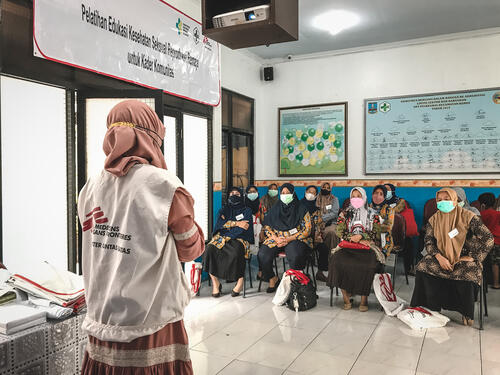
 
The MSF Indonesia adolescent health project focused on improving the quality of, and access for adolescents to, targeted health services, including health promotion and education sessions. Capacity building was one of the activities in this project, and health workers were trained on the topic of adolescent sexual reproductive health.
آسيا والمحيط الهادئ

أندونيسيا

نُقدّم الرعاية الصحية النفسية ونُنفّذ إجراءات طارئة في إندونيسيا. اسم البلد
 
A sex worker from Zalewa waits to be seen by Christine Muntali, MSF's Sexual and Reproductive Health nurse supervisor, in the team's ambulance. MSF provides family planning methods and medication to prevent sexually transmitted diseases to women beneficiaries of the project.
أفريقيا

ملاوي

في ملاوي التي يعيش فيها ما يقدر بنحو 980,000 مصاب بفيروس نقص المناعة البشرية، تدير منظمة أطباء بلا حدود مشاريع لدعم جهود مكافحة الفيروس. اسم البلد
 
Given the poor road infrastructure, extreme weather conditions severely limit people’s access to health centers and make it difficult for our teams to reach communities. A situation that often demotivates people to visit health centers before their condition worsens.
أفريقيا

مدغشقر

اقرأوا عن أنشطة أطباء بلا حدود في مدغشقر اسم البلد
 
Médecins Sans Frontières/ Doctors Without Borders (MSF) officially launched medical activities in the equatorial Pacific island nation of Kiribati in October 2022. Our team there, including a paediatrician, midwife and general practitioner, support the Ministry of Health and Medical Services to improve maternal and neonatal health outcomes. 

“Kiribati has one of the highest burdens of disease in the world, including the highest incidence of leprosy, one of the highest of TB and diabetes; and some of the lowest access to primary healthcare. There are clear needs here that are not being met,” says Alison Jones, MSF’s medical coordinator for Kiribati. On top of that, the environmental issues are significant, and growing.   

Kiribati is among the most climate-vulnerable places on earth. Along with erosion, the salinisation of underground water sources and soil, warmer air temperatures, more frequent ‘king tides’ and drought are increasing.  

The climate crisis is a health crisis: human health is dependent on the health and sustainability of the environment. Nowhere is this more evident than for people living within the constraints of an island. 

Seventy-five percent of deaths in the Pacific region are due to NCDs, and NCDs are now recognised as the leading cause of health problems in Kiribati. The rates of diabetes in Kiribati are high and increasing. 

“Diabetes in pregnant women is of particular concern as the condition can be high risk for mums and babies, who require access to secondary (specialist) care for management during labour, delivery, and after birth,” says MSF’s project medical referent in Kiribati, midwife Sandra Sedlmaier-Ouattara. 

MSF’s work in Kiribati aims initially to improve diabetes detection and management and hypertension related to maternal health in the Southern Gilbert Islands, based at Tabiteuea North
آسيا والمحيط الهادئ

كيريباتي

اقرأوا المزيد حول أنشطة أطباء بلا حدود في كيريباتي اسم البلد
 
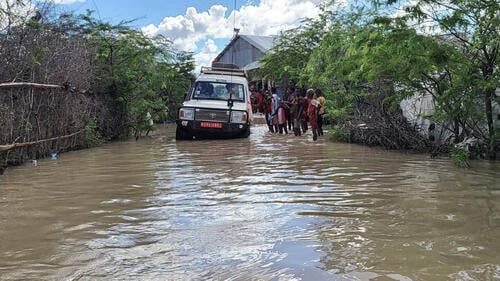
Since the beginning of November 2023, the Northeast of Kenya has experienced significant rainfall.
The communities surrounding MSF Dagahaley Project has suffered significantly from this rainfall. More than 2700 people have relocated to 5 schools within Dagahaley, with many others taking shelter within their extended families in Dagahaley. In response, MSF launched an intervention to assist the thousands of people affected by the flooding in the County of Garissa with a specific focus on the needs of the communities in and around Dagahaley’s refugee camp.
Immediate needs are with those in the schools who are without shelter from the elements, food, clean water and cooking capabilities. The risk of water-borne diseases increases as the shortage of drinking water, latrines and food continues. Additionally, the heavy rains have made roads inside the camp impassable, even for people walking on foot.
أفريقيا

كينيا

نقدم الرعاية للاجئين والناجين من العنف الجنسي والأشخاص الذين يتعاطون المخدرات في كينيا، كما نستجيب للتحديات التي يواجهها قطاع الصحة العامة على غرار فيروس نقص المناعة البشري. اسم البلد
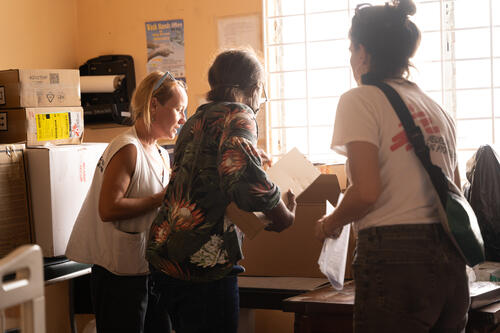
 
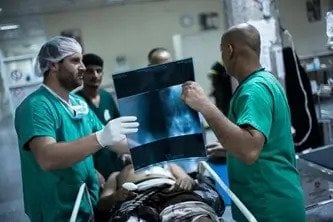
MSF medical team and District Medical Officer, Dr. Witter, inspect medical supplies and drugs brought to the provincial Maroon clinic.  

From left to right. Accident and Emergency nurse, Kirsty Robertson, District Medical Officer, Dr. Witter and Infectious disease specialist, Dr. Virginia Moneti.
أمريكا

جامايكا

وصل فريق من منظمة أطباء بلا حدود إلى جامايكا في أعقاب إعصار ميليسا في أكتوبر/تشرين الأول 2025. اسم البلد
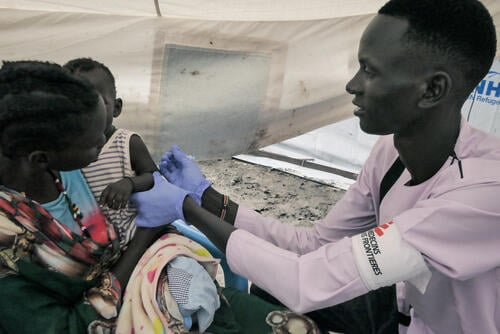
 
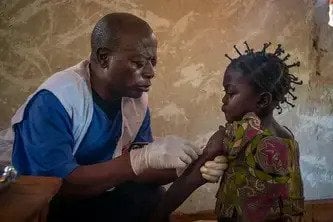
MSF Nurse Gatwech Tuoch immunizes a child against measles at the MSF Mobile Clinic in Bulukat, Upper Nile State South Sudan.
الأنشطة الطبيّة التي ننفذها

الحصبة

في عام 2025، تلقى أكثر من 2.1 مليون شخص حول العالم لقاح الحصبة في مشاريع أطباء بلا حدود استجابة لتفشي المرض. ومع ذلك، لا يزال هذا المرض الفيروسي شديد العدوى من أبرز أسباب وفاة الأطفال الصغار. الموضوع
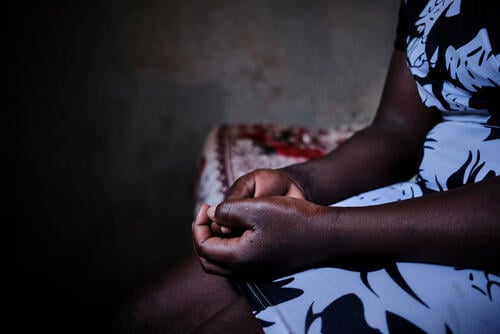
 
"There is nothing good about this job. Every day I think about whether to leave or continue, but I can't choose to leave, I have no money." Hamida Ajida (false name to protect her identity) says she has no choice: engaging in sex work is her only option. At 29, she has been in the business for three years now. She works in Dedza, a small, dusty town on the border with Mozambique where MSF runs the Sexual and Reproductive Health and Sexual Violence Program. Her story is the story of so many women in the same situation: Three years ago, Hamida ran a business selling vegetables and charckoal in Mangochi, where she was married with three children. Between her and her husband, they were supporting the family, but one day, without any explanation, her husband left her for another woman, a fact that changed Hamida's future: since then she could not support herself financially and had to start working as a sex worker in a bar in Dedza. In a weak voice and with her eyes on her knees, she says: "I started in 2020 to feed my children and my four siblings. Every month I have to send money for them, but it's never enough." Hamida charges 4,000 Malawi kwacha (3.20 euros) per service, and pays 2,500 kwacha a day to rent the room where she works. She says that when everything was going well she could have as many as 8 clients, but that is not the case now. "Nowadays I have one or even none. Many times I go to sleep on an empty stomach." 
She says the biggest challenge she faces is dealing with men who take advantage of her by not honoring price agreements. "When we finish, some clients take the money and leave. We have no one to protect us from threats and physical violence." Until three months ago, Hamida's three-year-old son lived with her in the room, but she took him away because the clients did not like having a baby hanging around the room. Thanks to the goodwill of Mercy, a woman who sometimes went to do laundry and food at the bar, Hamida managed to leave the son with her t
الأنشطة الطبيّة التي ننفذها

العنف الجنسيّ

العنف الجنسي يؤثر على الملايين من الناس، ويحطّم بوحشية حياة النساء والرجال والأطفال. هي حالة طبية طارئة، ولكن غالبًا ما يكون هناك نقص حادّ في خدمات الرّعاية الصحية للضّحايا. الموضوع
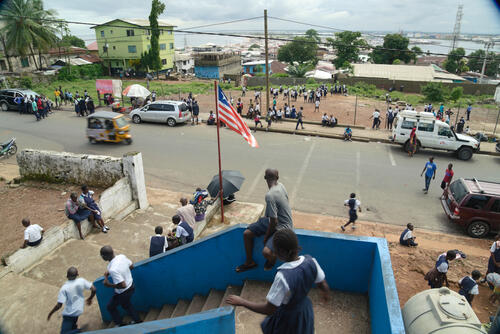
 
Children living with epilepsy in Liberia can find it difficult to stay in school because of their seizures and the stigma attached to them.
أفريقيا

ليبيريا

على الرغم من إعادة بناء الخدمات الصحية تدريجيًا في ليبيريا، تظهر فجوات هامة وواضحة وخصوصًا في مجالي رعاية الأطفال التخصصية والصحة النفسية. اسم البلد