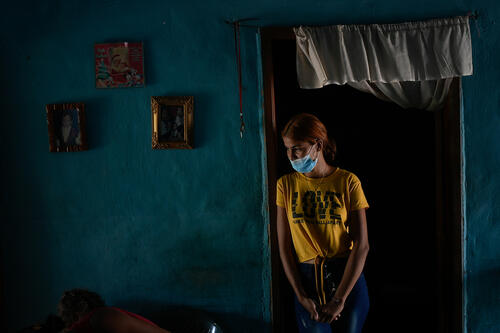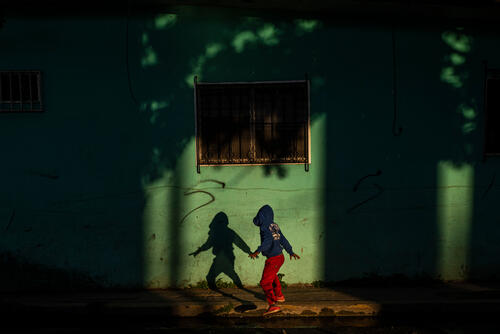
Ángel Alexis Ramirez Mejia, 9, plays under the Coatzacoalcos bridge on 25 March. Since leaving Comayagua, Honduras, he and his family have been travelling for 16 days, 14 of them on foot. 

MEXICO. Veracruz. Coatzacoalcos. March 25, 2021.
يلعب أنجل البالغ من العمر 9 أعوام تحت جسر كوتزاكوالتوس. وقد اضطرّ إلى السفر مع عائلته لمدة 16 يومًا منذ مغادرة هندوراس، من ضمنها 14 يومًا سيرًا على الأقدام. المكسيك، في مارس/آذار 2021.
© Yael Martínez/Magnum Photos

عام في صور 2021

يلعب أنجل البالغ من العمر 9 أعوام تحت جسر كوتزاكوالتوس. وقد اضطرّ إلى السفر مع عائلته لمدة 16 يومًا منذ مغادرة هندوراس، من ضمنها 14 يومًا سيرًا على الأقدام. المكسيك، في مارس/آذار 2021.
© Yael Martínez/Magnum Photos
الحرب في غزة: اطّلع على استجابتنا
اقرأ المزيد

عام من الاستجابة للأزمات في صور

في عام 2021، استمرت جائحة كوفيد-19 في فرض تحديات صحية في العالم بلا هوادة، وعملت طواقمنا بالوتيرة نفسها للاستجابة لها. لكن الجائحة باتت آخر شواغل الناس في الكثير من البلدان في ظل الأزمات والاحتياجات الأخرى التي تصدرت مخاوف الأشخاص الذين نقدّم لهم المساعدة.

استجابت فرقنا لأزمات النزاع والنزوح وقدّمت الرعاية للأشخاص المصابين بسوء التغذية والملاريا، كما قدّمنا الدعم للأشخاص الذين تعرّضوا للعنف الجنسي وأنقذنا الأشخاص الذين تعرضوا للخطر أثناء محاولة عبور البحر الأبيض المتوسط. كما شهدنا أدلّة ملموسة للطوارئ المناخية وتداعياتها.

اختيرت هذه المجموعة المؤلفة من 54 صورة التُقطت بين نوفمبر/تشرين الثاني 2020 وديسمبر/كانون الأول 2021 من أصل حوالي 8,000 صورة التُقطت في البلدان الـ 75 التي نعمل فيها. وفي هذه الصور، التقطت طواقمنا والمصورون المحترفون من جميع أنحاء العالم بعضًا من قصص الأشخاص والمرضى وطبيعة عَمَلنا معهم، وذلك في سبيل إدلاء شهادتنا عن حاجة إنسانية أساسية - هي الحصول على الرعاية الطبية.
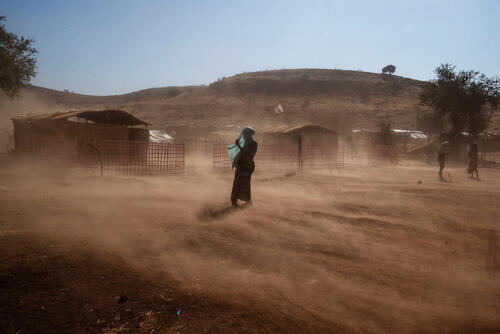
A refugee in the wind-blown dust in Um Rakuba refugee camp.

Ethnic Tigray, Ethiopian, refugees who fled the central government's military offensive against what is perceived as separatism by the Tigray regional government and its military branch TPLF. When crossing into Sudan the refugees are transferred and settled in Um Rakuba, which was already a site of camps during the 1984 famine.
MSF runs the water supplies and has an emergency clinic in the camp.

SUDAN, Gedaref Region, Eastern border with Ethiopia/Tigray Region. Um Rakuba Camp. 2020/12.
لاجئة تحمي وجهها من الغبار الناجم عن الرياح في مخيم أم راكوبة للاجئين. وقد بدأ الناس بالفرار من منطقة تيغراي الواقعة في شمال إثيوبيا في نوفمبر/تشرين الثاني 2020 هربًا من النزاع الدائر بين الجيش وجبهة تحرير شعب تيغراي. منطقة الغضارف، السودان، في ديسمبر/كانون الأول 2020.
Thomas Dworzak/Magnum Photos
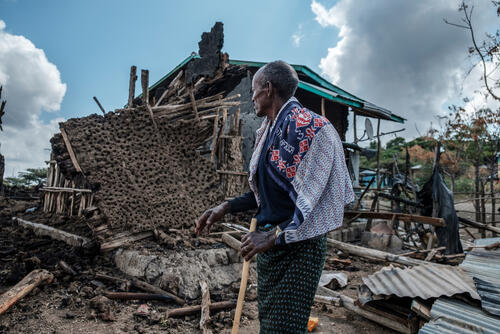
A man stands in front of his destroyed house in the village of Bisober, Ethiopia, on December 9, 2020.
رجل يعاين منزله المدمر في قرية بسوبر في إقليم تيغراي. إثيوبيا، في ديسمبر/كانون الأول 2020.
Eduardo Soteras Jalil


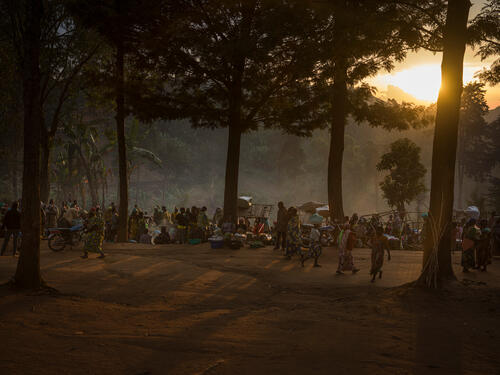
Around the Roman Catholic church of Drodro, a makeshift internally displaced people (IDP) camp named Tsuya has been in place for many years. Approximately 20,000 IDPs live there. 

DEMOCRATIC REPUBLIC OF CONGO. Ituri province. Drodro. 2021.
أشخاص يؤدون مهامهم اليومية في مخيم تسويا المؤقت للنازحين في فترة بعد الظهر تحت أشعة الشمس. يأوي المخيم الذي أُنشئ حول الكنيسة الكاثوليكية في درودرو نحو 20,000 شخص. مقاطعة إيتوري، جمهورية الكونغو الديمقراطية، في مارس/آذار 2021.
Newsha Tavakolian/Magnum Photos
Josias Madela was taking a shower in early January, when he unexpectedly experienced faintness and fell. Family members rushed him to hospital, where he was admitted, and tested for COVID-19. After his results came back positive he was transferred to the field hospital, where he says he was treated well. “I did not have the strength to do basic things, but nobody shouted at me.” He particularly appreciated the fact that his family were kept well informed. “I am blind, they could have worried but from the start they were reassured, and this made me feel I had nothing to fear,” he says.
كان جوسياس يستحم عندما أغمي عليه فجأة. سارع أفراد أسرته لنقله إلى المستشفى، حيث أجرى اختبار كوفيد-19. وبعد أن جاءت نتيجة الاختبار إيجابية، نُقل إلى المستشفى الميداني في الكاب الشرقية، حيث عولج بشكل جيد على حد قوله. جنوب إفريقيا، في فبراير/شباط 2021.
MSF/Chris Allan
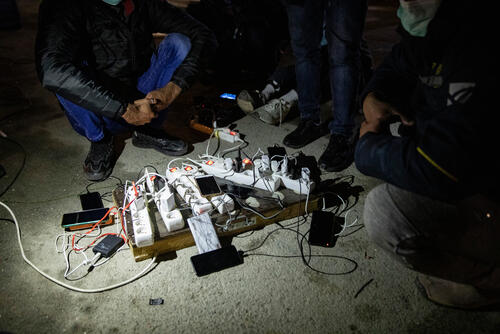
The “Talità Kum” refuge, located opposite Oulx railway station. The shelter is open from 6 pm to 10 am and it is managed by a network of volunteers.
أشخاص يشحنون هواتفهم وبنوك الطاقة المحمولة عبر مقابس كهربائية في ملجإ في تورينو يديره متطوعون للمهاجرين الذين يعبرون من إيطاليا إلى فرنسا. منطقة بيدمونت، إيطاليا، في ديسمبر/كانون الأول 2020.
Francesca Volpi
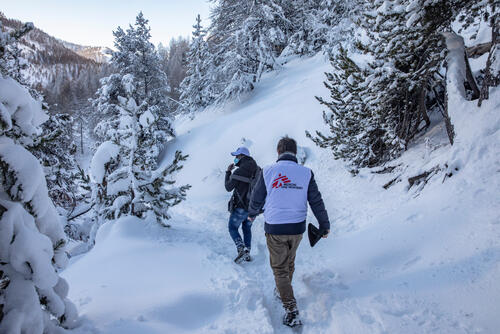
Even in winter, people head westwards across the snow-capped mountains towards France; many tell stories of being repeatedly turned back by the French police.
موظفو أطباء بلا حدود يقطعون جزءًا من المسار المغطى بالثلوج في جبال شمال غرب تورينو، علمًا أنه المسار الّذي يقطعه الراغبون في العبور من إيطاليا إلى فرنسا. تراقب فرق أطباء بلا حدود الوضع وتقدم الدعم لعدد من المنظمات التطوعية التي تقدّم المساعدة للأشخاص المهاجرين على طول هذا المسار. إيطاليا، في ديسمبر/كانون الأول 2020.
Francesca Volpi
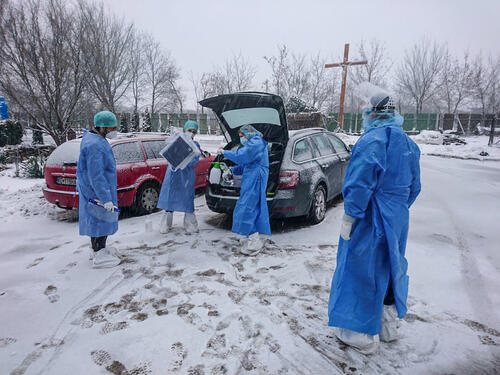
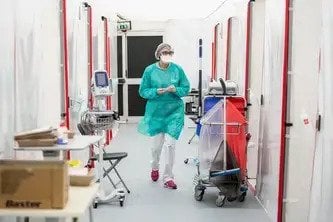
The MSF mobile team includes medical and non-medical profiles (Logistics, Administrators, Coordinators) and focuses on two pillars: (1) medical support and IPC trainings to nursing homes facing a high number of COVID-19 cases (2) medical support, mental health trainings, and health promotion trainings in Roma settlements.
يفرغ فريق أطباء بلا حدود المتنقل الّذي يضم طواقم طبية وغير طبية أجهزة لتدريب الموظفين العاملين في دار رعاية على منع تفشي كوفيد-19. سلوفاكيا، في مارس/آذار 2021.
MSF
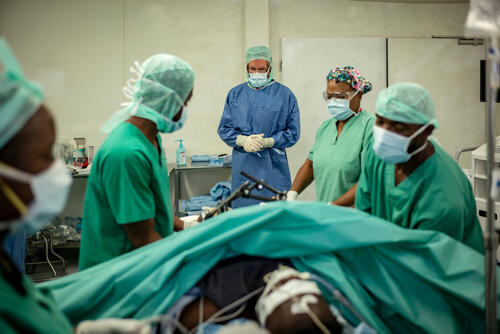
Doctors specialising in traumatology and vascular surgery amputate a patient with a leg injury.

“The mortality rate we have in Tabarre is low. The quality of care is high and there are very specialized medical staff. There is no other trauma center in Port-au-Prince that gives the necessary treatment for free. We face a lot of complex surgical cases here with patients then needing hospitalization.” – Stefano Zito, MSF medical activity manager, Tabarre Hospital
فريق أطباء بلا حدود الجراحي يجهز لبتر ساق مريض تعرض لإصابة خطيرة في ساقه في مستشفى الإصابات البليغة في تاباري في بورت أو برانس. هايتي، في ديسمبر/كانون الأول 2020.
Guillaume Binet/MYOP
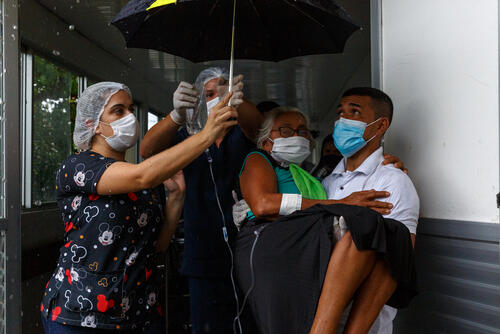
Patient is carried to the ambulance shortly after the start of a heavy rain in Tefé. She will go to the airport and from there to the state capital, Manaus, where there are more resources for her treatment of COVID-19. 

The transfer of this patient took place in late December 2020, before the health system in Manaus collapsed for the second time and referrals to the state capital were interrupted.
امرأة مصابة بكوفيد-19 تُنقل إلى سيارة إسعاف لتصل إلى المطار وتتوجه إلى ماناوس، عاصمة ولاية أمازوناس، لتلقي علاجٍ إضافي. تيفي، البرازيل، في ديسمبر/كانون الأول 2020.
Diego Baravelli
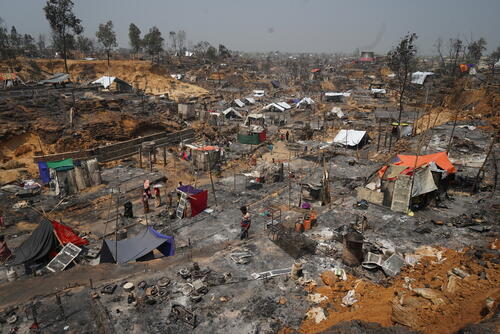
Fire destroyed thousands of shelters in several of the camps for Rohingya refugees. There are currently around 860,000 Rohingya refugees in Bangladesh and living conditions for them deteriorating due to several factors, including COVID-19 measures.
بدأ الناس ببناء ملاجئ بين الأنقاض المحترقة في جزء من مخيم كوكس بازار للاجئين الروهينغا بعد أن دمرته النيران. بنغلاديش، في مارس/آذار 2021.
Pau Miranda
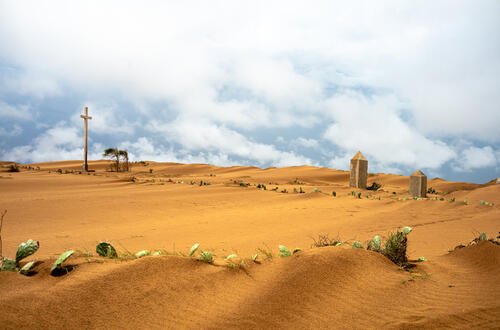
Formerly lined with cacti, the roads and paths are now buried under the sand.

The food hunger season, which usually ends in April, is becoming more critical each year in the desert regions of southern Madagascar. Three consecutive years of drought have severely affected harvests and access to food, in a context now marked by the Covid-19 pandemic, which has led to a drop in seasonal employment and other sources of income. From December onwards, violent sand winds also covered part of the arable land and food used during the lean season, such as cactus fruit. As a result, the chronic food and nutrition crisis, known on the island as kéré, is hitting the inhabitants even harder.

Since the last week of March, an MSF team of medical and logistical staff has been working in the Amboasary district in the Anosy region to assess the situation and the activities the organisation could implement to help respond to the emergency. The last MSF operation in Madagascar goes back to 2017 when we supported Madagascar’s Ministry of Health to tackle an outbreak of pneumonic plague.
بعد أن كان الصبار يحيط الطرقات من الجانبين، أدى الجفاف الّذي دام ثلاث سنوات متتالية إلى دفن هذه الأخيرة تحت الرمال. إذ تشتدّ فترة "فجوة الجوع" التي يسود فيها شح الطعام والمحاصيل بصورة حرجة في المناطق الصحراوية. منطقة أنوسي، مدغشقر، في مارس/آذار 2021.
Ainga Razafy/MSF
Commune of Ranobe, Amboasary District.

People in the south-east of Madagascar are facing the most acute nutritional and food crisis the region has seen in recent years. MSF began setting up mobile clinics in Amboasary district in late March to screen and treat acute malnutrition in remote villages like those of Ranobe commune, providing ready-to-use therapeutic food and medical care. 

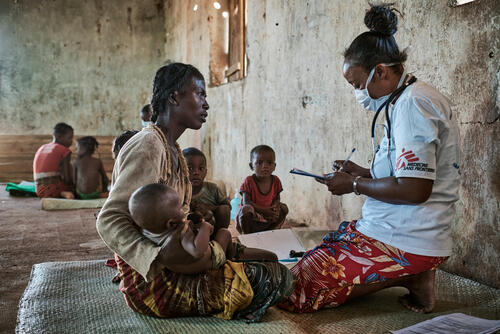
42-year old Vitasoa has six children. She’s brought four of them to the Médecins Sans Frontières mobile clinic. All the children are included in the nutrition programme launched at the end of March to respond to the food and nutrition emergency in southern Madagascar. 
 
“We live in Fenoarivo, and it took us five hours to walk here from Ranobe. During the rainy season, we live off cassava, mangoes and edible leaves. But, nothing’s growing because there’s been no rain. We make do with manioc tubers we find in the forest, cactus fruit and edible leaves. We have to dig in the sand for water as there’s also less surface water. Every day we pray for rain. We’re staying positive, but we really hope it’ll come soon.”
ممرضة في أطباء بلا حدود تفحص فيتاسوا وأربعة من أطفالها الستة بعد أن مشوا لمدة خمس ساعات للوصول إلى عيادة متنقلة تابعة لأطباء بلا حدود في رانوب لالتماس خدمات الرعاية للمصابين بسوء التغذية. ويواجه الناس في جنوب شرق مدغشقر أشد أزمة غذائية شهدتها المنطقة منذ سنوات. وتقول فيتاسوا، "خلال موسم الأمطار، نعيش على البفرة والمانجا والأوراق الصالحة للأكل. لكن لا شيء ينمو ما لم يهطل المطر". مقاطعة أمبواساري، منطقة أنوسي، مدغشقر، في أبريل/ نيسان 2021.
iAko M. Randrianarivelo/Mira Photo
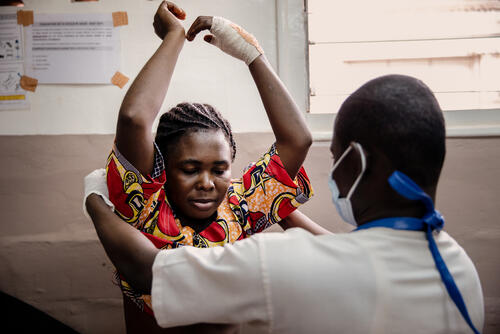
MSF medical staff helps France undress to check her chest wound and change her dressings, at the MSF’s SICA Hospital, on 2nd February 2021, in Bangui

France Beldo, 31, was wounded by a stray bullet on 13 January 2021 attack in the outskirts of Bangui, Central African Republic.
تتلقى فرونس المساعدة لخلع سترتها حتى يتمكن فريق أطباء بلا حدود في مستشفى سيكا في بانغي من تغيير ضمادتها وفحص الجرح في صدرها بعد أن أصيبت برصاصة طائشة. جمهورية إفريقيا الوسطى، في فبراير/شباط 2021.
Adrienne Surprenant/Collectif Item for MSF
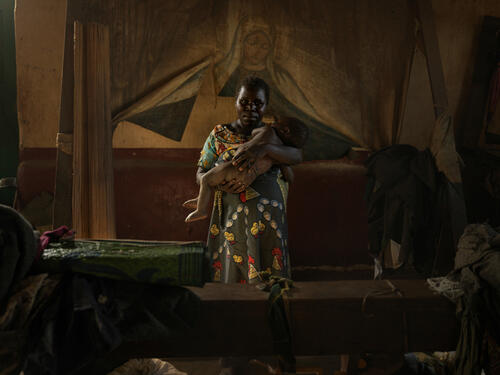
Christine, 30, holding up her baby, a boy. Her village was attacked by rebels, Christine ran away with her seven children and found shelter in the old church in Drodro.
تحمل كريستين طفلها في الكنيسة القديمة في درودرو في مقاطعة إيتوري بعد أن فرت من هجوم الجماعات المسلحة على قريتها. جمهورية الكونغو الديمقراطية، في مارس/آذار 2021.
Newsha Tavakolian/Magnum Photos
Nanette poses for a portrait in Bangui, CAR, on 11th December 2020. She went to investigate violence in her hometown in 2014. There, she saw pigs eating corpses, and the bodies of her parents in a river. She kept taking notes and images, knowing it was important to document this. When she was surrounded by a group of men, she was overpowered and they raped her. 

Nanette’s association, National Association for the Support of Free Women and Girls (ANAP) does social and economic reinsertion for survivors, as well as offers psycho-social support and eases the reference to MSF’s Tongolo centre. Compiling the testimonies and files of the survivors, Nanette also follows their cases with the Human Rights and justice organisations active in the Central African Republic.
تقف نانيت، وهي إحدى الناجيات من العنف الجنسي، لالتقاط صورة. في عام 2014، ذهبت نانيت لإجراء تحقيق حول العنف في مسقط رأسها، فشهدت كيف تأكل الخنازير الجثث ورأت جثتي والديها ملقاتين في النهر. وفيما كانت توثق المشهد، أحاط بها مجموعة من الرجال فتمكنوا منها وتعرضت للاغتصاب. تعمل جمعيتها مع مركز تونغولو التابع لمنظمة أطباء بلا حدود لرعاية ضحايا العنف الجنسي والناجين منه في بانغي. جمهورية إفريقيا الوسطى، في ديسمبر/كانون الأول 2020.
Adrienne Surprenant/Collectif Item for MSF
Amatou (lying down in the pirogue), 25 , has been a refugee in Ndu, Democratic Republic of the Congo, since the violent events of 2017 that occurred in Bangassou. She is pregnant and about to give birth but the midwives in the MSF-supported Ndu health centre identified some complications (hemorrhage) that cannot be managed from the health centre. Amatou is therefore referenced to the MSF-supported hospital in Bangassou, on the other side of the river, where she can be operated, if needed. 

Amatou is brought here by Odette, a midwife working in the small health center in Ndu, DRC. Facing the town of Bangassou, on the other side of the Mbomou river, the village has been hosting CAR refugees for years following spikes of violence. 

When the armed offensive started on Bangassou on January 3, more than 13,000 people fled the city and crossed the river to seek refuge in this village. The number of consultations at the health center exploded and MSF had to quickly increase its support to take care of women and children suffering from malaria, respiratory infections and diarrhea, not to mention the many pregnant women.

Today, Odette is alongside Amatou. The young woman is about to give birth but is bleeding. “She can’t deliver here, let’s bring her to Bangassou,” she says.

Amatou is then transported by stretcher to the river where a pirogue awaits her. She will make the crossing with Odette before being taken by the MSF ambulance to the university hospital, where our teams manage most serious cases.

For Amatou, the presence of MSF on either side of the river has made the difference today. The Bangassou hospital is the only one able to deal with obstetric complications in the district.

"Amatou is in good hands now", rejoices Odette after accompanying the mother-to-be to the delivery room, and heading back to the river to go back to the Ndu health center.
ترافق القابلة القانونية أوديت أماتو (المستلقية في الزورق)، وهي حامل على وشك الولادة، وتنقلها عبر النهر إلى المستشفى الذي تدعمه أطباء بلا حدود في بانغاسو لتلقي العلاج. فقد عانت أماتو من مضاعفات لا يمكن معالجتها في المركز الصحي الّذي تدعمه أطباء بلا حدود في قرية ندو. جمهورية إفريقيا الوسطى، في يناير/كانون الثاني 2021.
Alexis Huguet
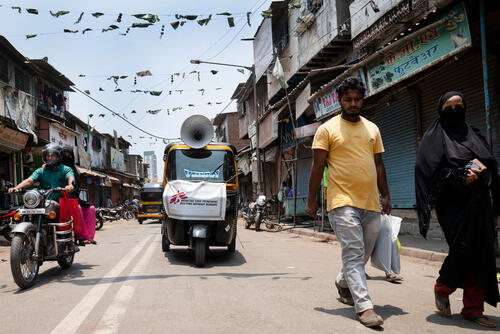
An Auto-Rikshaw (tuktuk) visiting alley lanes of Mumbai’s M-East Ward slums to generate COVID-19 Awareness
تتنقل عربة توك توك تستخدمها أطباء بلا حدود لنشر رسائل توعية صحية حول كيفية تجنّب الإصابة بكوفيد-19 بين شوارع القسم البلدي الشرقي "أم" في مومباي. الهند، في مايو/أبريل 2021.
Premananda Hessenkamp
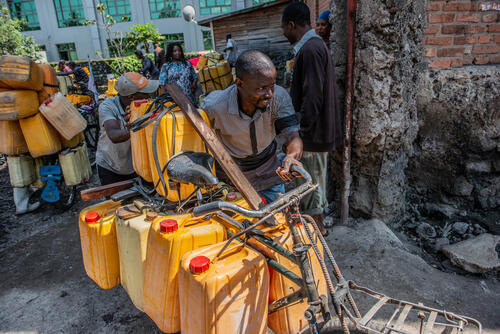
"To avoid making the population suffer even more or making them sick, we do not sell water from the lake but that from the tap" - Jean-Claude Bazibuhe
Selling water has been my job for 17 years, since I left the army. I am part of the association of water dealers on bicycles in Goma, a structure that allows us in this particular period to supply the population with drinking water to fight against cholera and other water-borne diseases. The demand for potable water is on the rise due to damage to the city's main water reservoir. We’re working hard to supply the households and match their critical needs. 

Since the eruption of the Nyiragongo volcano on May 22, water has become a scarce commodity. There is no question of leaving families without water: I have seven children, I understand their difficulty. In return, they pay me to provide food for my family. I cannot take advantage of the current crisis situation to make money and double the price of my services. The price has not changed: 250 Congolese Francs (0.10 euros) for a jerrycan of 20 liters of water. Sometimes I have to ask for up to 300 FC (0.14 euros) if I had trouble getting supplies. To avoid causing further suffering to the population or making them sick, we do not sell water from the lake but that from the tap. 

We are still living with the traumas of that night of May 22. When the night turned red, we rushed out of the house to escape the danger. Two of my children were injured and they are still in pain. They took shelter in Minova, in South Kivu. They are back in Goma and it is now hunger that grips them. “
يدفع جان كلود دراجته المليئة بالأوعية للحصول على مياه نظيفة. فقد أمست الحاجة إلى المياه النظيفة أمرًا في بالغ الأهمية عقب ثوران بركان نيراغونغو في 22 مايو/أيار. غوما، جمهورية الكونغو الديمقراطية، في يونيو/حزيران 2021.
Moses Sawasawa
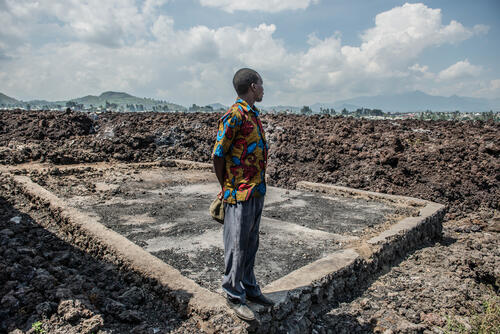
“We don't know where to go to escape this new danger. We too, in Goma, need assistance and medical care. ”- Dieudonné Bizimungu
On the Saturday 22 May, the day of the eruption of the Nyiragongo volcano, I was at home, in the Kihisi area of Goma. I was resting with my family after a week of work at Kibumba primary school where I teach. In the evening, it started to get very hot. The lava was heading straight to us. 
We fled, without thinking, without bringing anything with us. In Birere, a neighborhood in Goma where we gathered with other families, I heard that lava was starting to reach my house. I decided to go see what was going on: the lava flow was about a hundred meters from our home. I returned there, very early in the morning: to my surprise, it had stopped a few meters from my house. My roof has remained intact. 
When the government decided that we had to evacuate, we left for the second time, this time to the Kibumba area, north of Goma. Two days later, we decided to come back, having no clean water to drink. The 20-liter can cost 1,000 Congolese Francs (0.46 euros) against the usual 250 (0.10 euros). We only ate potatoes and cabbage. 
Today, the situation remains critical for my family and those around us. Night and day, we continue to feel the heat of the lava. Carbon dioxide continues to exit the cooled lava flow. Scientists and authorities tell us it is dangerous for health, but we remain exposed. We don't know where to go to escape this new danger. Sake (25 km west of Goma) or Minova (in South Kivu) are not the only places where disaster victims find themselves. We in Goma, too, need medical assistance and care. “
يعاين ديودوني المنازل المهدمة في حيه في غوما التي دمرتها تدفقات الحمم البركانية بعد ثوران بركان نيراغونغو في 22 مايو/أيار. جمهورية الكونغو الديمقراطية، في يونيو/حزيران 2021.
Moses Sawasawa
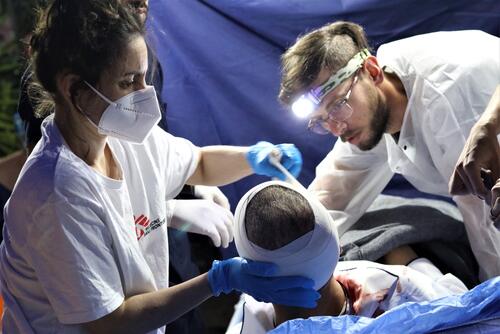
On Monday 10th of May, Médecins sans frontières / Doctors Without Borders (MSF) started supporting the Palestinian Red Crescent Society (PRCS) in Jerusalem to assess and stabilize hundreds of Palestinians injured by the Israeli police.
يضمد طاقم أطباء بلا حدود الطبي جروح فلسطيني أصيب على يد الشرطة الإسرائيلية خلال مواجهات في القدس. فلسطين، في مايو/أيار 2021.
Tetiana Gaviuk/MSF
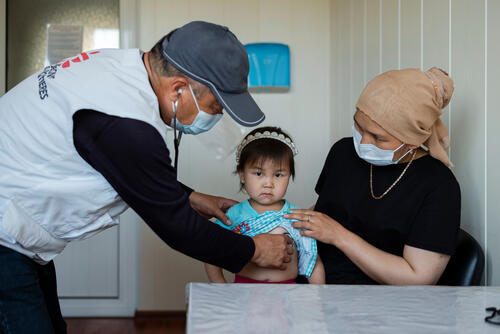
Anapiya, from neighboring village Kok-Terek, brought her daughter for consultation at Kok-Tash family medical center. Doctor Ergeshev Abdulamid is giving medical check. Kok-Tash, Batken Oblast, Kyrgyzstan.
أنابيا، في يمين الصورة، تخفف عن ابنتها الصغيرة أثناء إجراء فحص طبي في المركز الطبي العائلي " كوك تاش" في باتكين أوبلاست. قيرغيزستان، في مايو/أيار 2021.
Maxime Fossat
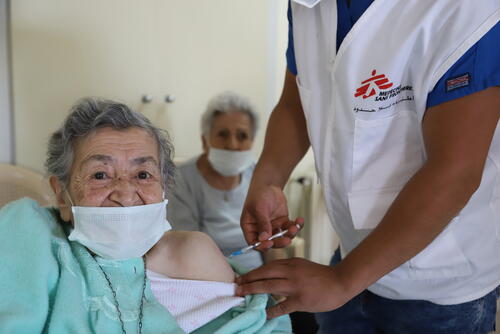
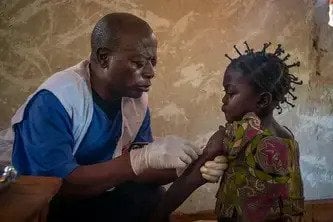
An elderly woman is being vaccinated against COVID-19 by a member of MSF’s mobile vaccination team at a nursing home in Shayle (Mount Lebanon).
تتلقى امرأة مسنة تعيش في دار للمسنين في منطقة السهيلة اللقاح من قبل فريق التلقيح المتنقل التابع لأطباء بلا حدود في محافطة جبل لبنان. لبنان، في يونيو/حزيران 2021.
Tracy Makhlouf/MSF
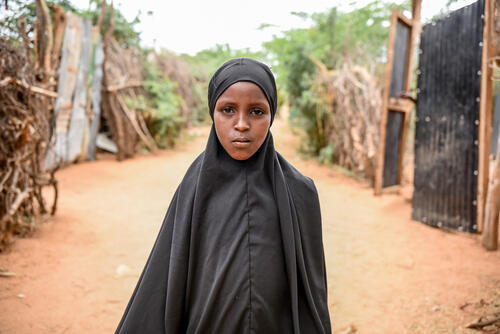
Ten-year-old Habiba lives with Type 1 Diabetes and needs to inject insulin twice every day. She was taught by MSF to inject herself and carries her insulin home, storing it in a portable cooler.
تعاني حبيبة ذات العشر أعوام من مرض السكري من النوع الأول وتحتاج إلى حقن الأنسولين مرتين يوميًا. علمتها فرق أطباء بلا حدود كيف تحقن الأنسولين بنفسها، فتأخذ حبيبة الأنسولين إلى منزلها في مخيم داداب للاجئين وتخزنه في مبرد محمول. كينيا، في مايو/أيار 2021.
Paul Odongo/MSF
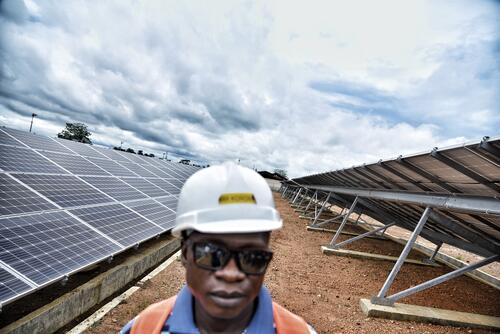
MSF logistics supervisor Mohammed Korma stands amid the solar panels that MSF has installed in Kenema district. MSF is aiming to run the Hangha hospital fully with clean energy in the future.
يقف مشرف الشؤون اللوجستية في أطباء بلا حدود "محمد قرما" أمام الألواح الشمسية التي أمنتها أطباء بلا حدود لتشغيل مستشفى هانغا بطاقة نقية. منطقة كينيما، سيراليون، في يونيو/حزيران 2021.
Mohammed Sanabani/MSF
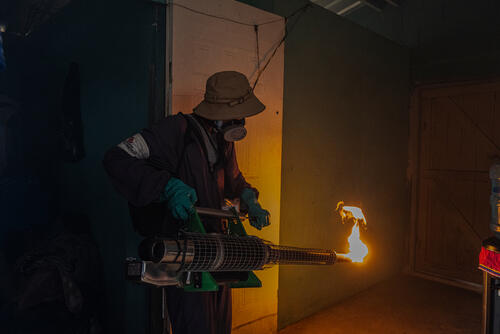
The MSF team spraying for pest control, Colonia Juan Orlando Hernandez. Coloma
Honduras April 7, 2021.
موظف في فريق أطباء بلا حدود يرش لمكافحة الآفات في خوان أورلاندو هيرنانديز في تشولوماز هندوراس، في أبريل/نيسان 2021.
Yael Martínez V./Magnum Photos
MSF nurse Oleksandr Oleksandr Vovkogon observes Vitalii Gorbachov, 56, take his DR-TB pills at this home in Chudniv village, Zhytomyr region, Ukraine. In order to enhance patient autonomy, MSF’s programme offers a combination of directly-observed (DOT), video-observed (VOT) and self-administered (SAT) therapies, depending on the needs and capacity of the patients. In directly-observed and video-observed therapies, a trained health worker observes patients swallow prescribed drugs, either in person or through video-enabled smartphones.
يتناول فيتالي أقراص الدواء للتعافي من السل المقاوم للأدوية في منزله في قرية تشودنيف في منطقة جيتومير. أوكرانيا، في يونيو/حزيران 2021.
Oksana Parafeniuk/MSF
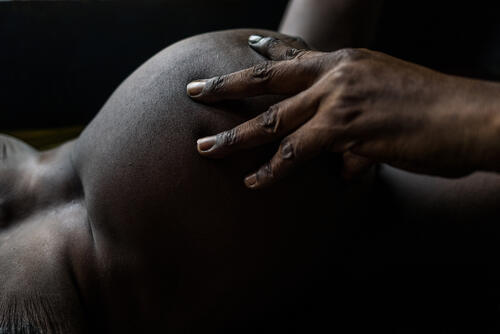
Octavie Braza takes 5 hours to deliver and finally, at 17.30h a baby boy comes out alive despite all the complications and lack of material at Nzacko health center.
تضع القابلة القانونية سيلفي غرينغبو يدها على بطن أوكتافي التي عانت من تعقيدات الحمل ومخاض دام خمس ساعات قبل أن تنجب طفلًا سليمًا في مركز "نزاكو" الصحي. جمهورية إفريقيا الوسطى، في يوليو/تموز 2021.
MSF
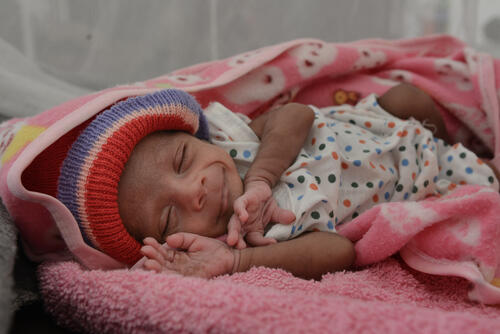
Baby Dawit Yonas was born prematurely, weighing only 1.2 kg. His mother, Mebruit Muruts, gave birth to Dawit at MSF’s maternity clinic in Al-Tanideba camp.
وُلد الطفل داويت قبل الأوان ويبلغ وزنه 1.2 كيلوغرامًا فقط. وقد أنجبته أمه "ميبروت" في مركز أطباء بلا حدود لخدمات الأمومة في مخيم الطنيدبة. السودان، في يوليو/تموز 2021.
MSF/Dalila Mahdawi
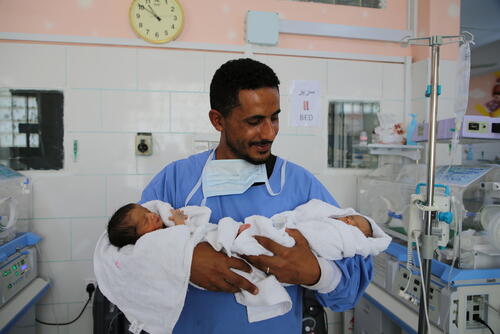
A happy father, Wael Abdul Jabbar Mahyub, lovingly holding his twin daughters Heba and Malath who are under treatment at special care baby unit supported by MSF at Al Jamhouri hospital in Taiz City, Yemen.
يحتضن الوالد السعيد وائل ابنتيه التوأم هبة وملاذ اللتين تتلقيان رعاية خاصة في وحدة حديثي الولادة التي تدعمها أطباء بلا حدود في مستشفى الجمهوري في تعز. اليمن، في يونيو/حزيران 2021.
Nasir Ghafoor/MSF
Bárbara tiene 20 años y un hijo de 24 meses. Quiere protegerse para no tener más bebés a corto plazo, pero la situación económica hace cuesta arriba el acceso a anticonceptivos orales. “Para comprar una caja de pastillas que dura solo un mes, tendría que pasar trabajando dos o tres semanas corridas, sin gastar en nada más”, explica. 


Barbara is 20 years old and has a 24-month-old son. She wants to protect herself from having more babies in the short term, but the economic situation makes access to oral contraceptives difficult. "To buy a box of pills that lasts only a month, I would have to spend two or three weeks working, without spending money on anything else," she explains.
باربارا هي أم لطفل يبلغ من العمر 24 شهرًا. ترغب باربارا في حماية نفسها من إنجاب المزيد من الأطفال على المدى القصير، إلّا أنّه يصعب الحصول على حبوب منع الحمل جراء الوضع الاقتصادي في البلاد. توضح باربارا، "عليّ أن أنفق ما أجنيه خلال أسبوعين أو ثلاثة أسابيع من العمل بدون اقتناء أي شيء آخر مقابل علبة من الدواء تكفي لشهر واحد فقط". ولاية سوكري، فنزويلا، في مايو/أيار 2021.
Matias Delacroix
Ángel Alexis Ramirez Mejia, 9, plays under the Coatzacoalcos bridge on 25 March. Since leaving Comayagua, Honduras, he and his family have been travelling for 16 days, 14 of them on foot. 

MEXICO. Veracruz. Coatzacoalcos. March 25, 2021.
يلعب أنجل البالغ من العمر 9 أعوام تحت جسر كوتزاكوالتوس. وقد اضطرّ إلى السفر مع عائلته لمدة 16 يومًا منذ مغادرة هندوراس، من ضمنها 14 يومًا سيرًا على الأقدام. المكسيك، في مارس/آذار 2021.
Yael Martínez/Magnum Photos
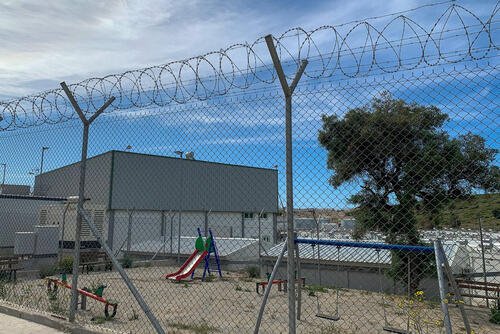
A brand-new reception centre, just 5km away from Vathy city, is being built in Samos island. Located in the middle of nowhere, it is designed to host up to 3,000 people, of which according to the Greek Minister of Migration, 2,100 will have a “controlled access” and 900 will be in detention waiting to be sent back to Turkey. Patients and people who live in Vathy reception center describe it as an open-air prison.
ملعب فارغ وراء الأسلاك الشائكة لمركز استقبال المهاجرين الجديد الذي يقع خارج فاثي في ساموس. اليونان، في مايو/أيار 2021.
Dora Vangi/MSF
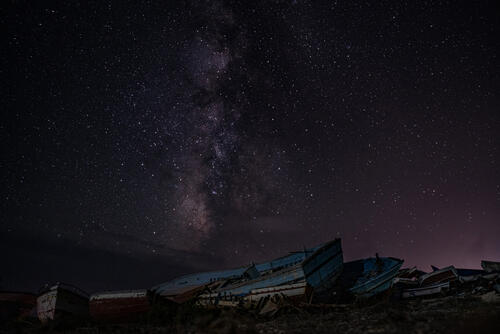
Milky Way rises on the remains of the “boat cemetery” of Lampedusa. The boats used by the migrants are pulled out of the water, brought to the mainland and piled up in strategic points on the island before being demolished.
تتراءى مجموعة من نجوم درب التبانة على أنقاض "مقبرة القوارب" في لامبيدوزا. تُسحب القوارب التي يستخدمها المهاجرون خارج المياه وتُنقل إلى اليابسة لتُكدّس في نقاط استراتيجية على الجزيرة قبل تحطيمها. لامبيدوزا، إيطاليا، في سبتمبر/أيلول 2021.
Giuliano Lo Re
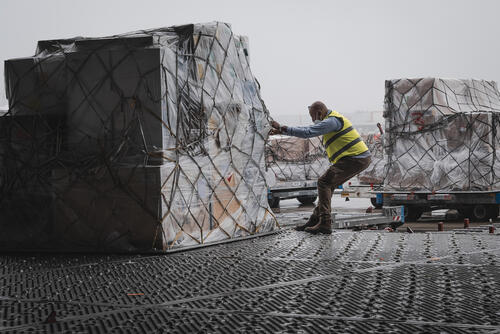
100 tons of material has been loaded into two cargo planes destined for Haiti. The fist plane took off from Brussels on Friday 20 August. The cargo includes items for setting up emergency medical structures and offices for our operations using tents; materials to install emergency drinking water supply systems for 30,000 people; and medical supplies for the care of 30,000 patients, including items for stabilisation, first aid, vaccination and blood collection.
يُحمّل عمال المطار أوّل 100 طن من المواد على متن طائرتي شحن ستتوجّهان إلى هايتي للاستجابة لتداعيات الزلزال الذي بلغت شدّته 7.2 درجة. وتتضمّن الشحنة المواد اللازمة لإنشاء مرافق طبية طارئة وتركيب أنظمة إمداد مياه صالحة للشرب لـ 30,000 شخص وإمدادات طبية لتقديم الرعاية لـ 30,000 مريض. بروكسل، بلجيكا، في أغسطس/آب 2021.
Julien Dewarichet/MSF
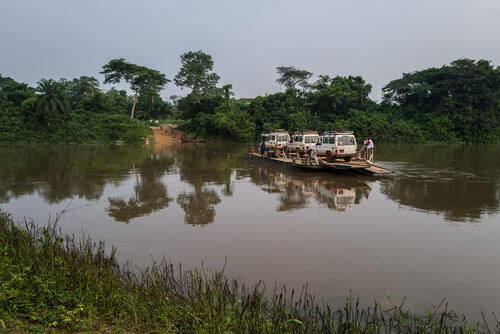
MSF convoy crosses the river on the way back to Bangassou. Thursday July 29, 2021
تعبر قافلة أطباء بلا حدود النهر في طريق العودة إلى بانغاسو بعد جلسة أجريت في عيادة متنقلة في المنطقة الصحية نزاكو. جمهورية إفريقيا الوسطى، في يوليو/تموز 2021.
MSF
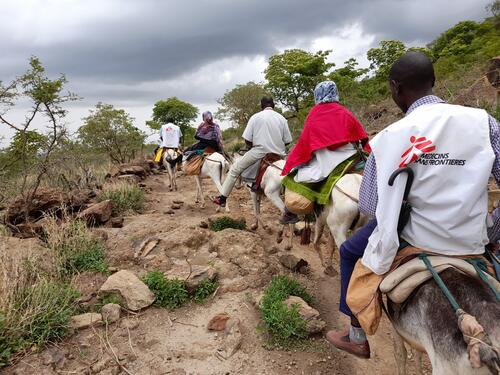
A MSF team comprising of medical assistants, a nurse, a nursing activity manager and project coordinator travel from Koya to Dilli, Jebel Marra region, South Darfur.
Together with the local community, the Ministry of Health and UN agencies, MSF in August 2021 launched an urgent measles vaccination and treatment campaign in Jebel Marra.
Since mid-July 2021, hundreds of suspected cases of measles have been reported across Jebel Marra, an isolated and mountainous region of Darfur. MSF received the first suspected measles patient at its Kalo Kitting clinic on 17 July. By 7 August, MSF’s clinics had received 849 children with suspected measles, of whom 824 were under the age of five years, as well as 11 deaths. Sudan’s Ministry of Health has so far confirmed seven cases by laboratory.
يسافر فريق أطباء بلا حدود الذي يتألّف من مساعدين طبيين وممرض ومدير تمريض ومنسّق مشروع على ظهور الحمير للتنقّل من كويا إلى ديلي في منطقة جبل مرة المعزولة والجبلية للاستجابة لتفشّي الحصبة في جنوب دارفور بشكل عاجل. السودان، في يوليو/تموز 2021.
Anna Bylund/MSF
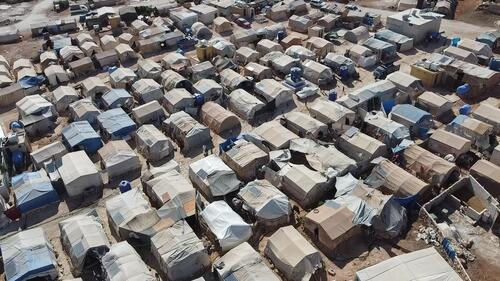
Northwest Syria is home to more than 1.7 million Internally Displaced Persons (IDPs). Most of them have been displaced by the conflict various times and are staying in displacement camps, with very poor living conditions.
تنتشر خيم النازحين في أحد المخيمات في شمال غرب سوريا، حيث تشكّل الظروف المعيشية السيئة وغياب المياه النظيفة مخاطر صحية جسيمة. سوريا، في سبتمبر/أيلول 2021.
Abdurzaq Alshami
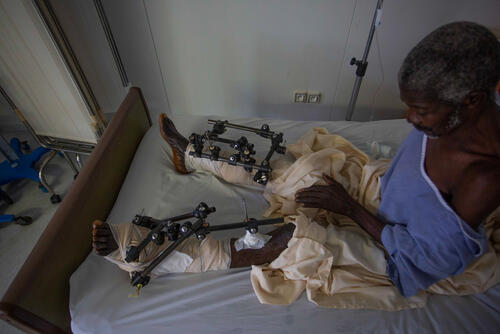
A victim from August 14 earthquake is being treated in Tabarre hospital after a referral from the South area, the most affected zone on Haiti.
ينظر الرجل إلى المثبّت الخارجي على رجله التي أصيبت بشكل خطير أثناء الزلزال الذي ضرب البلاد في 14 أغسطس/آب. مستشفى الإصابات البليغة في تاباري، بورت أو برانس. هايتي، في أغسطس/آب 2021.
Steven Aristil
At Hôpital Immaculée Conception in Les Cayes, MSF staff provide physiotherapy for patients injured in the earthquake, helping people regain strength and mobility.
يقدّم معالج فيزيائي في أطباء بلا حدود العلاج لمريض في مستشفى إيماكولي كنسبسيون إثر تعرّضه لإصابات جراء الزلزال الذي ضرب البلاد في 14 أغسطس/آب. ليه كاي، هايتي، في سبتمبر/أيلول 2021.
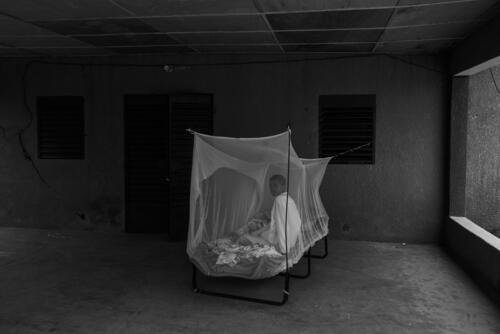
The use of mosquito nets to protect against malaria.
Belbeja, Zinder, Niger - 27 July 2021.
رجل يجلس على سريره تحت الناموسية لكي يحمي نفسه من الملاريا خلال موسم الأمطار في زندر. النيجر، في يوليو/تموز 2021.
Zied Ben Romdhane/Magnum Photos
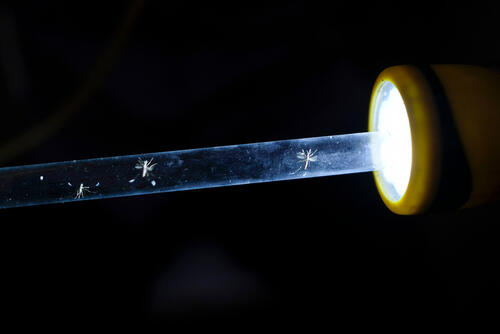
Mosquitos Anopheles capturados para su estudio. El análisis de los transmisores de la malaria permite diseñar estrategias eficaces para el control vectorial. Los equipos de MSF trabajan junto a autoridades locales, para prevenir la malaria en comunidades del estado Sucre, al noreste de Venezuela. 
 	
Anopheles mosquitoes have been captured to study them. The analysis of malaria transmitters supports the design of effective vector control strategies. MSF teams work with local authorities to prevent malaria in communities in Sucre state, northeastern Venezuela.
يتمّ فحص بعوض الأنفولية الذي علق في الفخ بواسطة مصباح يدوي. يصطاد علماء الأوبئة في أطباء بلا حدود البعوض الذي ينقل الملاريا ويجرون دراسات حوله من أجل تصميم استرتيجيات لمكافحته والوقاية من الملاريا بين المجتمعات في ولاية سوكري. فنزويلا، في أغسطس/آب 2021.
Matias Delacroix
Night rescue of 188 people from an overcrowded wooden boat. Geo Barents, 15.08.21
يجلس 188 شخصًا في قارب خشبي مكتظ بينما يقترب فريق أطباء بلا حدود على متن سفينة البحث والإنقاذ جيو بارنتس لإنقاذهم. وسط البحر الأبيض المتوسط، في أغسطس/آب 2021.
Vincent Haiges
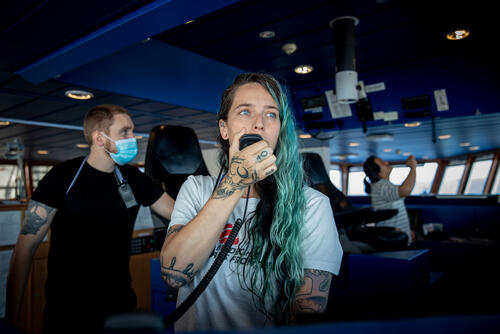
MSF teams communicating with the plane Colibri from Pilotes Volontaires before the rescue.
تتواصل إحدى أعضاء فريق أطباء بلا حدود الذي يعمل على متن سفينة البحث والإنقاذ جيو بارنتس مع طائرة المراقبة الجوية كوليبري التابعة لجمعية بيلوت فولنتير التي رصدت قاربًا منكوبًا يحمل على متنه 54 شخصًا. وسط البحر الأبيض المتوسط، في سبتمبر/أيلول 2021.
Pablo Garrigos/MSF
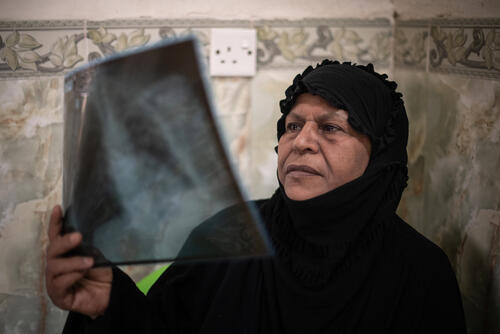
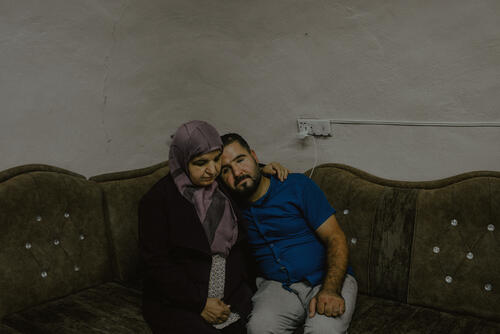
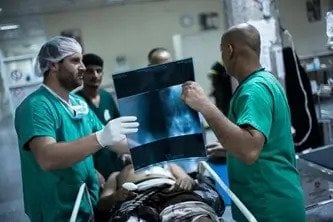
Hameeda looks at an x-ray of her lungs.
Hameeda, 65, photographed in her home, is Iraq’s first patient to be cured with the new oral treatment for multidrug-resistant tuberculosis. Before starting this treatment, she was having daily painful injections that had the potential of causing serious side effects; like hearing loss and kidney damage. Since her first diagnosis, Hameeda has relapsed several times.
Al-Fathilia, Baghdad, Iraq.
---
Hamida's testimony:
---
My name is Hameeda, I am 65 years old and I am from Baghdad (Iraq). I am a mother of six daughters and three sons.

The first time I was diagnosed with tuberculosis (TB) was in 2015. At that time, we didn’t know what was wrong with me. I was coughing, had night-time fever and I wasn’t feeling well. My blood pressure and blood sugar were both high. When I went to seek medical advice I was told that I had had a light stroke, and I was given treatments to better control my hypertension and blood sugar as well as medications for the stroke. But the coughing and the night-time fever didn’t go away. 

I started noticing that I was coughing up sputum and my overall health was not improving. My son took me again to be seen by doctors, who then sent us to the National Tuberculosis Institute in Baghdad. There, I was diagnosed with TB. The medical team at the institute prescribed injections for me that made me tired and weak. 

When I first got the disease, the doctors told us that TB was an infectious disease and that I had to isolate from others. I stopped going out, visiting others or seeing anyone outside. I took my medications for about eight months, after which point the doctors told me that I was cured. However, since then, I have had three relapses. The last one was at the beginning of 2020. I was told that it was a drug-resistant form of the disease this time around and I was put on a new drug regimen which involved taking pills.

During my previous infections, I was treated with daily injectable medications, which were giving me many side effects. For example, my body was itching a lot and I had developed bruise marks on my skin. But since I started taking oral tablets, I feel better. The tablets still hurt my stomach, but they are much better and I have fewer side effects compared to the injections.

At the beginning of the treatment, I was very tired. I couldn’t walk or even move. My son was taking care of me and only with his help was I able to go to the National Tuberculosis Institute for check-ups. He is the only provider for the family, and it was a hard time for him too. Sometimes he would have to take me to private clinics for consultations for my other chronic conditions, which would also need medications that he had to buy, and they were not cheap. All of that prevented him from going to work and that in turn affected our livelihood. But now, after almost 18 months of taking medication, I’m thankful I have finished my treatment and got rid of the disease and its hardships. Now I am in a better health and I don’t need care from others.
تنظر حميدة إلى صورة الأشعة السينية لرئتيها عقب شفائها من السل المقاوم للأدوية المتعدّدة باستخدام الأدوية الفموية الجديدة. بغداد، العراق، في سبتمبر/أيلول 2021.
MSF/CHLOE SHARROCK
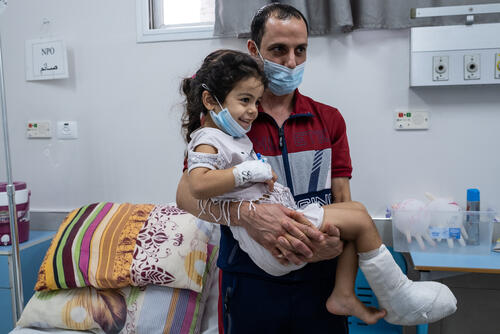
“When I started crossing the street, I saw a light. Then a yellow car hit me and suddenly I was in so much pain,” says four-year-old Hala, as she recalls the day of her accident. Hala’s right foot was crushed by the car and needs multiply surgeries to repair the damage. In 30 minutes, Hala will again go to the operating theatre for surgery. She is nervous and asks her father, Mohammed Aboud, to hold her.
يحمل محمد ابنته هالة البالغة من العمر أربعة أعوام قبل خضوعها لعملية جراحية. فقد دهست سيارة قدم هالة وتحتاج إلى إجراء عدة عمليات جراحية لإصلاح الضرر الذي تعرّضت له قدمها. ويشكّل علاج الإصابات البالغة تحدّيًا في قطاع غزة المحاصر. فلسطين، في أغسطس/آب 2021.
Virginie Nguyen Hoang
Kuzal together with her son in her house.
She is a midwife in the Nablus MSF hospital.
The Islamic State Group forced her to work also during war. Her son would drive her to work everyday.

Mosul, Iraq. September 2021.
تجلس كوزال (في اليسار) التي تعمل كقابلة في أطباء بلا حدود في مستشفى نابلس التابع لأطباء بلا حدود برفقة ابنها في منزلها. وقد أجبرتها جماعة الدولة الإسلامية على العمل أثناء الحرب، إذ كان إبنها يقلّها إلى العمل كل يوم. الموصل، العراق، في سبتمبر/أيلول 2021.
Nanna Heitmann /MAGNUM PHOTOS
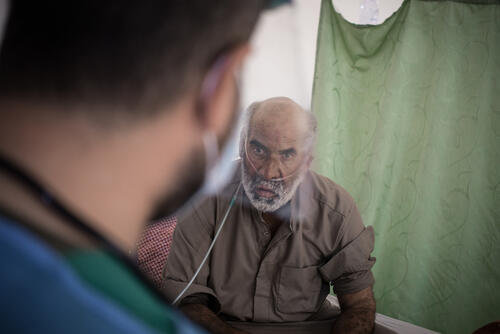
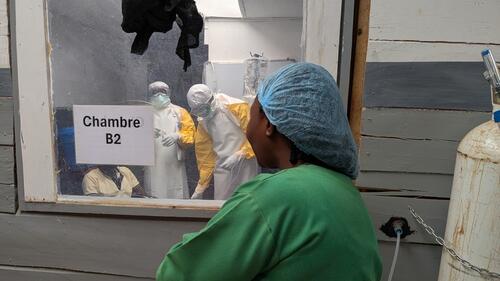
Abdul Harma, head nurse at the Hospital specialising in COVID-19 in Hassakeh, in northeast Syria, provides care to Mr. Ali, who lives two hours away from Hassakeh by road.
يجلس السيد علي على سريره وهو يتلقّى الأكسجين بينما يعمل مدير الممرضين عبدول هارما على رعايته في مستشفى كوفيد-19 في الحسكة. سوريا، في يونيو/حزيران 2021.
Florent Vergnes
Polish volunteer from Fundacja Ocalenie organisation covers the refugees with sleeping bags. Narewka, Poland.

In October 2021, MSF team accompanied Fundacja Ocalenie, one of the local Polish organisations, along with several journalists, into a forested area near the secure zone where they met a group of 13 people. A family of 13 Iraqi Kurds including 4 children asked for asylum in Poland. The family was taken by the Polish border guards back to emergency state zone at the Belarusian border. On the next day, they sent their location indicating that they were back on the Belarusian side of the border.
يغطي أحد المتطوعين في المنظمة البولندية مؤسسة الخلاص اللاجئين بأكياس النوم. وقد رافق فريق أطباء بلا حدود فريقًا من مؤسسة الخلاص في منطقة غابية بالقرب من الحدود البولندية/البيلاروسية، حيث التقوا عائلة من 13 كرديًا عراقيًا، بينهم أربعة أطفال، على الجانب البولندي. وقد طلبت العائلة اللجوء في بولندا ثمّ نُقلت إلى منطقة حالة الطوارئ على الحدود البيلاروسية من قبل حرس الحدود البولندي. وفي اليوم التالي، أرسلوا موقعهم للإشارة أنّهم قد عادوا إلى الجانب البيلاروسي من الحدود. ناريوكا، بولندا، في أكتوبر/تشرين الأول 2021.
Maciej Moskwa/Testigo
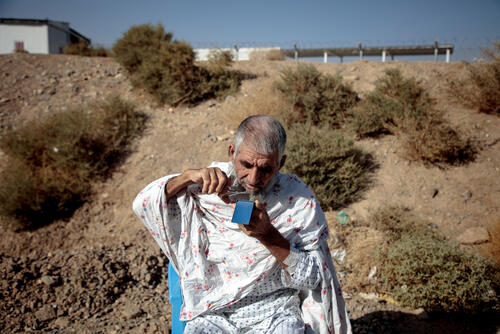
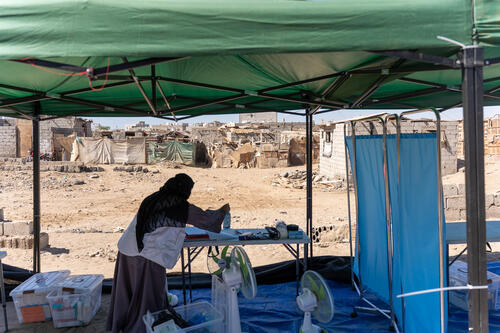
A patient have a sun bath, outside the building.
رجل يحلق لحيته تحت ضوء الشمس خارج مستشفى كوفيد-19 التابع لأطباء بلا حدود في هرات. أفغانستان، في أكتوبر/تشرين الأول 2021.
Sandra Calligaro
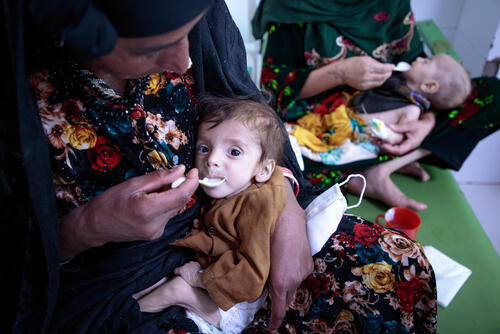
Mothers feeding their child in the rooms of MSF’s Inpatient Therapeutic Feeding Centre (ITFC) at Herat Regional Hospital. The centre is over crowded : there is actually 84 patients for 60 beds, mothers share sometimes one bed for 2 children.
تُطعم الأمهات أطفالهنّ المصابين بسوء التغذية في مركز التغذية العلاجية للمرضى المقيمين التابع لأطباء بلا حدود في مستشفى هرات الإقليمي. ويشهد المركز اكتظاظًا، إذ يشغل 84 مريضًا 60 سريرًا فقط، لذلك، اضطرت بعض الأمهات إلى مشاركة سرير واحد لطفلين. أفغانستان، في أكتوبر/تشرين الأول 2021.
Sandra Calligaro
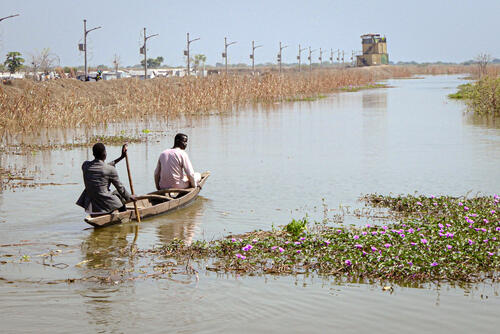
Two men use a canoe to navigate through floodwaters on the outskirts of Bentiu internally displaced persons camp.
رجلان يستخدمان زورقًا للتنقل عبر مياه الفيضانات على أطراف مخيم بنتيو للنازحين. جنوب السودان، في نوفمبر/تشرين الثاني 2021.
Njiiri Karago/MSF
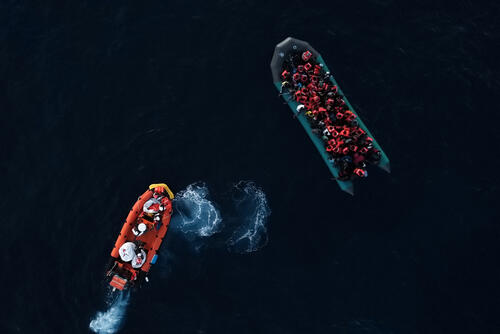
On the evening of the 23rd of October, a rubber boat with 95 people on board, was about to be intercepted by the Libyan Coast Guard, MSF teams arrived on time to carry out the rescue safely.
وصل فريق أطباء بلا حدود الذي يعمل على متن سفينة البحث والإنقاذ جيو بارنتس إلى قارب مطاطي يحمل على متنه 95 شخصًا قبل أن يعترضه خفر السواحل الليبي. وقد وصل الفريق في الوقت المناسب لإجراء عملية الإنقاذ بأمان. وسط البحر الأبيض المتوسط، في أكتوبر/تشرين الأول 2021.
Filippo Taddei/MSF
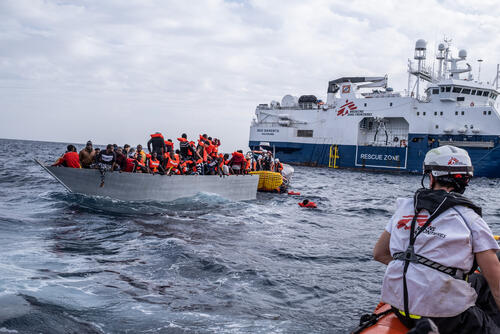
After a distress call from Alarm Phone, confirmed by Sea Bird, the afternoon of the 16th of November, 2021, 99 survivors were rescued by the Geo Barents at approx 30 miles from the Libyan shores. At the bottom of the overcrowded wooden boat, 10 people were found dead. 
10 persons who died from suffocation, after 13 hours adrift at sea. The deadly central Mediterranean route.
Currently on board, 186 people, many women and small children, the youngest one being 10 months old. Many of them seem traumatized by the horrendous ordeal. They were drifting at sea for hours, fearing for their lives.
أنقذت سفينة جيو بارنتس 99 شخصًا من قارب خشبي مكتظّ بقي هائمًا لمدة 13 ساعة. وقد وُجد 10 أشخاص متوفّين في قاع القارب الخشبي بعد تعرّضهم للاختناق بسبب دخان الوقود. وسط البحر الأبيض المتوسط، في نوفمبر/تشرين الثاني 2021.
Virginie Nguyen Hoang/ HUMA
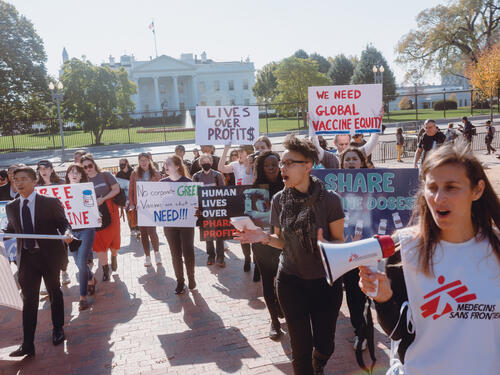
On November 10, MSF held a demonstration in front of the White House in Washington, DC, calling on the Biden administration—which gave pharmaceutical corporations billions of US  taxpayer dollars to develop COVID-19 vaccines—to do more to ensure global vaccine equity. 

The group carried a banner bearing the names of nearly 130,000 people who had signed a petition, and they staged a scene where mock supplies of the vaccines were chained and locked up and people posed as Pfizer, Moderna, and the World Trade Organization, guarding the doses. Later, participants “freed the vaccines” by removing the chains.
يتظاهر طاقم أطباء بلا حدود ومناصرو المنظمة أمام البيت الأبيض لدعوة إدارة بايدن إلى اتخاذ إجراءات إضافية تضمن توزيع لقاحات كوفيد-19 بإنصاف في العالم. واشنطن العاصمة، الولايات المتحدة الأمريكية، في نوفمبر/تشرين الثاني 2021.
Christopher Lee