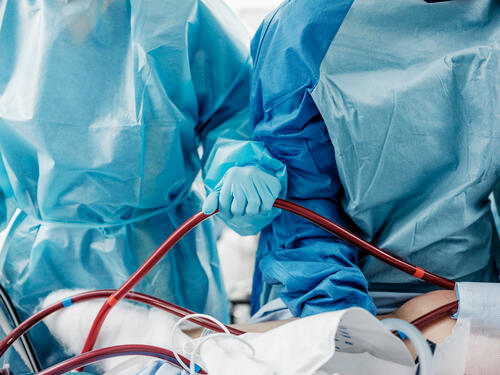
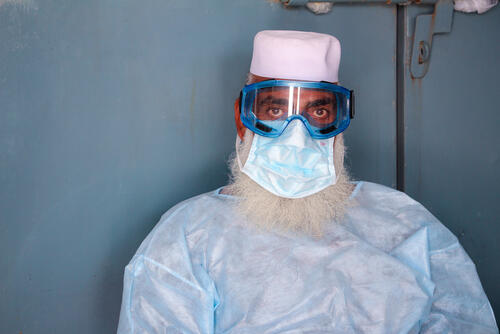
Switzerland, COVID-19 response in Intensive care unit of HUG. April 14, 2020. ©Nora Teylouni / MSF
In the intensive care unit of Geneva’s university hospital, where MSF supported the medical response to COVID-19. The focus was on managing patients with the new coronavirus and organising medical teams and services in the hospital. Switzerland, April 2020.
© Nora Teylouni/MSF

A year in pictures 2020

In the intensive care unit of Geneva’s university hospital, where MSF supported the medical response to COVID-19. The focus was on managing patients with the new coronavirus and organising medical teams and services in the hospital. Switzerland, April 2020.
© Nora Teylouni/MSF
Ebola disease in DRC: find out how we're responding
Learn more

International Activity Report 2020 >  A year in pictures

An extraordinary year in images

2020 has been a year like no other. This collection of images, from December 2019 to November 2020, documents a year in which MSF teams around the world responded to crises, emergencies and pressing healthcare needs.

A diverse range of staff, local and agency photographers captured our teams at work responding to outbreaks of measles and tuberculosis; plucking people from the Mediterranean Sea; providing assistance to people who have been displaced or who have been caught up in conflict; giving medical care to people in the wake of disaster, such as the Beirut explosion or storms in El Salvador.

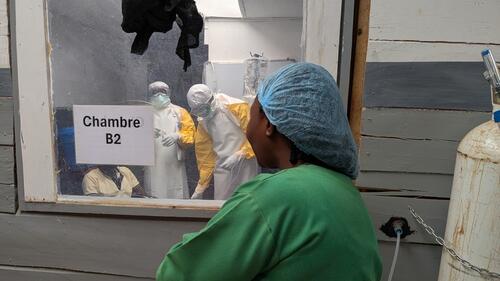
But it is the COVID-19 pandemic which resonates. This collection includes images from our response to the pandemic from around the world. But, strikingly, they cover a number of countries in which MSF teams responded on a scale which would have been unthinkable before the pandemic: nursing homes in Spain and the United States; hospitals in Brazil and Switzerland; refuges for vulnerable people in Belgium and France.

This selection of 53 images tell just some of the multitude of stories of our medical and humanitarian activities in over 80 countries over the last 12 months.
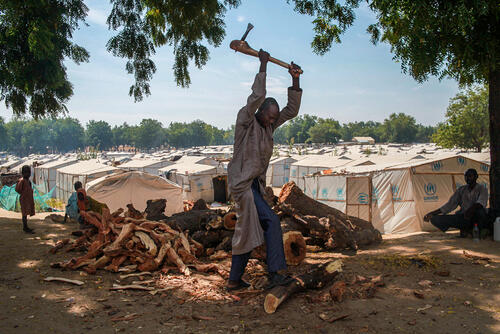
An IDP-camp resident in Bama chops firewood in the camp. Firewood is a precious commodity for many IDPs in Borno, and people often trade food and other essential items for it. Without fire and fuel to cook, IDPs cannot cook the food rations that are distributed for them.
A resident of a camp for internally displaced people in Bama, Borno state, chops firewood. It is a precious commodity for many displaced people in Borno and is often traded for food and other essential items. Without fire and fuel, people in the camps cannot cook the food rations they receive. Nigeria, December 2019.
Scott Hamilton/MSF
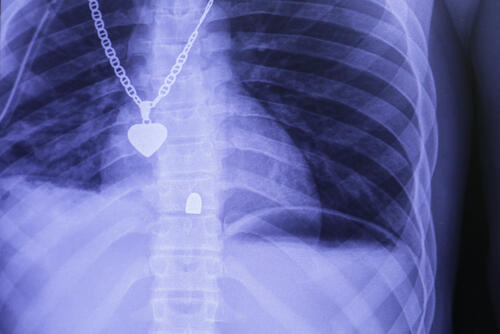
Hôpital de Tabarre, spécialisé dans les urgences traumatologiques, Port-au-Prince, Haïti, décembre 2019. Radiographie du thorax d'un patient victime d'un tir de pistolet. La balle s'est logée dans la colonne vertébrale. Il a été admis à l'hôpital MSF de Tabarre le dimanche 8 décembre. L'opération qu'il a subie a permise de vérifier l'absence de lésions des organes internes.
An X-ray taken at MSF’s emergency trauma hospital in the Tabarre area of Port-au-Prince. A bullet is lodged in the patient’s spine. Haiti, December 2019.
Nicolas Guyonnet/MSF
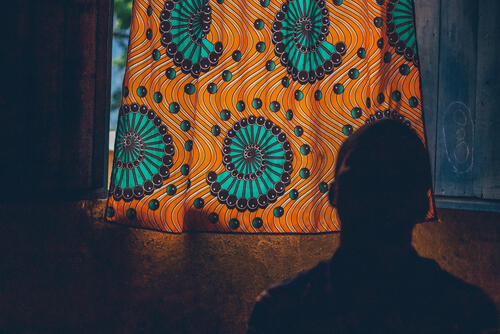
A young man has sought refuge in Itota, where we interview him, after having been violated by armed men in a nearby village.
A young man seeks refuge in Itota, South Kivu, after being raped by armed men in a nearby village. Democratic Republic of Congo, December 2020.
Davide Scalenghe/MSF
Marawi City, Lanao del Sur - Patients from the besieged city of Marawi and neighboring towns visit the Regional Health Office to avail of free medical check-up and consultations. 


Photo by Veejay Villafranca/MSF
Patients from the besieged city of Marawi and neighbouring towns in Lanao del Sur province visit the regional health office to have free medical check-ups and consultations. Philippines, January 2020.
Veejay Villafranca
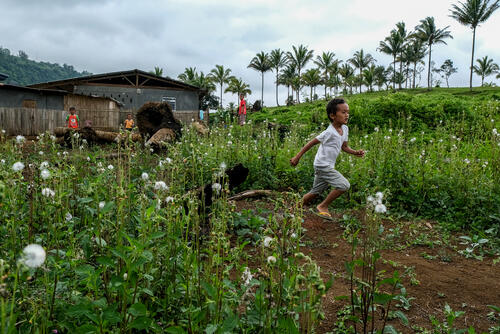
Lanao del Sur, Philippines - Displaced children play by the open fields near the Sagunsungan temporary shelter over two years since the siege of the capital, Marawi. 

Photo by Veejay Villafranca/MSF
Two years on from the siege of the capital, Marawi, displaced children play in the open fields near the temporary shelter in Sagunsungan, Lanao del Sur. Philippines, January 2020.
Veejay Villafranca
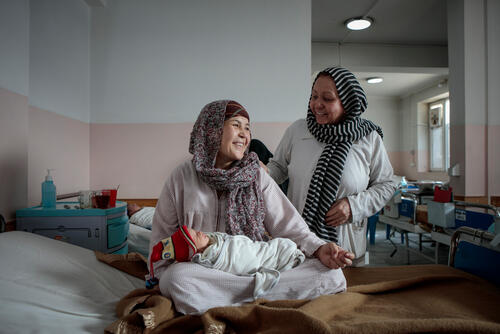
Zakia (32 ans), just gave birth to twins.
Zakia, 32, just after giving birth to twins at MSF’s 55-bed maternity wing at Dasht-e-Barchi hospital, west Kabul. Afghanistan, December 2019.
Sandra Calligaro
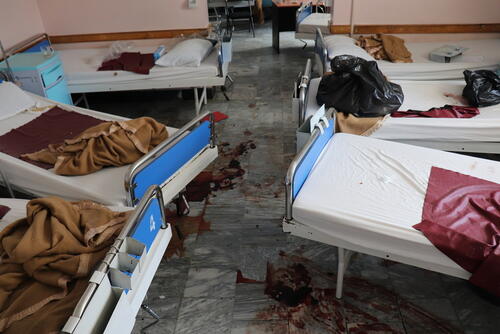
One of the wards in the maternity.
An unknown number of assailants stormed the maternity wing of Dasht-e-Barchi hospital in Kabul on Tuesday 12 May, at around 10 am local time. They carried out an assault that lasted for approximately four hours. During the attack, 16 mothers were systematically shot dead. An MSF midwife, two children aged 7 and 8, and six other people present at the time of the attack were also killed. Afghanistan, May 2020.
MSF
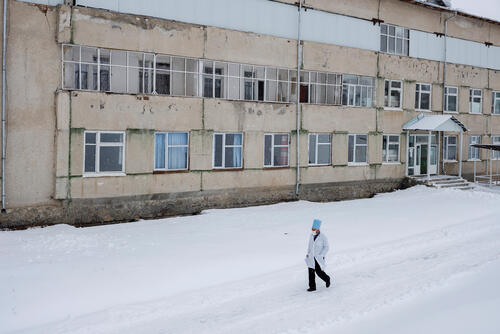
A local MoH doctor is walking alongside the Aydarken hospital.
A local Ministry of Health doctor walks in front of Aydarken hospital in the southwestern Kadamjay region of Kyrgyzstan. For the past four years, MSF has provided medical assistance in Kadamjay, where rates of some chronic diseases are among the country’s highest. Working closely with the Ministry of Health, our teams support district health authorities in the screening, diagnosis and prevention of ailments including diabetes, hypertension and anaemia. Kyrgyzstan, February 2020.
Maxime Fossat
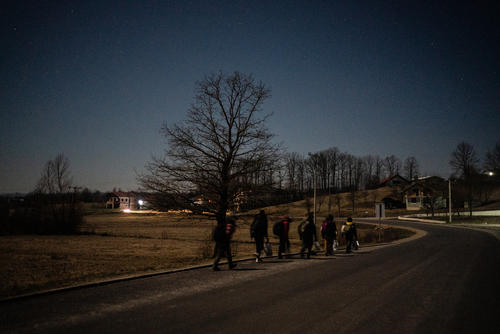
202002, Kristof Vadino, Bosnia, refugees,  migrants, walking between Velika Kladusa and Bihac, comming back from border
Refugees and migrants walk between Velika Kladuš and Bihać, near the border with Croatia. Bosnia and Herzegovina, February 2020.
Kristof Vadino
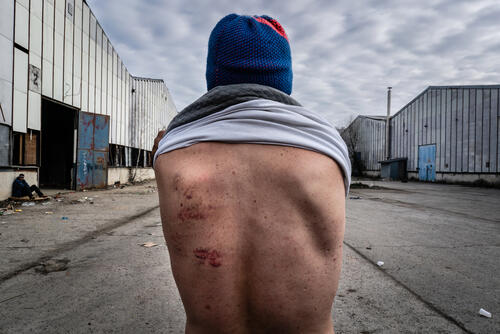
202002, Kristof Vadino, Bosnia, refugees,, migrant shows his wounds inflicted by Croation police, it is called 'The Factory', and is probably the biggst squad with very bad hygienic conditions, he came back from the border 2 days before
A migrant shows the wounds inflicted on him by the Croatian police. Two days earlier, he had come back from the Bosnian border with Croatia to a nearby squat in an abandoned former factory. Bosnia and Herzegovina, February 2020.
Kristof Vadino
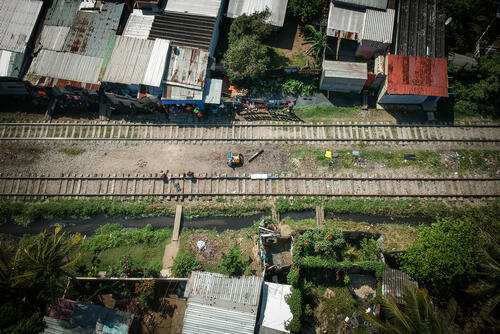
La Bestia, known as The Death Train, is the name of a network of freight trains that transport fuels, materials and other supplies along the railways of Mexico, but is also used as a means of transportation for migrants, mainly Salvadorans, Hondurans and Guatemalans, who seek to reach the United States.
‘La Bestia’ (or The Beast), known as The Death Train, is the name of a network of freight trains that transport fuel, cement and other goods along the railways of Mexico. It is also used as a means of transportation for migrants and asylum seekers ─ mainly Salvadorans, Hondurans and Guatemalans ─ who seek to reach the United States. Mexico, February 2020.
Léo Coulongeat/Hans Lucas
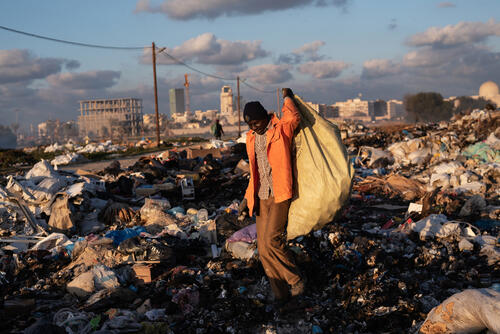
Mohammed, from Mali has lived in Libya since 2015. He wants to return to Mali but says at the moment hasn't enough money. He arrived in the country to escape the conflict and to find work to sustain him and his family. Since he arrived in Libya he has found work as a labourer for the municipality, but due to the low payment, he also collects scrap metals in the dump close to the entrance of the city to earn more money. He receives 1 Libyan Dinar (€0.64) for each 1kg of metal he collects.
Mohammed, from Mali, has lived in Libya since 2015. He wants to return to Mali but doesn’t have enough money. He came to escape the conflict in his country and to find work to sustain his family. He is a labourer for the municipality but, as his work is badly paid, he also collects scrap metals in a dump. He receives 1 Libyan dinar (€0.64) for each kilo of metal he collects. Libya, January 2020.
Giulio Piscitelli
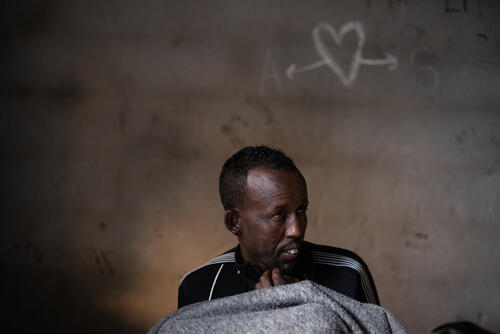
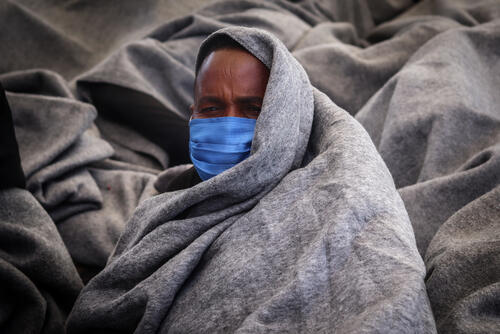
A Somali refugee in his accomodation in the district of Gorgi, south of Tripoli.
A Somalian refugee in his accommodation in the district of Gorgi, south of Tripoli. Libya, January 2020.
Giulio Piscitelli
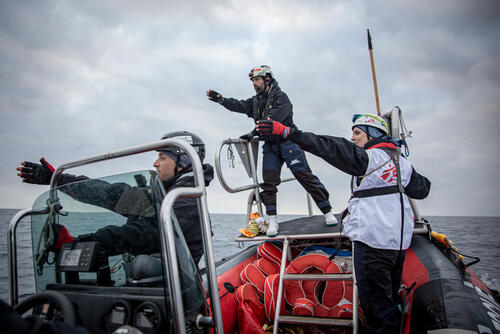
The MSF and SOS MEDITERRANEE teams were conducting simulation exercise of search and rescue at sea.
MSF and SOS MEDITERRANEE teams during a simulation exercise of search and rescue at sea between Marseille and the central Mediterranean. February 2020.
Anthony Jean/SOS MEDITERRANEE
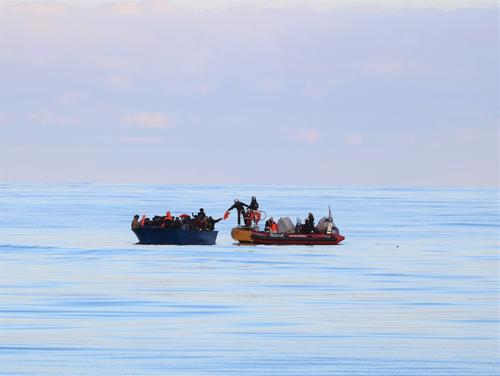
MSF and SOS MEDITERRANEE teams onboard Ocean Viking have just rescued 84 people from a dangerously overcrowded wooden boat, 71 NM from the coast of Libya. Luckily weather conditions were calm, as none of the survivors onboard the unseaworthy vessel were wearing a life jacket.
MSF and SOS MEDITERRANEE teams on board the Ocean Viking rescue 84 people from a dangerously overcrowded wooden boat, 71 nautical miles off the coast of Libya. Mediterranean Sea, February 2020.
MSF/Hannah Wallace Bowman
Phenduka Mtshali, a patient with Drug Resistant Tuberculosis (DR-TB), is seen at her home in Mbongolwane, South Africa speaking with MSF fieldworker, Celiwe Dlamini. Phenduka lives in Mbongolwane a rural area of South Africa’s KwaZulu-Natal province at the epicentre of South Africa’s HIV & TB epidemic and where MSF is currently piloting a model of care aimed at upgrading the TB treatment cascade.

Everybody Breathes is a package documenting how the lessons learnt from the initial phases of the ‘Bending The Curves’ initiative in South Africa are now being used by MSF in Eshowe to tackle TB. The package will document interventions the project is putting in place in collaboration with its partners to prevent the spread of TB, provide a link for patients to get tested, locate missing cases and ensuring patients remain on treatment with structures that fit into their lives.

Under embargo until 24/03/2020.
Phenduka Mtshali, a patient with drug-resistant tuberculosis (DR-TB), speaks with an MSF staff member at her home in Mbongolwane. This rural area of South Africa’s KwaZulu-Natal province is the epicentre of South Africa’s HIV and TB epidemic. MSF is piloting a model of care there to prevent the spread of TB. South Africa, March 2020.
MSF/Tadeu Andre
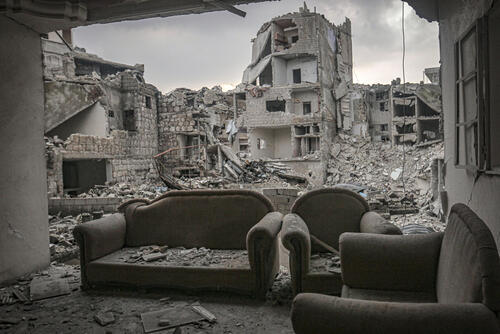
IDLIB, SYRIA - FEBRUARY 19: Abandoned and destroyed buildings are seen in Ariha district in Idlib, Syria on February 19, 2020. Ariha district located in south of Idlib has turned into a ghost town while civilians were fleing towards Turkish border due to the attacks of the Bashar al-Assad regime and its supporters. (Photo by Muhammed Said/Anadolu Agency via Getty Images)
Abandoned and destroyed buildings in Ariha district in Idlib. The district resembles a ghost town, as civilians have fled towards the Turkish border because of attacks by the Bashar al-Assad regime and its supporters. Syria, February 2020.
Muhammed Said/Anadolu Agency via Getty Images
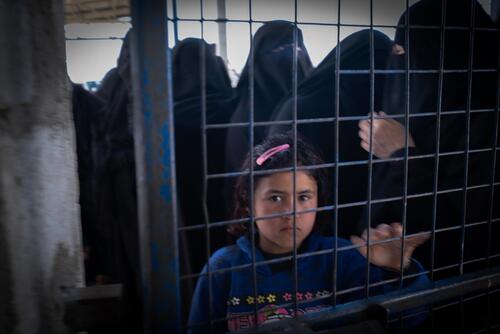
A young girl looking through a closed fence in Al Hole Camp, Eastern Al- Hasakah Governorate, Northeastern Syria. 09/03/2020
A young girl looks through a fence in Al-Hol camp, eastern Hassekeh governorate. Syria, March 2020.
Ricardo Garcia Vilanova
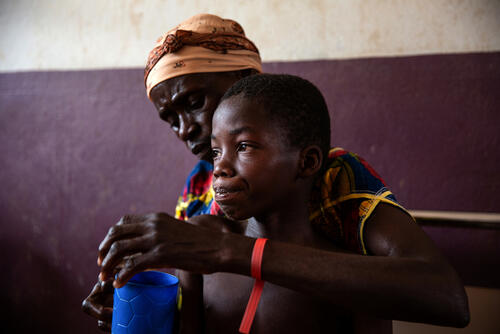
Maxime and Yvonne in the measles hospital ward. 

“I have insisted with my family to take Maxime to the health post, I knew it was measles. We haven’t had anybody getting sick from this disease for years; however I recognised the symptoms because I remember the last epidemic, when I was a child” says Yvonne.

“At that time, the traditional medicine was the only remedy, and there were no NGOs, doctors or hospitals in this region. Nowadays the situation has improved, we have a bit more access to healthcare, but it’s not enough: children are still dying in my community” says Yvonne.

Maxime has been sick at home for three days, he had fever and he didn’t want to eat. Yvonne comes from Bofiré, a village a few kilometers away from Benzambé MSF supported health post, where she first took Maxime while being sick. In her community, many children suffer from measles, and most families prefer to treat the disease with traditional medicine.  

Maxime was brought to the MSF supported medical centre in Benzembe village as he was very ill with measles and needed hospitalisation. He was taken to the MSF supported hospital in Bossangoa, where his father’s first wife, Yvonne, accompanied him. His mother, Balantine, stayed home in Bofiré, a village at about 45 km distance from Bossangoa, and close to Benzembé.

Yvonne is the first wife of Maxim's father and Maxime is a child of the second wife Balantine. Yvonne’s children are grown up, and they have left years ago, but she stayed in her husband’s house to help the Balatine to take care of her children.

Patients who are referred by MSF mobile clinics to the hospital can come with a care giver, who is often a relative, a tutor or someone close in the community.
Yvonne and her son Maxime in the measles ward of Bossangoa hospital. Yvonne recognised her son’s symptoms from the last epidemic, when she was a child. She says traditional medicine was the only option at that time, as there were no NGOs, doctors or hospitals in the region. Although the situation has improved, Yvonne says it’s not enough and children are still dying in her community. Central African Republic, March 2020.
James Oatway
Salamatou (28) has four children; Rukaya (7); Aissatou (4); Ahmadou (3) and  Abdouraman (2) – Her eldest kids have been already vaccinated, and she came back today for the other two. Salamatou is a Peulh woman who joined the local community with her family five years ago, when she had to flee from her native village on the border with Cameroon. Armed groups targeted her community, and killed her father. She had to leave everything behind and seek refuge in Besson, where she started a new life.
Salamatou brings her children to be vaccinated against measles and pneumococcal infections in Besson during MSF’s vaccination campaign in the Baboua-Aba health district. Salamatou and her family started a new life in the local community five years ago, after fleeing from their village on the border with Cameroon. Armed groups targeted their community and killed Salamatou’s father. Central African Republic, March 2020.
James Oatway
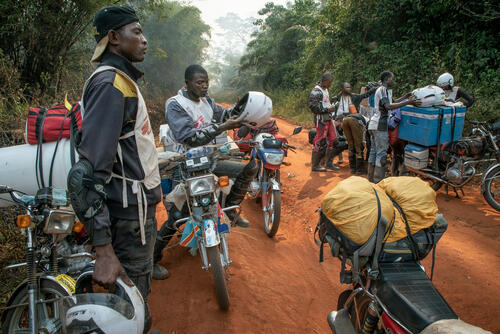
Measles vaccines are being delivered by motorbike from Lisala to Boso Manzi, Mongala province, a hard-to-reach area of Northern DRC badly hit by the measles epidemic. In February 2020, MSF sent here emergency teams to set up treatment and vaccination activities.


Des vaccins contre la rougeole sont acheminés en moto depuis Lisala jusque Boso Manzi, dans la province de la Mongala, une région du nord de la RDC difficile d’accès et durement frappée par l’épidémie de rougeole. En février 2020, MSF y a déployé une équipe d’urgence pour mener une vaste intervention de vaccination et de prise en charge.
Measles vaccines are taken by motorbike from Lisala to Boso Manzi, Mongala province, a hard-to-reach northern area badly hit by a measles epidemic. MSF sent emergency teams to set up treatment and vaccination activities. Democratic Republic of Congo, February 2020.
MSF/Caroline Thirion
MSF surgeons are providing care to Paul* , who was was attacked on the road by armed men who tortured him and shot him five times. He survived his wounds and is being treated by at St Mary Hospital in Bamenda, North-West Cameroon.
(*name has been changed for security reasons)
MSF surgeons provide care to a patient at St Mary Hospital in Bamenda, Northwest region. He was attacked on the road by armed men, who tortured him and shot him five times. Cameroon, March 2020.
Albert Masias/MSF
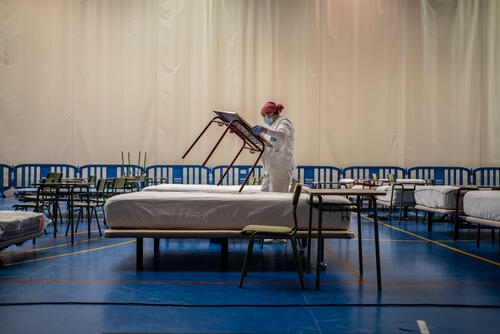
Hospital instalado por Medicos Sin Fronteras para tratar enfermos de coronavirus  en Leganes.
Foto: Olmo Calvo /MSF
A hospital set up by MSF to treat COVID-19 patients in Leganés. Spain, March 2020.
Olmo Calvo
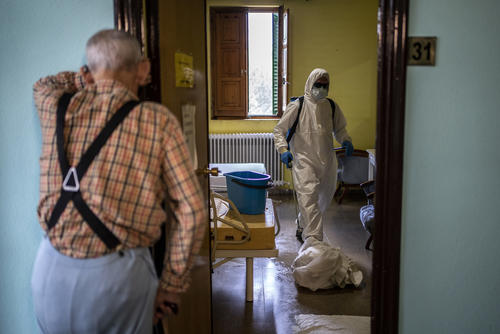
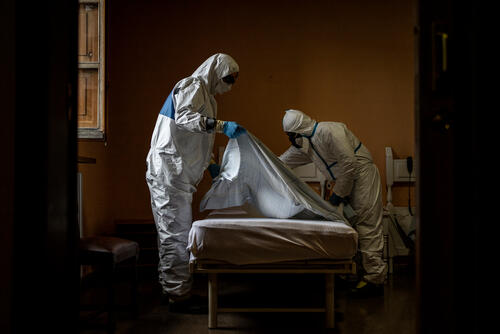
MSF acompaña a voluntarios de los bomberos para desinfección de espacios, establecimiento de circuitos y traslado de pacientes en función de las zonas designadas por su status sanitario en la Residencia Nuestra Señora de las Mercedes de El Royo (Soria).
Local firemen disinfect Residencia Nuestra Señora de las Mercedes, a care home for the elderly in El Royo, Soria province. Spain, April 2020.
Olmo Calvo/MSF
MSF acompaña a voluntarios de los bomberos para desinfección de espacios, establecimiento de circuitos y traslado de pacientes en función de las zonas designadas por su status sanitario en la Residencia Nuestra Señora de las Mercedes de El Royo (Soria).
The local fire brigade helps during the relocation of residents at the elderly care home Residencia Nuestra Señora de las Mercedes in El Royo, Soria province. Spain, April 2020.
Olmo Calvo/MSF
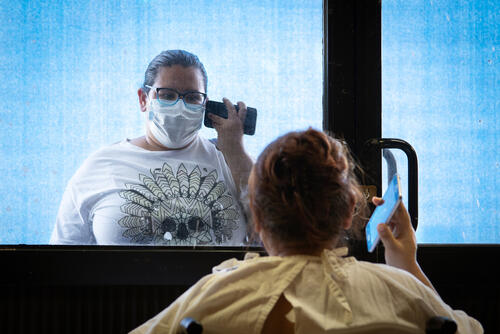
A patient is visited by her family at COVID-19 centre in Matamoros.
A patient receives a visit from her family at a COVID-19 centre MSF opened in Matamoros, Tamaulipas state, in coordination with the local health authorities. Mexico, April 2020.
MSF/Arlette Blanco
Switzerland, COVID-19 response in Intensive care unit of HUG. April 14, 2020. ©Nora Teylouni / MSF
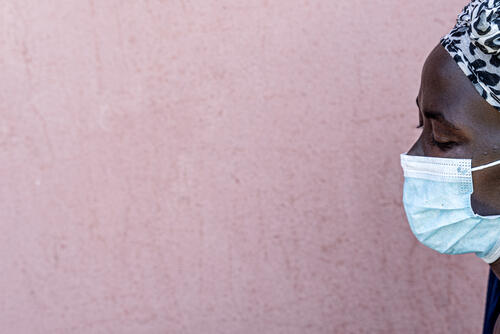
In the intensive care unit of Geneva’s university hospital, where MSF supported the medical response to COVID-19. The focus was on managing patients with the new coronavirus and organising medical teams and services in the hospital. Switzerland, April 2020.
Nora Teylouni/MSF
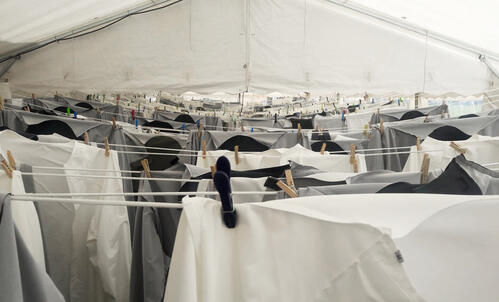
Because of the lack of re-usable aprons MSF constructed 'Washing streets’ in three hospitals in Antwerp (Flanders, Belgium). With the MSF expertise on washing and disinfection from other contexts where we are working (ex. Ebola) we have reached a ‘process’ that can clean and disinfect re-usable aprons in Belgium.

The used (dirty) aprons are put in a specific in a washing machine cycle with a 2 in 1 washing powder that can clean and disinfect. After the cycle the washed (clean) aprons are controlled on quality (holes, dirt, …). After the control the aprons need to dry before folding and going back to the COVID-services in the hospital for use.

We are washing, disinfecting and drying in each hospital around 500 aprons a day with 5 washing machines and 6 people.
A lack of re-usable aprons prompted MSF to set up 'washing zones’ as part of our COVID-19 response in three hospitals in Antwerp. Through our experience in other contexts ─ for example, Ebola ─ we have a process for cleaning and disinfecting re-usable aprons. We washed, disinfected and dried around 500 aprons a day in each of the Antwerp hospitals. Belgium, April 2020.
MSF
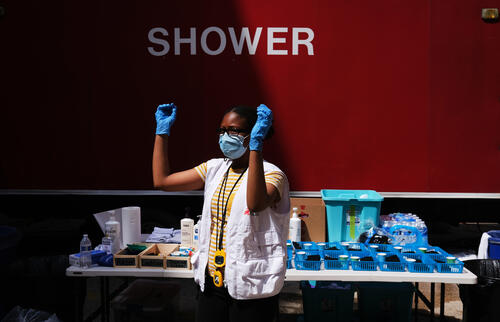
On April 22, MSF opened a shower trailer in Manhattan, offering free warm showers to the homeless and other people who currently lack access to hygiene facilities. Visitors also receive free toiletries, as well as clean socks and underwear.
In April, MSF opened a shower trailer in Manhattan, New York City, offering free warm showers to the homeless and other people lacking access to hygiene facilities. Visitors received free toiletries, as well as clean socks and underwear. United States of America, May 2020.
Spencer Platt/Getty Images
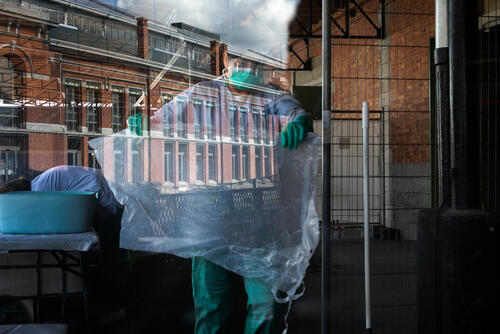
Sara (voliunteer from La Plateforme Citoyenne de Soutien aux Réfugiés) in the washing and disinfecting area for protective equipment used in the patients area. The support of volunteers from other organizations is key in this project.
Sara, a volunteer from the Plateforme Citoyenne de Soutien aux Réfugiés, in the washing and disinfecting area of our COVID-19 treatment facility for vulnerable people in the Tour & Taxis neighbourhood of Brussels. The support of volunteers from other organisations was key to this project. Belgium, April 2020.
Albert Masias/MSF
two workers at Al-Sahul COVID-19 centre are trying to carry the oxygen bottle in order to transfer it to inside the ICU,  provide oxygen for COVID-19 patients it's  a long and exhausting job.

 “I never before considered how many litres of oxygen a cylinder holds and how many cylinders a patient needs. In Ibb I quickly learned that a patient with moderate to severe COVID-19 symptoms needs about 6 cylinders a day. Any interruption in the provision of oxygen can be deadly.” Said Cristina nurse activity manager for MSF in Al-Sahul COVID-19 treatment centre.
Workers at Al-Sahul COVID-19 treatment centre, Ibb governorate, carry an oxygen cylinder to the intensive care unit. A patient with moderate to severe COVID-19 symptoms needs around six cylinders a day and any interruption in the provision of oxygen can be deadly. Yemen, July 2020.
MSF/Majd Aljunaid
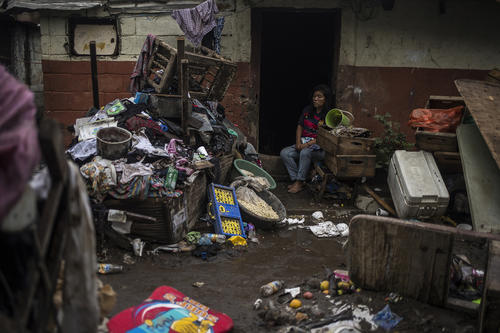
María Turcios and her five children swam to save their lives on Sunday, May 31. The water reached the roof of the house and broke the door hinges. Her belongings are on the street and all her food is lost.
María Turcios shares how she and her five children swam to save their lives on 31 May during the devastating cyclone Tropical Storm Amanda. El Salvador, June 2020.
Victor Peña/El Faro
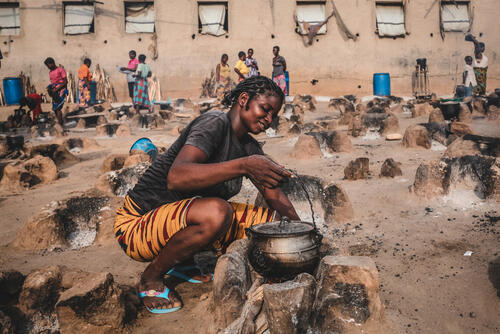
A young woman cooks an evening meal for her family in an open-air cooking area Abagana camp.
A young woman prepares an evening meal for her family in an open-air cooking area of Abagana camp for displaced people in Benue state. Nigeria, June 2020.
MSF/Scott Hamilton
Portrait of Soma Sediqi and her husband.
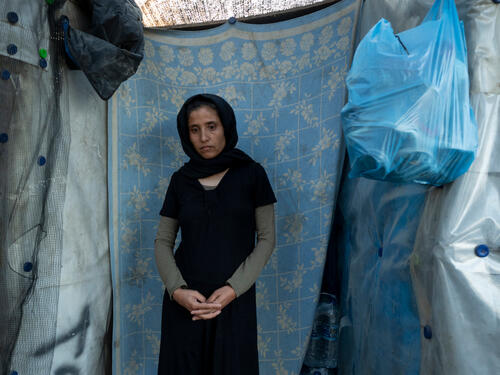
Soma Sediqi and her husband  are from Kabul. They have two baby children. 
“Life in Afghanistan was impossible. Every day there was violence and bombings. There was no future for our family and no medical treatment for me.
When you leave your place, you get to a point where you cannot go back. I have met people who said they would rather die than go back. I would never want to go back. Fear of explosions and bombs cannot be compared to anything.”

"We arrived in Lesbos in June 2018. Moria camp was horrible and scary. I was afraid all the time. Every day was a traumatic experience."
The family stayed in a container with 20 other people for five months before being transferred to Athens. But after they received refugee status, they were told to leave their accommodation.

We didn’t expect this. They surprised us. One day we just saw someone else in our room and they told us ‘we have moved all your stuff to the entrance of the hotel'.
My son has a severe medical condition that affects the normal development of the kidney. My husband was born with polio, an infectious disease that resulted in the complete paralysis of his left leg.”

Despite the eviction, the young parents managed to enroll in the Helios programme and they moved to an apartment in Athens. However, the programme only lasts six months, and so the family will soon face the streets again.

“We borrowed money from everyone we know. We needed to give one month’s rent in advance and one month’s deposit, in total 700 euros. The rent is 246 euros while we get 396 per month. Mostly the fridge is off, the light is off, we try to not use electricity. And soon we will have to leave this place, too. 
I am very thankful for many things and I have met many great people in Greece. There are things that work well in this system. But the government should see us as people and not as numbers.”
Soma Sediqi, her husband and two babies left the violence and bombings in Kabul, Afghanistan and arrived in Moria camp on the Greek island of Lesbos in 2018. The family stayed in a container with 20 other people for five months before being transferred to Athens. But after being granted refugee status, they were told to leave their accommodation. Greece, August 2020.
Enri CANAJ/MAGNUM Photos for MSF
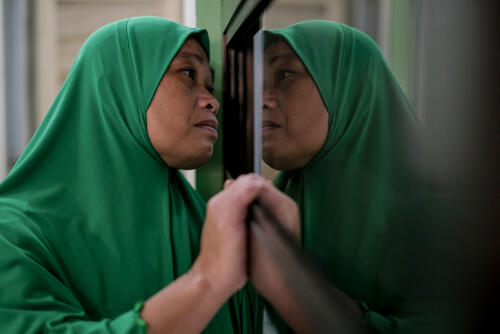
Misria 33 years old from Afghanistan has been living in Moria since 10 months.
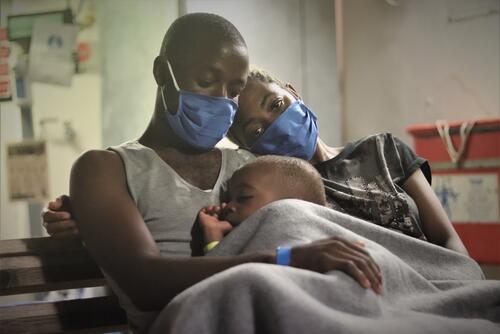
"I feel I can't be a mother any more. My hands are getting parylized and I can't wash or cook for my children. I feel exhausted and deeply sad, my heart is crying all the time."
In the last 4 months she could not use medication for her mental health as she’s 5 months pregnant.
Lesbos, Greece -July 2020
Misria, 33, from Afghanistan, had been living in Moria camp on the Greek island of Lesbos for 10 months when this photo was taken. She said she felt exhausted and deeply sad, that her heart was ‘crying all the time’. She was unable to take medicine for her mental health as she was five months pregnant. Greece, July 2020.
Enri CANAJ/Magnum Photos for MSF
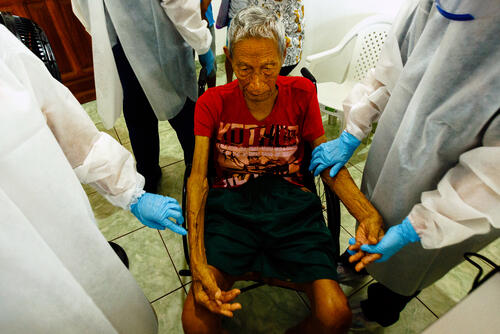
The MSF team helps 99-year-old patient Antonio Castro at the MSF care center for mild and moderate cases of COVID-19 in São Gabriel da Cachoeira. He was under observation for a few days with breathing difficulties.
An MSF team at our care centre for mild and moderate cases of COVID-19 in São Gabriel da Cachoeira helps 99-year-old patient Antonio Castro. He had breathing difficulties and was kept under observation for a few days. Brazil, July 2020.
Diego Baravelli
Brazil, July 2020.
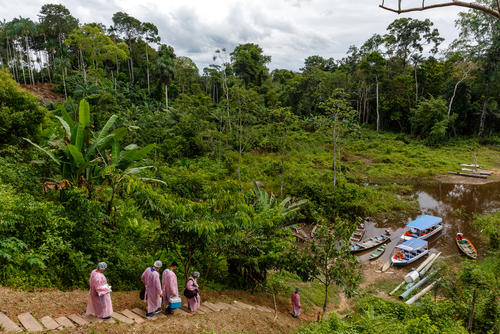
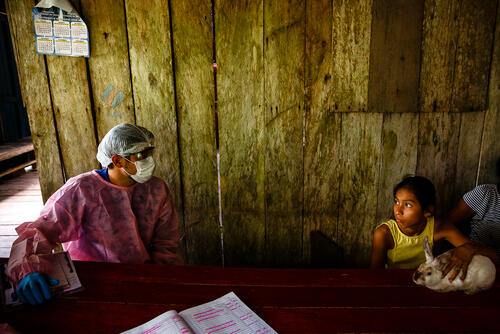
MSF and municipal health staff return to the boats they used to reach a community living on the shores of Lake Mirini in the Amazon region. They have carried out house-to-house routine screening and vaccinations. Brazil, July 2020.
Diego Baravelli
Municipal health system's worker talks to family during house-to-house visit in lake Mirini region.
A municipal health worker talks to a family during house-to-house visits on the shores of Lake Mirini in the Amazon region. Brazil, July 2020.
Diego Baravelli
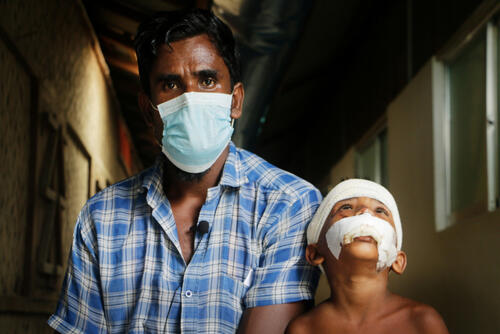
Abu Siddik is from Rakhine state in Myanmar. He now lives in a refugee camp in Cox’s Bazar with his two daughters, three sons and his wife. In the photo, he is at the MSF Kutupalong hospital with his five-year-old son Rashid Ullah, who is recovering from some wounds.
Abu Siddik (left) is from Rakhine state in Myanmar. He lives with his family in one of the camps in the Cox’s Bazar district of southeastern Bangladesh, where around 860,000 Rohingya refugees are crammed into 26 square kilometres of land. Here, he is at MSF’s Kutupalong hospital with his five-year-old son Rashid Ullah. The hospital has served Rohingya refugees and the local Bangladeshi community since its opening in 2009. Bangladesh, August 2020.
Hasnat Sohan/MSF
An MSF watchman on duty at the entrance of MSF Peshawar Women’s Hospital. He wears personal protection equipment. During the COVID-19 pandemic, the watchman checks temperature of all the staff entering the hospital for work.
An MSF watchman wearing personal protective equipment on duty at the entrance of our Women’s Hospital in Peshawar. During the COVID-19 pandemic, he checks the temperature of all staff entering the hospital for work. Pakistan, September 2020.
MSF/Nasir Ghafoor
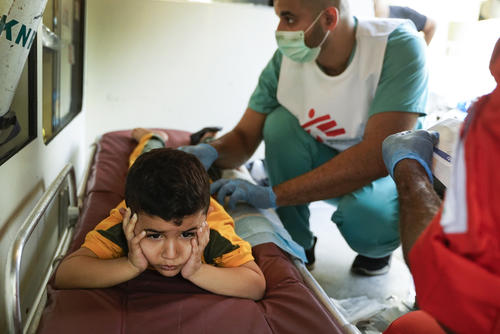
Hamza is four years old. He is receiving wound care treatment in the MSF medical point in Karantina, Beirut. MSF has established a fixed point in the Mar Mikhael and Karantina neighborhoods in Beirut, two of the areas most impacted by the blast, to provide medical support to the people affected by the explosion. The team provides wound care (dressings), rapid consultations for people with non-communicable diseases, as well as psychological first aid.
Four-year-old Hamza receives wound care treatment at MSF’s medical point in Karantina, Beirut. We set up medical points in the Mar Mikhael and Karantina neighbourhoods, two of the areas most impacted by the blast. Our team provides wound care (dressings), rapid consultations for people with non-communicable diseases, as well as psychological first aid. Lebanon, August 2020.
Mohamad Cheblak/MSF
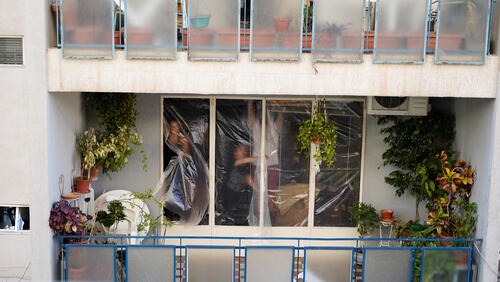
Residents covering their windows with plastic sheets. Thousands of apartments and shops were damaged due to the explosion which caused shattering to the glass windows and wooden doors. Beirut's streets were covered by debris and broken glass.
Beirut residents cover their windows with plastic sheets. Thousands of apartments and shops were damaged in the 4 August explosion and the streets were covered in debris and broken glass. Lebanon, August 2020.
Mohamad Cheblak/MSF
SeaWatch4 already has 201 survivors on board, denied a place of safety until date release of this photo. Yet as EU & maritime authorities again turn a deaf ear to the cries of  people in distress at sea - and despite still being over 6hrs away - the ship has altered course toward MVLouiseMichel.
Mediterranean sea, August 2020: The Sea-Watch 4 had 201 survivors on board, denied a place of safety. As EU and maritime authorities again turned a deaf ear to the cries of people in distress at sea ─ and despite being over six hours away ─ the ship had altered course to transfer people from the Louise Michel, the only other search and rescue vessel active at the time in the central Mediterranean.
MSF/Hannah Wallace Bowman
Souleman was rescued on 23 August from a rubber boat in distress, along with his wife Layla and 2-year-old son Cillian, during the maiden voyage of the Sea-Watch 4. They were disembarked to a quarantine ferry in Palermo in Sicily on 2 September.
Souleman, his wife Layla and their two-year-old son Cillian were rescued on 23 August from a rubber boat in distress during the maiden voyage of the Sea-Watch 4. They were disembarked to a quarantine ferry in Palermo, Sicily on 2 September. Mediterranean Sea, August 2020.
Hannah Wallace Bowman/MSF
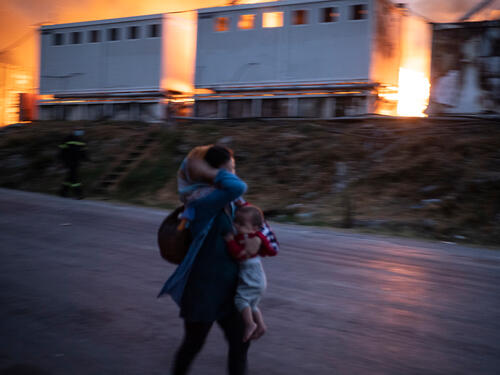
GREECE. Lesbos, 09 September 2020. Moria camp. The day-after a fire destroyed the majority of the refugees camp another major fire erupted and the totality of the camp has been burned.
The day after a fire destroyed most of Moria refugees camp on the Greek island of Lesbos, another fire broke out and the totality of the camp was burned down. Greece, September 2020.
Enri CANAJ/Magnum
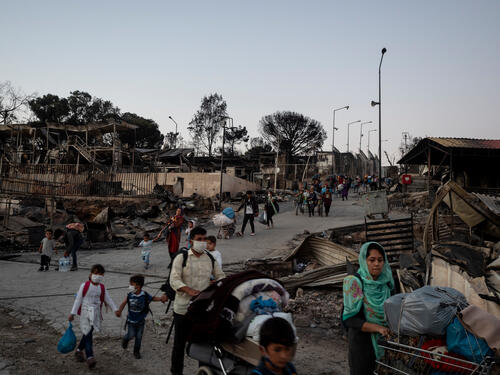
GREECE. Lesbos, 09 September 2020. Moria camp. The day-after a fire destroyed the majority of the refugees camp. Refugees and asylum seekers leaving the camp.
Refugees and asylum seekers leave Moria camp on the Greek island of Lesbos, the day after a fire destroyed most of it. Greece, September 2020.
Enri CANAJ/Magnum
South Sudan. The Greater Pibor Administrative Area. Lanyeri. September 10, 2020. A boy measuring his weight at MSF’s clinic in Lanyeri payam. An MSF (Médecins Sans Frontières) mobile clinic brings life-saving medical care to Lanyeri after the flooding has made the roads impassable.
Following heavy floods that threatened the lives of thousands of people in the Greater Pibor Administrative Area, a boy is weighed at MSF’s mobile clinic in Lanyeri payam. The clinic brings life-saving medical care to this area where the flooding has made roads impassable. South Sudan, September 2020.
Tetiana Gaviuk/MSF
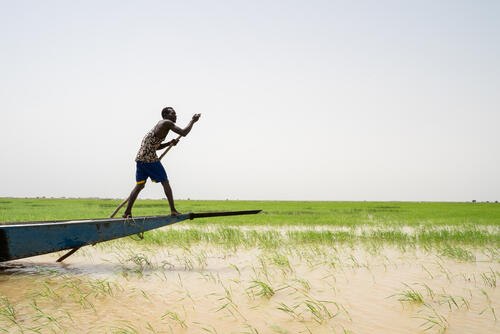
A boatman crossing the Niger river in Timbuktu region, northern Mali.
A boatman crossing the Niger river in Timbuktu region, northern Mali, during the mass measles vaccination campaign carried out by MSF and the Ministry of Health. Mali, September 2020.
MSF/Mohamed Dayfour
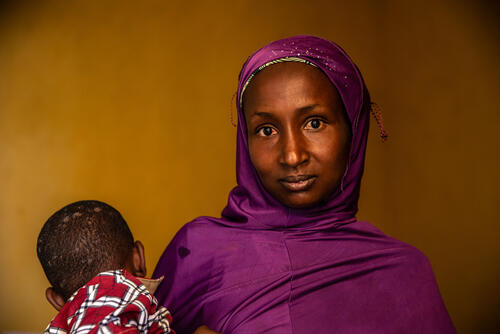
Mariam Maïga, who lives in Tassakane, with her son who is being vaccinated against measles.  The vaccination campaign with the Ministry of Health aims to vaccinate 95% of children aged between 6 months and 14 years against measles.
Mariam Maïga (left) has brought her son to be vaccinated against measles during a campaign carried out by MSF and the Ministry of Health in Timbuktu region. The campaign aims to vaccinate 95 per cent of children aged between six months and 14 years against measles. Mali, September 2020.
MSF/Mohamed Dayfour
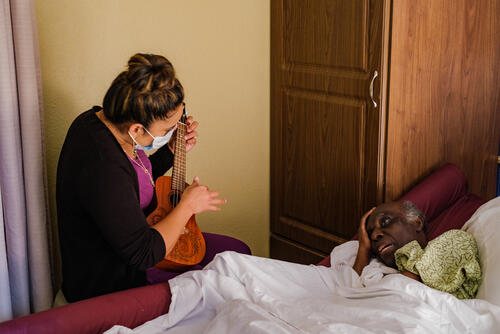
Adelia Patterson, wellness and life enrichment director at Focused Care at Beechnut long-term care facility, plays her ukelele while both she and the resident sing. MSF conducted infection prevention and control (IPC) training and mental health and wellness training with medical and non-medical staff at Beechnut and other nursing homes in Houston, Texas, during the summer and fall of 2020.
Adelia Patterson, wellness and life enrichment director at Focused Care at Beechnut longterm care facility, plays her ukelele while she and the residents sing. MSF conducted infection prevention and control training and mental health and wellness training with medical and non-medical staff at Beechnut and other nursing homes in Houston, Texas, between July and October. United States of America, October 2020.
Christoper Lee
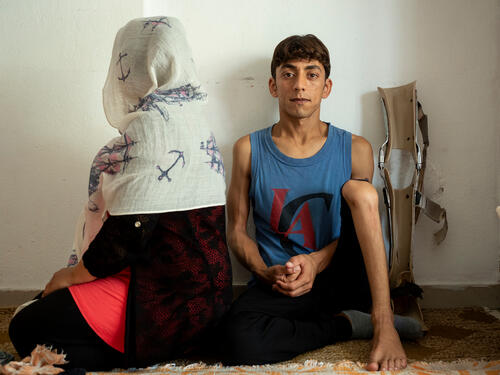
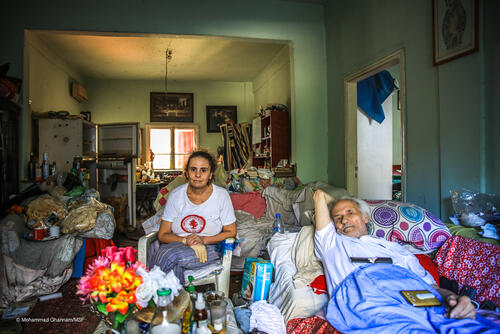
Chahadeh Tabbal is 86 years old. He and his daughter Hoda, 60, are unemployed because of the Lebanese economic crisis. The only support they receive is from local associations and Chahadeh's other daughter, who helps them. They live in the Geitawi neighbourhood of Beirut, which is located near the site of the August 4 explosion that annihilated the city's port. Their windows were shattered in the blast but they do not have the money to repair them. They are waiting for the help of an association to repair their house.
Eighty-six-year-old Chahadeh Tabbal and his daughter Hoda, 60, in their home in the Geitawi neighbourhood of Beirut, two months after the devastating explosion that tore through the city. Their windows were shattered in the blast, but they don’t have the money to repair them. Lebanon, October 2020
Mohammad Ghannam/MSF
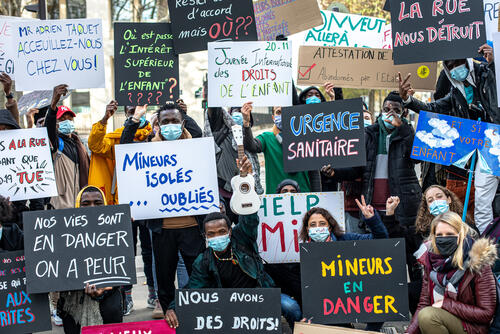
A l'occasion de la journée internationale des droits de l'enfant, une cinquantaine de mineurs isolés étrangers se sont rassemblés ce matin devant le Ministère des Solidarités et de la Santé. Avec MSF, le Comité pour la Santé des Exilé.e.s (Comede), les Midis du MIE, TIMMY - Soutien aux Mineurs Exilés et Utopia 56 ils demandent le droit à un hébergement qui leur permettrait à eux aussi de se confiner et de se protéger de la COVID-19. 
Une centaine de mineurs isolés étrangers sont encore contraints de survivre à la rue à Paris, le double en Ile-de-France.
On the International Day of the Rights of the Child, around fifty unaccompanied foreign minors gather in front of the Ministry of Solidarity and Health in Paris. With MSF, local organisations are asking for the right to accommodation that would also allow the young people to be confined and to protect themselves against COVID-19. Around one hundred unaccompanied foreign minors are still forced to survive on the streets of Paris. France, November 2020.
NICOLAS GUYONNET/MSF/MSF
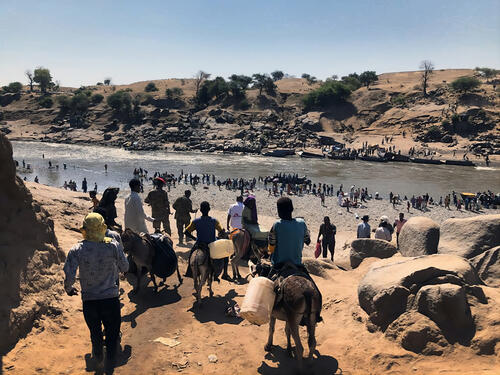
The Hamadayet border crossing, where refugees from Ethiopia cross the river into Sudan. New arrivals take whatever belongings they can carry with them, some have their livestock’s and  others left with nothing.
The Hamadayet border crossing, where refugees from Ethiopia cross the river into Sudan. New arrivals bring whatever belongings they can carry with them; some have their livestock, others left with nothing. Hamadayet, November 2020.
Jason Rizzo/MSF