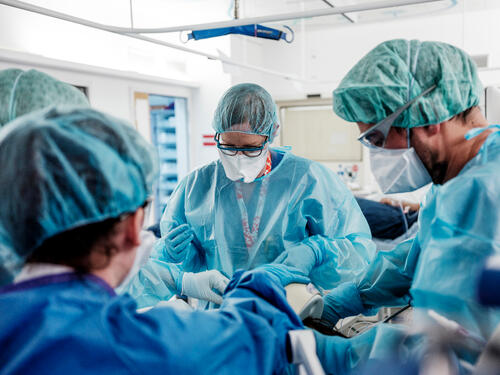
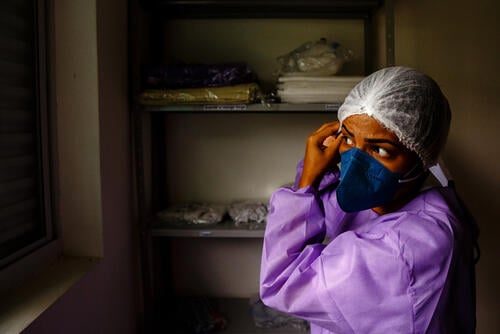
A health worker wears the personal protective equipment before entering the control area of the MSF care center for mild and moderate cases of COVID-19 in São Gabriel da Cachoeira. The facility was specifically adapted to suit local traditions; over 90 percent of the population of São Gabriel da Cachoeira is of indigenous origin. In the care centre, for example, indigenous patients with COVID-19 can remain for the duration of treatment with a carer, something that is not usually allowed in hospitals. Hammocks are available for patients and companions. In addition, traditional medicines used by many people in the region are accepted at the centre and can be taken together with the treatment offered by MSF, as long as their combination does not cause any adverse effects. Shamans, spiritual leaders of indigenous communities, can visit and perform rituals. The only requirement is that they use personal protective equipment to avoid being contaminated while in contact with the patient.
Médecins Sans Frontières

International Activity Report 2020

A health worker wears the personal protective equipment before entering the control area of the MSF care center for mild and moderate cases of COVID-19 in São Gabriel da Cachoeira. 
© Diego Baravelli/MSF
Ebola disease in DRC: find out how we're responding
Learn more

Foreword

The spread of COVID-19 around the world presented MSF with extraordinary challenges in 2020. It also exposed the weaknesses of many health systems and exacerbated the suffering of people in countries where we were already working before the pandemic. As the epicentre of the global public health crisis shifted, we lent our expertise in emergency response and infectious disease control to health authorities and medical staff in certain countries for the first time in our history. 

Although we had to suspend our services in some locations, the relentless commitment and efforts of our teams allowed us – for the most part – to ensure that the communities we serve could still have access to surgery, mother and child care, vaccinations and treatment for other infectious and non-communicable diseases.  
2020 in review

The year 2020 was extremely challenging for people all over the world, as they experienced extraordinary levels of disease, loss, fear and isolation due to the COVID-19 pandemic and its consequences. In many countries where Médecins Sans Frontières (MSF) works – and some in which we normally don’t – the pandemic exacerbated existing healthcare issues caused by conflict, displacement and poverty.

In one of the most demanding years in our almost half-century of providing assistance, our teams worked in nearly 90 countries to respond to COVID-19 and other emergencies, violence and disease outbreaks, that were made more complex by the pandemic.
Feature articles
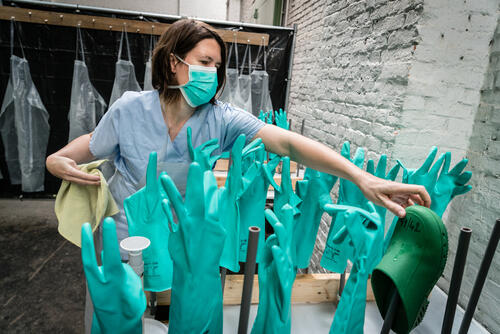
A volunteer from the La Plateforme Citoyenne de Soutien aux Réfugiés in protection equipment cleaning area. The support of volunteers from other organizations is key for the project.
A volunteer from the La Plateforme Citoyenne de Soutien aux Réfugiés in the protection equipment cleaning area of the COVID-19 treatment centre in the Tour et Taxis neighbourhood of Brussels. Belgium, April 2020. 
© Kristof Vadino
01 / 03

Keeping pace with the pandemic: MSF’s global COVID-19 response

Read More
International Review of the Year 2020
video

International Review of the Year 2020

International Review of the Year 2020

The whole world will certainly remember 2020 as the year of the coronavirus outbreak. It increased pressure on already fragile health systems, and seriously complicated humanitarian response. But the virus did not eradicate conflict, natural disasters, population displacement or epidemics. Consequently, for our teams, 2020 was one of the most demanding years in almost 50 years of activities.

Our activities around the world in 2020

Our teams conducted medical activities in 88 countries in 2020. Click on the map to find out more.

Facts and figures
Facts and figures

Our activities in figures
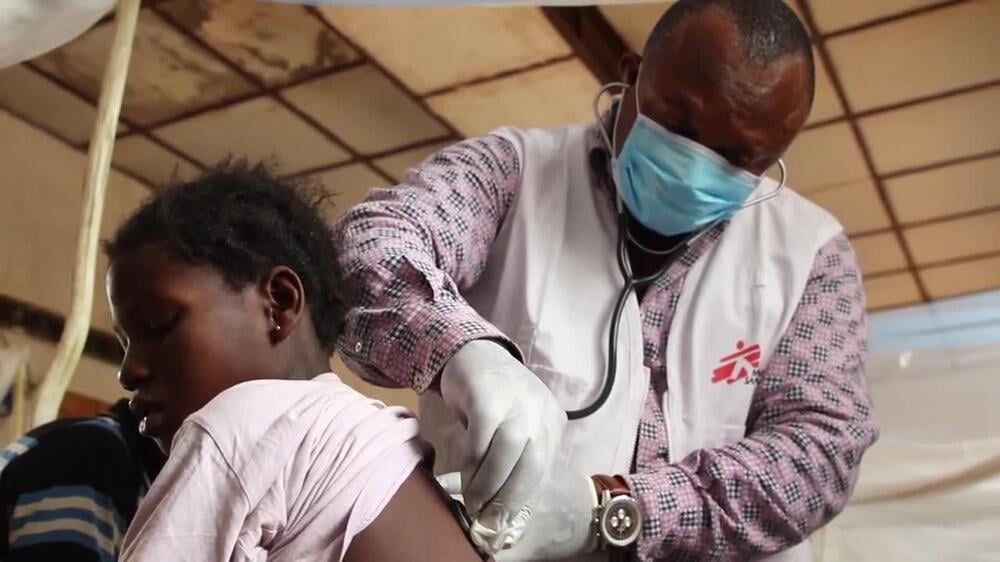
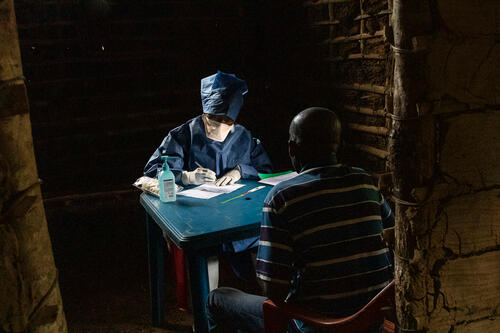
Dr Tathy, an MSF doctor, sees patients considered as non-Ebola suspects in consultation, as part of the mobile intervention clinic and training of local medical staff in the Ebola context, in the village of Bobua. This decentralization-based device aims to detect and isolate, if necessary, any person presenting symptoms close to Ebola (fevers, diarrhea, headaches, bleeding, etc.). But at the same time to treat other pathologies which are rife in the area, such as malaria or severe acute malnutrition. This is in order to increase the acceptance of MSF by the population in the area, and to avoid the stigmatization that affects Ebola patients, by getting as close as possible to the patients, and taking care of them where they live. Bobua.

***

Dr Tathy, médecin MSF, reçoit en consultation des patients considérés comme non suspects Ebola, dans le cadre des activités de clinique d'intervention mobile et de formation du personnel médical local en contexte Ebola, dans le village de Bobua. Ce dispositif axé sur la décentralisation, a pour but de déceler, et isoler le cas échéant, toute personne présentant des symptômes proches d'Ebola (fièvres, diarhhées, céphalées, saignements...). Mais de soigner en même temps d'autres pathologies qui sévissent dans la zone, telles que le paludisme ou la malnutrition aïgue sévère. Ceci afin d'augmenter l'acceptance de MSF par la population dans la zone, et d'éviter la stigmatisation qui affecte les patients Ebola, en se rapprochant au plus près des patients, et en les prenant en charge sur leur lieu de vie. Bobua.

9,904,200

outpatient consultations
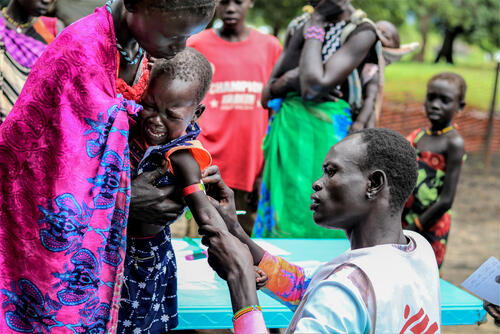
South Sudan. The Greater Pibor Administrative Area. Lukurunyang payam. September 7, 2020. An MSF (Médecins Sans Frontières) mobile clinic brings life-saving medical care to Lukurunyarg after the flooding made the roads impassable.

1,008,500

vaccinations against measles in response to an outbreak
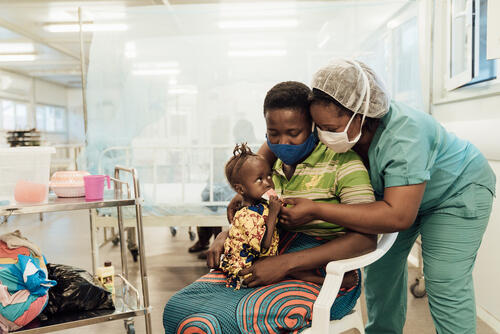
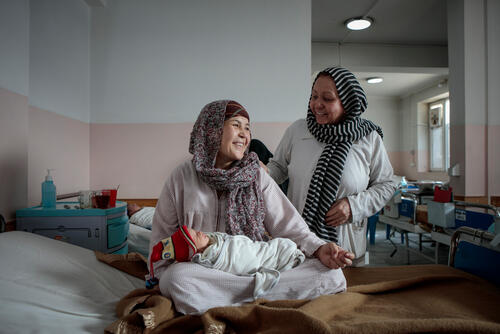
 Christiana Musa, MSF nurse, and the mother Mariama Kamara, give-ready-to-use therapeutic food to little Alice Tilu.  

Alice is 1 year and 7 months old and is treated for septic pneumonia and malnutrition. Every three hours, the children get ready-to-use therapeutic food. Before every feeding session, the nurses and mothers dance and sing songs to remember information about how to take care of their sick children and themselves. “I’m doing my job with a smile. I’m caring for our patients with all my heart.” says Christiana Musa.

877,300

Patients admitted

International Financial Report

Every year we publish our audited combined Financial Statements. These combined accounts are a means of transparency and accountability, providing a global overview of MSF’s work.

The International Financial report represents an aggregation of the Financial Statements of the 23 sections, 9 branch offices, 9 satellite organisations and MSF International. The 2020 International Financial Report is subject to approval by MSF's International General Assembly on 25 June 2021.