


Discover all our latest news, stories and publications. Use the filter to get to the content you're looking for.
التقرير الدولي عن أنشطة أطباء بلا حدود لعام 2017
مقدمة
2 May 2019

موزمبيق
إعصار كينيث يضرب موزمبيق بعد مرور شهر على إعصار إيداي وأطباء بلا حدود تستجيب
تحديث حول مشروع
2 May 2019
Mozambique
MSF responds as second cyclone hits Mozambique
Project Update
1 May 2019
إيران
الفيضانات المفاجئة تسبب دماراً هائلاً، وتجرف في طريقها منازل وطرقاً وجسوراً
أصوات من الميدان
30 Apr 2019
Iran
Flash floods in Iran wash away homes, roads and livelihoods
Voices from the Field
29 Apr 2019
Speaking out videos: MSF and North Korea 1995-1998
All Case Studies > MSF and North Korea 1995-1998 > Videos
Video 1: MSF Awarded Seoul Peace Prize
12 October 1996
On September 11, 1996, MSF received the Seoul Peace Prize. Philippe Biberson, Chairman of the Board of MSF France, highlighted the difficulty of assessing the situation on the ground in North Korea but noted that recent floods could worsen the population’s nutritional status.
Source: AP
Video 2: North Korea: Latest on famine
15 May 1997
Regarding the humanitarian situation in North Korea, Tun Myat, head of WFP’s North Korea assessment team, said: 'The situation is desperate, and desperate people make desperate choices. Right now, they are eating whatever they can find.'
Source: AP
Video 3: Famine Crisis in North Korea
31 May 1997
A Red Cross official reports that 60.6% of the children surveyed in North Korea suffer from malnutrition. Some European countries have delivered shipments of maize and cereals. But the United States and other nations have not provided aid, possibly hoping for the regime to collapse.
Source: AP
Video 4: North Korea Famine Report & Interview
gettyimages.co.uk8 July 1997 - Catherine Bertini, WFP (English)
Video 5: North Korea: U.S. Senate Press Conference
11 April 1997
Returning from Pyongyang, U.S. lawmakers warn of the risk of famine in North Korea. They call for urgent food aid highlight that the lack of basic services risks pushing the army into desperate acts against South Korea.
Source: AP
Video 6: The United States plans to provide food aid to North Korea
14 July 1997
In Washington, State Department spokesman Nicholas Burns said his government would commit to providing additional humanitarian aid to communist North Korea, which has been hit by devastating floods over the past two years.
Source: AP
Video 7: Famine is worsening in North Korea
17 August 1997
Interview with Jon Valfells, Red Cross representative, who states: 'This is not like a famine in Africa, with large population movements searching for food. It is a silent and slow famine, but it is indeed a famine.'
Source: AP
Video 8: The 1997 Famine That Still Affects North Korea Today
October 1997
Documentary film by Mark Davis, distributed by Journeyman Pictures, produced by Hobo Media, 1997 (in English).
Video 9: MSF press conference in Hong Kong
aparchive.com7 December
Following an exploratory mission in Kangwong Province, MSF met with journalists in Hong Kong. The organization treated 1,500 children suffering from severe malnutrition in its 38 nutrition centers. Dr. Eric Goemaere, General Director of MSF Belgium, emphasized that this number is limited compared to the province’s 2 million inhabitants and that there is no evidence to support claims of a widespread famine.
Source: AP
Video 10: A surgical procedure in North Korea
aparchive.com7 December 1997
Dr. Eric Goemaere, General Director of MSF Belgium, has returned from a mission in Kangwong Province, North Korea, with footage showing hospitals lacking equipment and medication. The images notably show a young Korean girl undergoing an appendectomy under local anesthesia only. She died two days later from toxic shock after a dirty cloth was used as a tampon.
Source: AP
Video 11: Inside a hospital in Kangwong Province
December 1997
Footage filmed by MSF inside a hospital in Kangwong Province, North Korea, showing the difficult conditions for staff and patients.
Source: MSF
Video 12: Report from Dandong, on the China–North Korea border
12 April 1998
North Korea is calling for help: a large part of its population is affected by food shortages. Report from the outskirts of Dandong, the Chinese gateway to North Korea. Interview with Chinese truck drivers: 'The children are pitiful, they are starving and begging for scraps. They even pounce on an inedible raw material used to make soap, which contains butter.'
Source: INA / France 2 (video in French, translated in English)
Video 13: WFP Press conference
14 June 1998
Press conference of representatives from the WFP and the United Nations Food and Agriculture Organization (FAO), returning from the affected regions in North Korea, presenting a worrying assessment of the crisis. According to them, famine is far from over.
Source: AP
Video 14: MSF Kicked out of North Korea
30 September 1998
Interview with Dr. Eric Goemaere, General Director of MSF Belgium, who states that when MSF pulls out, people MSF assists in North Korea will be left with nothing and thousands of them will die. 'There is no alternative.'
Source: AP
Video 15: MSF leaves North Korea
30 September 1998
MSF leaves North Korea, considering that their aid was diverted to the detriment of the victims. Interview with François Jean, Head of Mission at MSF France.
Source: INA / France 2
Video 16: Testimony of Li Song Hok, North Korean dissident, and interview with François Jean, MSF
1 December 1999
Excerpt from the testimony of Ms. Li Song Hok, North Korean dissident, before the French National Assembly, where she recounts the abuses, she endured during 13 years of detention in a re-education camp. This excerpt is followed by an interview with François Jean, Research Director at MSF. He states that the famine in North Korea results from a deliberate decision by the authorities to let the population die.
Source: INA / France 2 (in French, translated in English)
Video 17: North Korea: Famine and Misery
26 July 2003
Marine Buissonnière (MSF) provides an update on the difficult situation in North Korea: soaring inflation since 2002 has almost wiped out the purchasing power of North Koreans, despite their efforts to survive.
Source: INA/ France 3/AP TV News (in French, translated in English)
Anchor Links
Label
1996
Anchor
node1
Label
1997
Anchor
node2
Label
1998
Anchor
node13
Label
1999
Anchor
node17
Label
2003
Anchor
node18
Headline
Speaking out videos: MSF and North Korea 1995-1998
Background
None
Schedule content for publication
Off
Description
Speaking out videos: MSF and North Korea 1995-1998
Do not include into latest
On
Select caption
Short caption
Use a custom breadcrumb
No
Prises de parole publiques
Bienvenue
Bienvenue sur le site des Études de cas sur les prises de paroles publiques de Médecins Sans Frontières. Vous y trouverez une collection d’études de cas qui explorent les actions et les processus de prise de décision de l’organisation au cours des crises qui l’ont amenées à prendre la parole publiquement:
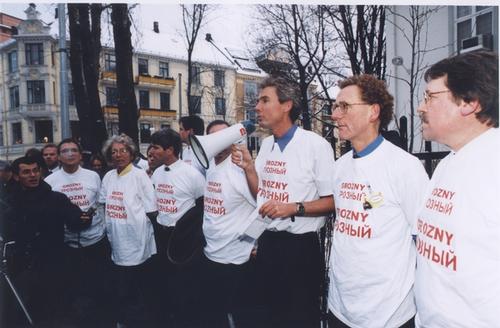
de la dénonciation des déplacements forcés pendant la famine en Ethiopie en 1985 au discours de réception du prix Nobel de la paix exigeant l’arrêt des bombardements des civils tchétchènes à Grozny en 1999, en passant par l’inaction de la communauté internationale pendant le génocide des Rwandais tutsis en 1994.
La source principale d’information de ces études réside dans la mémoire écrite et orale de MSF. Celle-ci est restituée à travers des extraits de documents d’archives et d'articles de presse datant de l’époque traitée et des extraits d’entretiens avec les protagonistes de MSF concernés.
Ces études de cas, dont la vocation est essentiellement pédagogique ont été longtemps réservées aux seuls membres de l’association. Désormais, dans un souci de renforcer cet objectif pédagogique, elles sont mises gracieusement à la disposition du public, sur ce site internet, ainsi que sur tous les sites francophones et anglophones de MSF et sur Google Books.
Video
Prises de parole publiques de MSF
EN UNE
Accédez à toute la série des études de cas sur les prises de parole publiques de MSF
Laisser un commentaire ou poser une question
Hero Image
Headline
ETUDES DE CAS SUR LES PRISES DE PAROLE PUBLIQUES
Background
Image
Schedule content for publication
Off
Description
In MSF, this means a willingness to speak on behalf of the people we seek to help: to bring abuses and intolerable situations to public attention. Through case studies, we openly examine and analyse our actions and decision-making processes during humanitarian emergencies that have led us to speak out.
Thumbnail Image
Do not include into latest
On
Select caption
Short caption
Use a custom breadcrumb
No
ليبيا
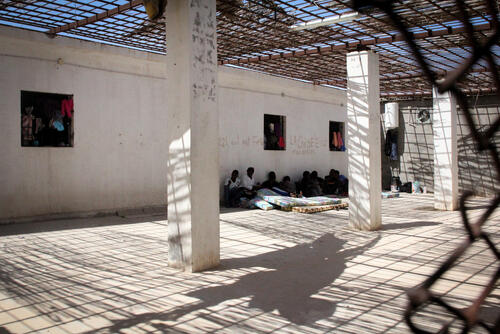
يكاد الوقت ينفد على إجلاء اللاجئين والمهاجرين العالقين مع ورود تقارير عن تعرضهم لإطلاق نار وحشي
بيان صحفي
26 Apr 2019
Speaking Out videos: MSF and the war in the former Yugoslavia 1991-2003
Video 1: Vukovar convoy
13 November 1991
INA/France 3 – Florence Villagi, MSF. (Video in French)
Video 2: 1992, MSF - A Year in focus
War in Yugoslavia. The MSF team was the first to enter besieged Vukovar. Its task is to evacuate 300 injured victims.
MSF. (Video in French)
Video 3: MSF France President's call to an armed intervention
Rony Brauman, President of MSF France, speaks about the situation in Sarajevo and criticizes the Western response to the conflict.
29 May 1992
RTL. (Audio in French)
Video 4: Kozarac report
Rony Brauman, president of MSF France, presents the MSF report (the Kozarac report) on ethnic cleansing in Bosnia-Herzegovina.
INA/France 3. (Video in French)
Video 5: Ethnic cleansing
Interview with Jean Porrini (Secretary General of MDM) and Rony Brauman (President of MSF France) on ethnic cleansing in Bosnia.
29 December 1992
INA/France 2 – Rony Brauman, MSF. (Video in French)
Video 6: General Morillon in Srebrenica
13 March 1993
INA/France 2. (Video in French)
Video 7: Rony Brauman on Srebrenica
17 April 1993
In this interview, Rony Brauman, President of MSF France, criticizes Western governments and European citizens for failing to prevent a stIn this interview, Rony Brauman, President of MSF France, criticizes Western governments and European citizens for failing to prevent a strategy of racial domination and territorial conquest in Europe. This inaction is described as leading to a barbaric situation.
INA/France 3 – Rony Brauman, MSF. (Video in French)
Video 8: A year in focus, 1993
Bosnia: discovery of the detention camps. 87 detainees resettled from these camps will arrive in France with their families. An MSF team is assessing their medical and psychological needs.
A Year in Focus, MSF France
Video 9: Rony Brauman on Sarajevo
7 February 1994
Interview with Rony Brauman, President of MSF France, by Jean Luc Hees. He expresses his indignation and pessimism about the resources being deployed to help the besieged populations.
INA/France Inter – Rony Brauman, MSF. (Audio in French)
Video 10: Eric Stobbaerts: Gorazde
10 April 1994
Telephone interview with Eric Stobbaert, from MSF in Belgrade, for an on the situation in Gorazde, a Muslim enclave in Bosnia, under fire from the Serb offensive.
INA/France 3 – Eric Stobbaerts, MSF. (Video in French)
Video 11: Rony Brauman: Gorazde
11 April 1994
Interview with Rony Brauman, President of MSF France, by Annette Ardisson. He talks about the consequences of the UN air strikes in Gorazde, and in particular on the humanitarian teams in place.
INA/France Inter – Rony Brauman, MSF. (Audio in French)
Video 12: Situation in Gorazde
18 April 1994
MSF is one of the humanitarian organisations still present in Gorazde, along with the Red Cross and the UNHCR. Rony Brauman, president of MSF, accuses the UN of misinforming international opinion about the catastrophic situation in the Muslim enclave.
INA/France 2. (Video in French)
Video 13: Call for Yasushi Akashi's resignation
18 April 1994
Situation in former Yugoslavia: The Muslim enclave of Gorazde, officially declared a ‘protected area’ by the United Nations, has fallen into the hands of Serb forces after a three-week offensive, despite NATO air strikes and UN threats. Interview with Rony Brauman, President of MSF France, denouncing the false statements made by Yasushi Akashi.
INA/France 3 – Rony Brauman, MSF. (Video in French)
Video 14: Lt Gen Michael Rose's Press Conference on Gorazde
18 April 1994
Michael Rose, commander of U.N. forces in Bosnia, declared that Bosnian Serbs could enter the town if they wanted to. "We now find ourselves in a very serious situation indeed in and around Gorazde," Rose told reporters at a daily briefing in Sarajevo.
Associated Press. (Video in English)
Video 15: Rony Brauman on his meeting with François Mitterand – French
21 April 1994
Interview with Rony Brauman, President of MSF France, who was received by the French President, François Mitterrand: ‘We have the impression that every day we are reaching a peak in horror in Gorazde...’.
INA/France 3. (Video in French)
Video 16: A year in focus, 1994
1994
The Gorazde enclave, declared previously a secured zone, is since mid-April caught in a barrage of fire. Two MSF staff witness the demise of the enclave.
MSF France (Video in French)
Video 17: Stephan Oberreit: Srebrenica
12 July 1995
On Tuesday 11 July, Bosnian Serb forces overran the Muslim enclave of Srebrenica in eastern Bosnia. 30,000 people have fled and are trying to find refuge around Potocari, the main UNPROFOR base in the region. This enclave became a UN security zone in 1993. By telephone, Stéphan Oberreit, MSF coordinator in Belgrade, reports on the situation.
INA/France 2 – Stephan Oberreit, MSF (Video in French)
Video 18: Fall of Srebrenica
12 July 1995
Interview of Stephane Oberreit, MSF Coordinator in Belgrade. He describes the scenes of separation and exile in Srebrenica and the dramatic health situation in the enclave: “it is urgent for humanitarian organisations to have access to Srebrenica.”
INA/France Inter (radio) – Prise de Srebrenica - Stephan Oberreit, MSF (Audio in French)
Video 19: Srebrenica: Ethnic Cleansing
11-13 July 1995
Ethnic cleansing’ is once again under way in Bosnia, in the Muslim enclave of Srebrenica, which Serb forces seized on Tuesday 11 July. The Serbs have begun to organise the expulsion of the enclave's Muslim population, under the direction of their commander, General Mladic. Thousands of refugees ended up in Tuzla, another Muslim enclave, to escape the Serbs.
INA/France 2 – Srebrenica: Epuration ethnique (Video in French)
Video 20: Christina Schmitz on Srebrenica
2014
Interview of Christina Schmitz, MSF field coordinator in Srebrenica in 1995.
Extract of ‘MSF(UN)Limited’, an MSF Documentary film. (Video in English)
Video 21: Srebrenica in Memoriam
12 August 1995
In May 1993, the UN declared Srebrenica a safe area. Two years later, following an assault by Serb forces, the enclave fell, despite the presence of a contingent of Dutch peacekeepers. Through the testimonies of a Dutch peacekeeper and Bosnian refugees, this film traces the end of the enclave.
A documentary by Christophe Picart/EUP/MSF. (Video in English)
Video 22: Envoyé spécial
12-13 October 1995
Pierre Salignon, MSF Deputy Programme Manager in the former Yugoslavia: - ‘I work with refugees at the hospital in Srebrenica. The stories are so serious that we decided to make them public... Between five and eight thousand people have disappeared, mostly men who fled into the forest. In Srebrenica, the fall was the culmination of ethnic cleansing and deportations to Tuzla’.
INA/France 2 – Pierre Salignon, MSF. (Video in French)
Video 23: Les 4 vérités : Pierre Salignon
14 August 1995
On the news set, Pierre Salignon, MSF Deputy Programme Manager in the former Yugoslavia.
INA/France 2 – Les quatre vérités – Pierre Salignon, MSF (Video in French)
Video 24: Dayton peace agreement
16 December 1995
(Min 2:35) Extract from an interview with Rony Brauman, former President of MSF. In his opinion, the failure to resolve the issue of refugees who see no prospect of returning to their country in the near future.
INA/France Inter – Accords de Dayton - Rony Brauman, MSF (Audio in French)
Video 25: French Parliamentary Fact-Finding Commission on Srebrenica
29 March 2001
Hearing of Christina Schmitz and Daniel O’Brien, MSF members, by French Parliamentary Fact-Finding Commission on Srebrenica.
MSF
Video 26: A Year in Focus, 2001
22 June 2001
Srebrenica Fall: With the Parliamentary Fact-Finding Commission on Srebrenica, members of Parliament are investigating in the military aspect of the fall of the enclave of Srebrenica.
MSF France (French)
Video 27: Parliamentary Fact-Finding Commission on Srebrenica
29 November 2001
News report dedicated to the report of the parliamentary mission on the Srebrenica massacre, designed to assess France's responsibility in the operation. Interview with Jean-Hervé Bradol from MSF.
INA/France 3 – Jean-Hervé Bradol, MSF (Video in French)
Video 28: Serb Parliament Public Apology for the Massacre of Srebrenica
31 March 2010
After 13 hours of debate, the Serbian parliament has adopted a resolution publicly apologising for the massacre of 8,000 Bosnian Muslims in Srebrenica in 1995. Deep divisions remain in the country over this chapter of history, and the Serbian far right demonstrated outside parliament.
INA/France 3 (Video in French)
Anchor Links
Label
1991
Anchor
node1
Label
1992
Anchor
node2
Label
1993
Anchor
node7
Label
1994
Anchor
node11
Label
1995
Anchor
node19
Label
2001
Anchor
node31
Headline
Speaking Out videos: MSF and the war in the former Yugoslavia 1991-2003
Background
None
Schedule content for publication
Off
Description
Speaking Out videos: MSF and the war in the former Yugoslavia 1991-2003
Do not include into latest
On
Select caption
Short caption
Use a custom breadcrumb
No
Cyclone Idai & Southern Africa flooding
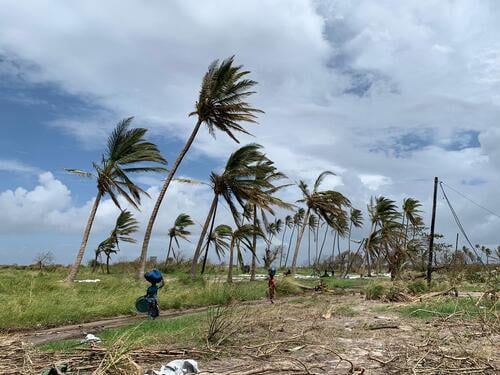
MSF emergency response to Cyclone Idai and flooding
Crisis Update
26 Apr 2019
Libya
Time running out for evacuations of trapped refugees in Tripoli amid shooting
Press Release
26 Apr 2019
Méthodologie
Méthodologie
Les « Études de cas sur les prises de parole publiques de Médecins Sans Frontières » ont pour origine la volonté de mettre à la disposition des volontaires du mouvement MSF, un document sur le « témoignage » qui leur servirait de référence pour comprendre et se réapproprier la culture de prise de parole de l’association.
Le témoignage ne se limitant pas à l’application mécanique de préceptes et de procédures, mais impliquant plutôt la compréhension des dilemmes inhérents à l’action humanitaire, le choix a été fait de présenter des études de cas plutôt qu'un manuel technique. Ces études de cas s'intéressent à des situations dans lesquelles la prise de parole publique a posé des dilemmes et/ou fait courir un risque à MSF.
Ces études de cas sont réalisées en s'appuyant sur la mémoire écrite et orale de MSF. Celle-ci est restituée à travers des documents datant de l’époque traitée et des extraits d’entretiens menés avec les protagonistes des événements sélectionnés.
Les personnes interviewées présentent alors à la fois leur récit des événements et leur appréciation sur la manière dont Médecins Sans Frontières a réagi. Elles s’expriment dans la langue de leur choix, avec l’appui d’un traducteur si nécessaire. Les entretiens sont enregistrés puis transcrits.
Les documents sont recherchés et exhumés des archives des différents bureaux de MSF concernés, et dans la mesure du possible, dans celles des médias.
Ces travaux de recherche sont soumis à des contraintes d’ordre pratique et financier : localisation et volonté des interviewés de s’exprimer, existence, qualité et quantité de documents d’archives.
Le texte- montage principal qui décrit les faits sur un mode chronologique, est composé d’extraits de documents et d’entretiens, reliés entre eux par de courts textes de liaison ou d'introduction. Les extraits de documents sont privilégiés pour établir les faits. À défaut, les entretiens sont parfois amenés à jouer ce rôle. Ils apportent également un éclairage humain sur le vécu des événements et des éléments d’analyse de la part des protagonistes.
Cette méthodologie permet de restituer les débats et les dilemmes rencontrés sans imposer de conclusion définitive sur la qualité des décisions prises.
L'étude est complétée par une chronologie détaillée, qui resitue les actions et prises de paroles de MSF dans l’actualité régionale et internationale de l’époque. Destinée à aider le lecteur à se repérer, elle ne prétend pas être une référence universitaire.
Une ou plusieurs cartes, la liste des abréviations utilisées, celle des personnes interviewées, et un résumé du contexte des prises de parole publiques concernées et des principaux dilemmes auxquels elles ont tenté de répondre complètent le dispositif.
Ces études de cas, dont la vocation est essentiellement pédagogique ont longtemps été réservées aux seuls membres de l’association. Dans un souci de renforcer cet objectif pédagogique, elles sont mises gracieusement à la disposition du public sur ce site, en anglais et en français.
Bonne lecture !
Headline
Méthodologie
Background
None
Schedule content for publication
Off
Description
Méthodologie
Do not include into latest
On
Select caption
Short caption
Toutes les études de cas
"Si nous ne sommes pas sûrs que la parole puisse toujours sauver, nous sommes certains que le silence peut tuer"Discours de réception du Prix nobel de la paix 1999 par Médecins Sans Frontières
MSF témoigne sur le sort des populations qu’elle secourt et révèle les abus et situations insoutenables auxquels elles sont confrontées. Cette collection d’études de cas explore les actions et les processus de prise de décision de l’organisation lors des situations d’urgence humanitaire qui l’ont amenée à prendre la parole publiquement.
Toutes les études de cas
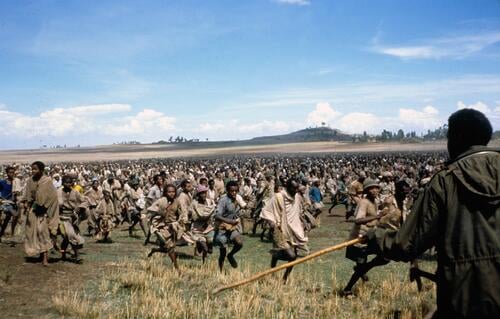
MSF Speaking Out
Famine and Forced Relocations in Ethiopia 1984-1986
Speaking Out Case Studies
1 Jan 2005
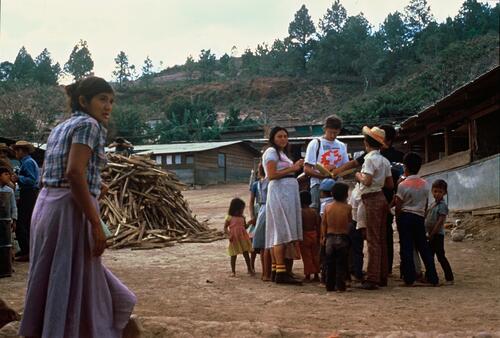
MSF Speaking Out
Salvadoran Refugee Camps In Honduras 1988
Speaking Out Case Studies
1 Apr 2013
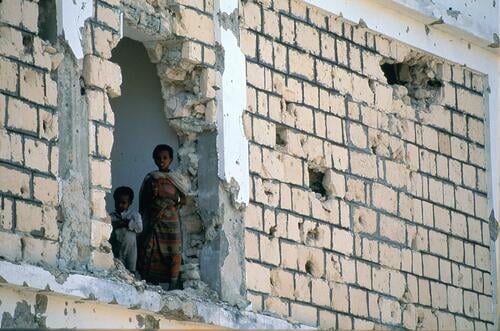
MSF Speaking Out
Somalia 1991-1993: Civil War, Famine Alert and a UN “Military-Humanitarian” Intervention
Speaking Out Case Studies
1 Sep 2013
MSF Speaking Out
MSF and the War in the Former Yugoslavia 1991-2003
Speaking Out Case Studies
1 Dec 2015
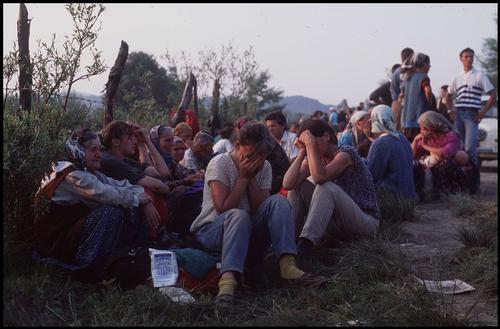
MSF Speaking Out
MSF and Srebrenica 1993-2003
Speaking Out Case Studies
1 Jun 2015
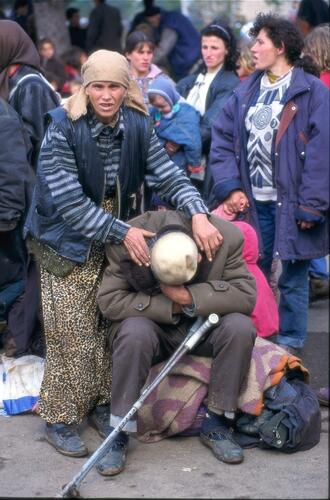
MSF Speaking Out
Violence against Kosovar Albanians, NATO's intervention 1998-1999
Speaking Out Case Studies
16 Jun 2019
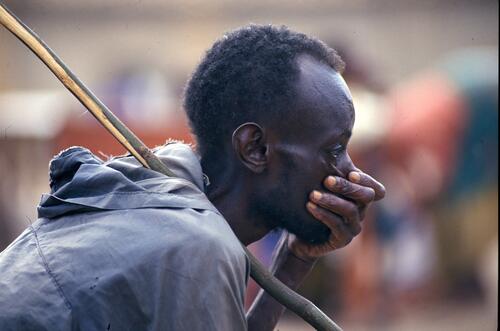
MSF Speaking Out
Genocide of Rwandan Tutsis 1994
Speaking Out Case Studies
1 Apr 2014
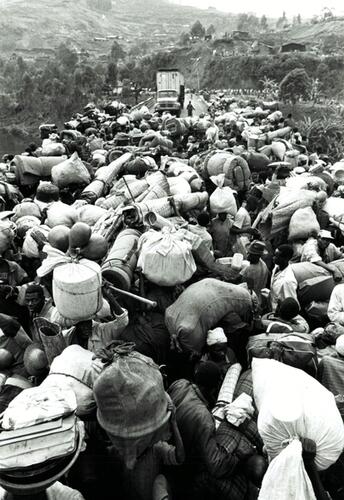
MSF Speaking Out
Rwandan Refugee Camps in Zaire and Tanzania 1994-1995
Speaking Out Case Studies
1 Apr 2014
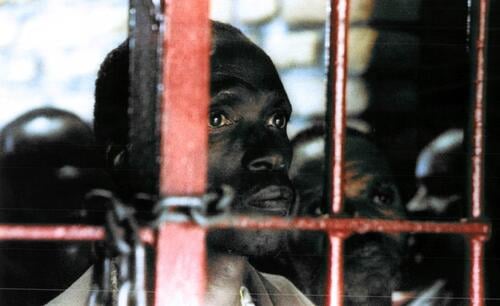
MSF Speaking Out
The Violence of the New Rwandan Regime 1994-1995
Speaking Out Case Studies
31 Mar 2014
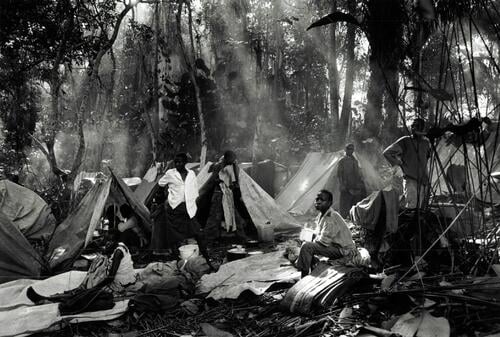
MSF Speaking Out
The Hunting and Killing of Rwandan Refugees in Zaire-Congo: 1996-1997
Speaking Out Case Studies
1 Apr 2014
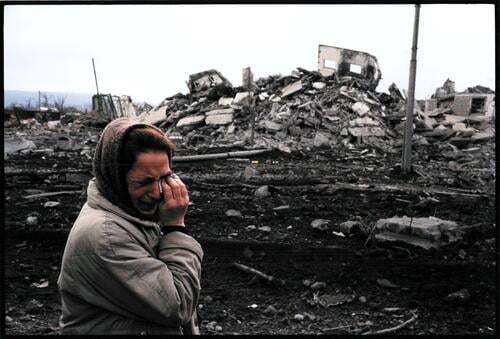
MSF Speaking Out
War crimes and politics of terror in Chechnya 1994-2004
Speaking Out Case Studies
1 Sep 2014
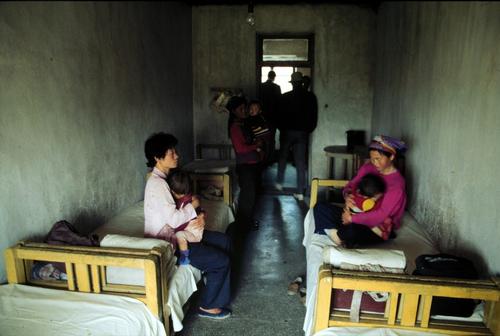
MSF Speaking Out
MSF and North Korea 1995-1998
Speaking Out Case Studies
1 Oct 2014
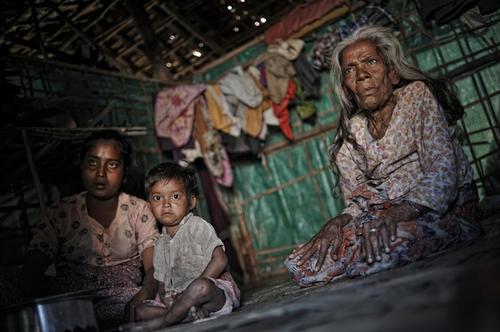
MSF Speaking Out
MSF and the Rohingya 1992 - 2014
Speaking Out Case Studies
19 Nov 2020
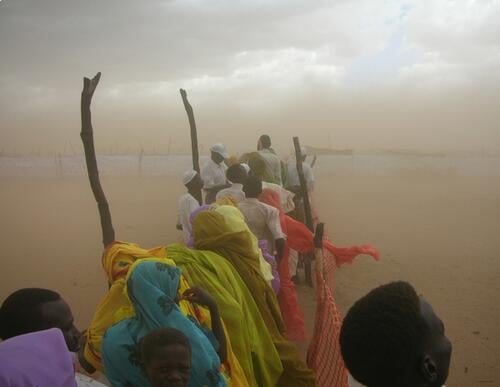
MSF Speaking Out
MSF and Darfur 2003-2009
18 Jun 2024
Hero Image
Headline
Toutes les études de cas
Background
Image
Schedule content for publication
Off
Description
Cela pour MSF se traduit par une volonté de témoigner au nom des populations que nous cherchons a soutenir, de révéler les abus et situations insoutenables auxquels elles sont confrontés. Cette collection d'étude de cas explore les actions et les processus de prise de décision de l'organisation au cours des crises d'urgence humanitaire qui l'ont amenées a prendre la parole publiquement.
Thumbnail Image
Do not include into latest
On
Select caption
Short caption
Use a custom breadcrumb
No
Methodology
Methodology
The Speaking Out case studies (also known as SOCS) is a reference document initially created to help MSF volunteers understand and adopt the organisation’s culture of speaking out.
“Témoignage” (bearing witness) cannot be reduced to a mechanical application of rules and procedures as it involves an understanding of the dilemmas inherent in every instance of humanitarian action. Therefore, it was decided to produce cases studies instead of a set of guidelines.
These case studies focus on crisis in which speaking out posed a dilemma for MSF and thus meant taking a risk.
Key information sources – MSF volunteers’ written and oral recollections — are reconstructed by highlighting documents from the period concerned and interviewing the main actors.
The individuals interviewed speak in the language they choose, they offer both their account of events and their assessment of MSF’s response. The interviews are recorded and transcribed.
Document searches are conducted in the MSF archives and, as far as possible, press archives.
The research is constrained by practical and financial issues, including locating interviewees and securing their agreement and determining the existence, quality and quantity of archived materials.
The methodology aims at establishing the facts and setting out a chronological presentation of the positions adopted at the time. It enables the reconstruction of debates and dilemmas without pre-judging the quality of the decisions made.
The main text describes events in chronological order. It includes excerpts from documents and interviews, linked by brief introductions and transitional passages. We rely on document extracts to establish the facts as MSF described and perceived them at the time. When documentation is missing, interviews sometimes fill the gaps. These accounts also provide a human perspective on the events and insight into the key players’ analysis.
Preceding the main texts collected, the reader will find a map, a list of abbreviations and an introduction that lays out the context of MSF’s public statements and the key dilemmas they sought to address.
In addition, a detailed chronology reconstructs MSF’s actions and public statements in regional and international news reports of the period. Specifically related to this document it is not intended to be comprehensive.
The Speaking Out Case Studies were essentially designed as an educational tool for members of the organisation. With the hope of broadening their educational scope the studies are now being made available on this website to the public for free in French and English.
Headline
Methodology
Background
None
Schedule content for publication
Off
Description
Methodology
Do not include into latest
On
Select caption
Short caption
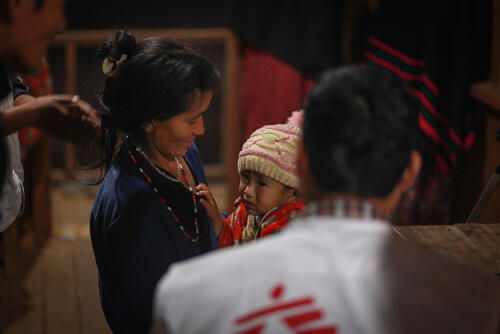
Photo Story
Bringing healthcare to remote communities in Naga
25 Apr 2019
Photo Story
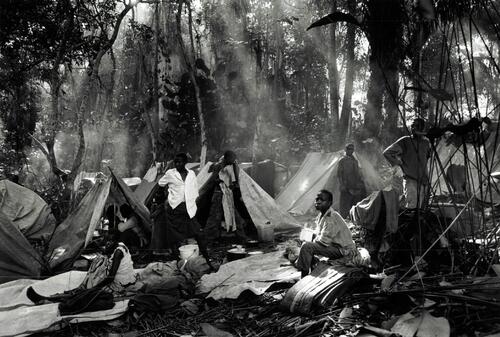
MSF Speaking Out
The Hunting and Killing of Rwandan Refugees in Zaire-Congo: 1996-1997 (PDF, 6 MB)
msf.org
25 Apr 2019
MSF Speaking Out
Salvadoran Refugee Camps in Honduras 1988 (PDF, 2 MB)
msf.org
25 Apr 2019
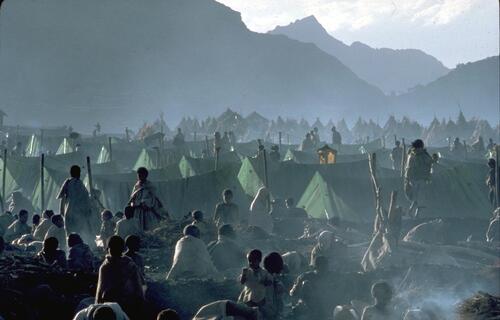
MSF Speaking Out
Famine and forced relocations in Ethiopia 1984-1986 (PDF, 5.6 MB)
msf.org
25 Apr 2019
MSF Speaking Out
War crimes and politics of terror in Chechnya 1994-2004 (PDF, 20 MB)
msf.org
25 Apr 2019
MSF Speaking Out
Genocide of Rwandan Tutsi 1994 (PDF, 3.8 MB)
msf.org
25 Apr 2019
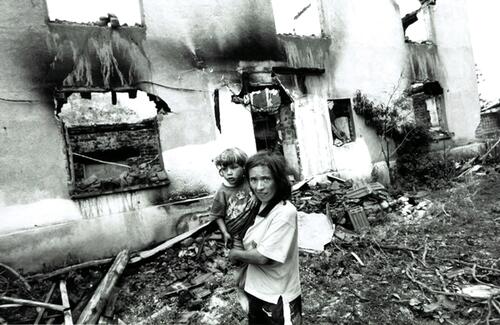
MSF Speaking Out
Violence against Kosovar Albanians, nato’s intervention 1998-1999 (PDF, 11.3 MB)
msf.org
25 Apr 2019
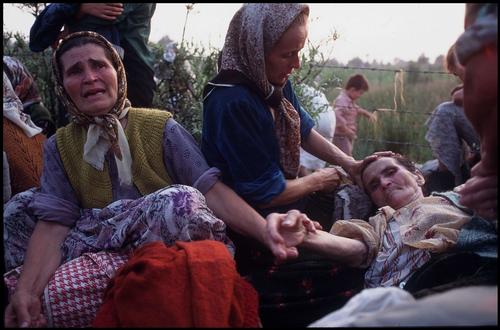
MSF Speaking Out
MSF and Srebrenica 1993 - 2003 (PDF, 5.8 MB)
msf.org
25 Apr 2019

How we work
How we deliver medical humanitarian assistance
Everywhere we work, the circumstances are unique. Nonetheless, our programmes generally follow a common set of practices designed to make sure our resources and expertise are used to maximum effect.