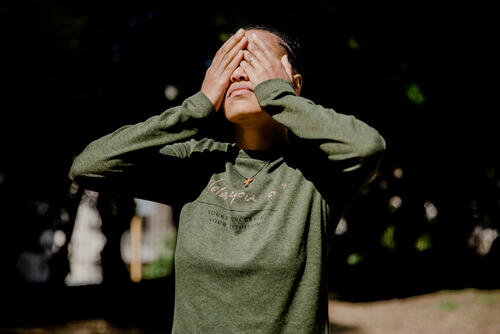
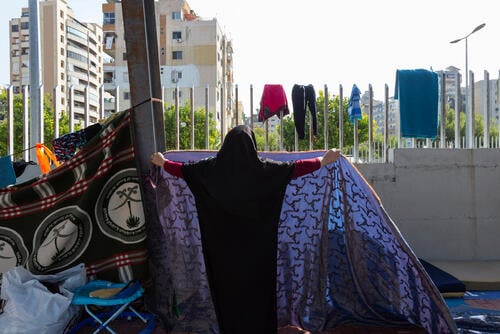
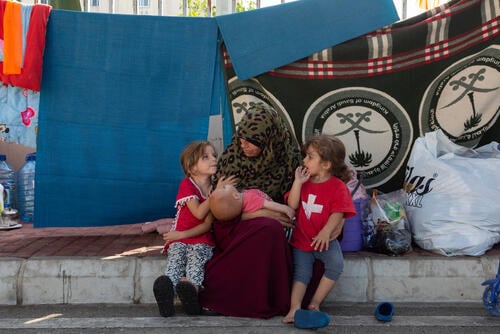
Um Mohammad, a 40-year-old Syrian refugee displaced from Qsaibeh, in South Lebanon, has three daughters. She used to maintain her employer's garden, landscaping and building fences around his land. The night she fled Qsaibeh, an airstrike landed dangerously close. She recalls joining the community with buckets of water to put out the fire, and then her employer told her it was time to leave. With her daughters, aged 18, 6, and 4, she packed a change of clothes for each and grabbed only a blanket, leaving behind the groceries she had just bought that day on her kitchen floor.
أم محمد لاجئة سورية تبلغ من العمر 40 عامًا، نزحت من القصيبة بجنوب لبنان، ولديها ثلاث بنات. لبنان، في أكتوبر/تشرين الأول 2024.
© Dalia Khamissy

"أيًا كانت خسائرنا، سنرجع"

أم محمد لاجئة سورية تبلغ من العمر 40 عامًا، نزحت من القصيبة بجنوب لبنان، ولديها ثلاث بنات. لبنان، في أكتوبر/تشرين الأول 2024.
© Dalia Khamissy
الحرب في غزة: اطّلع على استجابتنا
اقرأ المزيد

في خضم القصف الإسرائيلي المستمر والتوغلات الإسرائيلية في جنوب لبنان، هُجّر عدد لا يحصى من العائلات، والتي لجأ الكثير منها إلى مدينة صيدا الساحلية. تقوم الفرق الطبية المتنقلة التابعة لأطباء بلا حدود بزيارة عدة مواقع في المدينة الجنوبية، حيث توفر الرعاية الصحية الأساسية والأدوية والدعم النفسي للنازحين بسبب العنف. إليكم بعض شهادات مرضانا هناك:
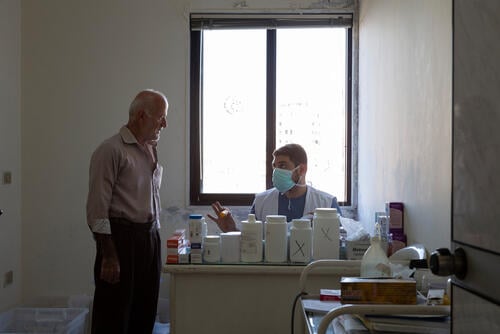
An MSF staff gives medications to patient Hassan Kheir Eddine, 67, at the Najda al Chaabiya Hospital in the city of Saida, south of Lebanon, Wednesday, October 16, 2024.

“There’s nothing like living in your own home,” reflects Hassan, 67, an internally displaced Lebanese man with hypertension. He and his wife fled Kfar Melki, south of Lebanon, after nearby Israeli bombardments, leaving with only the clothes on their backs. “My sons are also displaced, scattered across the country. That alone is a struggle, but what we are going through is similar to what everyone else is.” 
Having been uprooted three times during the recent escalations, Hassan, a retired employee who lost his pension and savings in the 2020 economic crisis, reminisces about the olive harvest and his deep connection to the land he was forced to leave behind. “There is nothing quite like the south. Wherever we go, whatever we lose, and whatever we are offered, we will always come back. I lived through the 1982 Israeli invasion and remember the airstrikes on southern villages then. As we returned to our homes then, we will now.”
أحد موظفي منظمة أطباء بلا حدود يقدم الأدوية للمريض حسن خير الدين، 67 عامًا، في مستشفى النجدة الشعبية في مدينة صيدا. جنوب لبنان، في 16 أكتوبر/تشرين الأول 2024.
© Dalia Khamissy

حسن خير الدين

"لا شيء يضاهي أن تعيش في منزلك"، يخبرنا حسن خير الدين، البالغ من العمر 67 عامًا، وهو نازح لبناني يعاني من ارتفاع ضغط الدم. فقد أجلى هو وزوجته من كفرملكي في جنوب لبنان بعدما اقترب القصف الإسرائيلي، وغادرا فقط بالملابس التي يرتديانها. ويضيف، "أبنائي نازحون أيضًا، ومشتتون في جميع أنحاء البلاد. هذه معاناة بحد ذاتها، ولكننا نمر بما يمر به الجميع".

حسن موظف متقاعد خسر راتبه التقاعدي ومدخراته في الأزمة الاقتصادية لعام 2020، وبعد أن هُجّر من أرضه ثلاث مرات خلال التصعيدات الأخيرة، يتذكر حسن حصاد الزيتون وارتباطه العميق بالأرض التي أُجبر على تركها، "لا شيء يضاهي الجنوب. فأينما ذهبنا ومهما خسرنا ومهما عُرض علينا، سنرجع دومًا. لقد عشت الاجتياح الإسرائيلي عام 1982 وأتذكر الغارات الجوية على القرى الجنوبية آنذاك. وكما عدنا إلى منازلنا آنذاك، سنعود هذه المرة".
 

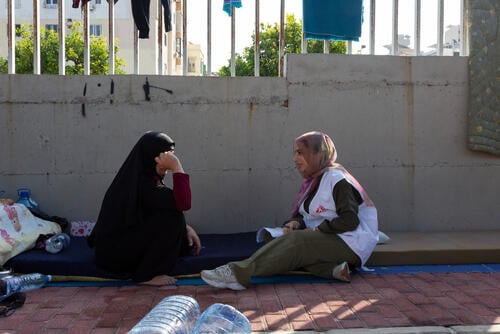
Khadija, a Syrian refugee, and mother of five, was displaced from Nabatieh with her family. "She’s fading right before my eyes," Khadija says, pointing to her seven-year-old daughter, who is suffering from stunted growth. She describes the harsh conditions in the open parking lot by the Saida coastline where they’ve sought refuge. "We never feel clean. People are competing over food here, and we don’t have enough clean water to wash. We go to the sea to relieve ourselves, but there are often men around." 
Her children are battling various health issues, and it's breaking her spirit. "Sidra, 13, has asthma, Hiba, 7, weighs barely 10 kilograms, and Malak, my 8-month-old, has a fever and diarrhoea. I breastfeed her whenever I can, but it’s not always enough, and I can’t properly clean her bottles." 
In a moment of despair, Khadija admits, "Sometimes I wish we had stayed and died in an airstrike instead of living like this."
خديجة هي لاجئة سورية وأم لخمسة أطفال نزحت من النبطية مع عائلتها. لبنان، في أكتوبر/تشرين الأول 2024.
© Dalia Khamissy

خديجة

نزحت خديجة، وهي لاجئة سورية وأم لخمسة أطفال، من النبطية مع عائلتها. تقول مشيرة إلى ابنتها البالغة من العمر سبع سنوات، "إنها تتلاشى أمام عيني"، والتي تقول إنها تعاني من التقزّم. تصف خديجة الظروف القاسية في موقف السيارات المكشوف على ساحل صيدا حيث التجأوا، فتقول، "لا نشعر بالنظافة إطلاقًا. الناس يتنافسون على الطعام هنا، وليس لدينا ما يكفي من الماء النظيف للاغتسال. نذهب إلى البحر لقضاء حاجتنا، ولكن غالبًا ما يكون هناك رجال حولنا".

يعاني أطفال خديجة من مشاكل صحية مختلفة، ما يتسبب بتحطيم معنوياتها. وتخبرنا، "سيدرا البالغة من العمر 13 عامًا تعاني من الربو، وهبة ذات السبع سنوات بالكاد تزن عشرة كيلوغرامات، وملك البالغة من العمر ثمانية أشهر تعاني من الحمى والإسهال. أُرضعها كلما استطعت، لكن ذلك لا يكفي دائمًا، ولا أستطيع تنظيف زجاجاتها بشكل صحيح".

وتعترف خديجة في لحظة يأس، "أحيانًا أتمنى لو أننا بقينا ومتنا في غارة جوية بدلًا من العيش هكذا".
 

Um Mohammad, a 40-year-old Syrian refugee displaced from Qsaibeh, in South Lebanon, has three daughters. She used to maintain her employer's garden, landscaping and building fences around his land. The night she fled Qsaibeh, an airstrike landed dangerously close. She recalls joining the community with buckets of water to put out the fire, and then her employer told her it was time to leave. With her daughters, aged 18, 6, and 4, she packed a change of clothes for each and grabbed only a blanket, leaving behind the groceries she had just bought that day on her kitchen floor.
أم محمد لاجئة سورية تبلغ من العمر 40 عامًا، نزحت من القصيبة بجنوب لبنان، ولديها ثلاث بنات. لبنان، في أكتوبر/تشرين الأول 2024.
© Dalia Khamissy

أم محمد

أم محمد لاجئة سورية تبلغ من العمر 40 عامًا، نزحت من القصيبة بجنوب لبنان، ولديها ثلاث بنات. كانت تعتني بحديقة صاحب عملها وتنسق أرضه وتبني سياجًا حولها. وليلة إجلائها من القصيبة، وقعت غارة جوية على مقربة خطيرة منها. تتذكر أنها شاركت مجتمعها بدلاء الماء لإخماد الحريق، ثم أخبرها صاحب العمل أن الوقت قد حان للرحيل. حزمت ثيابًا لكل واحدة من بناتها البالغات من العمر 18 وست وأربع سنوات، ولم تحمل معها سوى بطانية، تاركةً وراءها البِقالة التي كانت قد اشترتها يومها على أرضية مطبخها.
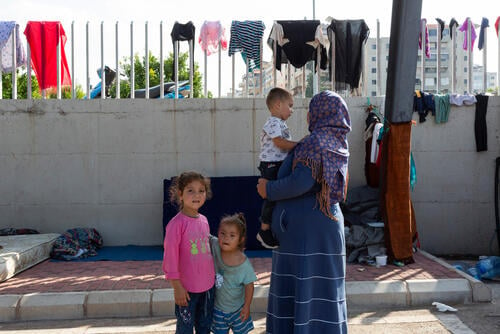
 

Syrian refugee Hala, 24, holds her son Yamen, 2, as her two daughters Razan, 6, left, and Rawan, 3,5, stand next to her, near the sidewalk where they sleep, in a parking lot in Saida, south of Lebanon, Wednesday, October 16, 2024.
Hala, 24, is a Syrian refugee and mother of three – Yamen (2), Rawan (3.5), and Razan (6). She fled from the coastal town of Adloun in South Lebanon amidst airstrikes and the sirens of ambulances. "We left with nothing. We escaped on a motorcycle, but it broke down here in Saida. My husband went back to retrieve our belongings, but everything was stolen." 
Now, they rely on aid for food. "All my children are sick with vomiting and diarrhoea. Rawan, who has Down syndrome, used to receive physical therapy to walk and move. We had high hopes that she would begin verbal communication through speech therapy soon, and she had made so much progress. But now, all that is gone. She requires lots of medications and is often bullied by other children for not being able to express herself."
هالة هي لاجئة سورية تبلغ من العمر 24 عامًا، وأم لثلاثة أطفال: يامن (عامان) وروان (ثلاثة أعوام) ورزان (ستة أعوام) بالقرب من الرصيف الذي ينامون عليه في أحد مواقف السيارات في صيدا. جنوب لبنان، في أكتوبر/تشرين الأول 2024.
© Dalia Khamissy

هالة

تبلغ هالة من العمر 24 عامًا، وهي لاجئة سورية وأم لثلاثة أطفال: يامن (عامان) وروان (ثلاثة أعوام) ورزان (ستة أعوام)، وقد أجلت من بلدة عدلون الساحلية في جنوب لبنان وسط الغارات الجوية وصفارات سيارات الإسعاف. تقول، "غادرنا بلا شيء. هربنا على متن دراجة نارية، لكنها تعطلت هنا في صيدا. عاد زوجي لاستعادة ممتلكاتنا، لكن كل شيء كان قد سُرق".

والآن، تعتمد هالة وعائلتها على المساعدات للحصول على الطعام، فتقول، "جميع أطفالي مرضى يعانون من القيء والإسهال. كانت روان، المصابة بمتلازمة داون، تتلقى العلاج الطبيعي للمشي والحركة. كانت لدينا آمال كبيرة في أن تبدأ بالتواصل اللفظي من خلال علاج النطق قريبًا، وقد أحرزت تقدمًا كبيرًا. ولكن الآن، تلاشى كل ذلك. فهي بحاجة إلى الكثير من الأدوية وغالبًا ما تعاني من التنمر من قبل الأطفال الآخرين لعدم قدرتها على التعبير عن نفسها".
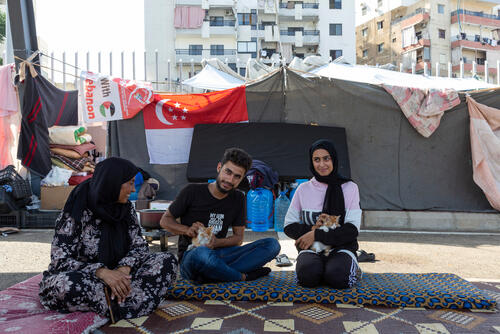
 

Syrian refugee Shams, left, sits on mattresses with her children Kazem, 20, center, and Marimar, 14, holding their kittens in a parking lot in the city of Saida, south of Lebanon, Wednesday, October 16, 2024, where Syrian refugees, who lived in the south of Lebanon, have found refuge after the Israeli escalation on Lebanon.
Syrian refugee Shams, whose name means "sun" in Arabic, remains bright and warm, despite the hardships she and her family have endured. Along with her children – Mimar (24), Mimas, Kazem (20), and Marimar (14) – Shams was displaced from Kfar Roumane and now lives in a parking lot in Saida, southern Lebanon. With an enduring smile, she recounts the moments her family escaped Israeli airstrikes in the town they had called home for over a decade, fleeing for twelve hours on foot to finally find relative safety in Saida. A few days later, Kazem and one of his sisters made a dangerous trip back to their former home on a borrowed motorcycle to rescue their two kittens, Simba and Mimi. “We thought of them as we were leaving,” Marimar says, as she fondly strokes one of the kittens, “but the airstrikes were too close. I’m so relieved we could go back for them.”
شمس (يسار) تجلس على فراش مع طفليها كاظم (20 عامًا) وماريمار (14 عامًا) واللذان يحملان هرتيهما الصغيرتين في موقف للسيارات في مدينة صيدا. جنوب لبنان، في 16 أكتوبر/تشرين الأول 2024.
© Dalia Khamissy

شمس المحمود وماريمار وكاظم

ما زالت شمس المحمود تحمل صفات اسمها، فقد بقيت مشرقة ودافئة كما كانت دومًا على الرغم من المصاعب التي عانت منها وعائلتها. نزحت شمس مع أطفالها معمار (24 عامًا) وميماس وكاظم (20 عامًا) وماريمار (14 عامًا) من كفرمان وتعيش الآن في موقف للسيارات في صيدا بجنوب لبنان.

بابتسامة محببة، تروي شمس لحظات هروب عائلتها من الغارات الجوية الإسرائيلية في البلدة التي اتخذوها منزلًا لهم لأكثر من عقد، إذ فروا سيرًا على الأقدام لمدة 12 ساعة حتى وجدوا أخيرًا الأمان النسبي في صيدا. وبعد أيام قليلة، انطلق كاظم وإحدى شقيقاته في رحلة خطرة إلى منزلهم السابق على دراجة نارية استعاراها لإنقاذ هرّتيهما الصغيرتين سيمبا وميمي. تقول مريمار، وهي تلعب مع إحدى الهرّتين، "فكرنا بهما بينما كنا نغادر. لكن الغارات الجوية كانت قريبة جدًا. أشعر بارتياح كبير لأننا تمكّنا من العودة لإحضارهما".
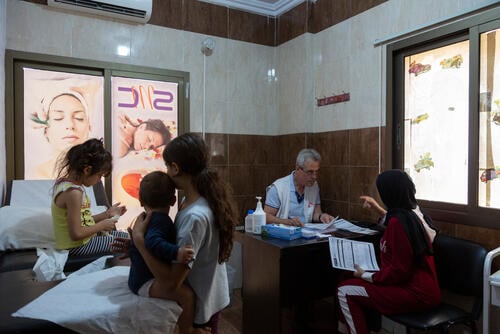
 

Dr Ali Daher, from MSF, takes information from Najah as her children Maya, holding Sary, 9 months, and Lujain, 6, wait for her at a clinic at Primary Health Care Center, in Wadi el Zayni, south of Lebanon, Wednesday, October 16, 2024.

Najah, a Syrian refugee living in south Lebanon, was displaced once again along with her daughters – Maya (11 years), Lujain (6 years), and Sary (9 months) – after airstrikes struck the southern town of Baisariyeh. She is among the 1.2 million people displaced by the ongoing Israeli bombardment. While the war affects much of the country, minority groups like Syrian refugees, migrant workers, the elderly, and people with disabilities face even greater risks of discrimination and exclusion, further limiting their access to healthcare and humanitarian aid.
يسجل الدكتور علي ضاهر الذي يعمل في أطباء بلا حدود معلومات نجاح بينما تنتظرها ابنتاها مايا التي تحمل ساري (9 أشهر) ولجين (6 سنوات) في عيادة في مركز الرعاية الصحية الأساسية في وادي الزيني. جنوب لبنان، في 16 أكتوبر 2024.
© Dalia Khamissy

نجاح عاشور

نجاح عاشور هي لاجئة سورية كانت تعيش في جنوب لبنان. وقد نزحت مرة أخرى مع بناتها مايا (11 عامًا( ولجين (6 أعوام) وساري (تسعة أشهر) بعدما طالت الغارات الجوية بلدة البيسارية بجنوب لبنان. كانت نجاح من بين 1.2 مليون شخص نزحوا بسبب القصف الإسرائيلي المستمر. وفيما يتأثر الجميع بالحرب، إلا أن الأقليات كاللاجئين السوريين والعمال المهاجرين والمسنين والأشخاص المصابين بعجز أو إعاقة يكونون أكثر عرضة للتمييز والإقصاء، مما يحد من إمكانية حصولهم على الرعاية الصحية والمساعدات الإنسانية.