استجابتنا للإيبولا في جمهورية الكونغو الديمقراطية
اقرأ المزيد
1360 Results
 
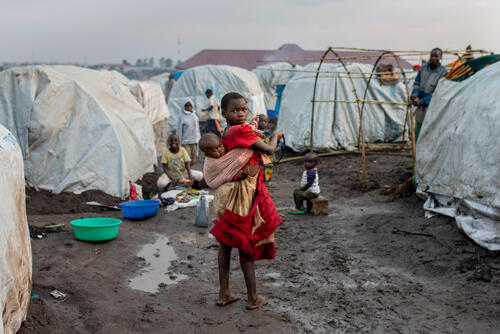
Daily life scene at the ISP camp for internally displaced people in Bunia. Thousands have fled their homes due to intercommunal violence in Ituri.
جمهورية الكونغو الديمقراطيّة

أزمات إنسانية غير مسبوقة تستدعي استجابة إنسانية طارئة واسعة النطاق

تدعو منظمة أطباء بلا حدود إلى تعزيز المساعدات الإنسانية على المدى الطويل وبشكل فوري لمنع وفاة المزيد من الناس ‏وتحقيق ظروف معيشية كريمة لجميع الذين اضطروا للنزوح. بيان صحفي - 1 يوليو/تموز 2019
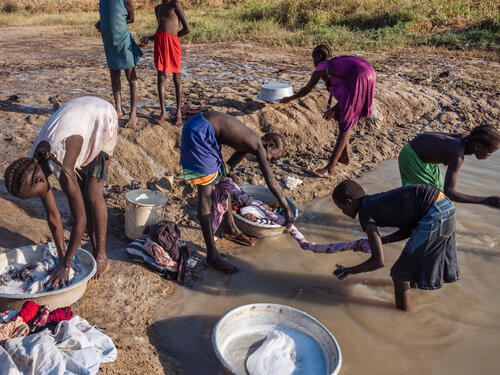
 
Bentiu, South Sudan, 2018. People wash clothes in the river in the buffer zone in Bentiu PoC (Protection of Civilians) site.
جنوب السودان

العيش إما خارج مخيم النزوح دون حماية أو داخله في ظروف مهينة

يصف المرضى وموظفو أطباء بلا حدود الحياة في مواقع حماية المدنيين التي تؤمن لهم السلامة النسبية، لكن في المقابل تعرّضهم إلى مخاطر من نوع آخر. تحديث حول مشروع - 1 يوليو/تموز 2019
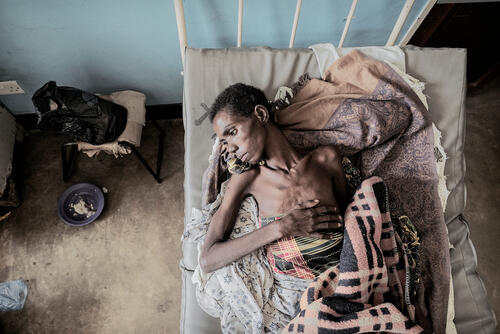
 
Nsanje, Malawi: Chrissy Kamanga, 37 years, a mother of three daughters was referred to Nsanje district hospital with late stage AIDS. He has advanced HIV with opportunistic infections TB and cryptococcal meningitis. She couldn’t talk or walk but is feeling better now. She has been on antiretrovirals for five years. Chrissy is an expert client at Tengani health center under Partners in Hope, a local nongovernmental organization. She helps in tracing patients who drop out of treatment.

Chrissy’s husband Wisted Simbi, 44 years is caring for Chrissy. He says: “here I support my wife’s sister to shift, feed, wash or take her to the bath room. We relieve each other of these daily duties. My wife complained of backache and headache. We went to Tengani health centre and they referred us here. By this time, she couldn’t walk or talk. They welcomed us well and all the tests were done.”

In 2016, an MSF survey of 1183 admissions in hospital over six months revealed that HIV inpatients accounted for 26 % of all admissions in male and female wards, and HIV deaths made up 54 % of all deaths.  Over 80% of HIV admissions arrived in advanced stages of the disease (defined as a CD4 count
الحصول على الأدوية

شركة "غيلياد" تخلف وعدها بتوفير دواء مُنقذ لحياة المصابين بفيروس نقص المناعة البشري

فشلت شركة الأدوية "غيلياد ساينسز" في الوفاء بوعدها بإتاحة دواء لعلاج الهاب السحايا الفطري للأشخاص المصابين بعدوى مُهدّدة للحياة ناجمة عن ‏فيروس نقص المناعة البشري. ‏ بيان صحفي - 27 يونيو/حزيران 2019
 
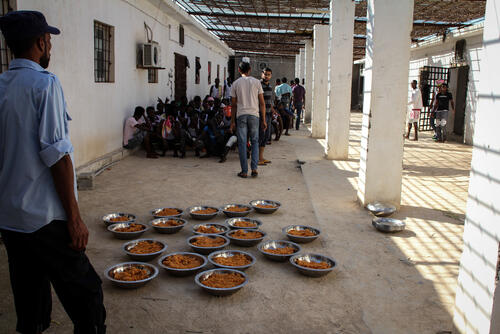
Refugees and migrants detained in this detention centre get rice or pasta for lunch and dinner. For breakfast people receive bread with some cheese. Meals often have to be shared by many people. Food is prepared in-house and is served in large metal bowls to be shared by five to 10 people.
ليبيا

"إنها كارثة صحية!" في مركزي احتجاز الزنتان وغريان في ليبيا

وجد موظفو منظمة أطباء بلا حدود، الذين تم السماح لهم مؤخرًا بالوصول إلى مركزين للاحتجاز في ليبيا، حالة طبية كارثية بين المحتجزين هناك. وقد أكدت معاينات الموظفين للوضع في مركزي الاحتجاز في الزنتان وغريان، الواقعان جنوب طرابلس في جبال نفوسة، ما نقلته التقارير التي صادقت عليها وكالات الأمم المتحدة بأن 22 شخصًا على الأقل توفوا في هذه المراكز بسبب الاشتباه في إصابتهم بالسل وأمراض أخرى منذ سبتمبر 2018. تحديث حول مشروع - 26 يونيو/حزيران 2019
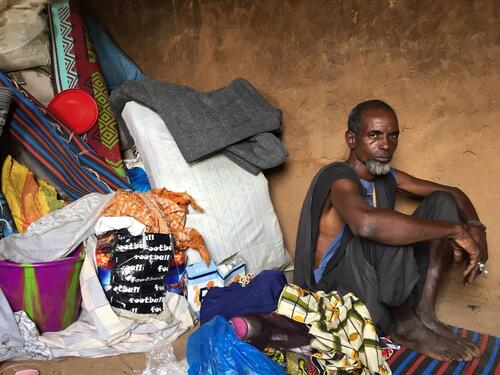
 
Following the massacre in the village of Ogossagou, MSF provided home care and psychosocial counselling.
مالي

العنف في وسط البلاد يصل مستويات غير مسبوقة ويتضرر المدنيين يوماً بعد يوم

باتريك إيرينج هو المنسق الطبي لمنظمة أطباء بلا حدود في باماكو، مالي منذ سبتمبر 2017. وبينما يواجه هذا البلد الواقع في غرب إفريقيا أزمة سياسية وأمنية منذ عام 2012، تكثف العنف في إقليم الوسط ليتسبب بأثر خطير على المدنيين. يصف باتريك كيف تسبب انعدام الأمن هذا في حدوث أزمة إنسانية غير مسبوقة، ويخبرنا عن الاستجابة الطارئة لمنظمة أطباء بلا حدود إلى جانب المشاريع المنتظمة للمنظمة والهادفة لمساعدة أكثر الناس حاجة. مقابلة - 26 يونيو/حزيران 2019
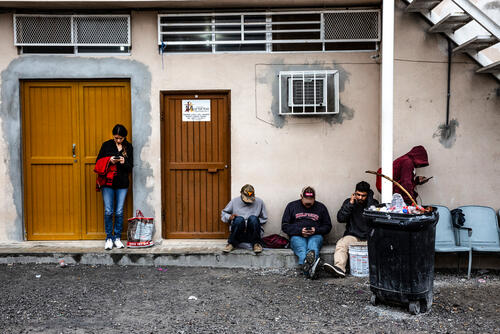
 
Most people in the shelters, where they wait to cross into the US, do not take to the streets due to the risk of imminent kidnapping. Migrants and refugees are exposed to risks of violence at the northern Mexican border.
المكسيك

الاعتقالات الجماعية تحرم المهاجرين من الرعاية الطبيّة

شهدت فرق أطباء بلا حدود على ازدياد وتيرة الاعتداءات والاعتقالات الجماعية للمهاجرين بالقرب من الحدود الجنوبية للمكسيك، والوضع العام مقلق. بيان صحفي - 24 يونيو/حزيران 2019
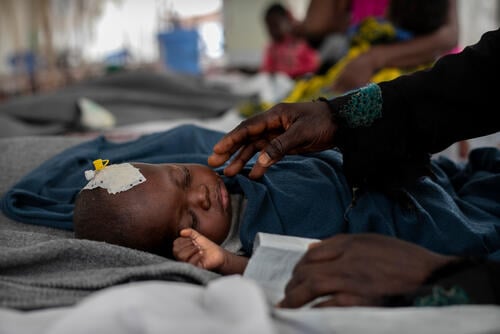
 
A mother looks after her child hospitalized at the MSF measles treatment center in Mayi-Munene, Kamwesha (Kasai).
جمهورية الكونغو الديمقراطيّة

حياة الأطفال مهددة بتفشي الحصبة الأخطر منذ أعوام

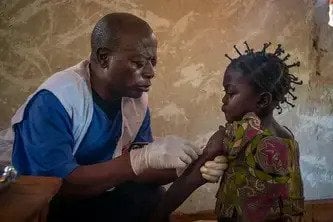
تفشي الحصبة الجديد في جمهورية الكونغو الديمقراطية هو الأسوأ منذ عام 2012، وحياة الأطفال في خطر. تعمل فرق أطباء بلا حدود على مكافحة المرض، لكن تشتدّ الحاجة إلى المزيد من الجهود لوقف انتشار الوباء. بيان صحفي - 24 يونيو/حزيران 2019
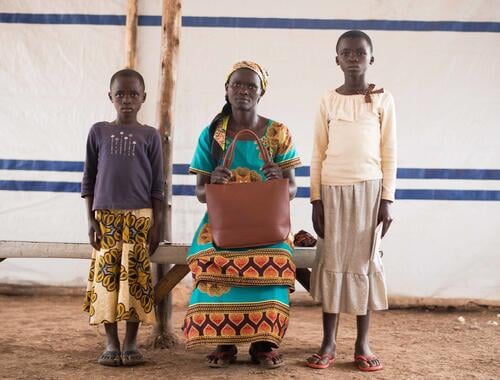
 
Adephine speaks in slow, hushed tones. She tugs at her mother, Elisabeth, sliding behind her as soon as the gathering of people at this remote Médecins Sans Frontières health clinic in Tanzania swells.
A refugee camp can limit people’s movement, but it can do little to dash the hopes and aspirations of a 12-year-old girl from breaking through its dim and bleak confines.
Adephine often lets her imagination fly outside the Nduta refugee camp, in north-western Tanzania, where she has been living since January 2017, when her mother fled violence in Burundi. In a place far away from the camp, she dreams of becoming a doctor one day. As she says this, she grows in confidence, and her eyes stare you straight in the face.
In the camp, she receives lessons in English, French, basic mathematics and science, but says, with a touch of gloom, “we often get punished in the school, and I don’t like it”.
It’s not only these daily chastening experiences that threaten to dampen the spirit of children like Adephine, but the grinding toil of living in a place where rationing is the norm can snuff out any lingering traces of ambition.

Adephine’s father, and her two siblings, only joined the family in the camp later, when registrations had stopped. “My husband is not registered, and so he cannot receive assistance”, says Adephine’s mother, Elisabeth. “We share the food we receive among us”.
A small patch of land around their modest two-room abode in the camp provides for a few green vegetables and beans.
“But this is not enough”, says Elisabeth.
Over 230,000 Burundians, spread across three camps in Tanzania, will remain dependent on much-needed humanitarian assistance until longer-term solutions are found. But, for now, they desperately need support. This little-spoken crisis continues to be dismally funded, revealing major gaps in the humanitarian response.

Limited food, poor living conditions and weak wastewater management are a recipe for disease outbreaks. The Nduta refugee camp, where MSF is the main healthcare provider, recently witnessed a peak in diarrhoea cases, but MSF teams were able to swiftly respond and staunch the spread of the disease.

Back in the health clinic, Adephine is playing with a strip of capsule. “When we are sick, we can have treatment”, says her mother, Elisabeth. But she wishes they had more variety in the food they received in the camp.

Sitting together, Adephine, her younger sister, Rachel, and Elisabeth appear composed. What the future holds for them remains shrouded in uncertainty. But with those dreams that take one far away, there is always that smallest of relief to take flight, even briefly, and escape the biting reality of the camp.
اللاجئون والنازحون

قصص اللاجئين حول العالم بين الصمود والبقاء على قيد الحياة

نحن منظّمة تعمل مع اللاجئين والنازحين حول العالم، لذا نعرف حق المعرفة ألا شيء – سواء كان جدار أو حتى ‏محيط – سيردع الناس الذين يحاولون وبكل بساطة الصمود والبقاء على قيد الحياة.‏ أصوات من الميدان - 20 يونيو/حزيران 2019
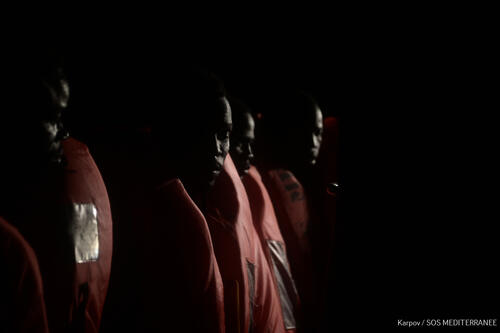
 
After an extremely busy night on the Central Mediterranean, starting late on June 9 and into the early hours of June 10, the Aquarius has 630 people on board from six different operations. The rescue of two rubber boats turned critical when one boat broke apart in the darkness, leaving over 40 people in the water. After rescuing 230 people from these boats, the Aquarius then took 400 more people on board at the request of the Italian Maritime Rescue Coordination Centre (IMRCC), who had been rescued by Italian navy and coastguard ships on 9 June. 

Over the next days, the Aquarius was embroiled in a political stand-off at sea over the fate of the people rescued in the Mediterranean. Although the rescue and transfers of the 630 people were initiated and coordinated by IMRCC, the Italian authorities denied Aquarius authorisation to bring them ashore in the closest port of safety in Italy. Malta, which had the nearest safe port, also refused to allow the Aquarius to disembark, citing Italy’s coordination role and responsibility.  Eventually, on 11 June, the Spanish government intervened and offered to let the Aquarius disembark in Valencia, 1,300 kilometres away. Despite MSF’s concerns about the humanitarian and medical impact of the sea journey to Valencia, the Italian authorities instructed Aquarius on 12 June to transfer 524 people back to Italian ships and embark with the remaining 106 rescued on a four-day journey to Spain. On June 17, one week after they had been rescued, all 630 people were disembarked in Valencia, Spain.
الهجرة عبر البحر الأبيض المتوسط

سياسات الهجرة الأوروبية تواصل إزهاق الأرواح في البحر المتوسط

بعد مرور عام على إغلاق إيطاليا موانئها أمام سفن البحث والإنقاذ الإنسانية، لقي أكثر من 1,000 شخص حتفهم بينما ‏آلاف آخرون عالقين في البحر، بسبب السياسات الأوروبية التي تجرّم عمليات الإنقاذ الإنسانية وتجرّد المهاجرين من إنسانيتهم. بيان صحفي - 12 يونيو/حزيران 2019
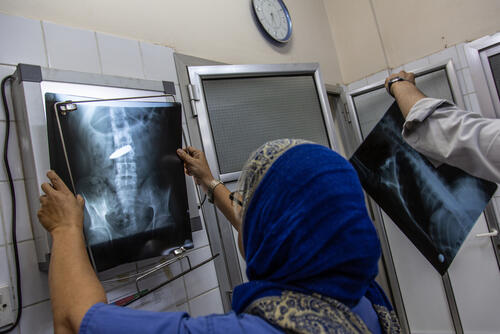
 
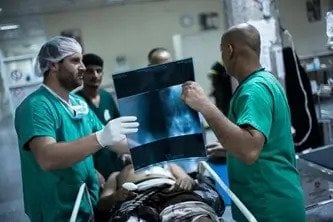
Yemen, Hodeidah, Al Salakhana hospital, 28 April 2019 - Maria Teresa Ingalla, ortho surgeon is watching the Xray of a patient injured by a gunshot in the abdomen. Mohammed, 18, was sitting in a street in Hodeidah, around 4.00pm when he was injured by a stray bullet: the bullet entered through his hip to his abdomen, next to one of his arteries. Luckily the bullet did not touch the spinal cord. It was removed after a laparotomy.
اليمن

علاج جرحى الحديدة في مستشفى السلخانة

تقرير مصوّر: تعمل منظمة أطباء بلا حدود في مستشفى السلخانة شمال شرق الحديدة، حيث ترتفع حالات إصابة المدنيين بطلقات نارية. شاهدوا مجريات يوم واحد في مستشفى السلخانة. تحديث حول مشروع - 31 مايو/أيار 2019