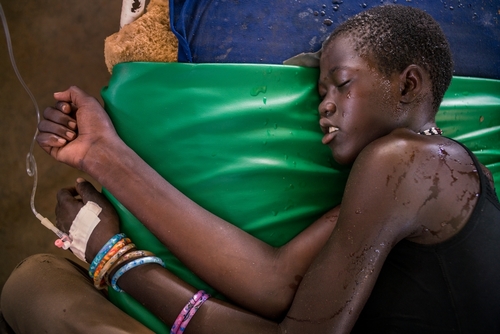
18-year-old Abuk Akuoc, semi-conscious and still letting out soft moans of pain, receives an IV treatment of quinine for her severe malaria at the government-run health center in Panthou. Abuk's family brought her to the health center from their village, called Malithbuol, by motorcycle, which they hired for 30 SSP.  The journey took 15 minutes, but it would have taken one hour on foot. This wasn't the first time she had been at the health center: the previous week they had brought her in, suffering from malaria. She had been prescribed ACT but at the time, the health center had none in stock. It had run out back on August 17th. So, they instructed her to purchase it in the market. But the family couldn't find any ACT there either. It wasn't in stock. So they bought only paracetamol. Last night, Abuk didn't eat and complained of a headache. This morning, when she was cooking, she collapsed. Her family had never seen anything like this and didn't know what malaria looked like until now. Panthou health care center is the only one in Aweil South county and is currently treating about 150 malaria patients per day. They had just received a supply of ACT oral medication for malaria; their previous stock had ran out on August 17. This new stock will likely run out in one or two weeks. They have quinine, but not a lot, so they reserve it for serious cases. They have no RDT (rapid detection tests), so diagnosis is only done clinically based on observed symptoms.
© Diana Zeyneb Alhindawi

يجب الاستعداد لمواجهة الملاريا في ظل بداية النزول الأمطار

© Diana Zeyneb Alhindawi
الحرب في غزة: اطّلع على استجابتنا
اقرأ المزيد

مئات الآلاف في جنوب السودان معرّضون للإصابة بالملاريا في الأشهر القادمة  ذروة انتشار المرض كل سنة، والتي تبدأ مع بداية الفصل الممطر في البلاد.

الملاريا هو واحدٌ من أولى مسبّبات المرض والموت في جنوب السودان، خصوصاً بين الأطفال. في عام 2016، عالجت منظّمة أطباء بلا حدود أكثر من 300,000 حالة من الملاريا في البلاد، كان من بينهم 250,000 حالة إصابة خلال فترة الأشهر الثلاثة التي تشهد ذروة انتشار المرض، ممّا يُحمِّل العاملين الطبيين ما قد يكون فوق طاقتهم.

في أويل، والتي تقع ثمانمئة كيلومتراً تقريباً شمال غرب جوبا، تتحضّر فرق أطباء بلا حدود لمعالجة آلاف الأطفال من الملاريا. في مستشفى أويل الحكوميّ حيث تدير المنظّمة جناحَي الأمومة والأطفال، قامت المنظمة بإضافة عشرين سريراً في جناح الأطفال، وأعادت تموين الأدوية، كما ونظّمت تدريباً طبياً لتهيئة الطاقم الطبي لاستقبال التدفّق المتوقّع لحالات الأطفال الشديدة.

تشتدّ الحاجة إلى هذه الجهود، فخلال فترة ذروة انتشار المرض في العام الماضي، عالجت المنظّمة 5,500 طفلاً مصابًا بالملاريا الشديدة في أويل فقط.

"خلال موسم الملاريا، اكتظّ المستشفى بالمرضى الذين يعانون من حالات معقّدة من الملاريا"، كما تقول منسّقة المشاريع في أويل ألين سيرين.

"ما يُثير القلق الشديد هو عدم استلام العديد من المراكز الصحية المحلّية الأدوية والإمدادات اللازمة لفحص ومعالجة الملاريا في منطقة أويل. بدون الكشف السريع عن المرض أو المعالجة الفورية، يصبح السكان لمحلّيون معرّضين لتطوّر المرض إلى حالة حادّة من الملاريا، مما يعرّض حياتهم للخطر".
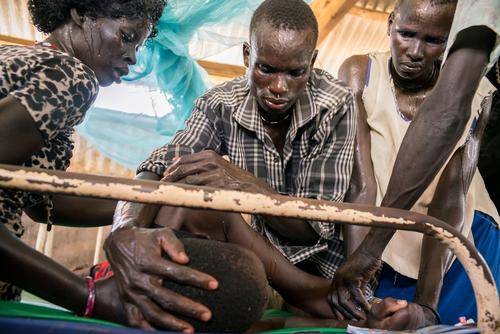
The family of 18-year-old Abuk Akuoc, semi-conscious and letting out cries of pain, holds her still on a bed at Panthou health care center in preparation for the IV that the nurse will administer in order to give Abuk a treatment of quinine for her severe malaria. Abuk's family brought her to the health center from their village, called Malithbuol, by motorcycle, which they hired for 30 SSP.  The journey took 15 minutes, but it would have taken one hour on foot. This wasn't the first time she had been at the health center: the previous week they had brought her in, suffering from malaria. She had been prescribed ACT but at the time, the health center had none in stock. It had run out back on August 17th. So, they instructed her to purchase it in the market. But the family couldn't find any ACT there either. It wasn't in stock. So they bought only paracetamol. Last night, Abuk didn't eat and complained of a headache. This morning, when she was cooking, she collapsed. Her family had never seen anything like this and didn't know what malaria looked like until now. Panthou health care center is the only one in Aweil South county and is currently treating about 150 malaria patients per day. They had just received a supply of ACT oral medication for malaria; their previous stock had ran out on August 17. This new stock will likely run out in one or two weeks. They have quinine, but not a lot, so they reserve it for serious cases. They have no RDT (rapid detection tests), so diagnosis is only done clinically based on observed symptoms.
Diana Zeyneb Alhindawi

على سبيل المثال، في أحد مرافق الرعاية الصحيّة الأساسيّة في مركز أويل، وصف مسؤولٌ العيادات الطبيّة للمنظّمة الحال، حيث تنقصه الأدوية الضرورية والإمدادات اللازمة للمحافظة على استقرار المرضى المصابين بالملاريا الشديدة.

تأمين الرعاية الأساسية على مستوى المجتمع المحلّي أمرٌ جوهريّ ومنقذٌ للحياة، لكن يتحتّم على العديد من سكّان جنوب السودان السفر مسافات طويلة للحصول على العلاج الأساسيّ، ونقص الأدوية على المستوى المحلّي يزيد من خطر تطوّر المرض لدى الأطفال المُصابين إلى حالة حادّة من الملاريا.

إذا عَلِم والدا الطفل المُصاب عن نفاذ العقاقير لدى أقرب مركز صحّيّ، قد يريدان أن يتحقّقا من تحسّن حالته أو عدم تحسّنها قبل أن يقرّرا المُضيّ في رحلة طويلة إلى أحد المستشفيات. إنّه موسم غرس المحاصيل، مما يجعل قرار إمضاء أيامٍ لإكمال الرحلة قراراً غير سهلٍ على الأهل الذين يُنازعون لتأمين معيشة عوائلهم اتّخاذه.

"يُكافح الناس في جنوب السودان، وسط النزاع المتواصل والكوارث الأخرى. يمكن للوقاية من الملاريا أو معالجتها أن تُحدِث فرقاً فعلياً في حياتهم"، كما تقول سيرين.

"يموت الناس بسبب عدم إمكانهم الوصول إلى العلاج الأساسيّ الذي يحتاجونه".