What we do

Ebola disease in DRC: find out how we're responding
Learn more
Médecins Sans Frontières brings medical humanitarian assistance to victims of conflict, natural disasters, epidemics or healthcare exclusion.

We treat patients suffering from a wide array of illnesses and health needs. Here you will find some of the main needs we see and what we do about them.

Discover the main crises we work in, the consequences faced by affected people and challenges in delivering care.
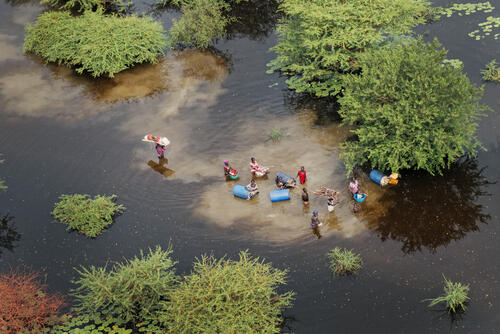
Families heading to dry land in Bentiu. 835,000 people have been directly affected by the flooding.

Across Unity state people’s homes and livelihoods (crops and cattle), as well as health facilities, schools, and markets, are completely submerged by floodwaters.
Crisis settings

Natural hazards

Within a matter of minutes, natural hazards can affect the lives of tens of thousands of people. Hundreds or even thousands of people can be injured, homes and livelihoods destroyed. Access to clean water, healthcare services and transport can also be disrupted. The impact of each event varies greatly and our response must adapt to each situation.
Mosoaya Harrison Karrau, MSF Physiotherapist, does exercises with Fatima, a 20-year-old noma survivor who had trismus caused by noma. Trismus is a medical condition that noma can caused and that blocks the jaws. May 5, 2023.
Medical activities

Neglected diseases

MSF teams treat a number of neglected diseases, including noma, Chagas, cutaneous leishmaniasis, in projects across the world.
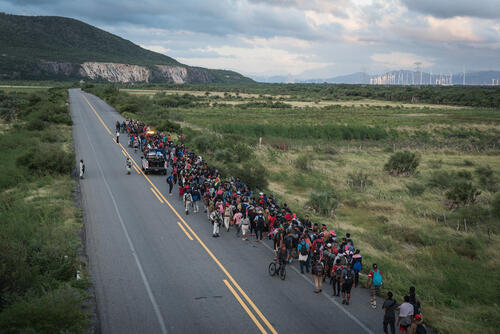
A caravan of migrants escorted by police officers advances along the route between the towns of La Venta and Juchitán, in southern Mexico.
Crisis settings

Refugees, IDPs and people on the move

There are many reasons for flight, including war, persecution, conflict, natural disaster, destitution and repression. With health and well-being jeopardised, the lives of the most vulnerable can be at risk.
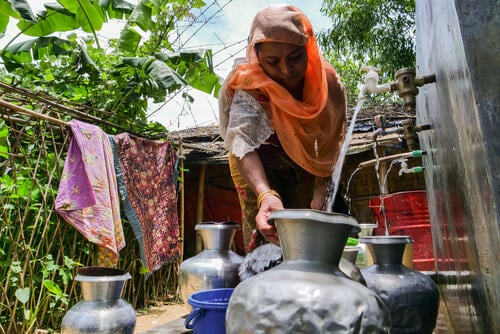
A Rohingya woman fills a pot with drinking water at a water point in Kutupalong-Balukhali camp in Cox’s Bazar district, Bangladesh
In Focus

Rohingya refugee crisis

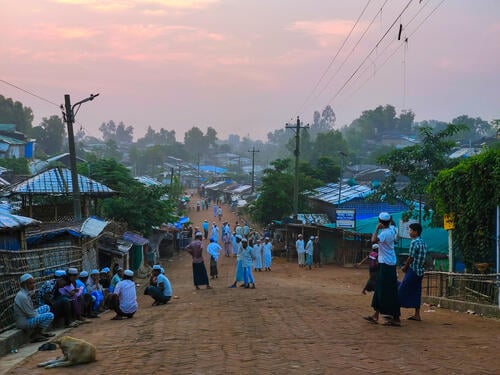
Legally stateless, with very limited options or rights in any country where they have sought refuge, the Rohingya are extremely vulnerable.
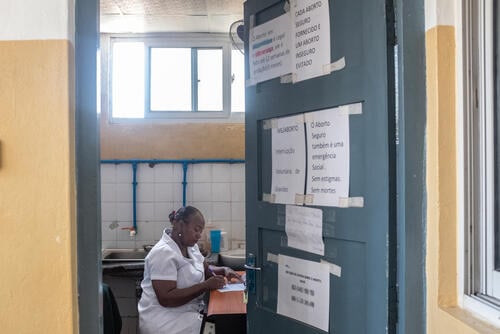
Nilsa, the head of maternity and safe abortion ward in the Chingussura health center in Beira, Mozambique, sits by a door covered with signs that say: "Termination of pregnancy is legal in Mozambique and is free of charge." "It is provided up to 12 weeks of pregnancy (three months)." "Each safe abortion offered is one unsafe abortion prevented." "Safe abortion is also a social emergency. No Stigma. No deaths.”
Medical activities

Safe abortion care

MSF is committed to providing safe abortion care to reduce avoidable suffering and deaths. Every minute, a woman or girl has an unsafe abortion. .
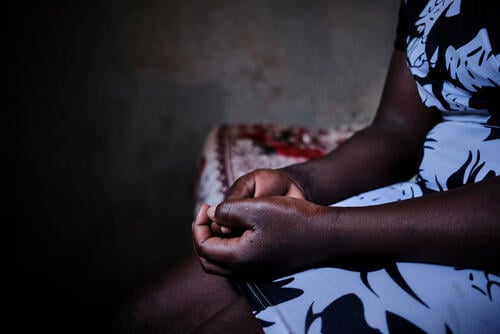
"There is nothing good about this job. Every day I think about whether to leave or continue, but I can't choose to leave, I have no money." Hamida Ajida (false name to protect her identity) says she has no choice: engaging in sex work is her only option. At 29, she has been in the business for three years now. She works in Dedza, a small, dusty town on the border with Mozambique where MSF runs the Sexual and Reproductive Health and Sexual Violence Program. Her story is the story of so many women in the same situation: Three years ago, Hamida ran a business selling vegetables and charckoal in Mangochi, where she was married with three children. Between her and her husband, they were supporting the family, but one day, without any explanation, her husband left her for another woman, a fact that changed Hamida's future: since then she could not support herself financially and had to start working as a sex worker in a bar in Dedza. In a weak voice and with her eyes on her knees, she says: "I started in 2020 to feed my children and my four siblings. Every month I have to send money for them, but it's never enough." Hamida charges 4,000 Malawi kwacha (3.20 euros) per service, and pays 2,500 kwacha a day to rent the room where she works. She says that when everything was going well she could have as many as 8 clients, but that is not the case now. "Nowadays I have one or even none. Many times I go to sleep on an empty stomach." 
She says the biggest challenge she faces is dealing with men who take advantage of her by not honoring price agreements. "When we finish, some clients take the money and leave. We have no one to protect us from threats and physical violence." Until three months ago, Hamida's three-year-old son lived with her in the room, but she took him away because the clients did not like having a baby hanging around the room. Thanks to the goodwill of Mercy, a woman who sometimes went to do laundry and food at the bar, Hamida managed to leave the son with her t
Medical activities

Sexual violence

Sexual violence affects millions of people, brutally shattering the lives of women, men and children. It is a medical emergency, but there is often a dire lack of healthcare services for victims.
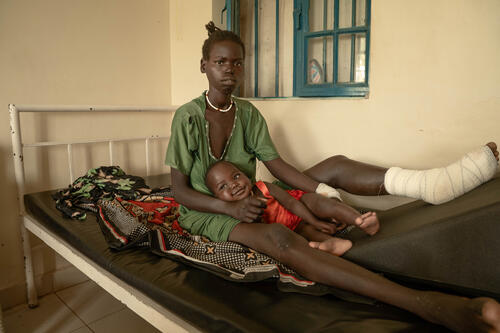
Achan arrived by ambulance after being bitten by a snake. It happened at night when Achan had gone to fetch water. She was attacked by a snake on her way. She was immediately taken to intensive care at the hospital in Abyei supported by Médecins Sans Frontières. She underwent surgery to remove necrotic tissue and was given an antidote.
 “The snake was very poisonous because shortly after the bite I felt itching and began to swell”.  
The woman has two children, one of whom came to the hospital with her because she is still breastfeeding. Achan’s mother also came with her. 
“I didn't see the snake because it was dark, but from the pain I immediately realised that it couldn't have been a common insect”.
Medical activities

Snakebite

Snakebite is a hidden health crisis. Every year, bites from venomous snakes make up to 2.7 million people sick, nearly 140,000 people die, and a further 400,000 people can be left disfigured and/or disabled.​
Rohingya refugees meet up and talk in the streets of the camps. Cox’s Bazar, Bangladesh, October 2023 © Ro Yassin Abdumonab

Des réfugiés rohingyas se rassemblent et discutent dans les camps de Cox’s Bazar. Cox’s Bazar, Bangladesh, octobre 2023 © Ro Yassin Abdumonab
Crisis settings

Social violence and exclusion

Many people are unable to access healthcare simply because of who they are. They may be afraid to seek help, or are excluded because they are forced to live outside of mainstream societal bounds.
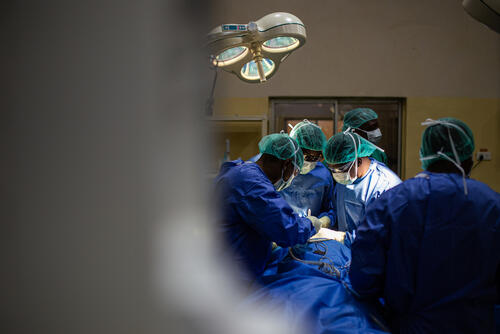
During two weeks between October and November 2023, a total of 32 reconstructive surgeries were carried out by a team of highly trained Nigerian, American and Japanese surgeons, anesthesiologists, and nurses.
Medical activities

Surgery & trauma care

Médecins Sans Frontières has been providing surgical care for people in precarious contexts for decades.
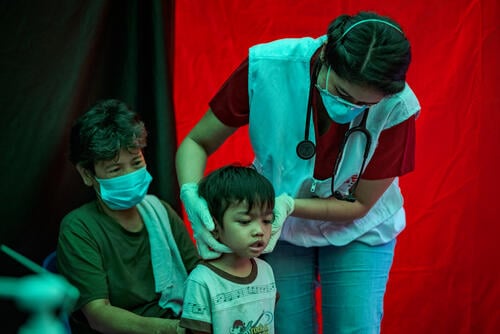
Agustina watches as Trisha Thadhani, MSF TB doctor, conducts a medical evaluation of her grandson Ion, at one of MSF's active case finding sites for tuberculosis on March 13, 2023 in Tondo, Manila, Philippines.
In Focus

TACTiC – Test, Avoid, Cure Tuberculosis in Children

Tuberculosis affects over 1 million children per year; 200,000 of them die. The TACTiC project – Test, Avoid, Cure Tuberculosis in Children - is a multifaceted project led by Médecins Sans Frontières (MSF) to reduce deaths from TB in children through treatment and preventive treatment.
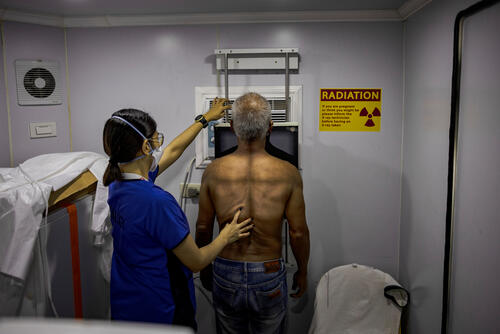
Truck driver Johnny is given a free chest X-ray at one of MSF's active case finding sites for tuberculosis on March 13, 2023 in Tondo, Manila, Philippines.
Medical activities

Tuberculosis

Tuberculosis (TB) is one of the world’s biggest global health crises. Killing 1.3 million people in 2022 TB is the world’s second deadliest infectious disease after COVID-19 (WHO).
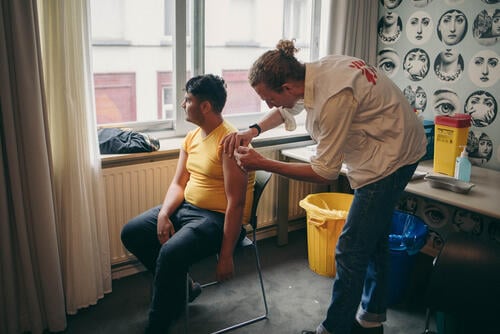
Bruxelles le 29 juin 2023, au Queen Anne. Maxime, médecin, en train d'administrer une dose à Obeid Aymann Ismael, qui vient de Palestine. Il a 21 ans.
Medical activities

Vaccination

MSF teams vaccinate millions of people every year, either as part of routine vaccination, or in response to an outbreak of disease.
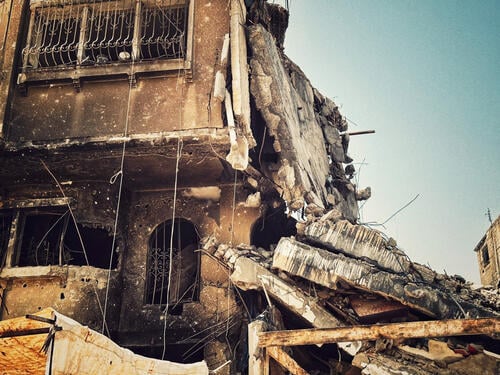
Destroyed buildings in Khan Younis, southern Gaza, taken on 26 May 2024
Crisis settings

War and conflict

More than one third of our humanitarian and medical assistance is for people affected by armed conflict.
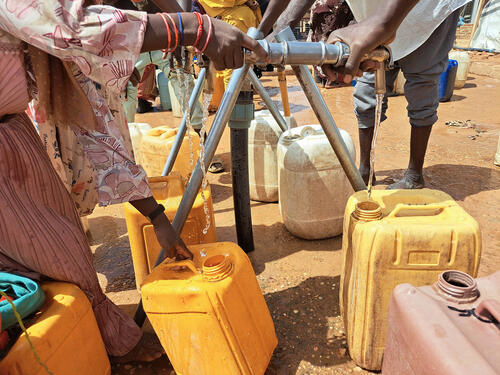
In Adré transit camp, MSF-built water systems produced 654 m³ of water per day in May alone. Since March 2025, one of the 10 boreholes - borehole #11 - has been extracting water using a solar-powered pump, which then distributes water to five additional distribution points.
Medical activities

Water and sanitation

Clean water and sanitation services are necessities for good health.
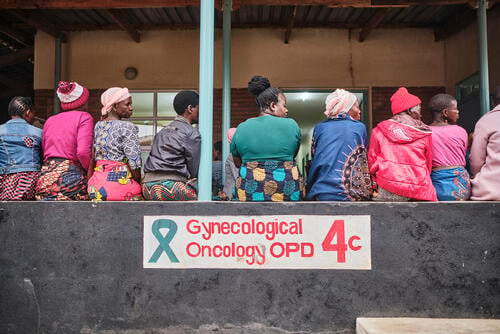
The waiting room in ward 4C where MSF's cervical cancer project is located at Queens Elizabeth Hospital in Blantyre, Malawi.
Medical activities

Women's health

An estimated 99 per cent of women who die in childbirth or from pregnancy-related complications live in developing countries. Most of these deaths are preventable.
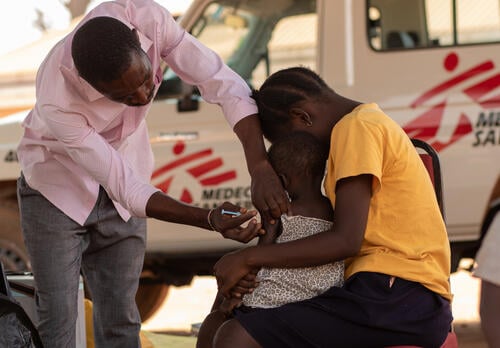
Individuals receive their doses of the yellow fever vaccine at vaccination posts strategically set up  in markets and throughout the community in Yambio, fortifying defenses against the ongoing outbreak in Western Equatoria State.
Medical activities

Yellow fever

Yellow fever can be prevented with a vaccine, yet it's a disease that claims the lives of an estimated 30,000 - 60,000 people each year.

Four mothers posing in a corridor of the Hospital in Bili. All four of them are staying in the hospital with their child, that's suffering from a severe case of malaria. Since the beginning of the project in 2016, the pediatric ward already treated more than 4.000 cases of complicated/severe form of malaria.
Médecins Sans Frontières (MSF)

Independent medical humanitarian assistance

We provide medical assistance to people affected by conflict, epidemics, disasters, or exclusion from healthcare. Our teams are made up of tens of thousands of health professionals, logistic and administrative staff - most of them hired locally. Our actions are guided by medical ethics and the principles of independence and impartiality. We are a non-profit, self-governed, member-based organisation.

Learn more