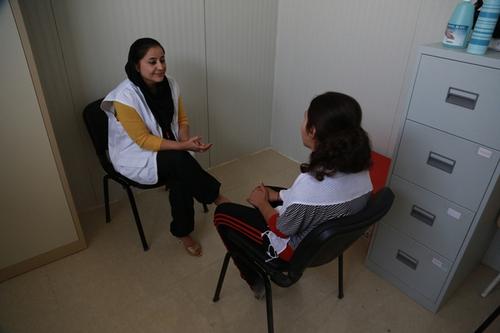
Alma is a 16 year old girl from Syria who is receiving counselling from MSF in Domeez refugee camp, northern Iraq. Her testimony is below. The war and its aftermath have had far reaching consequences for the mental health of children. As of October 2013 in Domeez, children and adolescents comprise 50 percent of all MSF’s new patients. Every week, between 15 and 20 children and adolescents aged 18 and under are admitted to the program. 

"We’ve been living in the camp for six months, after coming from Damascus to escape the war. There are six people in my family and we all live in one tent. At first we were happy to be here, and to be safe. Compared to Damascus, it is better. There we lived amidst war, at least here it is safe. 

But I am not happy here. After I arrived here, when I got upset or angry, I would faint. Last week, this happened twice. In the last month, it has happened six times. 

I don’t know why it happens. After I faint, and I have gained consciousness, I lie there for an hour or so then I get up. I have shortness in breath after it happens and it takes an hour to feel ok again. 

Most of the time there is no reason.

I don’t sleep very well and I am scared when I sleep. When I wake up, I am still scared. I am afraid of the tents. They remind me of the funeral procession when my cousin was killed in Syria. I remember people crying and I feel that I have dark things in front of my eyes. 

Every second night, I have nightmares. 

I also don’t eat very much. From yesterday until now, I did not eat. 

My biggest wish is to go back to Syria with my family. I want to study, but it’s not possible, either here or in Syria. It is difficult to have hope for the future when we don’t know what will happen."
© Pierre-Yves Bernard/MSF

"من الصعب أن يكون لدينا أمل بالمستقبل حين لا نعرف ما الذي سيحصل"

© Pierre-Yves Bernard/MSF
الحرب في غزة: اطّلع على استجابتنا
اقرأ المزيد

ألما فتاة تبلغ 16 عاماً من سوريا، تحصل على الاستشارات من أطباء بلا حدود في مخيم دوميز للاجئين، شمال العراق. شهادتها واردة أدناه. تركت الحرب وتبعاتها آثاراً بعيدة المدى على الصحة النفسية للأطفال. في أكتوبر 2013 في دوميز، شكل الأطفال واليافعين ما نسبته 50 بالمئة من جميع مرضى أطباء بلا حدود الجدد. كل أسبوع، يتم استقبال ما بين 15 و20 طفلاً ويافعاً دون 18 في البرنامج.

"نقيم في المخيم منذ ستة أشهر، بعد أن قدمنا من دمشق هرباً من الحرب. هناك ستة أفراد في عائلتي وجميعنا نعيش في خيمة واحدة. في البداية كنا سعداء بوجودنا هنا وبكوننا في أمان. مقارنة بدمشق، الأمر أفضل. هناك عشنا وسط الحرب، هنا على الأقل نحن بأمان.

لكنني لستُ سعيدة هنا. فبعد وصولي، حين أشعر بالاستياء أو الغضب يغمى علي. حصل الأمر مرتين في الأسبوع الماضي. وستة مراتٍ في الشهر الماضي.

لا أعرف لماذا يحصل الأمر. بعد أن أفقد الوعي ومن ثم أستعيده، أستلقي لساعة أو ما قاربها حتى أستطيع النهوض. أصاب بضيق بالتنفس بعد حصول الأمر وأستغرق ساعة لأشعر بأنني على ما يرام مجدداً.

معظم الوقت ليس هناك سبب.

لا أنام جيداً وأشعر بالخوف حين أنام، وحين أستيقظ، أبقى خائفة. إنني خائفة من الخيم. تذكرني بمراسم التشييع حين قُتل ابن عمي في سوريا. أتذكر الناس يبكون وأنا أشعر أن أشياءً مظلمة تمكث أمام عينيّ.

كل ليلة وأخرى، أرى الكوابيس.

كما أنني لا آكل كثيراً. منذ الأمس وحتى الآن لم آكل.

أمنيتي الكبرى هي العودة إلى سوريا مع عائلتي. أريد أن أدرس، ولكن ذلك غير ممكن، سواء هنا أو في سوريا. من الصعب أن يكون لدينا أمل بالمستقبل حين نعرف ما الذي سيحصل".