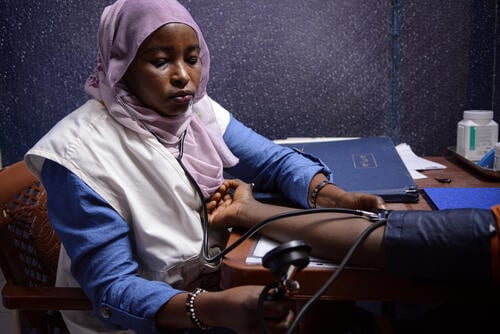
Nemat Abaker, MSF midwife supervisor in the maternity ward doing consultations for pregnant women in MSF fixed clinic in El Geneina, West Darfur. The majority of our patients come from the more than 100 sites in the state capital more than 100,000 people displaced people have taken shelter following episodes of deadly violence earlier this year. Water and sanitation conditions in these sites are very poor, contributing to poor health. 
(Written consent)  

 Testimony: 
“We provide reproductive healthcare for women, and we assist them during deliveries. We also provide all prenatal and postnatal care for the mothers. Usually, we receive more than 40 women and assist 5 deliveries a day in the clinic. 

Recently, we started to see fewer patients coming to us because of the recent violence here in El Geneina and attacks on the hospitals which lead to forcing these facilities to close its doors to patients. 

Even before these difficulties, women who face very critical conditions prefer to give birth at home and risk complications rather than going to a hospital. Even if it means a higher risk of dying during childbirth. There are many internally displaced people here and they are living in harsh living conditions which also brings bad consequences for women’s health and wellbeing  

Most of the time mothers come alone without a caretaker and they are in a bad nutrition condition, carrying the responsibility and care for their whole family.” (June 2022)  

 “I am very happy to be a woman and I thank God for creating me as a woman. However, many women in Sudan struggle. They work very hard to feed their children. Even when they are pregnant, they go out to work and get called out by people telling them they should stay home and care for their children. Some girls get married as early as 14 years old and are prevented education, because an educated woman would be strong and resist.   

In the MSF fixed clinic in El Geneina, Western Darfur, we see the many challenges women face to seek medical services. There are lots of displaced people in the city. Some pregnant women come for a first visit and would not come back for the next. Even if our services are free of charge, some women tell us: “I have nothing to eat, how can I come to you again?” Many pregnant women come alone to the clinic, there is no caretaker for them. Even after deliveries, husband usually don’t come. In another MSF clinic here in Darfur, we saw a girl who had gone through an unsafe abortion, she had severe anaemia. She spent three days without nobody asking about her. It is a neighbour who saw her by chance in the hospital and alerted the husband. Why did he not come with her?   

When I was a young student, I saw a woman die while giving birth, because of a lack of medical care. She had been delivered by a traditional birth attendant. At that moment, I decided to complete my education in order to avoid this to happen again. With MSF I can keep learning and achieving this. Helping mothers and their babies is the most important thing for me. I hope to learn more, know more, help more.” (March 2022)
تستكمل مشرفة القابلات في منظمة أطباء بلا حدود في جناح الأمومة، نعمت أبكر، الاستشارات مع النساء الحوامل في العيادة الثابتة في الجنينة، غرب دارفور. السودان، في يونيو/حزيران 2022.
© Majd Aljunaid/MSF
وظائف في الميدان

القابلات

تستكمل مشرفة القابلات في منظمة أطباء بلا حدود في جناح الأمومة، نعمت أبكر، الاستشارات مع النساء الحوامل في العيادة الثابتة في الجنينة، غرب دارفور. السودان، في يونيو/حزيران 2022.
© Majd Aljunaid/MSF
استجابتنا للإيبولا في جمهورية الكونغو الديمقراطية
اقرأ المزيد

كقابلة مع منظمة أطباء بلا حدود، سيكون من الضروري أن تتحلي بخبرة في التعامل مع عمليات الولادة المعقدة والطبيعية.

بدءًا من إجراء الولادات بشكل مستقل إلى الإشراف على استخدام الموارد الطبية، تؤدي القابلات دورًا حاسمًا في حماية صحة الأمهات والرضع في السياقات الإنسانية.

يكتسي دور القابلة في أطباء بلا حدود أهمية بالغة في تقديم الرعاية التوليدية إلى النساء الحوامل وأطفالهن في البيئات الصعبة. من خلال العمل تحت إشراف طبيب مختص، تضمن القابلات تنفيذ الرعاية قبل الولادة وبعدها، وتنظيم الأسرة، والخدمات التوليدية وفقًا لبروتوكولات أطباء بلا حدود. كما تتعامل القابلات مع حالات العنف الجنسي والتهابات الجهاز التناسلي ورعاية الأطفال حديثي الولادة، مع الحفاظ على معايير النظافة وضمان إمدادات ثابتة من الأدوية والمعدات الأساسية.

يتميّز هذا الدور بطابعه المتنوّع والمثير للاهتمام وينطوي على بعض أو كل مما يلي:

المسؤوليات

  • توفير الرعاية التوليدية للنساء الحوامل وأطفالهن، بما في ذلك رعاية ما قبل الولادة وخلالها وما بعدها.
  • تنفيذ وضمان استمرارية رعاية ما قبل الولادة وما بعدها وتنظيم الأسرة والرعاية التوليدية ورعاية الأطفال حديثي الولادة ورعاية الإجهاض الشاملة.
  • التعاون في إدارة حالات العنف الجنسي وتقييم قابلية إحالة النساء الحوامل.
  • ضمان استيفاء معايير النظافة الصحية والتعقيم، وإجراء أعمال التنظيف والصيانة البسيطة للمعدات الطبية الحيوية.
  • ضمان إمدادات منتظمة من الأدوية والمعدات اللازمة لأنشطة الأمومة ومتابعة حالات الأطفال حديثي الولادة حتى الخروج من المستشفى.
  • احترام حق المريضات في الخصوصية والسرية والإشراف على الإجراءات الإدارية.
  • المشاركة في تنظيم الجناح وضمان نقل المعلومات ذات الصلة إلى فريق المناوبة التالي.
  • إجراء عمليات الولادة الطبيعية بشكل مستقل وإدارة حالات الطوارئ التوليدية وتحديد الحالات التي تحتاج إلى إحالة.
  • الإشراف على استخدام الأدوية والمرافق والمواد التوليدية لضمان الاستخدام الرشيد ومستويات المخزون المناسبة.
في كل يوم أعمل فيه، وفي كل مكان أعمل فيه، أشهد لحظات جميلة ورائعة تجمع كل البشر. كيرستي ريني، قابلة

المتطلبات

  • تأهيل أو تخصص في القبالة (شرط أساسي)، بكالوريوس في التوليد (مرغوب فيه).
  • خبرة عملية لا تقل عن سنتين في وظائف مرتبطة بأنشطة التوليد.
  • إتقان لغة البعثة شرط أساسي؛ ويُستحسن إتقان لغة العمل المحلية.

مهارات أخرى ذات قيمة مضافة

  • بكالوريوس في التوليد.
  • خبرة في وظائف مرتبطة بالتوليد.
  • إتقان لغة العمل المحلية.
وظائف في الميدان
أريد التقديم على وظيفة
اختر بلد إقامتك الحالي