


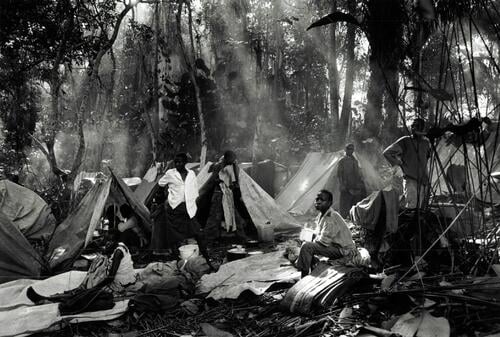
Does speaking out defend, expand, or limit humanitarian access and humanitarian space?
Based on the speaking out case study: The Hunting and Killing of Rwandan Refugees in Zaire-Congo: 1996-1997, this course is an interactive self-study course, which includes a learning journey.
This MSF Speaking Out Case Studies (SOCS) learning module emphasises and expands critical thinking and analysis skills using a two-part approach. It is based on MSF's speaking out dilemmas in complex humanitarian contexts.
Part one of this course is thematics-based and is focused on humanitarian access, humanitarian space and speaking out.
Part two investigates the case study, "The Hunting and Killing of Rwandan Refugees in Zaire-Congo: 1996-1997" and speaking out dilemmas surrounding how MSF was instrumentalised – used as refugee ‘bait.’
Part 1: The humanitarian access and humanitarian space thematic includes an introduction to concepts such as:
- Tangible and intangible humanitarian space and humanitarian access including negotiated access, limits, and risks.
- The normative international framework for humanitarian access/space and the laws that protect the act of medical humanitarian aid.
- External and internal challenges to humanitarian access/space including examples from Afghanistan and Gaza.
- Evolution of humanitarian space and humanitarian access including a spotlight on medically treating 'terrorists' and counterterrorism.
Part 2: Case study analysis of speaking out dilemmas, humanitarian access, and humanitarian space.
Learners are led through a critical reflective investigation of case study speaking out dilemmas including implications, after-action analysis, and trade-offs.
Although all of the speaking out case studies are relevant to the themes of public advocacy, humanitarian space, and access, the SOCS team chose to base its work on the case study, “The Hunting and Killing of Rwandan Refugees in Zaire-Congo: 1996–1997.” This case study uniquely highlights the constraints and issues associated with striking a balance between calls for humanitarian space, the instrumentalisation of access, and speaking out.
The critical aspects of this crisis—which persist to this day—constitute key elements of the central theme, notably crimes against humanity (specifically genocide), the resulting mass exodus of populations, refugee crises, reprisals, the systematic hunting down and massacring of refugees, and an international community that abandoned the affected populations.
The Learning Journey
What you need to know before starting the course.
How to enrol
All students - internal and external - must register on TEMBO, the MSF learning platform, in order to access courses. Click on the button below to access the course.