



8041 Results
 
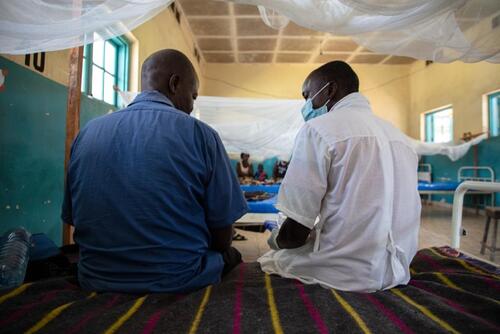
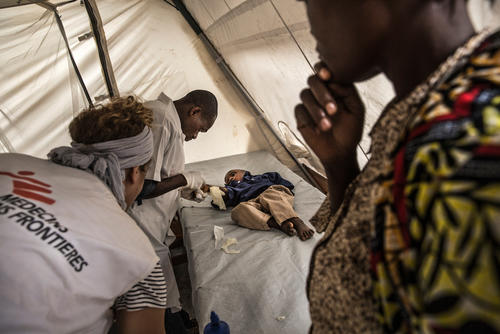
Sabiti Lukalaba vient de finir son traitement contre la méningite, il rentre à la maison dans les minutes qui suivent; les signes de la méningite ont disparu; il vient de passer cinq jours à l’hôpital général de Banalia.

MSF soutient les efforts du à Ministère Provinciale de la Santé dans cette zone de la Province de la Tshopo en RDC dans la lutte contre cette maladie potentiellement mortelle.
Medical activities

Meningitis

Meningococcal meningitis is a highly contagious bacterial form of meningitis – a serious inflammation of the meninges – the thin lining that surrounds the brain and spinal cord. Topic
 
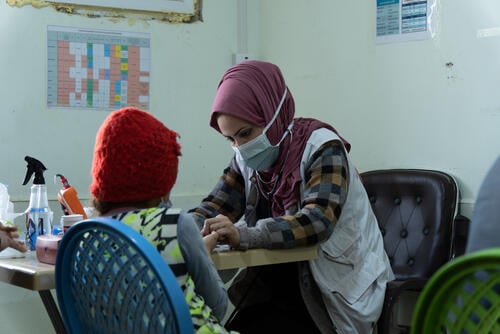
MSF nurse checking the vital signs and glucose level of a diabetes patient at the MSF-run clinic for non-communicable diseases in the Hawija General Hospital in Hawija, Kirkuk.
Medical activities

Non-communicable diseases

Non-communicable diseases require lifelong care. Topic
 
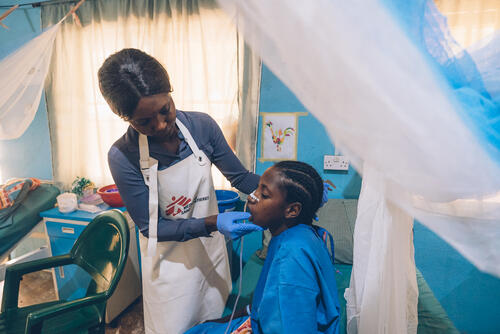
Mosoaya Harrison Karrau, MSF Physiotherapist, does exercises with Fatima, a 20-year-old noma survivor who had trismus caused by noma. Trismus is a medical condition that noma can caused and that blocks the jaws. May 5, 2023.
Medical activities

Neglected diseases

MSF teams treat a number of neglected diseases, including noma, Chagas, cutaneous leishmaniasis, in projects across the world. Topic
 
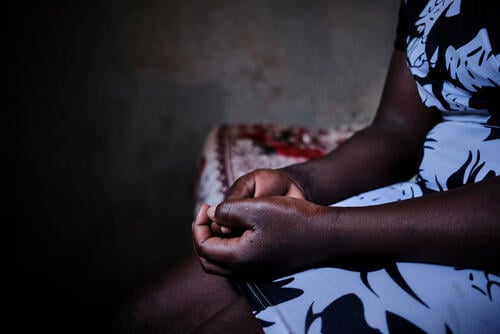
"There is nothing good about this job. Every day I think about whether to leave or continue, but I can't choose to leave, I have no money." Hamida Ajida (false name to protect her identity) says she has no choice: engaging in sex work is her only option. At 29, she has been in the business for three years now. She works in Dedza, a small, dusty town on the border with Mozambique where MSF runs the Sexual and Reproductive Health and Sexual Violence Program. Her story is the story of so many women in the same situation: Three years ago, Hamida ran a business selling vegetables and charckoal in Mangochi, where she was married with three children. Between her and her husband, they were supporting the family, but one day, without any explanation, her husband left her for another woman, a fact that changed Hamida's future: since then she could not support herself financially and had to start working as a sex worker in a bar in Dedza. In a weak voice and with her eyes on her knees, she says: "I started in 2020 to feed my children and my four siblings. Every month I have to send money for them, but it's never enough." Hamida charges 4,000 Malawi kwacha (3.20 euros) per service, and pays 2,500 kwacha a day to rent the room where she works. She says that when everything was going well she could have as many as 8 clients, but that is not the case now. "Nowadays I have one or even none. Many times I go to sleep on an empty stomach." 
She says the biggest challenge she faces is dealing with men who take advantage of her by not honoring price agreements. "When we finish, some clients take the money and leave. We have no one to protect us from threats and physical violence." Until three months ago, Hamida's three-year-old son lived with her in the room, but she took him away because the clients did not like having a baby hanging around the room. Thanks to the goodwill of Mercy, a woman who sometimes went to do laundry and food at the bar, Hamida managed to leave the son with her t
Medical activities

Sexual violence

Sexual violence affects millions of people, brutally shattering the lives of women, men and children. It is a medical emergency, but there is often a dire lack of healthcare services for victims. Topic
 
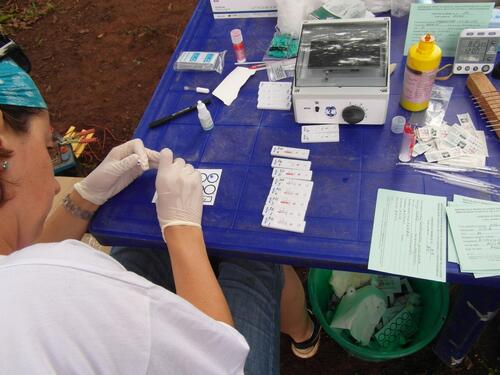
A MSF lab technician, who travels with a mobile laboratory, including microscopes and centrifuges, tests a blood sample for sleeping sickness. MSF mobile medical teams are spending 8 months travelling through DRC and aim to test and treat 42,000 people for sleeping sickness.
Medical activities

Sleeping sickness

Sleeping sickness, or human African trypanosomiasis, is a neglected tropical disease. It is a potentially fatal parasitic infection which attacks the body’s central nervous system, causing severe neurological conditions. Topic
 
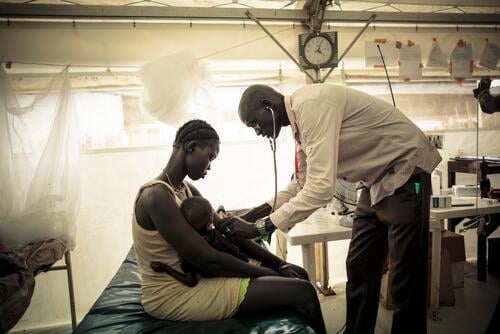
Médecins Sans Frontières (MSF) runs health care facilities in the UN protection of civilians camp (PoC) in Bentiu, South Sudan. The MSF hospital in the Bentiu PoC is the only hospital for the population of the camp. It provides 24-hour emergency room care, intensive care for malnourished children, medical treatment in paediatric and adult wards, and surgical and maternity services. More than  100,000 people live in
dire living conditions in the Bentiu PoC, having fled ongoing violence.
The MSF staff consisted out of international staff (round the 20) and national staff ( round 500). The national staff members are people themselves affected by the violence in South Sudan and live as IDP’s in the camp.

International Activity Report 2016

Almost one-third of our projects in 2016 were dedicated to providing assistance to populations caught in wars, such as in Yemen, South Sudan, Afghanistan, Iraq, Nigeria and Syria. We also provided assistance to people on the move, fleeing repression, poverty or violence, exploitation or danger as countries closed options for safe and legal routes. Our teams responded to other emergencies caused by epidemics and natural disasters and provided care and improved treatment for patients with diseases such as tuberculosis and HIV. Annual Report - 25 Jun 2017
 
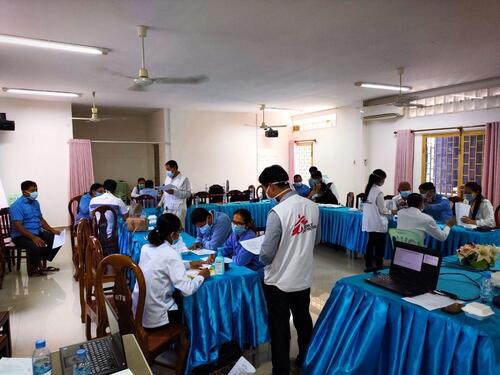
Nurses of the Ministry of Health receive training in Sangker operational district, ahead of the relaunch of the hepatitis C nursing activity pilot, where nurses will lead the care of hepatitis C patients.
In addition to skills related to hepatitis C, new measures around infection prevention control regarding COVID-19 are taught.

Until the end of June 2020, just 141 cases were confirmed in Cambodia, and a quarter of them originates from a European tourist group in March. The authorities were quick to implement thorough contact tracing and asked our teams to help with this. We’ve also contributed to the new IPC and clinical guidelines for Cambodia and developed training units. Subsequently, about 300 staff members of hospitals run by the Ministry of health received training. Given the difficulty of importing medical equipment, the team is now trying innovative approaches to develop oxygen ventilation systems by using commercially available diving masks and 3D-printing the necessary connectors in the country in anticipation of an outbreak of COVID-19 in Cambodia.
Asia & Pacific

Cambodia

We handed over our projects in Cambodia in 2021. Country
 
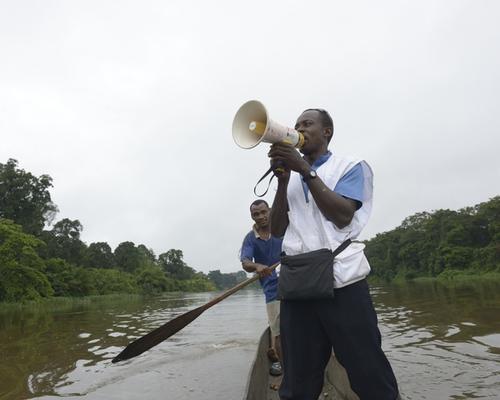
In Congo's rainforest, MSF cured 15.000 pygmies affected by Yaws, a neglected disease, in 3 months (Sept - Oct 2012) using a new therapeutic regime (single dose oral antibiotic)
Yaws is a neglected tropical disease caused by a bacterium that affects the skin, bone and cartilage. Lack of resources, it has never been completely eradicated. Humans are the only reservoir of this bacterial infection. A recent discovery that a single-dose of azithromycin (given orally) can cure the disease has raised the prospects of eradicating yaws altogether. 
It affects many isolated communities whose populations Congo Pigmy North, away from the health care system. 

MSF-Epicentre with OCP decided to launch a universal treatment with azithromycin that can eradicate this illness among Aboriginal people (Pygmies) in the Bétou and Enyellé districts. During two months (in september and october 2012), three MSF teams have traveled on the Ubangi River, which separates the two Congos and trails through the rainforest. 
A real human and logistical challenge to achieve these Pygmy communities in their villages in the rainy season because it is the only time during which they are sedentary.
Africa

Republic of Congo

MSF first worked in Congo in 1997 and closed its projects in 2013. Country
 
A mother watches her child, who she just brought to the CTC in Katana is examined by MSF nurses for cholera symptoms.

International Activity Report 2017

Treating the wounded and responding to basic health needs, malnutrition and outbreaks of infectious disease, in 2017 Médecins Sans Frontières (MSF) provided lifesaving care to those caught up in conflict as health systems collapsed and living conditions deteriorated. Annual Report - 24 Jul 2018
 
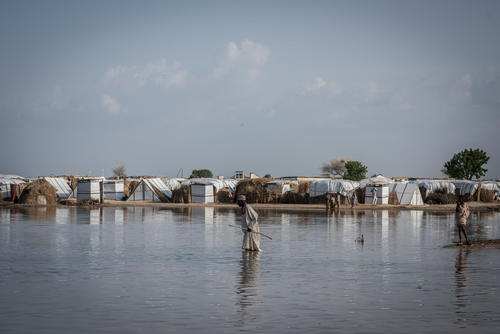
 Rann during the rainy season.
In Focus

Lake Chad Crisis

Armed conflict has forced over 2.5 million people to flee their homes across the Lake Chad Basin. Violence and multiple forced displacement have destroyed what ability people had to support themselves, with many dependent on humanitarian assistance. Topic
Four mothers posing in a corridor of the Hospital in Bili. All four of them are staying in the hospital with their child, that's suffering from a severe case of malaria. Since the beginning of the project in 2016, the pediatric ward already treated more than 4.000 cases of complicated/severe form of malaria.
Médecins Sans Frontières (MSF)

Independent medical humanitarian assistance

We provide medical assistance to people affected by conflict, epidemics, disasters, or exclusion from healthcare. Our teams are made up of tens of thousands of health professionals, logistic and administrative staff - most of them hired locally. Our actions are guided by medical ethics and the principles of independence and impartiality. We are a non-profit, self-governed, member-based organisation.

Learn more