



Ebola disease in DRC: find out how we're responding
Learn more
7996 Results
 
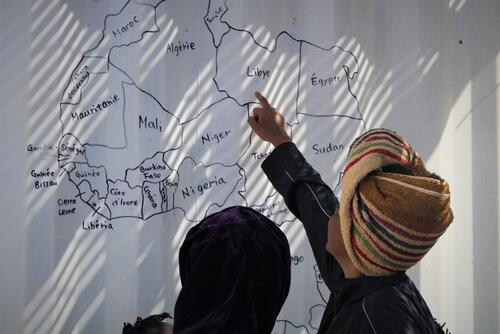
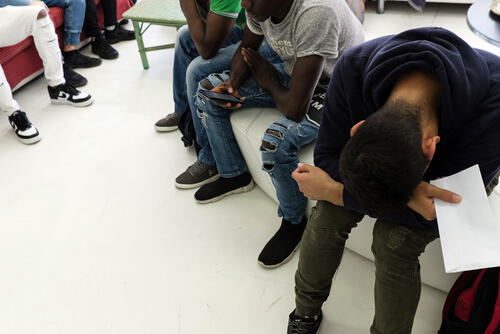
Refugees and migrants detained in this detention centre get rice or pasta for lunch and dinner. For breakfast people receive bread with some cheese. Meals often have to be shared by many people. Food is prepared in-house and is served in large metal bowls to be shared by five to 10 people.
Libya

“Healthwise, it was a disaster” in Libya’s Zintan and Gharyan detention centres

MSF staff who were recently granted access to two detention centres in Libya found a catastrophic medical situation among the people detained there. Project Update - 21 Jun 2019
 
Following the massacre in the village of Ogossagou, MSF provided home care and psychosocial counselling.
Mali

Violence in central Mali has reached unprecedented levels

Interview with Patrick Irenge, MSF’s medical coordinator in Bamako, Mali, since September 2017 on the current situation, the impact of violence on the population and how MSF is responding. Interview - 20 Jun 2019
 
Yemen, Saada city, 22 April 2019 - A man walking in front of destroyed buildings near the old city of Saada.
Yemen

Aerial bombardments in Sa'ada

Video report on life in Sa'ada, the most bombed governorate of Yemen. With almost a quarter of all recorded coalition air raids since March 2015, the MSF hospital that was bombed in 2015 and reopened in April 2018 had admitted more than 1,500 patients by the end of the year. Project Update - 20 Jun 2019
 
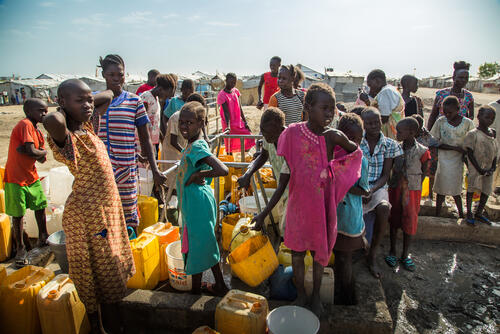
Bentiu, South Sudan, 2018. People wash clothes in the river in the buffer zone in Bentiu PoC (Protection of Civilians) site.
South Sudan

Life inside or outside a displacement camp

MSF patients and staff describe life in South Sudan’s Protection of Civilians sites, where relative safety comes at the expense of exposure to life-threatening diseases and undignified living conditions. Project Update - 20 Jun 2019
 
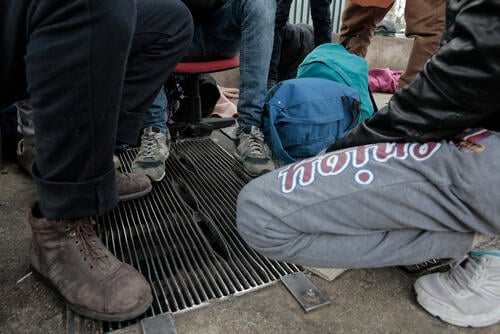
Most people in the shelters, where they wait to cross into the US, do not take to the streets due to the risk of imminent kidnapping. Migrants and refugees are exposed to risks of violence at the northern Mexican border.
Mexico

Mass arrests drive migrants underground and cut them off from medical care

MSF teams have witnessed an increase in mass arrests and raids on groups of migrants on Mexico’s southern border, with alarming consequences. Press Release - 19 Jun 2019
 
Adephine speaks in slow, hushed tones. She tugs at her mother, Elisabeth, sliding behind her as soon as the gathering of people at this remote Médecins Sans Frontières health clinic in Tanzania swells.
A refugee camp can limit people’s movement, but it can do little to dash the hopes and aspirations of a 12-year-old girl from breaking through its dim and bleak confines.
Adephine often lets her imagination fly outside the Nduta refugee camp, in north-western Tanzania, where she has been living since January 2017, when her mother fled violence in Burundi. In a place far away from the camp, she dreams of becoming a doctor one day. As she says this, she grows in confidence, and her eyes stare you straight in the face.
In the camp, she receives lessons in English, French, basic mathematics and science, but says, with a touch of gloom, “we often get punished in the school, and I don’t like it”.
It’s not only these daily chastening experiences that threaten to dampen the spirit of children like Adephine, but the grinding toil of living in a place where rationing is the norm can snuff out any lingering traces of ambition.

Adephine’s father, and her two siblings, only joined the family in the camp later, when registrations had stopped. “My husband is not registered, and so he cannot receive assistance”, says Adephine’s mother, Elisabeth. “We share the food we receive among us”.
A small patch of land around their modest two-room abode in the camp provides for a few green vegetables and beans.
“But this is not enough”, says Elisabeth.
Over 230,000 Burundians, spread across three camps in Tanzania, will remain dependent on much-needed humanitarian assistance until longer-term solutions are found. But, for now, they desperately need support. This little-spoken crisis continues to be dismally funded, revealing major gaps in the humanitarian response.

Limited food, poor living conditions and weak wastewater management are a recipe for disease outbreaks. The Nduta refugee camp, where MSF is the main healthcare provider, recently witnessed a peak in diarrhoea cases, but MSF teams were able to swiftly respond and staunch the spread of the disease.

Back in the health clinic, Adephine is playing with a strip of capsule. “When we are sick, we can have treatment”, says her mother, Elisabeth. But she wishes they had more variety in the food they received in the camp.

Sitting together, Adephine, her younger sister, Rachel, and Elisabeth appear composed. What the future holds for them remains shrouded in uncertainty. But with those dreams that take one far away, there is always that smallest of relief to take flight, even briefly, and escape the biting reality of the camp.
Refugees, IDPs and people on the move

Refugees around the world: Stories of survival

For World Refugee Day, we take a look at the stories of survival of people forced to flee from home. There are now 70.8 million people displaced around the world. MSF teams provide care to refugees in a number of countries. Voices from the Field - 19 Jun 2019
 
Refugees from Kosovo in Albania, April-June 1999.
MSF Speaking Out

Violence against Kosovar Albanians, NATO's intervention 1998-1999

The ‘Violence against Kosovar Albanians NATO’s intervention 1998-1999’ case study describes the constraints and dilemmas faced by Médecins Sans Frontières teams when witnessing the process of terror and expulsion they described as the ‘deportation’ of Kosovar Albanians by Serb forces. Speaking Out Case Studies - 16 Jun 2019
 
Kenema hospital during the end of the first of four construction phases. Pictures are taken after the main building structures have been built.

Medical Communication Advisor Gijs Van Gassen inspecting one of the modular buildings at the hospital.
Sierra Leone

New hospital to counter high maternal and child mortality rates

On 6 March 2019, Médecins Sans Frontières (MSF) welcomed the first patients in its new 63-bed hospital in Hangha town, Kenema district, southeast Sierra Leone. Project Update - 14 Jun 2019
 
In March 2018, Doctors Without Borders/ Médecins Sans Frontières (MSF) sent an assessment team to Mosul’s old city in northern Iraq. The old city experienced intense shelling, aerial bombing and attacks with improvised explosive devices (IED) during the conflict. Much of the old city is still inaccessible due to the destruction and presence of IEDs, unexploded ordinance (UXO) and booby traps. 

The MSF assessment team visited two primary healthcare centres (PHCCs) and donated medical supplies such as painkillers, antibiotics, dressing materials and tablets for sterilizing water. The assessment found the PHCCs were under-resourced and struggled to provide healthcare due to the lack of medication, water and electricity. One of the doctors said: “If we don't have water or electricity, we cannot do anything…most of the cases we cannot treat. We can only treat the simple cases and the complicated cases we refer.”

MSF currently runs a maternity and paediatrics hospital in west Mosul, and a post-operative and surgical unit for war-wounded patients in east Mosul. Following the assessment in the old city, MSF distributed 550 hygiene kits to families. The kits included items such as soap, toothbrushes, towels and water containers and will help families stay clean and prevent the spread of diseases.
Iraq

MSF in Iraq Annual Report 2018

Report on MSF's activities in Iraq during 2018. Report - 14 Jun 2019
 
Knocking door to door

“My aunt bleeds regularly from the nose, but I am too afraid to take her to the health centre. I am afraid that she will be forced into an Ebola Treatment Center”, says a villager visited by Diallo, who knocks each day on the doors in Vukeme neighborhood in Lubero, to placate fears spread within the communities. “We need to rebuild trust with the communities, and this takes time”, explains Diallo.

“We stay with these families for half an hour and inform them about Ebola and the comprehensive healthcare they can receive at Lubero-cité health center”.

Since Ebola claimed some victims in this health zone early 2019, many rumours have been spread. Some sick people stopped going to professional health centers, because they were afraid of a killer disease they did not know. Diallo reassures them that many infectious diseases are treated in Lubero, but not Ebola. Ebola-suspected patients are transferred to Butembo hospital, where they can be tested and benefit from specialised care.

“We stay with the families for about half an hour, but information sessions can last up to more than one hour, when we visit groups made of people who are influential in their communities. We need to make sure that the correct information is given to those who need healthcare.”
Democratic Republic of Congo

Restoring trust among communities fearful of Ebola

In the midst of the Ebola outbreak in eastern Democratic Republic of Congo, MSF teams are finding ways to restore the trust of a community fearful of the disease and mistrustful of those responding to it. Project Update - 13 Jun 2019
Four mothers posing in a corridor of the Hospital in Bili. All four of them are staying in the hospital with their child, that's suffering from a severe case of malaria. Since the beginning of the project in 2016, the pediatric ward already treated more than 4.000 cases of complicated/severe form of malaria.
Médecins Sans Frontières (MSF)

Independent medical humanitarian assistance

We provide medical assistance to people affected by conflict, epidemics, disasters, or exclusion from healthcare. Our teams are made up of tens of thousands of health professionals, logistic and administrative staff - most of them hired locally. Our actions are guided by medical ethics and the principles of independence and impartiality. We are a non-profit, self-governed, member-based organisation.

Learn more