



Ebola disease in DRC: find out how we're responding
Learn more
7996 Results
 
MSF staff providing treatment
Niger

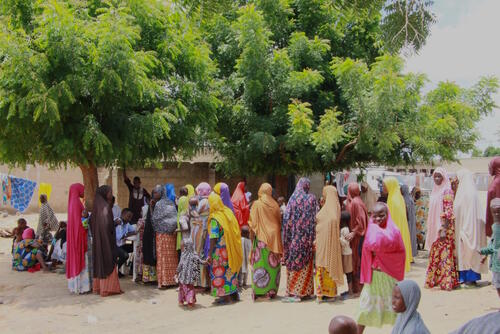
MSF teams forced to leave Maïné Soroa after two years

After two years working in Maïné Soroa, in Diffa region, northeastern Niger, teams have been forced to leave after a number of security incidents. Head of Mission, Abdoul-Aziz O. Mohammed, explains more. Interview - 9 Aug 2019
 
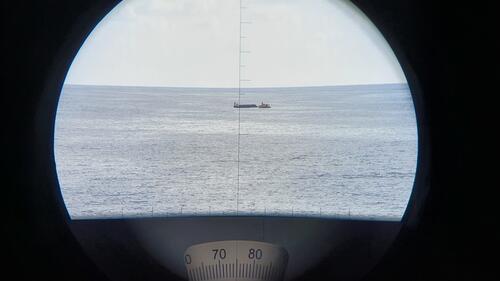
The Aquarius and its 58 survivors spent five days waiting in international waters off the coast of Malta under poor weather conditions. On Sunday morning, 30 September 2018, the strong winds and choppy water finally abated and allowed for the safe and secure transfer of all 58 people – and a dog – to Maltese authorities. The survivors were then disembarked in Malta and will be distributed to four European countries in the coming days: France, Germany, Portugal and Spain.

Following the transfer, the Aquarius set course for Marseille, France in order to address its flag registration after the news a week prior that Italy had pressured Panama into removing the Aquarius from its register. Without the Aquarius, there are no search & rescue vessels in the area to conduct rescue operations and witness to the grave humanitarian needs on the Central Mediterranean. Meanwhile, people continue to flee Libya and die attempting to cross the world’s deadliest maritime route.
Mediterranean migration

Europe must act now to end preventable deaths in Libya and at sea

MSF International President Dr Joanne Liu implores European leaders to find better solutions to prevent people dying, trapped in Libyan detention centres, or from drowning at sea. Op-Ed - 6 Aug 2019
 
Many children in Pulka have experienced very distressing situations – such as losing parents and relatives to the violence and witnessing killings. MSF’s mental health team provides indoor and outdoor recreational activities for children and encourages them to express themselves, for example in drawing sessions, to help identify who needs their support.
Nigeria

More mental health support needed for people in Pulka

Desperate living conditions and a lack of protection in Pulka, northeastern Nigeria, are exacerbating people’s acute mental health needs. Project Update - 5 Aug 2019
 
After their decontamination work, and a visit to a risk area, the men in turn are decontaminated with chlorine.

Après leur travail de décontamination, et un passage dans une zone à risque, les hommes se font à leur tour décontaminer au chlore.
DRC Ebola outbreaks

10 facts on a year of Ebola in DRC

Read some of the facts behind the Ebola outbreak in northeastern Democratic Republic of Congo, declared a year ago on 1 August 2018. Project Update - 2 Aug 2019
 
Medical and hygienist staff get dressed with the PPE to get into the high risk zone of the Ebola Transit Center in Bunia
DRC Ebola outbreaks

Tenth Ebola outbreak in DRC still rages, one year on

The Ebola outbreak in DRC, which has become the second-largest recorded anywhere and the worst on record in DRC, is still raging a year on. Trish Newport reflects on the response over the last 12 months. Voices from the Field - 1 Aug 2019
 
The laboratory technician observes the work of the teams and looks in particular at how they will succeed in disinfecting the microscope and the tools in their laboratory. Some elements such as paper will be burned because they cannot be decontaminated.

Le laborantin observe le travail des équipes et regarde notamment comment ils vont réussir à désinfecter le microscope et les outils de son laboratoire. Certains éléments comme du papier seront brûlés car impossible à décontaminer.
DRC Ebola outbreaks

DRC Ebola outbreak response struggling one year on

One year into the Ebola outbreak in northeastern DRC, response teams are struggling to stay on top of the epidemic due to a number of issues, including insecurity and a lack of trust from local people. Project Update - 31 Jul 2019
 
In northern rural Idlib, MSF is running a mobile clinic in a camp in Deir Hassan where the number of IDPs has increased by 10 500 people in two months, following the bombing and shelling on the southern Idlib and northern Hama countryside.
Syria

Escalating conflict in Idlib leaves increasing numbers dead, wounded or displaced

The level of conflict in Idlib and Hama governorates has increased exponentially over the last three months, resulting in hundreds of deaths, thousands of people injured, and forced nearly half a million from their homes and into camps in appalling conditions. Project Update - 31 Jul 2019
 
Frontline worker been vaccinated in Bikoro, Equateur Province, DRC.
Participants to the vaccination receive information on the vaccine before consenting, and will be carefully monitored over a period of time. Participation is voluntary and the vaccination is free.
DRC Ebola outbreaks

Not contained, new cases: three questions on vaccines and the Ebola outbreak in DRC

MSF director of operations Dr Isabelle Defourny answers three questions on what’s currently happening and what needs to happen next in the Ebola outbreak. Interview - 31 Jul 2019
 
Kim Kholling (50) in her home talking to an MSF counsellor. Kim is an MDR-TB patient and started treatment on 22 March 2019, so is only a few months into her treatment. She is still system positive and therefore contagious for others, so has to stay home. The MSF team in Churachandpur is treating her.

MSF started providing specialised care for HIV and TB in Manipur in 2005 and 2007, respectively. At its three clinics in Chakpikarong, Churachandpur and Moreh, MSF provides screening, diagnosis and treatment for HIV, TB, Hepatitis C and co-infections.  MSF, which is the only international NGO in Manipur, has put a patient-focused model of care at the heart of its operations in order to improve outcomes and minimise the spread of the diseases.
 “One of the simple ways we’ve tried to reduce the spread of drug-resistant strains of tuberculosis is to bring care to the patient, instead of making them come to us,” says Edoardo Nicolotti, MSF Project Coordinator. “When someone is newly diagnosed, we visit them at home to carry out an infection prevention and control assessment. If they live with family, we offer to build a simple house for them near to the house. This greatly minimises the risk of transmission to others but keeps the patient close enough to maintain normal interaction.” MSF has built nine such houses in 2018- 2019. MSF also sends a nurse to the patient’s house every day to carry out tests and ensure they are sticking to their treatment, which involves a challenging cocktail of drugs over roughly two years. Since DR-TB medication causes significant side effects, making it difficult for patients to complete treatment, MSF also provides counselling to encourage better outcomes.
India

Putting people at the centre of TB, HIV and hepatitis treatment in Manipur

For MSF in Manipur, India, people and their needs are at the centre of how treatment is provided for tuberculosis, HIV and hepatitis C. Photo Story - 30 Jul 2019
 
Thousands of life jackets left behind by arriving migrants are gathered at a dump on Lesbos Island, Greece. 
Thousands of people seeking safety after fleeing countries such as Syria, Afghanistan, Iraq, Sudan, and Congo continue to risk their lives to reach Europe. Those who try to arrive via Turkey and the Aegean Sea have been trapped for an indefinite period of time on islands in Greece as part of the EU/Turkey deal and its deterrence and containment approach. 
In Moria refugee camp, on Lesbos island, there are currently more than 7,500 people in a camp made for a maximum of 2,500. With the camp so full, refugees are now staying in an informal extension of the camp known as Olive Grove. The awful conditions at Moria camp/Olive Grove and arbitrary administrative situations have had a dramatic impact on their health and in particular their mental health. 
Médecins Sans Frontières teams provide medical and mental health support outside Moria camp and run a clinic for severe mental health cases in Mytilene, the capital of the island.
Mediterranean migration

Libya shipwreck: “There are no words to describe their suffering”

Anne-Cecilia Kjaer, MSF nurse activity manager describes the scene on assisting people who had survived a horrific shipwreck off the Libyan coast. Voices from the Field - 26 Jul 2019
Four mothers posing in a corridor of the Hospital in Bili. All four of them are staying in the hospital with their child, that's suffering from a severe case of malaria. Since the beginning of the project in 2016, the pediatric ward already treated more than 4.000 cases of complicated/severe form of malaria.
Médecins Sans Frontières (MSF)

Independent medical humanitarian assistance

We provide medical assistance to people affected by conflict, epidemics, disasters, or exclusion from healthcare. Our teams are made up of tens of thousands of health professionals, logistic and administrative staff - most of them hired locally. Our actions are guided by medical ethics and the principles of independence and impartiality. We are a non-profit, self-governed, member-based organisation.

Learn more