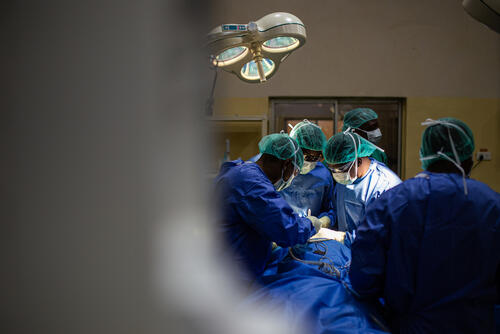
Dr. Ali Mohamed and Dr. Abdifatah Mohamed performing caesarean section at Bay Regional Hospital, an MSF supported hospital in Baidoa, Somalia on 9th October 2023.

Medical activities

Dr Ali Mohamed and Dr Abdifatah Mohamed perform a caesarean section at Bay Regional hospital in Baidoa. Somalia, October 2023.

© Mohamed Ali/MSF
Ebola disease in DRC: find out how we're responding
Learn more

Learn about how, why, and where MSF teams respond to different diseases around the world, and the challenges we face in providing treatment.
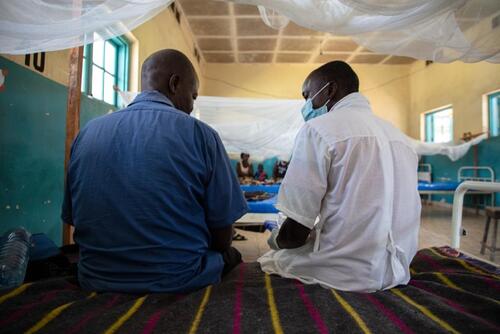
Sabiti Lukalaba vient de finir son traitement contre la méningite, il rentre à la maison dans les minutes qui suivent; les signes de la méningite ont disparu; il vient de passer cinq jours à l’hôpital général de Banalia.

MSF soutient les efforts du à Ministère Provinciale de la Santé dans cette zone de la Province de la Tshopo en RDC dans la lutte contre cette maladie potentiellement mortelle.
Medical activities

Meningitis

Meningococcal meningitis is a highly contagious bacterial form of meningitis – a serious inflammation of the meninges – the thin lining that surrounds the brain and spinal cord.
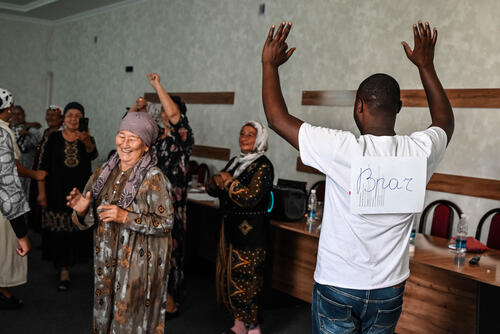
On July 11, 2023, about 30 MSF volunteers from the villages of Internatsional, Arka-1 and Eski-Oochu et al., Leilek district, Batken oblast, took part in a training on psychological first aid, stress management, behavior recognition, and psychological support for children affected by emergencies.
Medical activities

Mental health

Where we work, we may see people with a mental illness or confronting distressing situations, such as violence, loss or displacement. Mental health support can be crucial to help people cope.
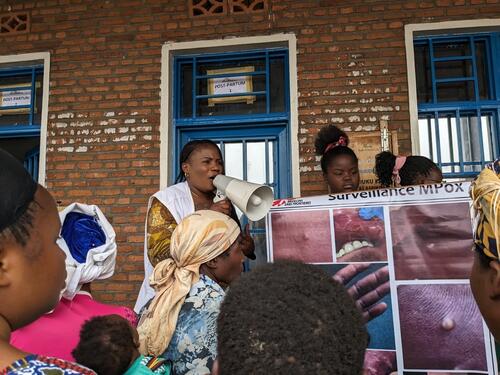
MSF health promotion workers raise awareness about Mpox in the Kanyaruchinya IDP site. The Mpox epidemic is increasingly affecting people displaced by armed conflict in Goma, North Kivu. MSF has deployed its teams of health promoters to raise awareness of the behaviour to adopt to avoid contamination. Communities are urged to bring any suspected cases to the health centre as a matter of urgency, and to avoid discriminating against contaminated people.
Medical activities

Mpox

Learn more about MSF's activities in responding to mpox.
Mosoaya Harrison Karrau, MSF Physiotherapist, does exercises with Fatima, a 20-year-old noma survivor who had trismus caused by noma. Trismus is a medical condition that noma can caused and that blocks the jaws. May 5, 2023.
Medical activities

Neglected diseases

MSF teams treat a number of neglected diseases, including noma, Chagas, cutaneous leishmaniasis, in projects across the world.
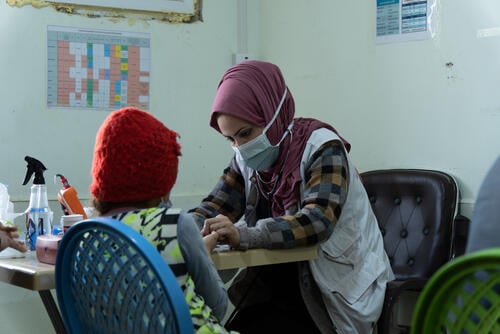
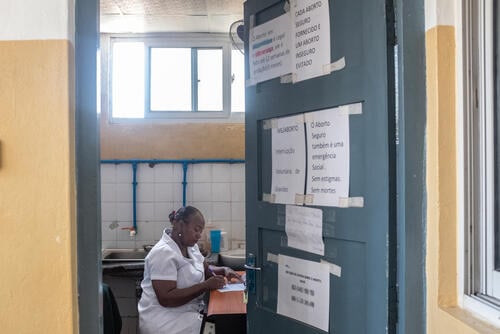
Nilsa, the head of maternity and safe abortion ward in the Chingussura health center in Beira, Mozambique, sits by a door covered with signs that say: "Termination of pregnancy is legal in Mozambique and is free of charge." "It is provided up to 12 weeks of pregnancy (three months)." "Each safe abortion offered is one unsafe abortion prevented." "Safe abortion is also a social emergency. No Stigma. No deaths.”
Medical activities

Safe abortion care

MSF is committed to providing safe abortion care to reduce avoidable suffering and deaths. Every minute, a woman or girl has an unsafe abortion. .
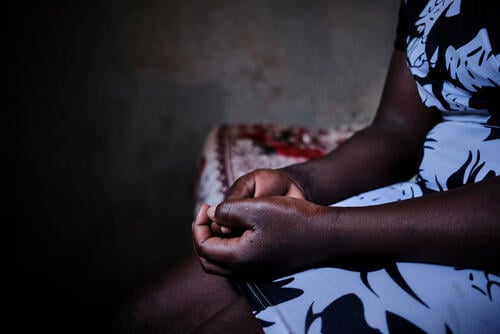
"There is nothing good about this job. Every day I think about whether to leave or continue, but I can't choose to leave, I have no money." Hamida Ajida (false name to protect her identity) says she has no choice: engaging in sex work is her only option. At 29, she has been in the business for three years now. She works in Dedza, a small, dusty town on the border with Mozambique where MSF runs the Sexual and Reproductive Health and Sexual Violence Program. Her story is the story of so many women in the same situation: Three years ago, Hamida ran a business selling vegetables and charckoal in Mangochi, where she was married with three children. Between her and her husband, they were supporting the family, but one day, without any explanation, her husband left her for another woman, a fact that changed Hamida's future: since then she could not support herself financially and had to start working as a sex worker in a bar in Dedza. In a weak voice and with her eyes on her knees, she says: "I started in 2020 to feed my children and my four siblings. Every month I have to send money for them, but it's never enough." Hamida charges 4,000 Malawi kwacha (3.20 euros) per service, and pays 2,500 kwacha a day to rent the room where she works. She says that when everything was going well she could have as many as 8 clients, but that is not the case now. "Nowadays I have one or even none. Many times I go to sleep on an empty stomach." 
She says the biggest challenge she faces is dealing with men who take advantage of her by not honoring price agreements. "When we finish, some clients take the money and leave. We have no one to protect us from threats and physical violence." Until three months ago, Hamida's three-year-old son lived with her in the room, but she took him away because the clients did not like having a baby hanging around the room. Thanks to the goodwill of Mercy, a woman who sometimes went to do laundry and food at the bar, Hamida managed to leave the son with her t
Medical activities

Sexual violence

Sexual violence affects millions of people, brutally shattering the lives of women, men and children. It is a medical emergency, but there is often a dire lack of healthcare services for victims.
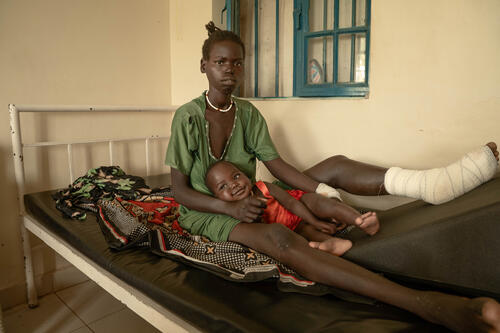
Achan arrived by ambulance after being bitten by a snake. It happened at night when Achan had gone to fetch water. She was attacked by a snake on her way. She was immediately taken to intensive care at the hospital in Abyei supported by Médecins Sans Frontières. She underwent surgery to remove necrotic tissue and was given an antidote.
 “The snake was very poisonous because shortly after the bite I felt itching and began to swell”.  
The woman has two children, one of whom came to the hospital with her because she is still breastfeeding. Achan’s mother also came with her. 
“I didn't see the snake because it was dark, but from the pain I immediately realised that it couldn't have been a common insect”.
Medical activities

Snakebite

Snakebite is a hidden health crisis. Every year, bites from venomous snakes make up to 2.7 million people sick, nearly 140,000 people die, and a further 400,000 people can be left disfigured and/or disabled.​
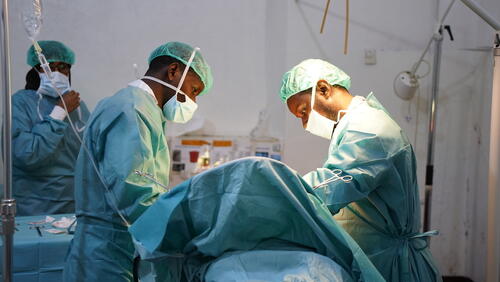
During two weeks between October and November 2023, a total of 32 reconstructive surgeries were carried out by a team of highly trained Nigerian, American and Japanese surgeons, anesthesiologists, and nurses.
Medical activities

Surgery & trauma care

Médecins Sans Frontières has been providing surgical care for people in precarious contexts for decades.
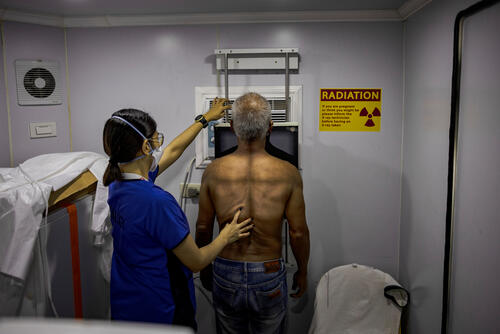
Truck driver Johnny is given a free chest X-ray at one of MSF's active case finding sites for tuberculosis on March 13, 2023 in Tondo, Manila, Philippines.
Medical activities

Tuberculosis

Tuberculosis (TB) is one of the world’s biggest global health crises. Killing 1.3 million people in 2022 TB is the world’s second deadliest infectious disease after COVID-19 (WHO).
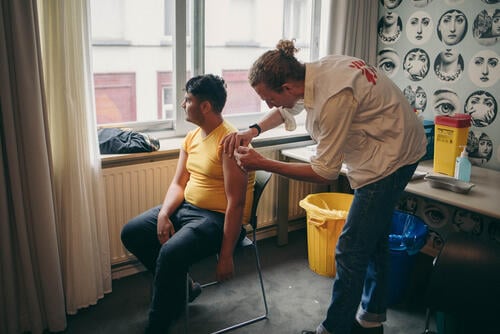
Bruxelles le 29 juin 2023, au Queen Anne. Maxime, médecin, en train d'administrer une dose à Obeid Aymann Ismael, qui vient de Palestine. Il a 21 ans.
Medical activities

Vaccination

MSF teams vaccinate millions of people every year, either as part of routine vaccination, or in response to an outbreak of disease.
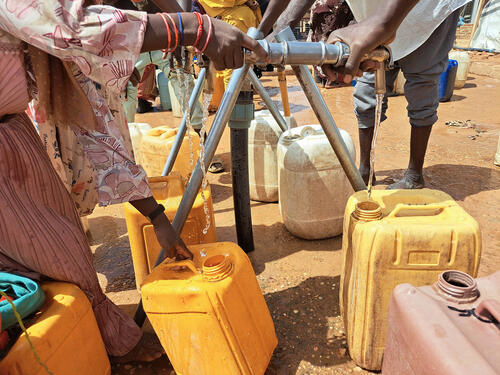
In Adré transit camp, MSF-built water systems produced 654 m³ of water per day in May alone. Since March 2025, one of the 10 boreholes - borehole #11 - has been extracting water using a solar-powered pump, which then distributes water to five additional distribution points.
Medical activities

Water and sanitation

Clean water and sanitation services are necessities for good health.

Four mothers posing in a corridor of the Hospital in Bili. All four of them are staying in the hospital with their child, that's suffering from a severe case of malaria. Since the beginning of the project in 2016, the pediatric ward already treated more than 4.000 cases of complicated/severe form of malaria.
Médecins Sans Frontières (MSF)

Independent medical humanitarian assistance

We provide medical assistance to people affected by conflict, epidemics, disasters, or exclusion from healthcare. Our teams are made up of tens of thousands of health professionals, logistic and administrative staff - most of them hired locally. Our actions are guided by medical ethics and the principles of independence and impartiality. We are a non-profit, self-governed, member-based organisation.

Learn more