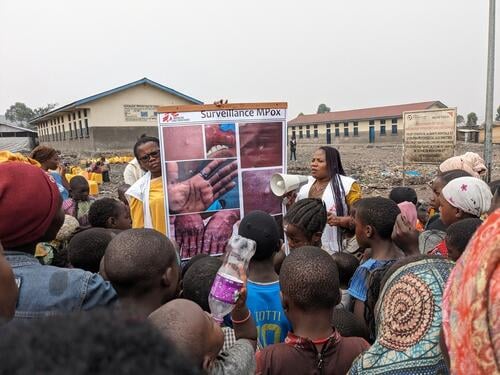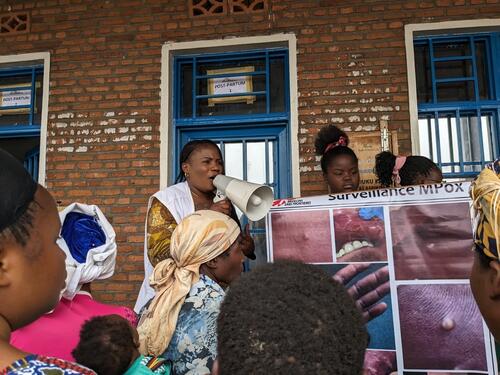
Mpox is a contagious, viral illness that can be fatal if left untreated.
Caused by the monkeypox virus, mpox is transmitted by close contact between people or with infected animals. There are two clades – or strains – of the virus. It has been endemic in Central Africa and West Africa for over 50 years.
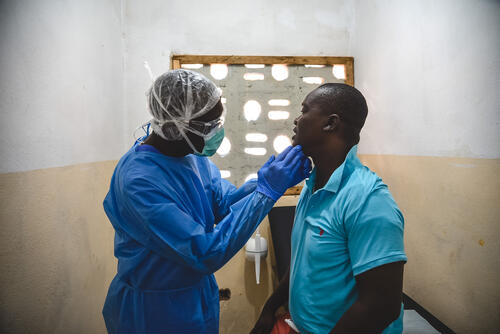
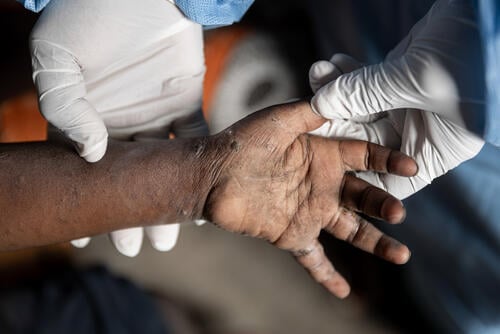
People with mpox experience rashes, lesions, and pain, all of which require supportive treatment for the symptoms. Most patients treated recover within a month; however, people with weakened immune systems, children and pregnant women are most at risk of serious illness or death.
The current mpox epidemic has seen 14,000 suspected cases and more than 500 deaths in Democratic Republic of Congo (DRC). We’re responding in DRC and neighbouring Burundi.
Democratic Republic of Congo
Mpox in eastern DRC is just another challenge amid torrent of problems
Voices from the Field
4 Sep 2024