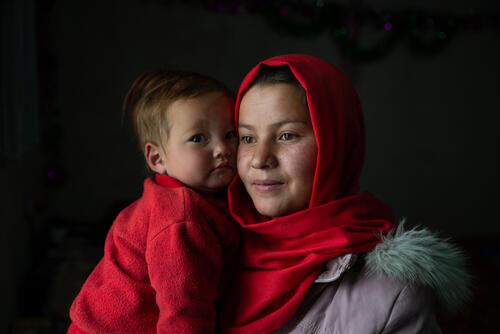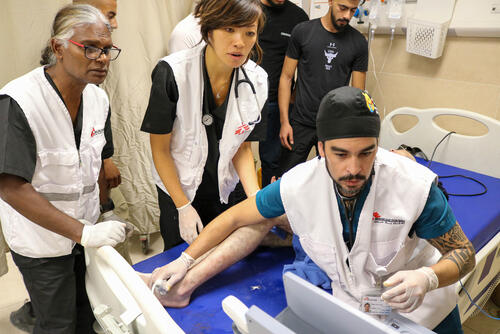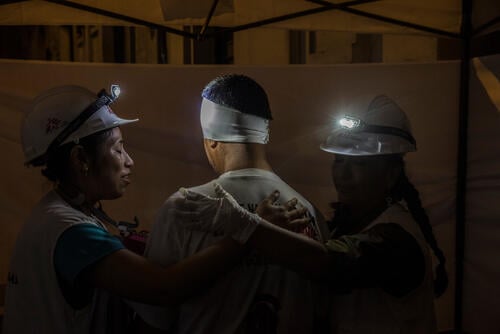
A 70-year-old patient is treated by MSF staff in Lima after being hit in the left temple by pellets fired by the police.
Following political protests across Peru, a 70-year-old patient is treated by MSF staff in Lima after being hit in the left temple by pellets fired by the police. Lima, Peru, January 2023. 
© Max Cabello Orcasitas

A Year in Pictures 2023

Following political protests across Peru, a 70-year-old patient is treated by MSF staff in Lima after being hit in the left temple by pellets fired by the police. Lima, Peru, January 2023. 
© Max Cabello Orcasitas
Ebola disease in DRC: find out how we're responding
Learn more

This collection of 58 images, taken between November 2022 and November 2023, highlights stories and voices from around the world where Médecins Sans Frontières (MSF) is working. 

Over the last 12 months, multiple acute humanitarian crises have emerged. Climate change continues to take a devastating toll on people's health and war has reached disastrous heights in several places. A brutal, deadly war has unfolded in Gaza, where attacks on health facilities put the lives of many of our staff and patients at risk. We mourn the loss of four Palestinian colleagues. 

This image collection provides a glimpse into the medical and humanitarian activities carried out by MSF teams in over 75 countries during the past 12 months. From providing basic healthcare in Venezuela, to rescuing people from the Mediterranean Sea and raising awareness on TB among neighbourhoods in the Philippines, MSF has continued to assist people and communities in need. 

From the tireless work of our staff to the resilience of patients fighting for their lives in difficult circumstances, these stories bear witness to the vital importance of worldwide access to healthcare. It is an essential need that should never be taken for granted, as emphasised in each and every one of these photographs. 
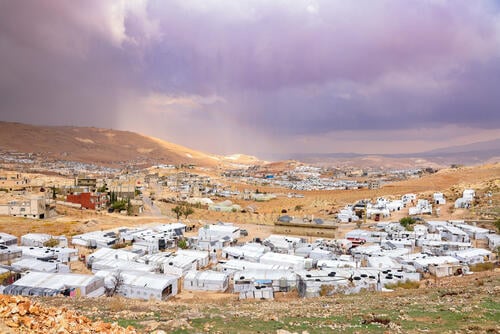
Arsal, Bekaa Valley Lebanon.
A view of a refugee camp in Arsal, where MSF teams are responding to a large cholera outbreak. Bekaa Valley, Lebanon, November 2022. 
Carmen Yahchouchi
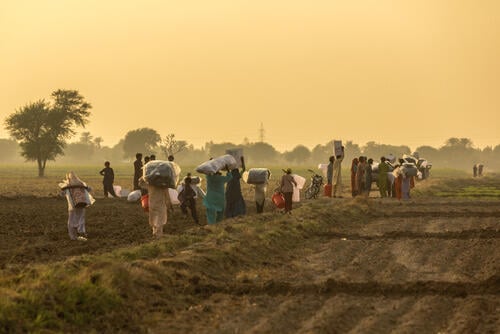
Villagers carry NFIs on their heads, as they are walking through the field to go back to their homes at a village near Sanghar, Sindh province of Pakistan on 16th November 2022.
Villagers carry items, including blankets and cooking items, as they walk back to their homes at a village near Sanghar, following severe flooding in the country. Sindh province, Pakistan, November 2022. 
Asim Hafeez for MSF
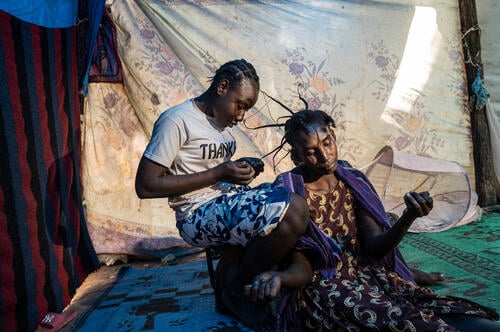
Chad. N'Djamena. Mielizi IDP camp. Kati Abati, 30, doing 20-year-old Fidtma's hair. Both arrived in the camp from Cameron in a small boat. Kati is a hairdresser but the flood destroyed both her house and her shop and she found herself forced to take refuge in Chad because here there was the possibility of staying in a field. She would like to return to Cameron as soon as possible but she doesn't know how to do it because at the moment she has nothing left.
Kati Abati braids Fidtma’s hair. Both women have taken refuge in Mielizi displacement camp from floods, first in Cameroon, and now in the Chadian capital, N'Djamena. Chad, December 2022. 
Fausto Podavini
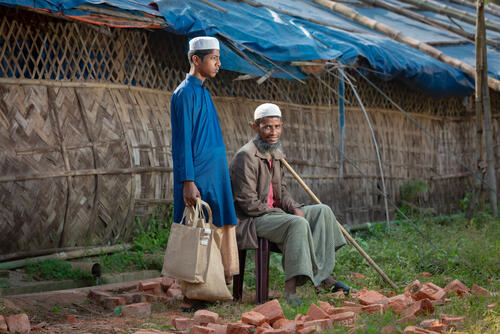
Abdulshakour, 43, a father to seven children, once had a life centered around his family and work. Everything changed after the events of 25th August 2017. In this picture, he sits while his son stands beside him, carrying the bags that hold the few belongings they managed to bring from home.

In Myanmar, 43-year-old Abdulshakour made his living as a fisherman, casting his nets into the river and selling his catch at the local markets. Father to seven children, life for Abdulshakour revolved around his family and his work until the events of 25th August 2017 changed everything. 

When conflict erupted around his village, with neighboring areas being targeted, panic and chaos ensued. "Everyone was scrambling to escape," Abdulshakour recounts. In the chaos, he was separated from his family for a harrowing 25 days. Their reunion came during their journey to Bangladesh, a path they took by boat. 

Given the constraints of the escape, refugees were advised to carry only one essential item. For Abdulshakour, the choice was obvious - his fishing net. "I believed it would be useful here," he shares. However, a physical impediment later prevented him from fishing in his new environment. 

Life at the refugee camp presents its own set of challenges. "The camp has remained the same size, but its population has swelled since 2022," he notes. To supplement their meals, families sometimes resort to selling their vegetable rations to diversify their diet. "We can't always get fish," Abdulshakour adds, emphasizing the need for varied nutrition. The birth of one of his children in these conditions amplifies the reality of their situation.  

Amidst it all, a house number from his home in Myanmar remains with him, a connection to a life paused. It serves as a tangible link to the memories and the existence he once knew. 

Connecting with his two brothers-in-law back in Myanmar, he's updated about the ongoing constraints that limit their movements to safer areas. For Abdulshakour, his heart remains tethered to his homeland. "I deeply miss my land and my family," he says, echoing the sentiment of many, "and hold onto the hope of returning."
Abdulshakour sits while his son stands beside him, carrying the bags that hold the few belongings his family managed to bring from home while fleeing the attacks on Rohingya people in Myanmar in August 2017. Abdulshakour now lives with his family, including his seven children, in the Cox’s Bazar refugee camp. Bangladesh, December 2022.  
Mohammad Hijazi/MSF
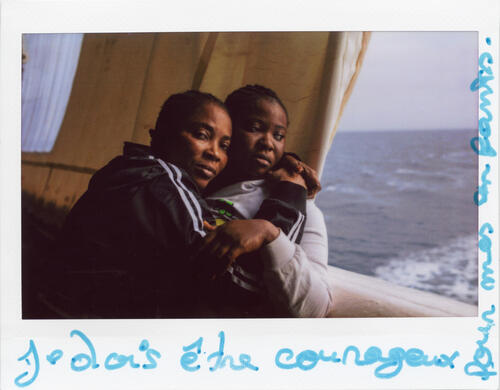
«Je dois être courageuse pour mes enfants » Bintou, 42 ans, Ivoirienne // "I have to be brave for my children." Bintou, Ivorian, 42 years old
A polaroid photo of Bintou (left) is inscribed, ‘Je dois être courageuse pour mes enfants’ (I have to be brave for my children’). Bintou, from Côte d’Ivoire, was among the survivors rescued from the Central Mediterranean Sea by MSF’s search and rescue boat Geo Barents. Central Mediterranean, December 2022. 
Mahka Eslami
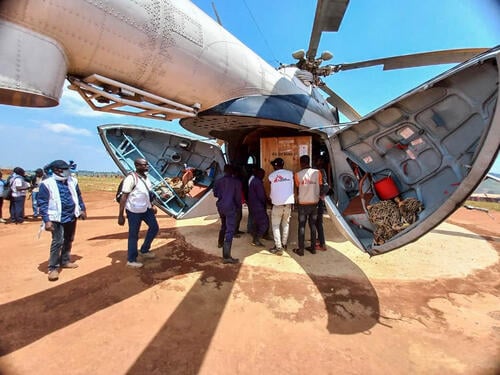
Unloading of the MSF cargo in Rhoe camp, where around 70'000 people live in dire conditions. Dujgu territory, Ituri province, Democratic Republic of the Congo. January 19, 2023.
MSF teams unload cargo in Rho displaced people’s camp, which has seen a further influx of people seeking safety following violent attacks by armed groups. The camp population has doubled to over 70,000 people, all living in dire conditions. Ituri province, Democratic Republic of the Congo, January 2023. 
Philomène Franssen/MSF
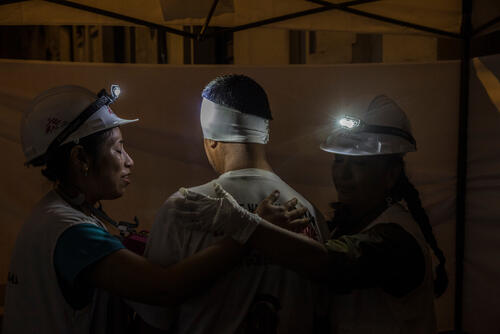
A 70-year-old patient is treated by MSF staff in Lima after being hit in the left temple by pellets fired by the police.
Following political protests across Peru, a 70-year-old patient is treated by MSF staff in Lima after being hit in the left temple by pellets fired by the police. Lima, Peru, January 2023. 
Max Cabello Orcasitas
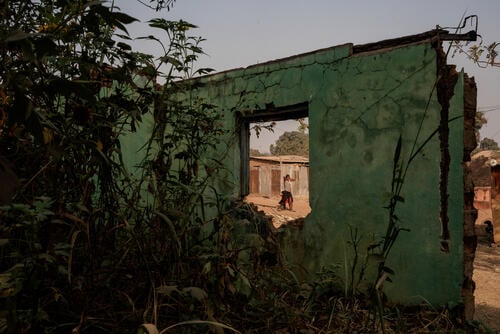
A destroyed house near PK5 neighborhood in Bangui, Central African Republic, January 2023.
A woman and her child are seen through the window of a destroyed house near the PK5 neighbourhood in Bangui. The town and surrounding area have been the scene of often brutal violence for the last 10 years. Central African Republic, January 2023. 
Adrienne Surprenant/MYOP
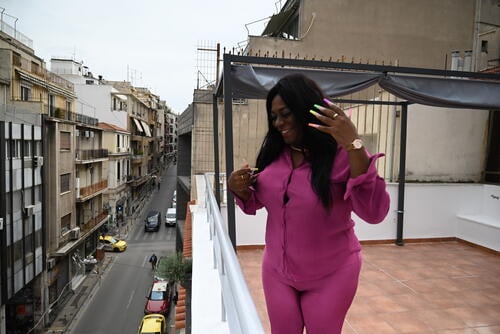
Yuli fled persecution in Cuba and now lives in Greece where she is committed to connecting the Cuban transgender community with healthcare and social services. (c) Maro Verli/MSF
Yuli looks onto the street below from the MSF day centre’s terrace in Athens. She fled persecution in Cuba and now lives in Greece, where she is committed to connecting the Cuban transgender community with healthcare and social services. Athens, Greece, January 2023. 
Maro Verli/MSF
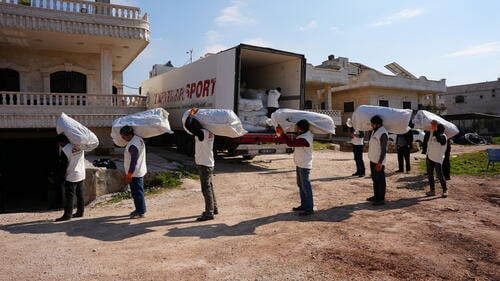
14 MSF trucks loaded with tents and winter kits entered Syria through Hamam crossing point, in partnership with Al-Ameen, a Syrian NGO.
In the wake of the 6 February Türkiye-Syria earthquake, MSF staff unload 14 trucks loaded with tents and winter kits which entered Syria through the Hamam crossing point, in partnership with Al-Ameen, a Syrian NGO. Idlib province, Syria, February 2023. 
Rami Alsayed
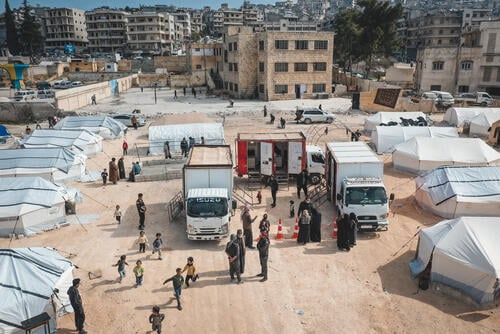
These aerial and ground photos show MSF’s distribution of relief items to a reception center hosting displaced families as a result of the earthquake that struck Syria and Turkey on February 6, 2023. The shelter is located near the village of Tal Ammar in the countryside of the city of Salqin on the Turkish border in northwestern Syria.
An aerial view of MSF’s distribution of relief items to a reception centre hosting families displaced by the earthquake which struck Syria and Türkiye on 6 February. Salqin, Idlib province, Syria, February 2023. 
Omar Haj Kadour
Nuria López Torres
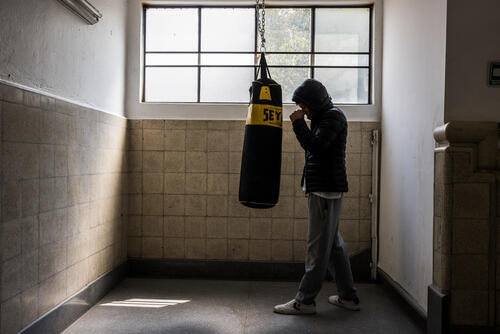
Mauricio works off some energy in boxing at MSF’s Survivors of Extreme Violence, Torture and Cruel, Inhuman and Degrading Treatment Centre. He was accused of a crime he did not commit and was tortured while incarcerated. Mexico City, Mexico, February 2023. 
Nuria Lopez Torres
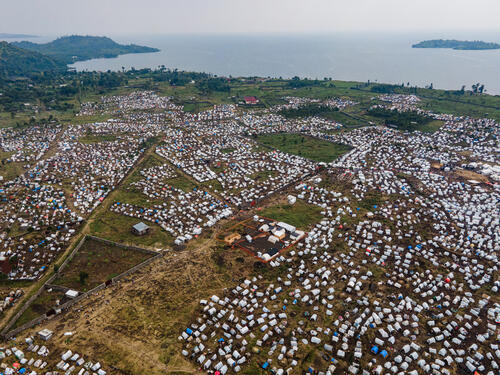
Aerial view of the Bulengo IDP site on the outskirts of Goma city, North Kivu. MSF is providing free medical assistance and clean water to more than 7,000 households that have taken refuge there since 2023 following armed clashes in and around the Mweso health zone. The organization is also building 200 latrines, 120 of which are already functional
An aerial view of the Bulengo displaced people’s camp, where MSF is providing free medical assistance and clean water to people from more than 7,000 households who have taken refuge there following armed clashes. Goma, North Kivu province, Democratic Republic of the Congo, 17 February 2023. 
Michel Lunanga/MSF
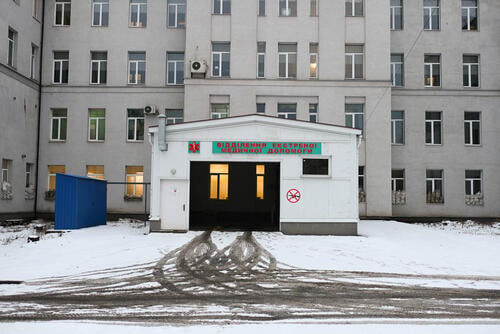
Kostyantynivka hospital, Donetsk Oblast, Ukraine.
The emergency entrance of Kostyantynivka hospital, where MSF works following the retaking of the area by Ukrainian forces. Donetsk oblast (province), Ukraine, February 2023. 
Colin Delfosse
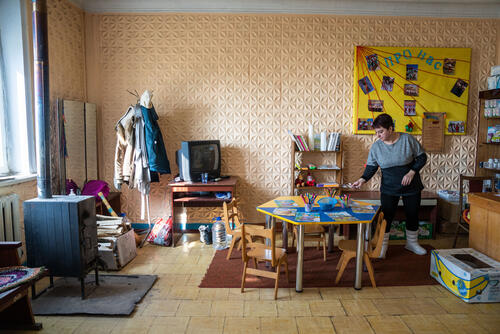
A volunteer at a public space in the village of Blahodatne, Kherson region. 

People used to come here to warm up and charge their phones. Now the electricity is back.
A volunteer at a public space in the village of Blahodatne. MSF runs a mobile clinic in the area, providing medical care and mental health support to residents. Kherson oblast (province), Ukraine, February 2023. 
Laurel Chor
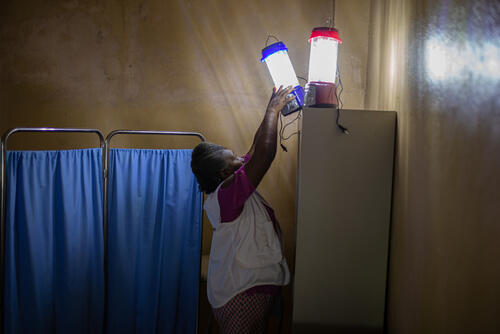
The midwife installs the lights in the maternity room.
An MSF midwife installs lights in the maternity room. She is part of an MSF mobile clinic team providing care to people living in areas affected by urban violence in Port-au-Prince. Bel Air, Port-au-Prince, Haiti, February 2023. 
Alexandre Marcou/MSF
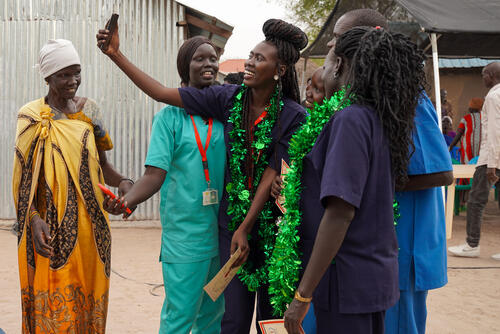
Participants of the MSF Academy for Healthcare Nursing & Midwifery initiative during their graduation in Lankien
Newly graduated nurses from the MSF Academy for Healthcare take a selfie at their graduation ceremony. Lankien, Jonglei state, South Sudan, March 2023. 
Alicia Gonzalez/MSF
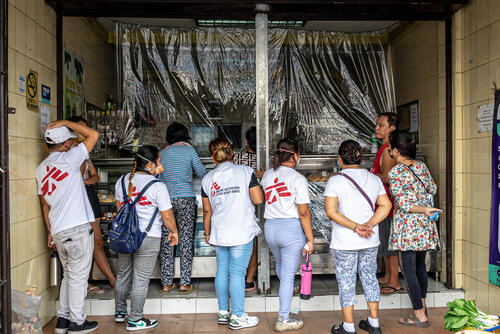
MSF volunteers invite staff and customers at a local bakery to get  their chest x-rays at the free tuberculosis screening held by MSF at Barangay 133 covered court in Tondo, Manila, the Philippines, March 1, 2023.
In the Tondo neighbourhood of Manila, MSF volunteers invite staff and customers at a local bakery to get their chest x-rayed at the free tuberculosis screening held by MSF. Manila, Philippines, March 2023. 
Ria Kristina Torrente
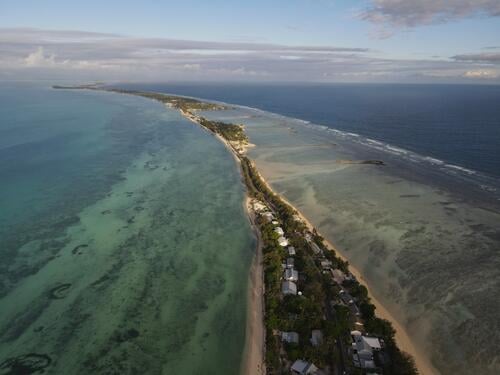
Aerial shot of South Tarawa. Half of the country’s total population lives on this tiny strip of land (a coral atoll) with the lagoon on one side and the ocean on the other.  The highest point in South Tarawa is just 3 metres above sea level.
An aerial view of South Tarawa. Half of the population of Kiribati lives on this tiny strip of land, with the lagoon on one side and the ocean on the other. The highest point in South Tarawa is just 3 metres above sea level; the entire country is extremely vulnerable to the effects of climate change. Kiribati, March 2023. 
Karim Eldib/MSF
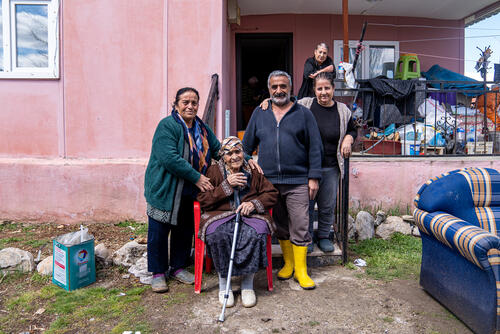
Semra Karaca, Sultan Kodaş, Hüseyin Kodaş and Şengül Kodaş (from left to right) live together as a family in Ören village, on the outskirsts of Malatya, Türkiye. They have been greatly affected by the recent earthquakes, as well as heavy flooding in the region.  

"There are earthquakes on the one hand and rain on the other. We don’t know what will happen in the future. I’m here with my wife, my siblings, my children, and my mother. 

Our belongings are drowned in water because of the flood, we can't find anything to wear, the neighbour brought us these clothes for now. We were staying in a tent, but the tent got flooded too.

We are now trying to dry what we took out of the house, including our family photos. 

 The children are scared. The situation is very dire”, says Hüseyin Kodaş
Semra Karaca, Sultan Kodaş, Hüseyin Kodaş and Şengül Kodaş (from left to right) live together as a family in Ören village, on the outskirts of Malatya, where MSF partners provide mental health support following the recent earthquakes and heavy flooding in the region. Türkiye, March 2023.  
Mariana Abdalla/MSF
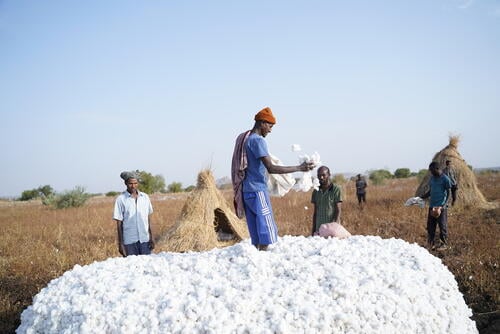
Getu Kassa and other farm workers are picking cotton in a farm in the Abdurafi area. Most patients at Abdurafi health centre are young seasonal migrant laborers working in the lowlands on the big cash crop farms producing sesame seeds, cotton and sorgum. They come from the highlands where there is no immunity against kala azar or malaria and they work and sleep in the fields during the night when the sand-fly are active.
Getu Kassa (centre) and other farm workers pick cotton on a farm in the Abdurafi area. They have come from the highlands, where there is no immunity against kala azar or malaria, and they work and sleep in the fields during the night, leaving them susceptible to both diseases. Abdurafi, Ethiopia, March 2023. 
Amanuel Sileshi/MSF
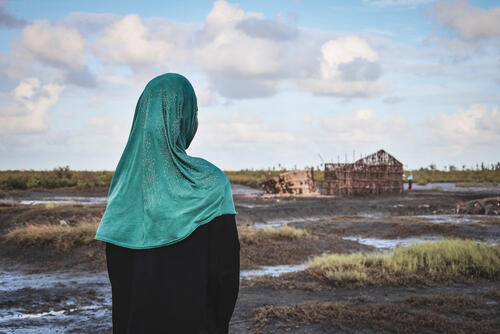
In March 2023, tropical cyclone Freddy affected some 1.2 million people in the Mozambique, 750,000 in Zambézia province according to the United Nations. In the photo, we can see a resident from Quelimane looking at the view of an area severely impacted by by cyclone.
A woman in the village of Quelimane surveys a house which was destroyed by Cyclone Freddy. Zambézia province, Mozambique, March 2023.  
Martim Gray Pereira
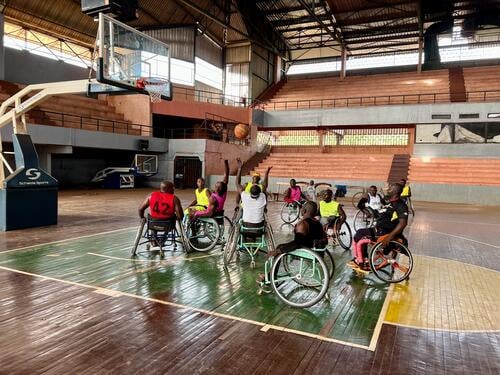
After an accident in 2016 in the Central African Republic, Bienvenu (young male with pink jersey) had his right leg amputated. He received medical care and physiotherapy treatment from MSF, who performed the surgery. On average, our teams at the SICA hospital in Bangui perform operations and provide follow-up care to approximately 320 people each month who have been injured in road accidents or violent situations.
Bienvenue (third from left) reaches for the ball during a game of basketball. After an accident in 2016, Bienvenue had his right leg amputated by an MSF surgical team at SICA hospital. He received medical care and physiotherapy treatment from MSF. “After my surgeries, I received physiotherapy... Playing sports allows us to release energy and strengthen our disabilities, helping us forget our past and current situations. I train five times a week, a routine I've maintained since 2017.” Bangui, Central African Republic, April 2023. 
Kristen Poels/MSF
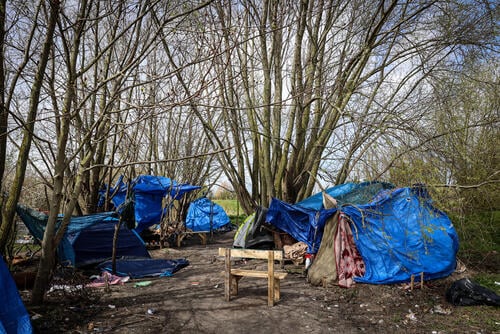
Every day, at the French-British border, migrants are confronted with the security response and repressive policies implemented by France and the United Kingdom (walls, barbed wire, barriers, surveillance cameras, daily expulsions, police harassment). The only aim is to dissuade them from staying in Calais and going to the UK. This policy of regular evictions and militarization of the border, which aims to discourage and exhaust people, generates great physical and psychological suffering, particularly among the most vulnerable groups.


FR :
Chaque jour les personnes exilées présentes à la frontière franco-britannique se heurtent à la réponse sécuritaire et aux politiques répressives mises en œuvre par la France et le Royaume-Uni (présence de murs, barbelés, barrières, caméras de surveillances, expulsions quotidiennes, harcèlement policier). Le seul but est de les dissuader de rester dans la zone du Calaisis et de se rendre au Royaume-Uni. Cette politique d’expulsion et de militarisation visant à décourager et épuiser les personnes est génératrice de grande souffrance physique et psychologique notamment chez les publics les plus vulnérables.
The remnants of a migrant camp in Calais, on the French-British border, following the eviction of people by French police. MSF provides medical and mental health care to people on the move in the area. Pas-de-Calais department, France, April 2023. 
Mohammad Ghannam
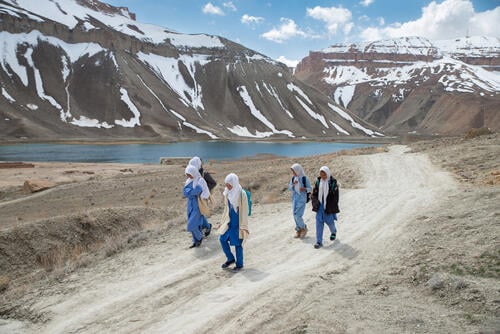
Girls go to school in Band-e-Amir of Yakawalang, a remote district in Bamyan Province, Afghanistan. MSF opened a community health facility in Band-e-Amir, where there is no other health facility for women and children. The MSF-supported facility offers ante-natal care (ANC), post-natal care (PNC), delivery and maternal care, under 5 paediatric consultations, malnutrition monitoring and referrals of complicated cases.
Girls walk to school in Band-e-Amir, a remote district in Bamyan province, where MSF opened a community health facility in the town; there is no other health facility for women and children in the area. Bamyan province, Afghanistan, April 2023. 
Nava Jamshidi
A happy mother with her baby girl in her home in Jarokashan, a village in Band-e-Amir in Yakawalang district in Bamyan Province, Afghanistan. Naqiba, 19, delivered her second child in the MSF-supported community health facility that was opened in late December 2022.
A mother with her baby girl at her home in Jarokashan, a village in Band-e-Amir. MSF provides healthcare in a community where there are no other options for women and children. Bamyan province, Afghanistan, April 2023.  
Nava Jamshidi
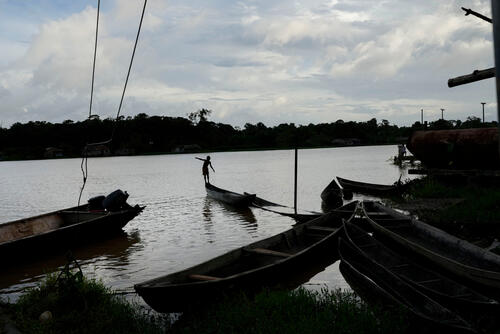
Many indigenous communities live scattered along the banks of the Orinoco River, one of the world's largest rivers and the region’s main highway, located in Delta Amacuro state in northeastern Venezuela. Mobility is only by river and it can take hours or even days to reach a location where medical assistance is available. 


Comunidades indígenas viven esparcidas a lo largo de las laderas del Orinoco, uno de los ríos más caudalosos del mundo, ubicado en el estado Delta Amacuro, al noreste de Venezuela.  La movilidad es sólo fluvial y toma horas trasladarse de un lugar a otro.
A boy balances on the end of a canoe near an indigenous community on the banks of the Orinoco River. Mobility in the area is only by river, and it can take hours or even days to reach medical care. Delta Amacuro state, Venezuela, May 2023. 
Matias Delacroix
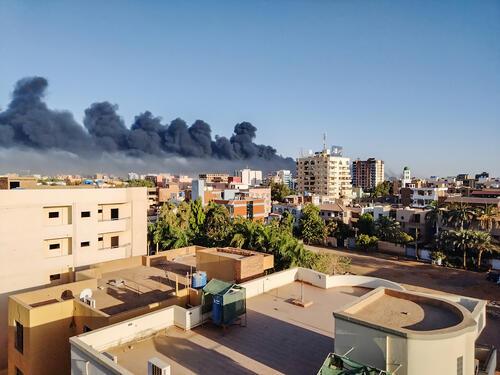
Aerial view captures the fighting  and violence that erupted in Khartoum, Sudan.
An aerial view shows black smoke drifting across Khartoum following the fighting and violence that erupted between the army and paramilitary forces in mid-April. Khartoum, Sudan, May 2023. 
Atsuhiko Ochiai/MSF
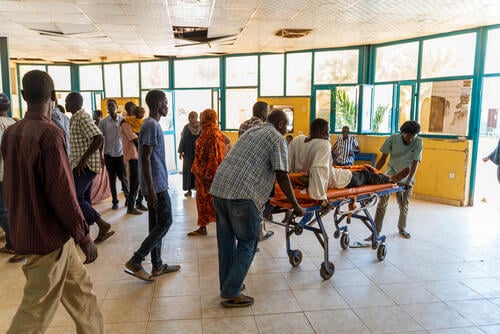
More patients are arriving at Bashair Hospital as it is the only accessible hospital in southern Khartoum. With the presence of MSF team, Bashair can support most of the critical cases and other departments at the hospital have started to operate as well.
Patients arrive at Bashair hospital in southern Khartoum, which needs to cope with the influx of wounded people following the outbreak of conflict between the army and paramilitary forces. Khartoum, Sudan, May 2023. 
Ala Kheir/MSF
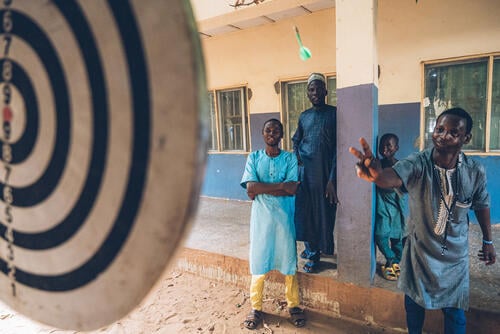
Rabiu, a 20-year-old noma survivor, from Raba, Sokoto state, plays darts in the courtyard of the Sokoto Noma Hospital. ‘This is the first time I am coming to this hospital. At the beginning I refused, but my elder sister pushed me and brought me here’. He came with his brother Bello, who remembers: ‘He started getting herbal medication at home. His face had a boil, and a hot metal was used to break the boil. The sore was removed and it healed. Two others came out and the same thing was done.’ May 4, 2023.
Rabiu (right), a Noma survivor, plays darts in the courtyard of the Sokoto Noma hospital. Rabiu received reconstructive surgery from an MSF medical team. Sokoto, Nigeria, May 2023. 
Fabrice Caterini/Inediz
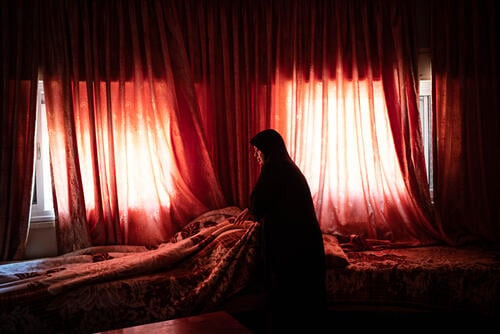
Harbiyeh Al-Zaru folds blankets in her children's room in Hebron on May 2, 2023.
Harbiyeh Al-Zaru folds blankets in her children’s room in Hebron. Palestinians in the area have experienced a steady, alarming escalation of violence from Israeli settlers and forces over the years, which often leaves physical and mental health scars on residents. Hebron, West Bank, Palestine, May 2023.
Samar Hazboun
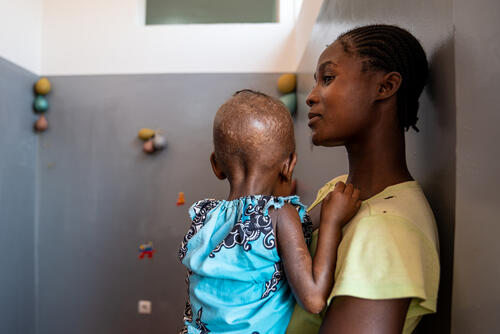
Paulina Cassombu has been in Cuvango Municipal Hospital, in southwestern Angola, with her daughter, Rosa, for three weeks. Rosa was admitted with severe malnutrition and was covered in painful blisters and could not walk for a long period of time. Now, as she got better, and with the help of psychostimulation sessions, has been able to regain her mobility. 
“She came in with a lot of blisters. She is much better now and it makes me happy,” said Paulina.
Both in Cuvango and Chipindo Municipal Hospitals, through psychostimulation sessions, psychologists have worked to re-establish mobility, cognition, confidence, and mother to child bond after a child has been in a critical condition in the hospital for an extended period.
Paulina Cassombu holds her daughter, Rosa, who had been admitted to Cuvango Municipal hospital three weeks earlier with severe malnutrition and a loss of mobility. MSF staff were able to treat her malnutrition and get her walking again. Cuvango, Huíla province, Angola, May 2023. 
Mariana Abdalla/MSF
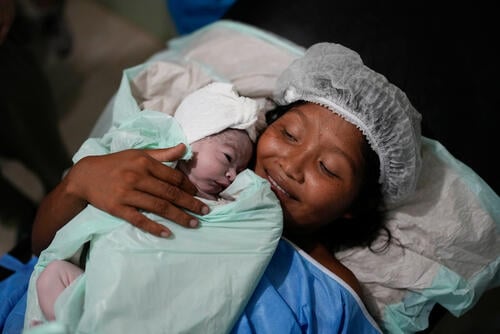
Adelia sonríe al tener a su hijo José Antonio en su regazo. Con 18 años y tras horas en trabajo de parto, se siente exhausta, pero con la alegría de tener a su bebé recién nacido en brazos. Delta Amacuro, noreste de Venezuela.


Adelia sonríe al tener a su hijo José Antonio en su regazo. Con 18 años y tras horas en trabajo de parto, se siente exhausta, pero con la alegría de tener a su bebé recién nacido en brazos. Delta Amacuro, noreste de Venezuela.
Adelia smiles as she holds her son José Antonio on her chest. After hours in labour, she feels exhausted, but is overjoyed at having her newborn baby in her arms. Delta Amacuro state, Venezuela, May 2023. 
Matias Delacroix
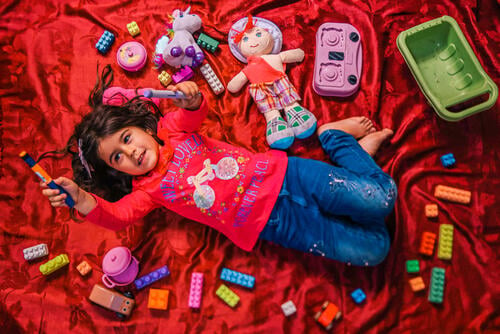
(Bird's-eye view) Siwar holds up her insulin pen while lying down among her toys in her family's makeshift home in Arsal, north Lebanon. Siwar was diagnosed with type 1 diabetes at a young age and frequents the MSF clinic in town for treatment.
Siwar holds up her insulin pen while lying down amongst her toys in her family’s makeshift home in Arsal. She was diagnosed with type 1 diabetes at a young age and frequents the MSF clinic in the town for treatment. Arsal, Lebanon, May 2023. 
Carmen Yahchouchi/MSF
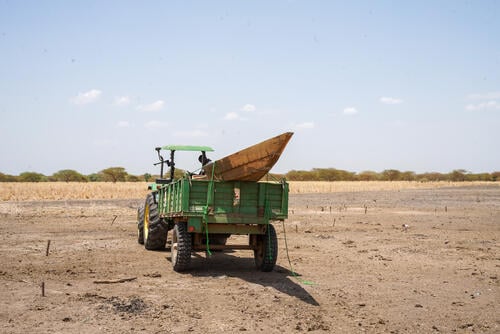
MSF tractor in Dentiuk, Akoka County in the Upper Nile State. Despite being dry, the area floods and is often cut off from other areas during the rainy season.

It is one of the villages where MSF distributed 11 canoes to support the community in transporting the sick to the hospital when it floods.
An MSF tractor takes a wooden canoe to a local community, in preparation for the upcoming rainy season. In the rainy season, villages are often cut off by floods, and the canoes enable communities to transport the sick to the hospital. Dentiuk, Upper Nile State, South Sudan, May 2023. 
Paul Odongo/MSF
Beatriz*, at left, a midwife trainee, speaks with colleagues at Chingussura health center in Beira, Mozambique, where MSF supports Ministry of Health staff providing safe abortion care and maternity services. A year ago when she was still in school, she came to the health center as a patient for safe abortion care. She had heard about the center's services from other health workers. "I had support from my family, from my husband. At first he didn’t accept it, but after we discussed my situation, that I was studying, he accepted it. It is a myth that you cannot get pregnant again after having a [safe] abortion. Because I got pregnant again normally," she said.  
*Name has been changed
Beatriz* (far left), a midwife trainee, speaks with colleagues at Chingussura health centre in Beira. MSF supports Ministry of Health staff in providing safe abortion care and maternity services. A year ago, when she was still in school, she came to the health centre as a patient for safe abortion care. “I had support from my family, from my husband. At first, he didn’t accept it, but after we discussed my situation, that I was studying, he accepted it. It is a myth that you cannot get pregnant again after having a [safe] abortion. Because I got pregnant again normally,” she said. Beira, Mozambique, May 2023. *Name changed to protect privacy 
Miora Rajaonary
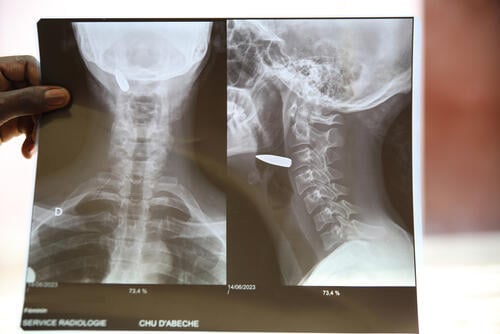
A woman shot in the neck, taken in charge in Abéché hospital.
A doctor holds up the x-rays of a woman who was shot in the neck in Sudan, before she managed to reach Adré in Chad. There, MSF staff operated to remove the bullet in Abéché hospital. Adré, Chad, June 2023. 
Mohammad Ghannam/MSF
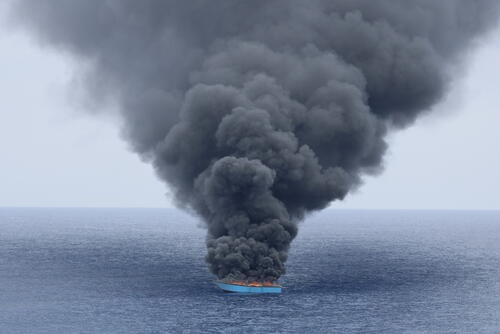
On 8 June 2023, a wooden boat was set on flames after being intercepted by a vessel operated by the Libyan Coast Guard in the international waters of the Central Mediterranean. The boat had around 50 people onboard, who were moved to the vessel before the wooden boat was set on fire. Later, a Libyan Coastal Security vessel arrived. Prior to our arrival at 7:24 UTC, our team saw smoke rising on the horizon, indicating another boat engulfed in flames.
Black smoke billows from a wooden boat after being intercepted by the Libyan Coast Guard. The boat had around 50 people onboard, who were transferred to the Coast Guard’s vessel before the wooden boat was set on fire. Central Mediterranean Sea, June 2023. 
Skye McKee/MSF
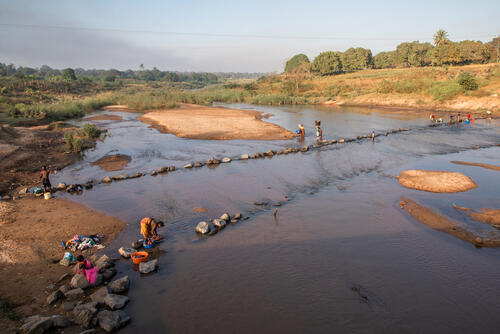
The Meluli River, which flows alongside the town of Nametil in the Mogovolas district of Nampula province, is the main water source of the region. People come here to wash themselves, their clothes and sometimes even their cars and motorcycles. By doing so, people can contract schistosomiasis. They become infected when larval forms of the parasite – released by freshwater snails – penetrate the skin during contact with infested water. Transmission occurs when people suffering from schistosomiasis contaminate freshwater sources with faeces or urine containing parasite eggs, which hatch in water.
People wash themselves and their clothes in the Meluli River, which puts them at risk of contracting schistosomiasis, a parasitic disease. MSF teams have set up a health post nearby to carry out consultations for neglected tropical diseases like schistosomiasis. Mogovolas district, Nampula province, Mozambique, June 2023. 
Pierre-Yves Bernard/MSF
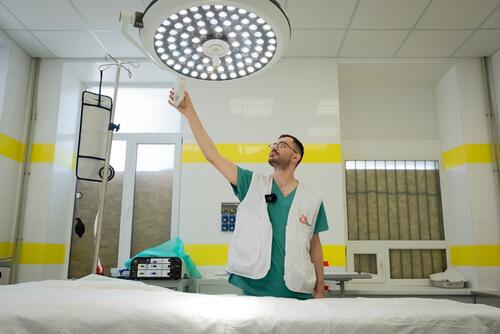
Dr. Khassan El-Kafarna, a doctor with MSF, works in both the emergency department and the surgical unit of Kostiantynivka hospital in the Donetsk region of Ukraine.

He is standing in the operating room of the hospital. MSF teams transformed the former ground floor pharmacy into an operating room, to support the healthcare provision in Kostiantynivka. 

As the fighting has moved closer to Kostiantynivka, there has been a steep increase in shelling and correspondingly, an increase in the number of patients requiring urgent medical care.

At the same time, with the near constant shelling and sounds of alarms, going to see the doctor has shifted from a routine necessity to a careful calculation of risk and resources. 

“Unfortunately, some patients take a day or even two to come to the hospital with injuries that need urgent treatment”, explains Dr Khassan El-Kafarna. “One injured patient took an entire month to reach us, due to the constant fighting.” 

Between January to August 2023, MSF provided 231 surgical interventions in Kostiantynivka hospital.
Dr Khassan El-Kafarna, an MSF doctor, adjusts the light in the operating room of Kostiantynivka hospital. MSF teams transformed the hospital’s ground floor pharmacy into an operating room, to respond to a steep increase in shelling and, consequently, an increase in the number of patients requiring urgent surgery. Donetsk oblast (province), Ukraine, June 2023. 
Linda Nyholm/MSF
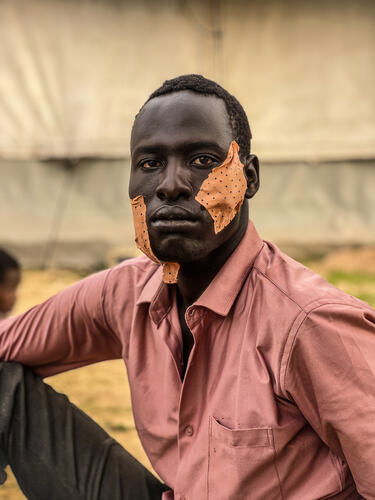
Nour, a 25-year-old Sudanese refugee at Adré Hospital, eastern Chad,  treated by MSF medical teams.
Nour escaped the war in El Geneina, Sudan, with wounds to his face. Upon reaching Adré in Chad, near the border with Sudan, MSF teams provided him, and hundreds of other war-wounded, with medical care. Adré, Chad, June 2023. 
Mohammad Ghannam/MSF
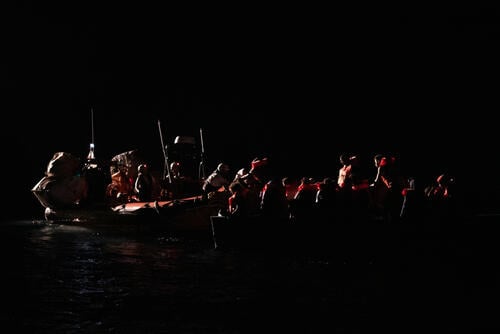
On 3 July 2023, MSF team onboard of Geo Barents conducted 4 different rescues in the  Maltese SAR zone. In total, 196 survivors were rescued, including 47 unaccompanied minors, 16 women, and 1 baby.

In the first rescue, our team was guided by aerial support from Pilotes Volontaires during the active search for this boat, which lasted more than 1.5 hours. 
While the last 3 rescues were all coordinated through the Italian MRCC.

The Italian authorities have assigned us Marina di Carrara as a place of #safety to disembark the survivors.
A team from the MSF search and rescue ship Geo Barents provides life vests to survivors on a wooden boat during a night-time rescue. Central Mediterranean Sea, July 2023. 
Michela Rizzotti/MSF
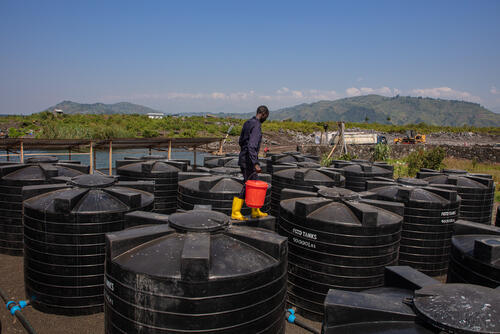
The water treatment plant located in Bulengo has the capacity to treat and distribute 2 million liters of water per day. The water is pumped from the lake and treated with chlorine before being stored in 10m3 tanks. Hygienists regularly make sure that the right amount of chlorine is used to disinfect the water.
An MSF water and sanitation hygienist walks across the top of water tanks being used to store and treat water for the people living in Bulengo displaced people’s camp. Goma, North Kivu province, Democratic Republic of Congo, July 2023. 
Alexandre Marcou/MSF
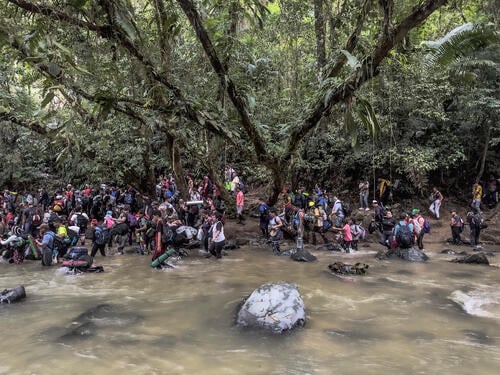
From January to November 2023, almost half a million migrants have crossed the Darién Gap, between Colombia and Panama.
People on the move from South to North America traverse a river in the Darién gap, as they make their way over the Panamanian border. Near Lajas Blancas, Panama, August 2023. 
Juan Carlos Tomasi/MSF
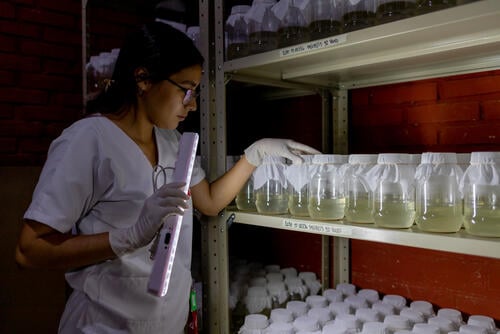
Mosquitoes have four stages in their life cycle: egg, larvae, pupa, and adult. Here you can see hundreds of larvae that in the next few days will become adults to be released. 

-------------

MSF has been responding to dengue outbreaks in Honduras since 1998. These are growing increasingly severe, with emergency thresholds reaching alarming levels and more than 10,000 dengue cases reported each year.  


Current prevention tools are not sufficient to protect people from dengue, there are no specific treatments currently available and no vaccines have yet been produced that provide sufficient protection against infection. With the aim of finding better and more sustainable solutions to the growing global health challenge that dengue represents, MSF is undertaking new activities to prevent dengue transmission and other arboviruses. This includes deploying an innovative method to reduce the risk of dengue and other arboviruses, carried out in partnership with local communities, the Honduras Ministry of health and the World Mosquito Program. The method consists of releasing Aedes aegypti mosquitoes carrying the natural Wolbachia bacteria, which reduces mosquitoes’ ability to transmit arboviruses – with the aim to lower the number of people affected by dengue fever in the area.  


Dengue fever is an important global health threat. It is rapidly spreading with reported incidence increasing 30-fold over the past 50 years. Today, more than half the world’s population is at risk, and it is expected that another billion people will be exposed to dengue fever in coming decades due to climate change. (Population growth, the movement of people from rural areas to cities, more international travel and climate change have all increased the spread of Aedes aegypti mosquitoes - also causing an increasing number of people affected by mosquito-borne diseases.)   


This comms initiative is the first public communication about this project which is unprecedented for both MSF and local communities.
Yosselin Vásquez, an MSF laboratory assistant, examines larvae of Aedes aegypti mosquitoes carrying the natural Wolbachia bacteria. Once the larvae become adult mosquitoes and are then released, the Wolbachia bacteria will reduce the mosquitoes’ ability to transmit arboviruses – such as dengue and Yellow fever – with the aim to lower the number of people affected by dengue fever in the area. Tegucigalpa, Honduras, August 2023. 
Martín Cálix/MSF
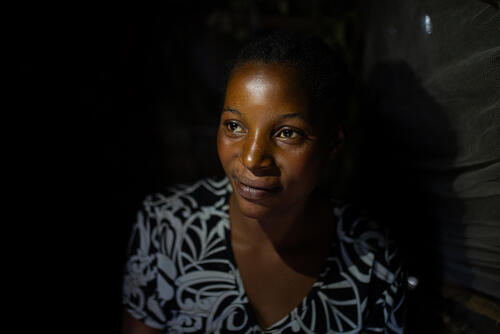
Asifiwe Seburo is 7-months pregnant of her 3rd child. “It is really difficult to be pregnant in the camp” explains the 22 year-old woman, “We are four people sleeping in this tiny hut, latrines are often full, I do not eat enough… it is a daily struggle”.
Asifiwe Seburo poses for a photo in her hut in Kanyaruchinya displaced people’s camp. She’s 7-months pregnant with her third child. “It is really difficult to be pregnant in the camp. We are four people sleeping in this tiny hut, latrines are often full, I do not eat enough… it is a daily struggle,” she says. Goma, North Kivu province, Democratic Republic of the Congo, August 2023. 
Alexandre Marcou/MSF
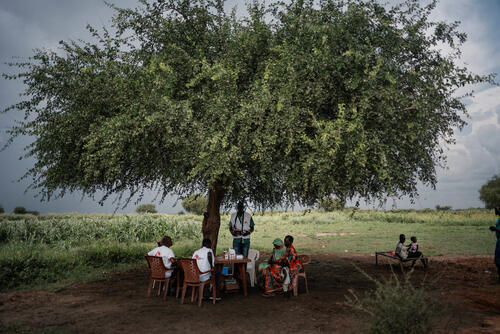
Aid post under a tree, Khadian village.
An MSF team provides medical consultations to people in the village of Khadian, at a temporary health post set up under a tree. Abyei Special Administrative Area (contested area between South Sudan and Sudan), August 2023.  
Sean Sutton/Panos Pictures
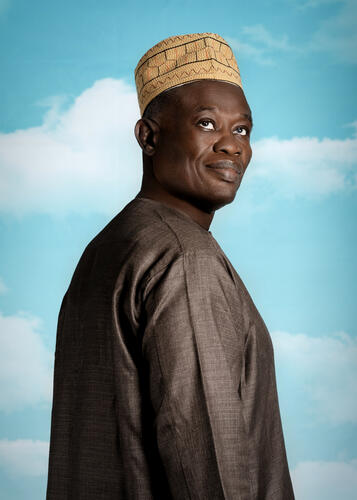
Hassimiou Camara, MSF peer educator and person living with HIV. Joined MSF in 2014

“A second chance at life” 

I was a train conductor in 2005 when my boss called me into his office to fire me because I was off sick all the time. He suspected I had AIDS. He left the door and windows open when he made his announcement. He let me go after 24 years of service. I was livid.
A short time after, I saw an MSF commercial on television about HIV care. I went to get tested and when I got the results back, I was shocked: positive! At the time, HIV meant death. But I started my treatment and six months later I was healthy again.
Stigmatising against HIV patients is strong in Guinea. The neighbourhood kids used to come to my house to watch TV. One eventually told me that the adults had discouraged them from visiting me because I had HIV. But I don’t condemn those who stigmatise it’s the result of misinformation.
Some patients fear telling their families and communities. Some women don’t tell their partners about their diagnosis, for fear of being beaten. But those same husbands need to understand that marriage is for better or for worse, in sickness and in health. And sometimes, children abandon their parents.
I joined the Guinea Hope Foundation and in 2007 I volunteered to speak out openly. I fight to defend the sick, give them hope and courage. I help those who are afraid of HIV. I raise awareness and I am proud to lead the change. Today, stigma has decreased, and many things have changed.
A portrait of Hassimiou Camara, an MSF peer educator and person living with HIV. He joined MSF in 2014, and had his portrait taken as part of a series by Guinean photographer Namsa Leuba, documenting the daily, fulfilling lives of people living with HIV in a bid to reduce stigma around the disease. Conakry, Guinea, November 2023.
Namsa Leuba
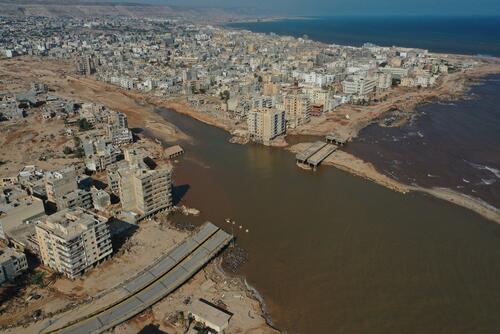
DERNA, LIBYA - SEPTEMBER 17: An aerial view of devastation after the floods caused by the Storm Daniel ravaged the region, in Derna, Libya on September 17, 2023.
An aerial view of the devastation in Derna, caused by floods following Storm Daniel’s rampage through the region. Derna, Libya, September 2023. 
Halil Fidan/Anadolu Agency via AFP
Conflict in Gaza
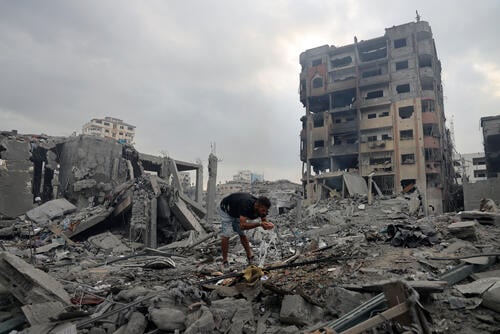
A man drinks water from a burst pipe amongst destroyed buildings in Gaza, following the outbreak of war between Israel and Hamas three days earlier. Gaza Strip, Palestine, 10 October 2023.  
Mohammed Baba
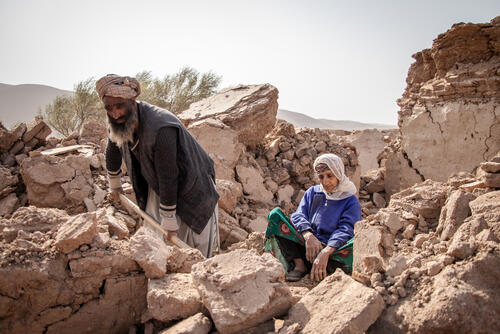
Abdul Salaam digging through the rubble of what used to be his home with a shovel. His mother seated on the side watches quietly.
Abdul Salaam digs through the rubble of what used to be his home with a shovel, as his mother watches on, after a 6.3 magnitude earthquake struck the region five days earlier. Herat, Afghanistan, 12 October 2023. 
Paul Odongo/MSF
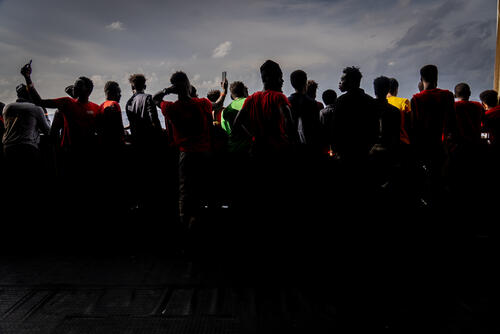
On the night of 15 of October, MSF team on board the Geo Barents rescued 63 people from a rubber boat in distress in Libyan SAR region. They spent 3 day on board the Geo Barents before reaching Genova, the place of safety assigned by the italian authorities.
A group of people, among 63 who were rescued by the MSF team on board the search and rescue ship Geo Barents, look out over the side of the ship, as they head to Genova, the place of safety assigned by the Italian authorities following the rescue. Central Mediterranean Sea, October 2023. 
Annalisa Ausilio/MSF
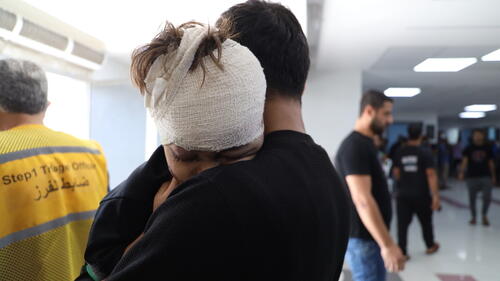
Patients at Al Shifa hospital
A young boy injured by an airstrike in Gaza hugs his father after receiving treatment at Al-Shifa hospital. Gaza Strip, Palestine, 19 October 2023.  
Mohammad Masri
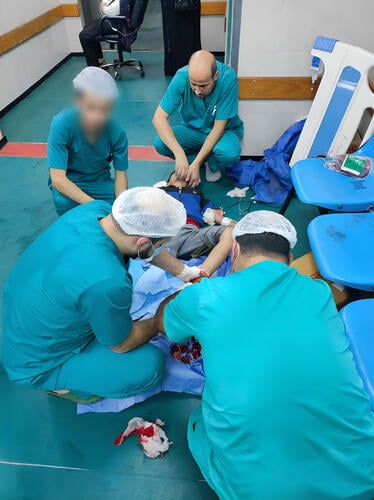
Today in Gaza, hospitals are overwhelmed with a massive number of patients, while doctors are running out of medical supplies, including anesthetics. Dr Obeid, MSF surgeon in Gaza, tells the story of a young boy, who had to go through an amputation with no proper anesthetics, as they are no longer available. Medicines and essential humanitarian aid must immediately be allowed into Gaza in order to save lives.
MSF doctors are forced to amputate the foot of a young boy on the floor of Al-Shifa hospital, using minimal anaesthesia, as medical facilities and personnel start to run out of supplies in a context of siege. Gaza Strip, Palestine, October 2023. 
MSF
At around 2am, on 27 October, our medical team arrived at Jenin hospital to treat wounded people following an Israeli forces incursion on Jenin refugee camp. Two Palestinians were reportedly killed, and many more were injured. Palestine, 27 October 2023.
MSF medical staff treat wounded people at 2am in Jenin hospital, following an Israeli forces incursion on Jenin refugee camp. Jenin, West Bank, Palestine, 27 October 2023. 
Faris Al-Jawad/MSF
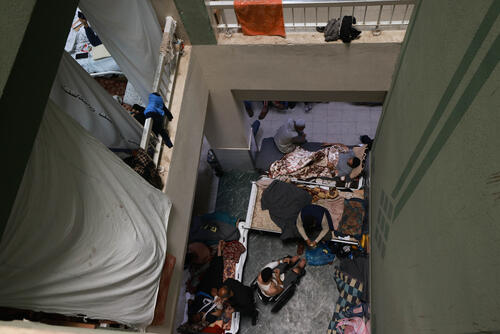
Hallway at Al Aqsa hospital. 29 November 2023, Middle Area, Gaza.
An above view of a crowded hallway at Al-Aqsa hospital, where patients and displaced people are forced to live. Middle Area, Gaza, Strip, Palestine, 29 November 2023. 
MSF
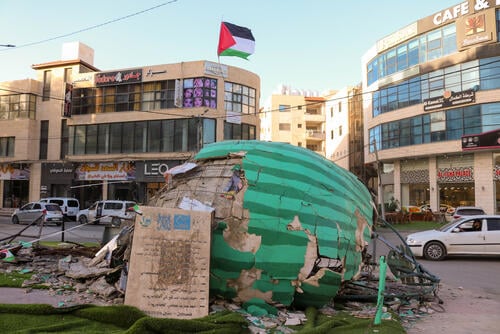
The watermelon roundabout, a symbol of Palestinian pride in Jenin, was destroyed during a military incursion in the city. Violent Israeli incursions in Jenin have become commonplace since 7 October. At least 30 people been killed and 162 injured by Israeli forces in the past month. Jenin, West Bank, 6 November, 2023.
The watermelon roundabout, a symbol of Palestinian pride in Jenin, was destroyed during a military incursion in the city. Violent Israeli incursions in Jenin have become commonplace since 7 October. Jenin, West Bank, Palestine, November 2023. 
Faris Al-Jawad/MSF