


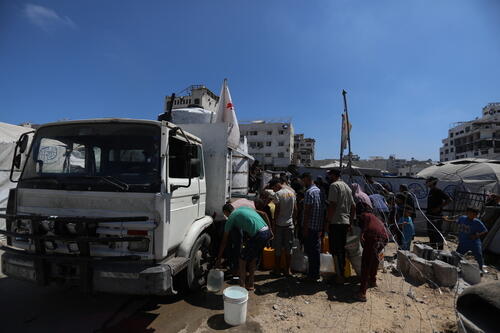
- Israel continues to restrict the entry of engine oil and spare parts, which are needed to run hospital generators, ambulances, and water pumps, from entering Gaza, Palestine.
- These restrictions are part of a broader system meant to limit vital services and supplies.
- Israel must immediately lift its blockade and allow the sustained, unhindered entry of supplies needed to respond to people's immense needs.
Amman/Jerusalem – Thousands of people in Gaza, Palestine, are at heightened risk of death and severe illness, as Israeli authorities continue to restrict the entry of engine oil and spare parts into the enclave, warns Médecins Sans Frontières (MSF). These supplies are needed to keep hospital generators, ambulances, water pumps and water trucks running. The impediment of these essential services is emblematic of Israel's systematic destruction of the necessities for life in Gaza.
In some facilities, MSF barely has enough engine oil to last a month, and some of our equipment has already been affected by shortages. We are forced to try and find stocks at the local market for extortionate prices. The supply of engine oil is so limited that the price has increased 20 times in the last six months. By the end of July, it was more than US$1,300 per litre. Neither the quality nor the availability is guaranteed.
On 5 August, one of the generators at the MSF field hospital in Deir Al-Balah broke down. Forced to rely on a smaller backup generator, teams had to drastically ration electricity during this time. We were only able to run the operating theatre for people in the most critical condition; nurses could not sterilise essential equipment; x-ray services stopped; and people with painful burns were left to suffer in extreme heat without air conditioning.
“What we are witnessing in Gaza is not a series of isolated shortages, it is a policy of attrition by design,” says Filipe Ribeiro, MSF head of mission in Palestine. “For more than two years, we have observed Israel's policies impairing the entry of supplies. These policies do not merely delay aid; they dismantle the very systems people rely on to survive.”
“Today it is engine oil and spare parts. Tomorrow it will be something else,” says Ribeiro. “The items change, but the logic remains the same: reduce people to conditions where life becomes untenable, where dignity is systematically stripped away through the denial of the most ordinary, most essential goods. This is not bureaucracy. It is a deliberate effort to make existence itself impossible.”
Today it is engine oil and spare parts. Tomorrow it will be something else.Filipe Ribeiro, MSF's head of mission in Palestine
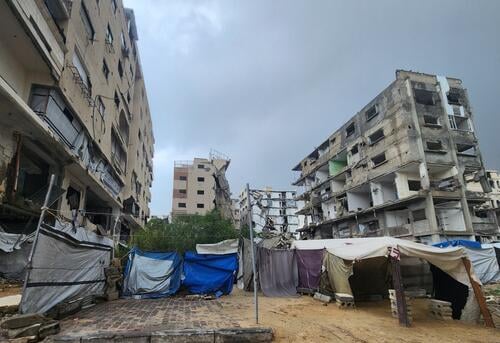
In Gaza, most electricity has been cut by Israeli authorities and much of the electrical infrastructure has been destroyed. Hospitals and other essential services now rely almost entirely on generators. Without engine oil and replacement parts, these generators are increasingly breaking down.
If generators stop working, there are no alternative power sources such as solar systems or replacement equipment. New generators or new vehicles have also been blocked by Israeli authorities.
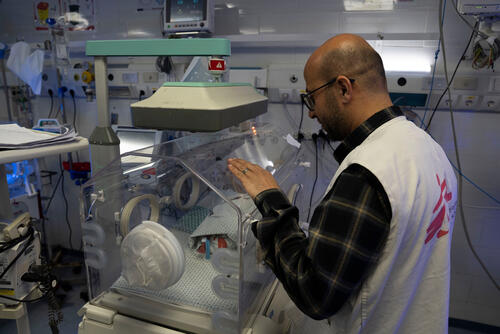
“When generators break down, hospitals are at risk,” says Ola Bardawil, deputy project coordinator. “Newborn babies in incubators, people who rely on oxygen generators, or those in need of lifesaving surgery will suffer.”
The withholding of engine oil and spare parts is not isolated, but part of wider restrictions imposed as part of Israel's genocide, using structural violence to intentionally limit access to vital services and supplies. The entry of engine oil and spare parts alone will not be enough to improve the lives of people in Gaza. Israel must immediately lift its blockade and allow the sustained, unhindered entry of all medical, humanitarian and commercial supplies needed to respond to people's immense needs.
The consequences extend far beyond hospitals. Currently, people's access to drinking water relies on trucks bringing water to the areas where they are sheltering. A survey carried out in July by organisations monitoring water and sanitation found that 90 per cent of households experience moderate to high water insecurity.1
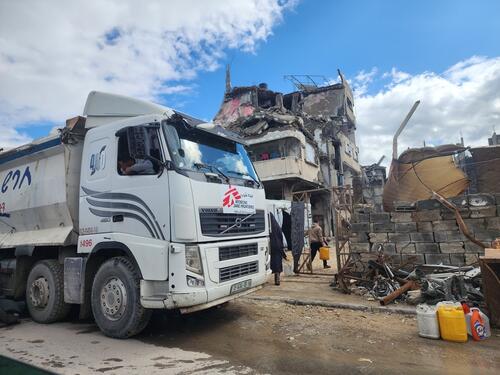
Without engine oil, all transport is at risk of stopping, including much needed water trucks at the height of the summer heat. This also means ambulances, buses enabling medical staff to come to work, and trucks collecting humanitarian supplies. Bakeries and flour mills also run off generators, meaning food production could be affected.
One of the generators in MSF's water desalination hub is already damaged due to the lack of engine oil and spare parts to replace what is broken. In June, we had to start reducing its use from 12 to seven hours per day, resulting in a decrease in drinking water production from 600,000 litres to 350,000 litres a day. This means over 40,000 fewer people can receive water each day.
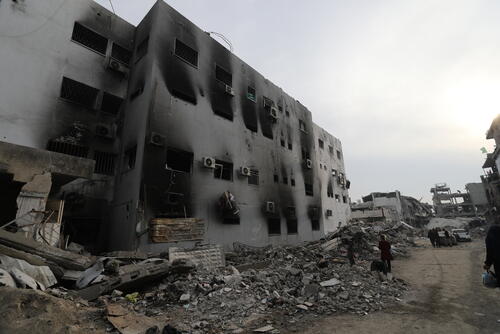
Israel's restrictions have become increasingly expansive, preventing the entry not only of generators and vehicles but also routine items, from ointments for skin diseases to rubber seals needed for machines to clean medical equipment. The shortages now extend across virtually every aspect of life in Gaza, leaving hospitals and humanitarian organisations without basic supplies.
Gaza-Israel war
MSF urges release of detained Palestinian medics in Israel as World Medical Association begins General Assembly
Opinion
6 Oct 2026
Gaza-Israel war
Three years on, Israel is asphyxiating Gaza and dismantling the means of survival
Press Release
5 Oct 2026
Palestine
Escalating violence and movement restrictions continue to drive medical needs in Hebron
Project Update
20 Aug 2026