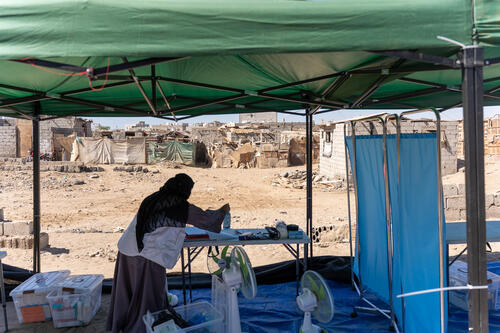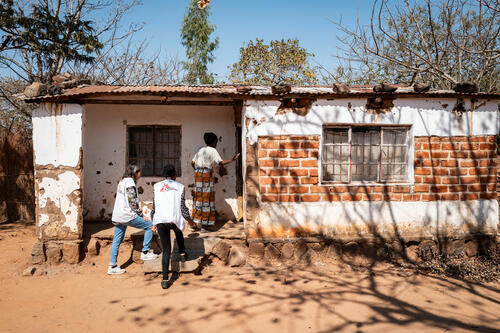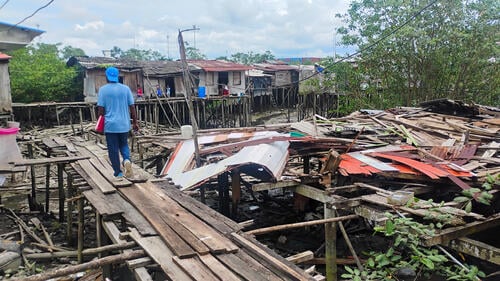
Three weeks after the 7.4-magnitude earthquake that struck western Colombia on 10 August, the initial phase of the emergency has ended, but thousands of people are still facing difficulties accessing medical care, mental health support, food, and materials to rebuild their homes.
Although the earthquake severely affected cities such as Cali and Pereira, the most critical gaps remain in areas that have long faced poverty, barriers to healthcare, and the presence of armed groups. In parts of Quibdó and Medio Baudó in Chocó, as well as Buenaventura in Valle del Cauca, where conditions were already precarious before the disaster, the earthquake has further exacerbated existing needs.
Médecins Sans Frontières (MSF) sent assessment and response teams to Valle del Cauca, Chocó, and Risaralda, prioritising areas where needs remain greatest and where the response has been more limited.
“Unlike other emergencies, the effects of the earthquake in Colombia were not concentrated in one place,” says Siham Hajaj, MSF head of mission in Colombia. “The impact was felt across territories that may seem close to one another but are separated by rivers and mountains, which has made the response more difficult. We have also seen significant differences between areas with a stronger institutional presence and others that have historically been neglected, including Indigenous and Afro-Colombian communities.”
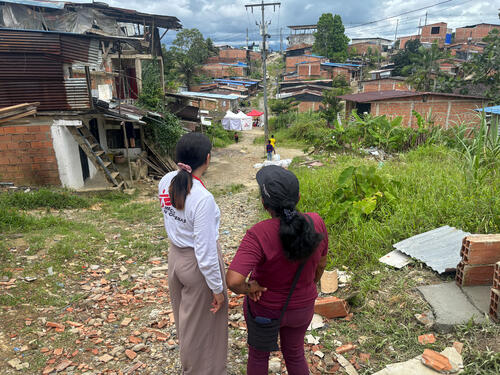
MSF has sent teams to the departments of Valle del Cauca, Chocó, and Risaralda, and, after conducting assessments in about ten municipalities. We’ve begun mobile clinics in Buenaventura (Valle del Cauca), as well as in Quibdó and Medio Baudó (Chocó), where greater barriers to accessing healthcare and lower response coverage were identified.
“In these territories, many communities are facing a double or even triple burden,” says Hajaj. “In addition to the effects of the earthquake, they are living in contexts marked by armed conflict, structural limitations in health services, and, in some cases, new climate-related events.”
In the municipality of Medio Baudó, Indigenous communities also faced flooding caused by the sudden rise of the Baudó River just two days after the earthquake, further worsening living conditions.
Health impacts
MSF teams have identified mental health needs as one of the main consequences of the disaster. Three weeks after the earthquake, common reactions include anxiety, acute stress, hypervigilance, insomnia, and a persistent fear of possible aftershocks and uncertainty about the future.
Blanca Lucila, an Embera1 woman from Medio Baudó in Chocó, said she was left deeply shaken. “In my community, three houses collapsed completely and the others were left leaning,” she says. “My head feels out of control; I get up and feel like I’m falling. People say something is going to happen, and we are all staying inside out of fear, waiting to see what will happen.”
My head feels out of control; I get up and feel like I’m falling.Blanca Lucila, an Embera woman from Medio Baudó in Chocó
In addition to healthcare, many families continue to need support to repair their homes and access food. In Buenaventura, Sebastián Cundumí returned from fishing to find his house destroyed. “The houses are devastated,” he says. “From the outside, some still look like they are standing, but when you go inside, there is nothing. We need materials to rebuild our homes.”
Luz Hernecia Rojas, Sebastián Cundumí’s neighbour, saw his house collapse. “Now I’m sleeping in the living room of my daughter’s house, which was also affected, so when it rains, we all get soaked,” says Rojas.
MSF’s response
In Quibdó, Chocó, during the first days of the response, MSF teams focused their efforts on urban areas, including the Municipal Coliseum shelter and the neighbourhoods of Medrano, Las Palmas, Poblado, and Zona Minera. Over eight days, teams carried out more than 700 consultations, including 480 general medical consultations and nearly 60 individual mental health consultations. They also held 15 group psychoeducation sessions with more than 200 participants.
We have also worked in coordination with local institutions, such as ESE Ismael Roldán and the Colombian Family Welfare Institute (ICBF), on vaccination activities, nutrition support, and access to safe water.
Following this initial phase, we expanded our response to rural communities in the department, where significant needs persist and access constraints continue to hinder humanitarian assistance. In Medio Baudó, the team carried out more than 140 medical consultations in three days.
In Buenaventura, Valle del Cauca, the team continues to run mobile clinics in some of the city’s most vulnerable neighbourhoods, where residents had not received medical care after the earthquake. We have conducted activities in the Alberto Lleras, Palo Seco, La Carmelita, Pampa Linda, Santafé, and Unión de Vivienda neighbourhoods.
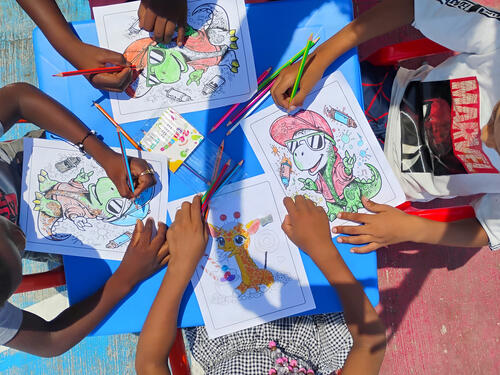
Throughout Buenaventura, MSF’s response includes a strong mental health and psychosocial support component. In the Alberto Lleras neighbourhood, for example, the team is setting up the “safe spaces” initiative, with recreational activities for children, mental health support, and health promotion activities.
In Buenaventura, the team has carried out nearly 800 consultations, including 600 general medical consultations and 84 individual mental health consultations. The team has also held 59 group sessions, reaching 750 people.
“This emergency has laid bare the inequalities that already existed before the earthquake,” says Hajaj. “One of the priorities now must be to ensure that the most isolated communities receive care.”