


Ebola disease in DRC: find out how we're responding
Learn more
7996 Results
 
Providing care to displaced communities, Tikrit district, Iraq.
Iraq

Crisis update – December 2017

MSF has seen an increasing number of families leaving the camps and returning home but more than 2.9 million remain displaced. Crisis Update - 18 Jan 2018
 
Nine-day-old Mohammad was born at the Doctors Without Borders/ Médecins Sans Frontières (MSF) maternity unit in Domiz Refugee Camp, northern Iraq. His parents left Syria when the incessant bombing became too much. 

“I have three daughters and one son,” Mohammad’s mother Seva says. “Mohammad was born here at the maternity centre, as well as one of my daughters. The maternity unit [in Domiz camp] is much better than the other places where I gave birth.”

“The staff were really good [when I gave birth to Mohammad]. I feel relaxed when I know there are people from my community providing the services. It feels better than going outside.” 

MSF launched the sexual reproductive health and maternity project in Domiz Refugee Camp in 2013. We initially provided check-ups for women before and after birth and family planning services. In 2014, the project was expanded to a full maternity unit with a 24-hour delivery room, triage and gynaecological consultations. Over the past four years, MSF medical staff have delivered more than 3,400 babies and provided more than 27,400 gynaecological consultations.

MSF completed the project in Domiz Refugee Camp in November 2017 and has handed over the maternity unit to the Dohuk Directorate of Health. We currently have projects across Iraq in the governorates of Erbil, Diyala, Ninawa, Kirkuk, Salaheddin, Anbar and Baghdad and will continue to set up new projects where the needs are greatest.
Iraq

Giving Syrian refugees a safe place to give birth

The services here are really good and they take care of us. Voices from the Field - 18 Jan 2018
 
Markings of the January 17 bomb blast on a house in Rann
Nigeria

Rann bombing - one year on

On the one year anniversary of the bombing, we remember the victims. Project Update - 17 Jan 2018
 
Mallan Ibrahim Kana, 43 years, (04.07.2017) from a village some 15 kms from Ngala. Fled twice before reaching Ngala camp. 

I arrived here with my family yesterday after walking for four days. We first left our village because of Boko Haram. For the past three years, there has been a lot of trouble. Boko Haram were outside our village and came to take our food and belongings. They took what we farmed and fished. They told us we could not go out at night. Many men have been killed in the village. We thought the military would come and bring security it didn't happen. Sometimes we heard planes dropping bombs outside of our village. I know people were injured in these bombings nearby. There was also fighting going on outside and we could not leave for fear of being caught up in the middle.
Life was very difficult and many people were sick and died. There is no hospital there and we could not go anywhere else. Most of the people in our village have fled. Many of them are here. We left empty handed and we have nothing.
Nigeria

“I feel ashamed of relying on others to live, but we can’t go home”

"People are stranded and in need of assistance. It is hard to see how their situation will improve in the near future." Voices from the Field - 17 Jan 2018
 
A keke napep carrying patients entering the MSF health centre in the Nigerian town of Gwoza. These three-wheeled vehicles, known as Keke napeps, are customised as makeshift ambulances to ferry patients from their homes to the MSF health centre.
Nigeria

No red lights to saving lives

Innovative use of small, three-wheeled vehicles to transport patients helps MSF overcome restrictions on movement in northeast Nigeria. Voices from the Field - 15 Jan 2018
 
Two kids helping their parents cleaning their house from rubbles. Al Mishlab, east of Raqqa city.
Syria

33 blast victims treated by MSF in Raqqa in the first week of 2018

Demining activities need to be scaled up to protect Raqqa returnees from catastrophic but avoidable deaths and injuries. Statement - 15 Jan 2018
 
A group of women and children flee threats of attacks by an armed group on the town of Betoko, northwestern Central African Republic. On their way to the town of Paoua, they stopped in Beda village to share informations with the villagers. Beda, December 27, 2017.
Central African Republic

Thousands displaced by fighting north of Paoua

Those forced to flee tell of torched villages, extortion and indiscriminate attacks. Voices from the Field - 8 Jan 2018
 
Tatiana Ivanovna, 65 years old, in a medical consultation with Doctor Tatiana Azarova. This MSF mobile clinic is located in the village of Pavlopil, about five kilometers from the contact line. Tatiana Ivana is receiving medical care and mental health support from MSF mobile teams.
Ukraine

Caring for villagers trapped near frontlines in Opytne

Without access to a regular doctor, the villagers in Opytne practice self-care, measure each other’s blood pressure, and self-medicate. Project Update - 5 Jan 2018
 
Yassin Tara, 20, and her 10-month-old daughter Asma have been refugees in Bangladesh since September. Tara’s food and pots were stolen, leaving the already desperate family with even less to get by on. She bought damaged pots to replace the ones she had, and she is trying to clean them, so she can cook for her family. Her husband is trying to find work but it is very hard. Her daughter has pneumonia and high fever. “I hope my children go to school, so that they can make a living and help us,” she says. Back in her village in Myanmar, she had three cows. She accuses the army of burning her house down and stealing her livestock.
Bangladesh

Building a hospital for Rohingya in three weeks

Watch our latest video on our 50-bed hospital build in 3 weeks. Project Update - 4 Jan 2018
 
Mohammad Othman, a 10-year-old Rohingya refugee in Bangladesh, carries a heavy sack of food distributed by the Red Cross back to his family.
Rohingya refugee crisis

A living nightmare (part two)

Arriving at the Kutupalong makeshift refugee camp complex in Bangladesh, the first thing one is struck by is its sheer size. Home to close to 650,000 members of Myanmar’s Rohingya community, its population is comparable to Frankfurt or Memphis. Photo Story - 3 Jan 2018
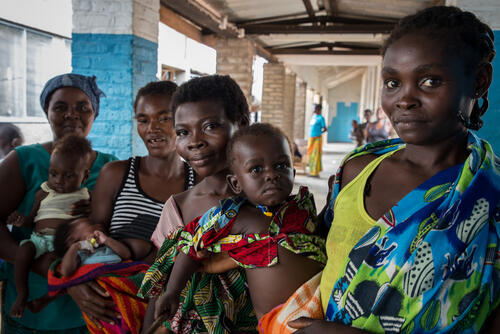
Four mothers posing in a corridor of the Hospital in Bili. All four of them are staying in the hospital with their child, that's suffering from a severe case of malaria. Since the beginning of the project in 2016, the pediatric ward already treated more than 4.000 cases of complicated/severe form of malaria.
Médecins Sans Frontières (MSF)

Independent medical humanitarian assistance

We provide medical assistance to people affected by conflict, epidemics, disasters, or exclusion from healthcare. Our teams are made up of tens of thousands of health professionals, logistic and administrative staff - most of them hired locally. Our actions are guided by medical ethics and the principles of independence and impartiality. We are a non-profit, self-governed, member-based organisation.

Learn more