



Ebola disease in DRC: find out how we're responding
Learn more
7996 Results
 
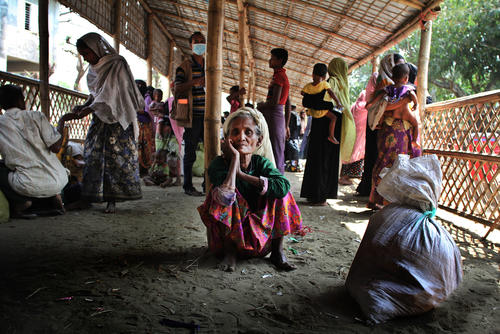
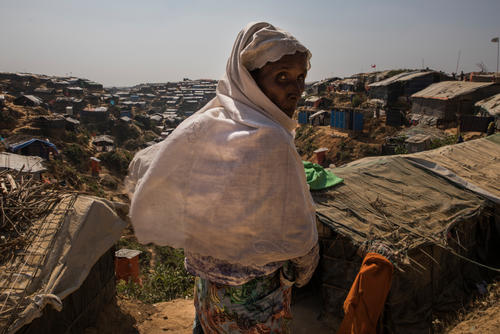
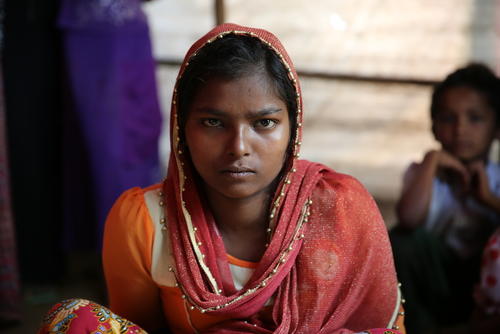
Conditions of life for Rohingya children at the refugee camps in Bangladesh are grim.
Rohingya refugee crisis

MSF surveys estimate that at least 6,700 Rohingya were killed during the attacks in Myanmar

Currently people are still fleeing from Myanmar to Bangladesh and those who do manage to cross the border still report being subject to violence in recent weeks. Press Release - 12 Dec 2017
 
Ms Marie-Josée Yakité, MSF midwife at the Castors HRUB since 2014

"I’ve been working here with MSF at Castors since 2014. For 20 years, I worked at Castors before the arrival of MSF, and also at the Hôpital de l’Amitié – a big hospital in Bangui, the capital of the Central African Republic.
We often look after patients who can’t get treatment elsewhere because they don’t have the money. People know that here we offer quality care to everyone, free of charge. In health centres that are not managed by international organisations like MSF, you have to pay for everything. If a patient can’t pay, they send them here. I remember one lady who was referred to us from one of the main hospitals in Bangui. This woman had already been monitored for pre-eclampsia. When the medical staff realised that there was foetal distress, they referred her to us. Not because the hospital couldn’t treat this kind of complication – it was just a matter of money.
In the health centres where patients have to pay for their care, when women arrive in labour, the staff make an assessment of all the tests and the procedures that need to be performed, and an estimate of how much it will cost. And then they make them pay. And if they realise that the woman doesn’t have the money, and that she needs treatment she can’t afford, they prefer to refer her here at Castors because we don’t ask for any money for our services.
We also have women who show up here ready to give birth, but who, for lack of money, have not had any prenatal examinations or tests, for syphilis, toxoplasmosis or HIV for example. We see this very often, especially women who are HIV-positive. These women come to us in labour, without having had a prenatal HIV test. And in theory this test should be free, as it is covered by the Global Fund. Yet sometimes they force women to pay for a whole raft of prenatal tests and they refuse to do the HIV test if the women don’t do the other tests, for which they have to pay. They ask them to pay for the medical supplies, the gloves, the health card, everything.
Because of these financial questions, some people refuse to go to hospital. They prefer to stay at home and rely on traditional medicine. Not long ago, we treated a young woman of 19 who had taken traditional oxytocics. She wanted to give birth at home, she didn’t want to go to a health centre because she didn’t have the money to pay. But the dose of the medicine she took was too high – she ruptured her uterus and her baby died. When the family saw she had suffered a haemorrhagic shock, she was taken to the health centre near her home, which then referred her here to Castors. By the time she came here, three days had already passed. Luckily we managed to save her, but we had to carry out a hysterectomy. She already has a healthy child, but sadly for her, she can’t have any more.
It’s the referrals from other health centres that are the most complicated. Very often, these women come to us in a very serious condition. Sometimes they bring us a woman on the back of a motorbike, and she dies before making it to the door. I suspect that sometimes the health centres keep patients longer than they should in the hope that they might still squeeze something out of them. I tell all the women to come here to Castors as soon as they feel their first labour pains. Here we have qualified staff who can guarantee high-quality care to all patients, irrespective of who they are and where they come from."
Access to Healthcare

8 ways user fees for health are harmful to people

When people simply don’t have the means to pay either formal or informal healthcare fees, they are de facto excluded or delayed from receiving care and aren’t treated in time. This can lead to death or complication from treatable diseases such as malaria and can happen even when seemingly small amounts are requested. Project Update - 11 Dec 2017
 
Raissa, 35 years old, shopkeeper, and Maiva, 18 months,
Single, with spouse
Malimaka neighbourhood, district 5, Bangui

"I have six children: the oldest is 19 and the youngest, Maiva, is now 18 months. I live here in Bangui, in the Malimaka neighbourhood, in district 5. 
During the events of 2013, I fled with almost all my neighbours to the IDP camp at M’Poko airport. Seleka set up here in the neighbourhood in March that year (Author’s note: this is when Seleka, a coalition of armed men under former-President Michel Djotodia, took Bangui by force).  There was a Seleka house just on the corner there, and there was another other that way. There were also many of them in the mosque. Those men would do whatever they wanted. When you crossed the road, you had to watch out to make sure you weren’t shot at. They would turn up at houses in the neighbourhood, break down the door and steal everything. Sometimes, to get people to leave, they would fire into the air, and even at people – they killed women by the road behind where we are sitting now. Once the shots started, everyone would start running and the Seleka fighters would make take advantage of this to carry off our things, even our beds. Anti-Balaka fighters chased them off in December 2013 and then set up here themselves. For us, the people living here, not much changed. They also harassed us, which ultimately drove us to leave. 
Before the troubles, we had better lives. During, and just after, I no longer had the means to continue my business. Now, it is quiet, we no longer hear gunfire. It still isn’t easy to earn a living here, but I have to try. I have six children: I can’t just sit here and do nothing. 
When I was living at the M’Poko IDP camp, we were living in poor conditions: my five children and I lived under the same tarpaulin. I became pregnant with Maiva while we were there. I didn’t go to many prenatal consultations, but that was more due to the lack of security in the camp and city, rather than money problems. Ultimately, we left in December last year, when the government closed and tore down the camp. They gave money to some people to help them leave and get back on with their lives. Unfortunately, I didn’t get anything. 
I gave birth to Maiva in Castors, in district 5. For the other children, I gave birth at one of the major hospitals in Bangui. There, they ask for a lot of money. At every step, they ask you for money. For every procedure, you have to pay the healthcare staff directly in cash. They don’t even ask you to go to the counter. The staff do not look after the patients, their top priority is the money. When I went to the hospital to give birth to my second son, I gave birth alone on the floor in the waiting room. If you want the midwife to come to you, you have to spend a lot of money first."

Prenatal consultation for her previous pregnancies: CFA 2,000 
Spending CFA 2,000 on oranges from the market, Raissa could make CFA 2,000 in profit by reselling them.
Global health

Health policies must focus on needs of individuals

Between 12-15 December the Universal Health Coverage Forum 2017 will take place Tokyo, Japan. Report - 11 Dec 2017
 
For more than a year, civil servants salaries haven’t been paid in Yemen. Despite this, many health workers continue to bear their duties despite growing difficulties. Emergency room of the Al Koweit university hospital in Sana’a - Yemen.
Yemen

“Just living has become more difficult”

Monia Khaled is water and sanitation supervisor for MSF in Yemen. This is her account of the dramatic changes in everyday life she has witnessed over the past two and a half years. Voices from the Field - 11 Dec 2017
 
Healthcare staff in the district was trained in these centres by MSF staff experienced in hemorrhagic fevers outbreaks. The main fields of training included the safe management of suspect and confirmed cases, collection of laboratory samples and community surveillance.
Uganda

MSF ends its intervention in response to the Marburg fever outbreak

“This is the first time that Marburg fever has been diagnosed in these districts of Uganda, but strong national surveillance meant that the epidemic was noticed and confirmed early enough to allow for a rapid and effective collaborative response” Project Update - 11 Dec 2017
 
msf-placeholder
Yemen

Crisis update - January 2018

MSF is in Yemen to support the Yemeni populations affected by the conflict on all sides of the frontlines. We work in 13 hospitals and health centres and provide support to more than 20 hospitals or health centres across 11 Yemeni governorates: Taiz, Aden, Ad Dhale, Sa’ada, Amran, Hajjah, Ibb, Sana’a, Abyan, Shabwa and Lahj. Crisis Update - 11 Dec 2017
 
MSF staff treat Rohingya refugee patients at a clinic in a camp in Bangladesh.
Rohingya refugee crisis

Rohingya crisis - a summary of findings from six pooled surveys

On 25 August 2017, a counter-insurgency military operation in Rakhine State, Myanmar, led to a mass displacement of Rohingya civilians into Bangladesh. Over the following three months, some 626,000 Rohingya crossed into Bangladesh to escape the violence.
Project Update - 9 Dec 2017
 
MSF staff distributing water to people who’ve been internally displaced by fighting in Zemio, CAR. They were among 7,000 people who have sought shelter at the local hospital.  
Just weeks after this photo was taken, On Tuesday 11 July, two armed men arrived at Zemio hospital in the southeastern region of CAR.
The men threatened a family, one member of which had been a patient two weeks earlier but had been unable to leave the premises due to ongoing violence. As three members of the family – including a woman holding her baby – attempted to seek cover, the armed men shot at them, striking the child in the head and killing her instantly. A month later, another armed group opened fire in the hospital. Thousand fled into the surrounding bush and across the border to DRC. The site now sits vacant and MSF has ceased its operations in the area, with no patients to treat and the safety situation for our staff remaining precarious.
Central African Republic

“The only people left in Zemio are those who couldn’t run away”

Recent attacks on Zemio, in southeast Central African Republic, have closed down the hospital and forced the city’s population, including MSF staff members, to flee. MSF medical coordinator Wil van Roekel describes the ramifications of the violence, including on some 1,600 HIV patients who need daily medication to survive. Voices from the Field - 9 Dec 2017
 
In the state of Puebla, Mexico, MSF teams identified as the main medical conditions among the population both respiratory problems and aggravations of chronic diseases, such as hypertension or diabetes, and psychosomatic symptoms
Mexico

MSF ends emergency response after the earthquakes

In November, Médecins Sans Frontières (MSF) teams in Mexico City, Mexico State, Puebla, Oaxaca and Morelos concluded the medical, mental health and heath promotions activities that were launched in response to the emergency situations created by two major earthquakes in September.

Project Update - 8 Dec 2017
 
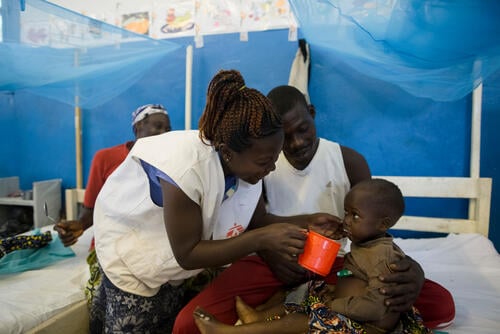
Victoire is four years old and has been brought to the CTC in Bukavu by his mother. He was very sick and had been vomiting all night.
Access to Healthcare

Taxing the ill - How user fees are blocking universal health coverage

MSF’s report, Taxing the ill, looks at fees paid to access health care, and how these are blocking universal health coverage

Report - 8 Dec 2017
Four mothers posing in a corridor of the Hospital in Bili. All four of them are staying in the hospital with their child, that's suffering from a severe case of malaria. Since the beginning of the project in 2016, the pediatric ward already treated more than 4.000 cases of complicated/severe form of malaria.
Médecins Sans Frontières (MSF)

Independent medical humanitarian assistance

We provide medical assistance to people affected by conflict, epidemics, disasters, or exclusion from healthcare. Our teams are made up of tens of thousands of health professionals, logistic and administrative staff - most of them hired locally. Our actions are guided by medical ethics and the principles of independence and impartiality. We are a non-profit, self-governed, member-based organisation.

Learn more