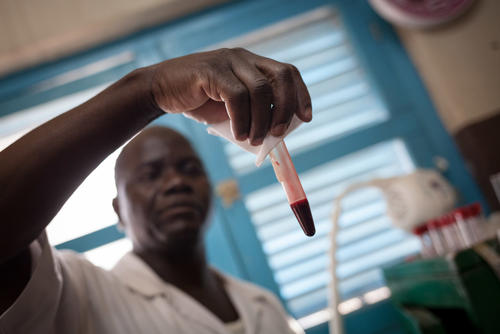
A nurse analyses a blood sample to perform a coagulation test following a snake bite at the Paoua hospital in northwestern Central African Republic, supported by MSF.
These blood samples, taken from a snakebite victim at the hospital MSF supports in Paoua, will be tested to identify any coagulation abnormalities.
© Alexis Huguet

Affordable and quality antivenoms needed for snakebites

These blood samples, taken from a snakebite victim at the hospital MSF supports in Paoua, will be tested to identify any coagulation abnormalities.
© Alexis Huguet
Ebola disease in DRC: find out how we're responding
Learn more

MSF has worked in Paoua, northwestern Central African Republic since 2006. Disease and snakebites are frequent there but people lack access to healthcare. In 2017, we treated around 1,000 victims of snake bite envenoming, which can trigger life-threatening hematoxic, cytotoxic and neurotoxic syndromes.

Snakebite envenoming permanently disables hundreds of thousands of people and kills more than 100,000 every year across the globe – more than any other World Health Organization (WHO)-designated neglected tropical disease. More than 20,000 people die from snakebites each year in sub-Saharan Africa alone.

Yet highly effective treatments exist.

We treat several thousand people free of charge in our facilities annually, but most people bitten by snakes in sub-Saharan Africa live in rural areas. They receive no antivenom treatment (the only validated treatment for the disease) or it is substandard because exorbitant prices put quality treatment out of reach.
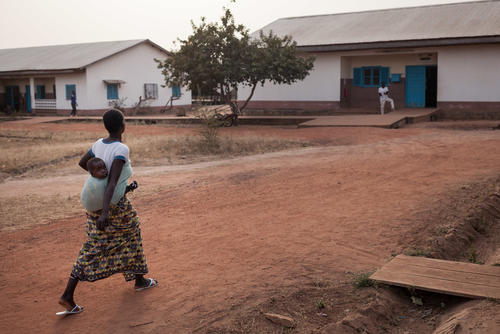
A woman and her baby go to the emergency department of the Paoua hospital, northwestern Central African Republic, supported by MSF.
A woman and her baby go to the MSF-supported emergency department of Paoua hospital, northwestern Central African Republic.
Alexis Huguet
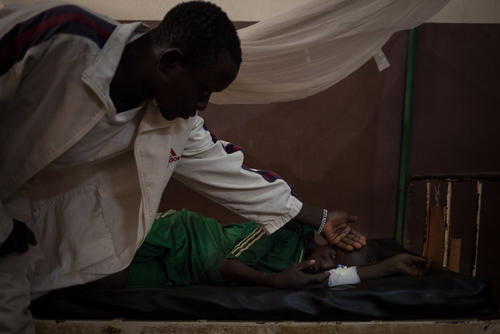
Nicsonne Dadjam, 13, is treated at Paoua Hospital, northwestern Central African Republic, supported by MSF. He was bitten by a snake while working in the fields in his village, 2 hours by motorbike from Paoua. His older brother is checking his temperature.
Nicsonne, 13, is being treated at the hospital in Paoua, northwestern Central African Republic. A snake bit him while he was working in the fields around his village, a two-hour motorbike ride from Paoua. His older brother checks his temperature.
Alexis Huguet
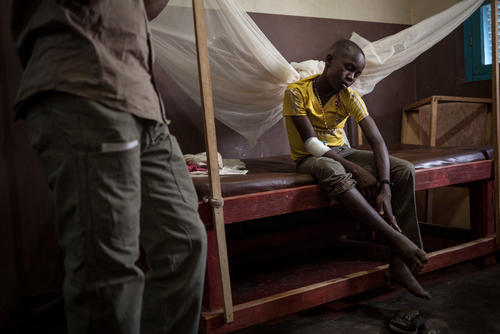
Bonaventure Ndjekpe, 14, is being kept under surveillance at Paoua Hospital, northwestern Central African Republic, supported by MSF. He would have been bitten on the heel by a snake on Christmas Eve, but there is no sign of blood poisoning.
Bonaventure, 14, is being kept under surveillance at Paoua Hospital. A snake apparently bit his heel but there is no sign of blood poisoning.g.
Alexis Huguet
A nurse analyses a blood sample to perform a coagulation test following a snake bite at the Paoua hospital in northwestern Central African Republic, supported by MSF.
These blood samples, taken from a snakebite victim at the hospital MSF supports in Paoua, will be tested to identify any coagulation abnormalities.
Alexis Huguet
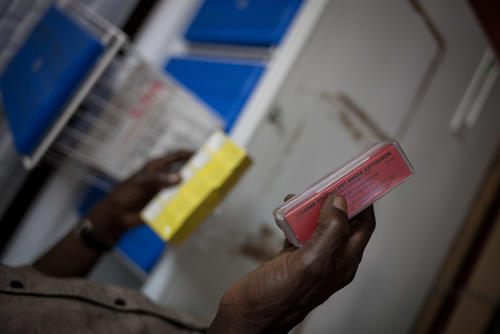
The head of the emergency department of the Paoua hospital, northwestern Central African Republic, supported by MSF, takes out the anti-venom serum from the refrigerator.
The head of Paoua hospital's emergency department takes the antivenom serum from the refrigerator.
Alexis Huguet
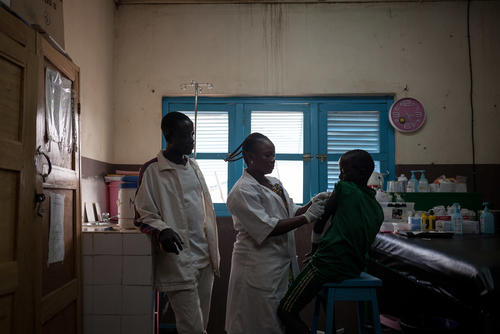
A nurse injects an anti-tetanus vaccine to Nicsonne Dadjam, 13, who is treated at the Paoua hospital in northwestern Central African Republic, supported by MSF. He was bitten by a snake while working in the fields in his village, 2 hours by motorbike from Paoua.
A nurse gives Nicsonne, 13, an anti-tetanus vaccine at the hospital in Paoua. A snake bit him while he was working in the fields near his village, a two-hour drive from Paoua.
Alexis Huguet
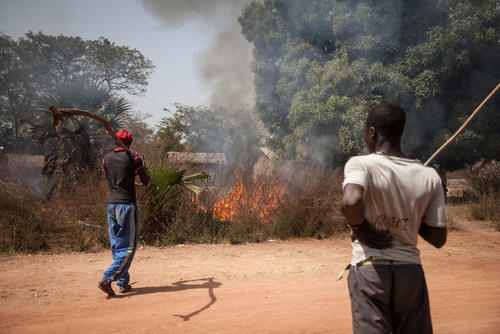
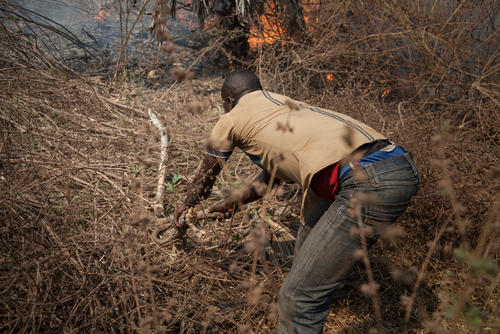
Villagers try to kill a snake in a village in the region of Paoua, northwestern Central African Republic.
© Alexis Huguet
Villagers try to kill a snake in a village in the region of Paoua, northwestern Central African Republic.
Alexis Huguet
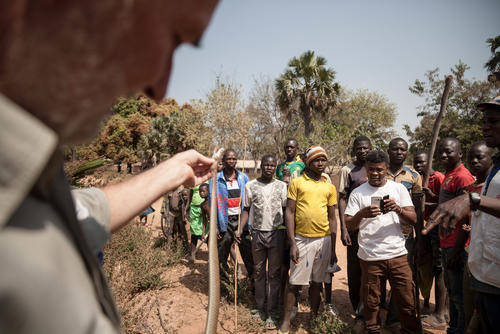
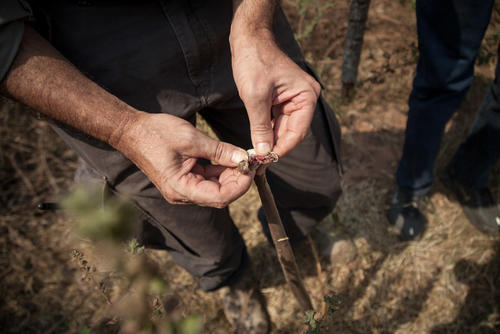
Jean Ospital, MSF field coordinator in Paoua Region, explains to the villagers who killed the snake (a green mamba), how not to hurt themselves by manipulating the dead body of the snake.
Jean Ospital, MSF field coordinator in the Paoua region, holds up the snake the villagers have just killed.
Alexis Huguet
Jean Ospital, MSF field coordinator in Paoua Region, explains to the villagers who killed the snake (a green mamba), how not to hurt themselves by manipulating the dead body of the snake.
Jean Ospital explains to the villagers who killed the snake (a green mamba) how to avoid hurting themselves when they manipulate its dead body.
Alexis Huguet
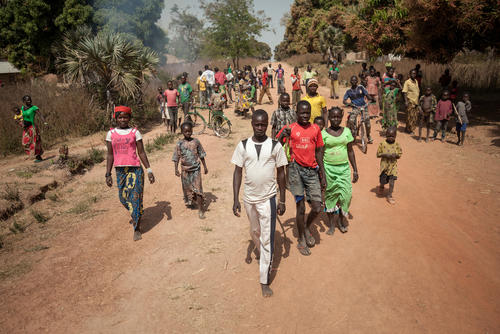
After killing a snake, a green mamba, the villagers, reassured, return home. Paoua region, northwestern Central African Republic.
The snake is dead; the reassured villagers go home.
Alexis Huguet