




Ebola disease in DRC: find out how we're responding
Learn more
7996 Results
 
Rohingya refugees, who suffer from diphtheria, are being treated at an MSF clinic near Cox's Bazar, Bangladesh.
Bangladesh

“We had to learn around the clock how to treat diphtheria”

“When diphtheria broke out in December in Bangladesh’s Cox’s Bazar district, the MSF team in Balukhali was completely overwhelmed." Voices from the Field - 22 Feb 2018
 
The last two functional ambulances in Al-Marj neighbourhood (in the East Ghouta besieged area near Damascus) were destroyed beyond repair in an aerial bomb attack on Monday 05 December 2016. They were parked in the hospital’s warehouse/garage, very near to the makeshift hospital’s location. Two hospital cars, used to transporting supplies and medical personnel, were also destroyed in the blast. The lack of ambulances will have an impact on the ability to quickly treat wounded when there is bombing or shelling in the area, but above all it will affect the capacity to refer the most sick patients to larger secondary referral hospitals. The makeshift hospital in Al-Marj is not equipped for complex or long-term in-patient hospital care, and this could have a big impact on the ability to refer patients for appropriate secondary care.
Syria

Extraordinary mass-casualty influxes in East Ghouta as hospitals run short of life-saving medicines

“We make a plea to those in and around East Ghouta with medical supplies to urgently grant access to those stocks to the medics in East Ghouta – lives depend on it.” Press Release - 21 Feb 2018
 
Patients wait for a consultation at MSF's primary health centre in Jamtoli.
Bangladesh

Rohingya exodus - six months into the humanitarian crisis

Nearly 700,000 Rohingya refugees have arrived in Cox's Bazar district in southeastern Bangladesh since late August 2017 after fleeing targeted violence in Rakhine state, Myanmar. Photo Story - 20 Feb 2018
 
Chests of drawers and gas tanks litter the floor at the emergency entrance in the center of the building, its view looking out toward the hospital's front gate.
War and conflict

Humanitarian Wars? - Interview with Rony Brauman

Rony Brauman has just published “Guerres humanitaires? Mensonges et intox” (which could be loosely translated as "Humanitarian Wars? Lies and Brainwashing"). This book, a collection of interviews co-authored with Régis Meyran, explores a number of recent armed interventions that have all shared the goal of saving lives. msf-crash.org - 19 Feb 2018
 
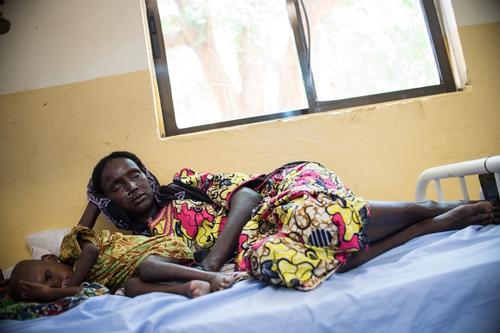
Humaira, a 25-year-old Rohingya woman, was found by MSF teams in her tent in Jamtoli makeshift settlement living in a state of shock. When violence broke out in her hometown in Myanmar’s Rakhine state, Humaira lost her husband and was forced to flee despite her very advanced pregnancy. It was October 2017. She walked for days through the forest with her seven-year-old son, Mohamed Faisal. Then, while aboard a boat heading towards Bangladesh, she went into labor. Ruzina, a baby girl, was born. Humaira has not been able to breastfeed her during these past months, and the child is malnourished.
In this photograph, Humaira is in a ward at MSF’s primary healthcare centre in Jamtoli.
Rohingya refugee crisis

Journey of death and life

More than 688,000 Rohingya refugees have arrived in Cox's Bazar, a district in southeast Bangladesh, since late August 2017, after fleeing violence in Rakhine State, Myanmar. They joined several other thousands who had made the same journey in previous crises. Voices from the Field - 19 Feb 2018
 
Kate Nolan, MSF emergency coordinator in Bangladesh responding to the Rohingya refugee crisis.
Bangladesh

The crisis is not over - Rohingya refugees are still arriving

The numbers of people arriving now are not massive, like in the beginning of the crisis, but we still see a few hundred reaching the country every week after crossing the Naf river. Voices from the Field - 19 Feb 2018
 
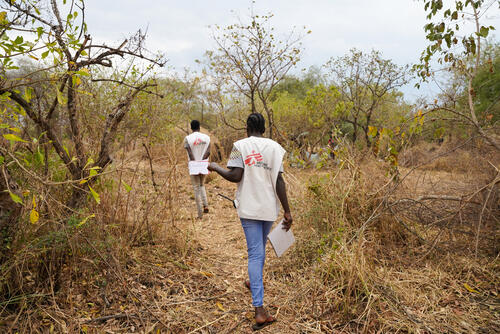
The team dispatched is made up of drivers, a logistical coordinator, a doctor, a nurse and a community health advisor.
South Sudan

Decentralised healthcare in Upper Nile State

In South Sudan’s north-east Upper Nile State, medical care for people living in remote areas is almost non-existent. Years of civil war and budget cuts have lead to chronic underfunding and a near collapse of pre-existing medical structures. Photo Story - 13 Feb 2018
 
Those that arrive have a multitude of different problems, from broken fingers, to strokes, to diabetes. What is clear is that for most of them their conditions are somewhat neglected. For most the arrival of MSF is a lifeline. Despite the long wait everybody gets to see the a doctor or nurse
South Sudan

The stark choices facing displaced people in Aburoc

"This constant fleeing from one town to another has taken its toll on the community. While some are planning ahead, others are still mentally and physically exhausted by the ordeal of last year." Project Update - 13 Feb 2018
 
msf-placeholder
Syria

The situation in the northwest is quickly going from very bad to worse

"This is another step towards disaster in this troubled zone."  Voices from the Field - 9 Feb 2018
 
Simphiwe holds his medication, he takes up to 26 pills a day to treat XDR-TB. Here he holds his morning selection, which includes delamanid, one of the newest DR-TB drugs, which Simphiwe is taking for the first time today. 

Simphiwe Zwide, 43 years, lives in a one-bedroom house with his wife, Nomonde Tyala, and children in Kuyasa, Khayelitsha. Simphiwe was first diagnosed with MDR-TB in 2011. He completed six months of treatment, but when he learned that he had pre-XDR-TB and would need even more treatment, he lost heart and returned to work. 
In June 2016, he presented back to his Khayelistha clinic as he had fallen ill again. This time test results showed he had XDR-TB. He took his first delamanid tablets on 12 October, as part of a strengthened regimen for XDR-TB.
Simphiwe’s current regimen: Delamanid, bedaquiline, linezolid, levofloxacin, terizidone, clofazimine, ethionamide
Simphiwe Zwide:

“In 2011, my wife had TB and they admitted her into Jooste District Hospital. I visited her for over a week. When she came out of hospital, I fell sick. 
I couldn’t eat, my body was painful, my throat was sore – I thought I had a virus. My wife tried to cook – sour milk and maize meal. I couldn’t swallow. I had to drink many cups of water. I was sweating – I couldn’t walk even couple of metres. 
My wife was very supportive of me. She would leave me taxi money and go and stand in the hospital queue for me from 5am.
I started to feel my health returning and I felt like I could work again. I’m the breadwinner, and we were all suffering. I was the only one who could work for my family. I was taking clofazamine injections which meant that I had to attend the clinic every day and this was preventing me from finding a job.  
I was between Johannesburg and Cape Town looking for work between 2012 to the end of 2016. Then in January 2016, I started to get sick again. I couldn’t work like I’m used to.  I came back to Khayelitsha, now I’m here at Kuyasa clinic getting treated for XDR-TB. I’m joining a support group soon. 
I’m a jack of all trades - I learned to be a cleaner, I was piping donuts down at Monte Vista. I do construction, I bake cakes. My big brother taught me how to bake and my cousin is a confectioner. 

I’ve been on treatment (including linezolid and bedaquiline ) for  two months now. Sometimes I take 26 pills a day. 

When I take them, I have to sleep the whole day. But I’m feeling much better, I can’t say I’m 100% but this is only my third month. I know who I am, I’m strong and I want my health back.”
Tuberculosis

Drug-resistant TB: “Some of our patients simply can’t wait for clinical trials"

Drug-resistant tuberculosis (TB) remains a major threat to global health: Of the ten million people who fell ill with TB in 2016 alone, over half a million are estimated to have resistance to the most effective drugs used to treat TB, rifampicin and isoniazid. For those with highly resistant strains of TB, very few treatment options exist. Project Update - 9 Feb 2018
Four mothers posing in a corridor of the Hospital in Bili. All four of them are staying in the hospital with their child, that's suffering from a severe case of malaria. Since the beginning of the project in 2016, the pediatric ward already treated more than 4.000 cases of complicated/severe form of malaria.
Médecins Sans Frontières (MSF)

Independent medical humanitarian assistance

We provide medical assistance to people affected by conflict, epidemics, disasters, or exclusion from healthcare. Our teams are made up of tens of thousands of health professionals, logistic and administrative staff - most of them hired locally. Our actions are guided by medical ethics and the principles of independence and impartiality. We are a non-profit, self-governed, member-based organisation.

Learn more