


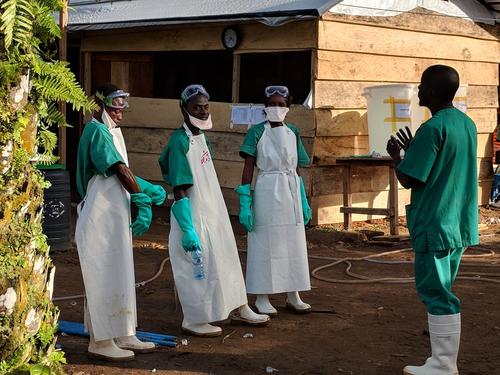

Ebola disease in DRC: find out how we're responding
Learn more
7996 Results
 
Displaced people wait for a distribution of non-food items (NFIs) in Pulka town.
Nigeria

“The situation in northeast Nigeria is deteriorating after years of conflict”

The humanitarian situation in northeast Nigeria, where about 1.7 million people have been displaced, is deteriorating. Interview - 18 Jul 2018
 
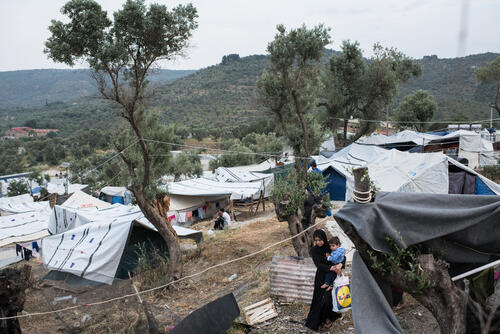
Thousands of people seeking safety after fleeing countries such as Syria, Afghanistan, Iraq, Sudan, and Congo continue to risk their lives to reach Europe. Those who try to arrive via Turkey and the Aegean Sea have been trapped for an indefinite period of time on islands in Greece as part of the EU/Turkey deal and its deterrence and containment approach. 
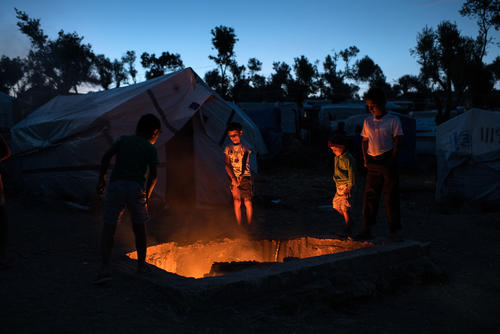
In Moria refugee camp, on Lesbos island, there are currently more than 7,500 people in a camp made for a maximum of 2,500. With the camp so full, refugees are now staying in an informal extension of the camp known as Olive Grove. The awful conditions at Moria camp/Olive Grove and arbitrary administrative situations have had a dramatic impact on their health and in particular their mental health. 
Médecins Sans Frontières teams provide medical and mental health support outside Moria camp and run a clinic for severe mental health cases in Mytilene, the capital of the island.
Greece

Confinement, violence and chaos: How a European refugee camp is traumatising people on Lesbos

MSF calls for vulnerable people to be moved out of Moria into secure accommodation, and continues to call for a decongestion of the camp. Project Update - 18 Jul 2018
 
An MSF lab technician in the MSF-supported laboratory services in Matam health centre, performs a CrAG test using samples from HIV positive patients to test for cryptococcal meningitis. CrAG tests are provided for HIV patients who are diagnosed with CD4
Website

AIDS 2018

The 22nd International AIDS Conference will be held in Amsterdam on 23-27 July. This year’s theme is Breaking Barriers, Building Bridges, drawing attention to the need of rights-based approaches to more effectively reach key populations, including in Eastern Europe and Central Asia and the North-African/Middle Eastern regions where epidemics are growing. aids2018.org
 
A child affected by severe malnutrition, treated in the therapeutic nutrition center (CNT), in the MSF-supported hospital.


By May 2018, the nutritional feeding centre (CNT), run by MSF, was already over its capacity of 60 beds with 325 malnourished children admitted in that month alone. 
It’s expected that this number will only increase over the coming months. But despite the high numbers of children requiring treatment, and the strains on medical staff, this crisis is not unexpected nor is it the first time the region has been hit by such worrying levels of undernourished children. From May to September each year, hundreds of thousands of people in Chad and in the entire Sahel region endure extreme food insecurity due to the lean period, a result of the dry season coupled with low food stocks. A recurrent nutritional crisis has just started in the Salamat region, and has spread to other regions of the country.

In order to combat the high mortality rates, in the nutritional feeding centre in Am Timan hospital, during their treatment patients receive special food, in order to recover their appetite and respon-siveness. They’re fed with therapeutic milk containing sugar, oil, minerals and vitamins and with a high-protein peanut paste fortified with vitamins and minerals. The children admitted to this program have very low weight for their height and severe muscle wasting. They may also have nutritional oedema – characterized by swollen feet, face and limbs. The hope is that they can be discharged when they’re able to eat again, without medical assistance.
Chad

Tackling malnutrition in Am Timan

MSF teams in Am Timan are responding to this nutritional crisis by providing support to three local health centres in screening and treating cases of malnutrition. Project Update - 17 Jul 2018
 
R6M visit– Finda at the end of her six-monthly R6M consultation at the MSF-supported HIV outpatient department at Matam health centre, Conakry, Guinea 

Finda Oulare, 49 years has three children and lives nearby Matam health centre, where MSF provides HIV TB outpatient and ambulatory services. As a member of R6M, she comes to Matam health centre twice a year for a consultation and to collect her ARVs. 

Finda was diagnosed with HIV in 2010. She suspects she may have contracted HIV in Luanda, Angola, where she had surgery.

“Every time I take my meds on time, I feel better. R6M helps with this because I don’t have delays in coming to the hospital.”

R6M (Rendez-vous de Six Mois) is an MSF-developed model of care where stable patients come for appointments every six months (rather than the standard 1-2 months for a medical consultation) where they pick up six-months of ARV supplies. They also have a yearly VL screening. R6M members significantly reduce costs and time for stable HIV patients, while freeing up health centers for other patients who need more dedicated care.
Patients are eligible for R6M if they met the following criteria:  older than 15years, on first line ARVs, no opportunistic infections, VL
HIV/AIDS

MSF at AIDS 2018

Details of how to find info on MSF publications, materials, and sessions at the 22nd International AIDS Conference in Amsterdam, 23-27 July 2018. Follow on Twitter: @MSF_HIV Project Update - 16 Jul 2018
 
msf-placeholder
Tuberculosis

EndTB: Bedaquiline- and delamanid- containing regimens achieve excellent interim treatment response without safety concerns

http://www.endtb.org/resources/endtb-interim-analysis-july2018 - 13 Jul 2018
 
msf-placeholder
Tuberculosis

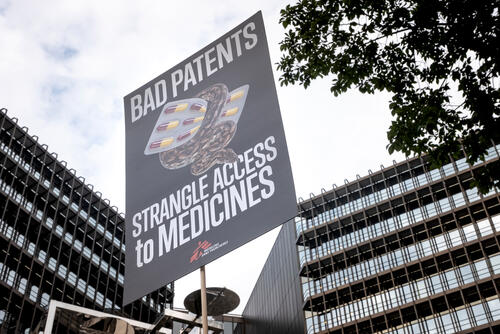
TB Online: Activists call on Johnson & Johnson to drop the price of bedaquiline

http://tbonline.info/posts/2018/7/13/activists-call-johnson-johnson-drop-price-bedaquil/ - 13 Jul 2018
 
A health promotion MSF worker at the referral hospital in Ansongo, where MSF has been running projects since 2012.
Mali

“Insecurity has pushed people to their limits”

Jamal Mrrouch has just returned from Mali, where he spent more than one year coordinating MSF’s work in the northern regions of Gao and Kidal, and in the central region of Mopti. Interview - 13 Jul 2018
 
MSF and SOS Mediterannee Search and Rescue personnel from the vessel, Aquarius, intervene to rescue refugees and migrants from an over-crowded wooden boat, 28 December 2016, in the Mediterranean sea off the northern coast of Libya.
Mediterranean migration

Drowning skyrockets as European governments block humanitarian assistance on Central Mediterranean

In the last four weeks, the number of deaths in the Central Mediterranean has skyrocketed, with over 600 people drowned or are presumed drowned, including babies and toddlers. Press Release - 12 Jul 2018
 
Mosul’s old town experienced intense shelling, aerial bombing and attacks with improvised explosive devices (IED) during the conflict to retake the city from the Islamic State group in 2016/17. Much of the old city is still inaccessible due to the destruction and presence of IEDs, unexploded ordinance (UXO) and booby traps. 

Between 5,000 and 7,000 people have returned to their homes in Mosul’s old city, despite the danger of explosive remnants of war. They face extremely difficult conditions, often living without water and electricity and in partially damaged houses.
Iraq

After the battle: The unfolding of a disaster

A year has passed since the battle for Mosul officially ended, yet its consequences can be still witnessed inside and around the city. The battle might be over, but our work here is not, even a year later. Follow our timeline of events, from the military offensive launched in October 2016 to Mosul today. Photo Story - 11 Jul 2018
Four mothers posing in a corridor of the Hospital in Bili. All four of them are staying in the hospital with their child, that's suffering from a severe case of malaria. Since the beginning of the project in 2016, the pediatric ward already treated more than 4.000 cases of complicated/severe form of malaria.
Médecins Sans Frontières (MSF)

Independent medical humanitarian assistance

We provide medical assistance to people affected by conflict, epidemics, disasters, or exclusion from healthcare. Our teams are made up of tens of thousands of health professionals, logistic and administrative staff - most of them hired locally. Our actions are guided by medical ethics and the principles of independence and impartiality. We are a non-profit, self-governed, member-based organisation.

Learn more