



Ebola disease in DRC: find out how we're responding
Learn more
7996 Results
 
The pneumonia vaccine from GSK used for vaccination in refugee camps in Greek islands was made available at a special reduced price of US$9 while its retail price is $168 in Greece.
Access to medicines

Gavi should stop awarding special funds to Pfizer and GSK for pneumonia vaccine

MSF urges Gavi to reserve its special funds for pneumonia vaccine for a new manufacturer offering a more affordable version, not Pfizer and GlaxoSmithKline. Press Release - 26 Aug 2019
 
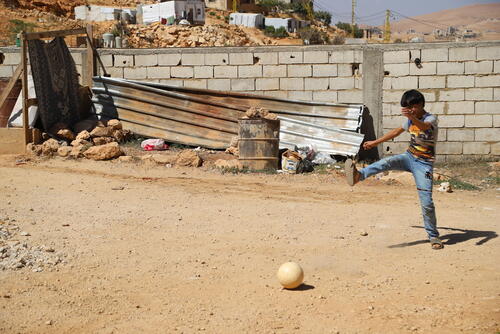
In the West Bank, MSF provides psychotherapy in Nablus and Qalqiliya. While three of our psychologists in the project are local Palestinians, two are foreigners who do not speak Arabic. This means our interpreters play a vital role in our work there.
Palestine

Mental healthcare in translation

MSF is providing psychotherapy services in Nablus and Qalqiliya. While three of our psychologists in the project are local Palestinians, two are foreigners who do not speak Arabic. This means interpreters play a vital role in our work there. Project Update - 25 Aug 2019
 
A message from the Ocean Viking as it remains stranded in the Mediterranean Sea for the 12th day since the first rescue. There are 356 men women and children onboard.
Mediterranean migration

Ocean Viking rescue survivors finally offered place of safety

After 14 days at sea with 356 vulnerable men, women and children aboard, MSF is relieved Ocean Viking has been offered a place of safety to disembark in Malta Press Release - 23 Aug 2019
 
Over a week since Ocean Viking's first rescue, there are 356 people on board. MSF are still expecting to be assigned a place of safety for the disembarkation.
Mediterranean migration

“He just kept running, despite the wound and the bleeding”

MSF doctor tells the story of a 20-year-old Libyan man who had shrapnel removed from his torso on the search and rescue ship Ocean Viking in the Mediterranean Voices from the Field - 22 Aug 2019
 
Franck Ale - MSF regional epidemiologist based in Dakar.
Cholera

How to identify the causes of an epidemic and respond strategically

Epidemiologist Franck Ale explains the cholera situation in the Lake Chad region and how surveillance and investigation are helping to identify the causes of epidemics and guide strategic responses by MSF and others. Interview - 21 Aug 2019
 
Alphonse Elogo, MSF Water and Sanitation manager, observes a potentially contaminated water point in a neighbourhood of the Pitoa health district, Northern Cameroon.

Alphonse Elogo, responsable MSF eau et assainissement observe un point d'eau potentiellement contaminée dans un quartier du district de santé de Pitoa, région Nord du Cameroun.
Cameroon

A multidisciplinary approach to stem the spread of cholera

How MSF health promoters, water and sanitation experts, medics and epidemiologists are preventing the spread of cholera in Cameroon and the Lake Chad region. Project Update - 21 Aug 2019
 
People are seen on a walkway in Kutupalong megacamp, which runs next to an open sewer.
Rohingya refugee crisis

Two years on: No solutions in sight for the Rohingya

Hear the fears, hopes and daily reality of Rohingya people in Myanmar, Bangladesh and Malaysia, two years since the biggest ever exodus of Rohingya from Myanmar’s Rakhine state. Project Update - 20 Aug 2019
 
A young man looks on at the outskirts of Ah Nauk Ye camp. This camp is home to almost 5,000 people. It is overcrowded, squalid and prone to floods during the rainy season. MSF is the only provider of medical services in Ah Nauk Ye, and runs a regular mobile clinic here.
Rohingya refugee crisis

Being Rohingya in Myanmar: “We hold our frustration inside because we cannot speak out”

Read the story of Suleiman, an MSF watchman living in Nget Chaung village, central Rakhine State, Myanmar. Voices from the Field - 20 Aug 2019
 
An old man makes his way through Kutupalong megacamp. Bangladesh now hosts over 912,000 Rohingya refugees, of which over 700,000 arrived since 25 August 2019. Thousands more Rohingya are scattered across the region.
Two years on since the biggest ever influx of Rohingya refugees into Bangladesh, housing in the refugee camps in Bangladesh remain rudimentary, as do latrines and other basic infrastructure. Refugees have very little privacy or shelter from the elements. In one of the most flood and cyclone-prone areas of the world, shelters can be often destroyed, damaged or entirely washed away by heavy rains. The Rohingya lack legal status in Bangladesh, Malaysia and other host countries, meaning they are unable to access formal education, employment or build a future for themselves. They are unable to enjoy the right of freedom of movement and live with great uncertainty for what the future holds. They remain dependent on humanitarian assistance, living in a state of perpetual limbo and privation. 
Despite vocal international condemnation at the violence committed by Myanmar security forces against the Rohingya in 2017, there has been little meaningful diplomatic pressure on the Myanmar government, where the origin of the problem lies. Some 550,000-600,000 Rohingya still live in Rakhine state.  Approximately 130,000 Rohingya and other Muslims remain in de facto detention camps in central Rakhine state, unable to access basic services such as education or healthcare, or earn a living. In northern Rakhine, hundreds of thousands of Rohingya are completely cut off from international humanitarian aid. Our repeated requests for access to this region continue to be ignored or denied by the authorities.
MSF has been working with the Rohingya for decades – in Bangladesh on and off since 1985, in Myanmar since 1994, and in Malaysia starting in 2004.
Rohingya refugee crisis

Being Rohingya in Bangladesh: “The population has been completely suspended in time”

Arunn Jegan, emergency coordinator for MSF in Bangladesh, describes the restrictions, fears and hopes among the Rohingya living in Cox’s Bazar Voices from the Field - 20 Aug 2019
 
Girls play with their hair near a dog in the Kutupalong megacamp. Bangladesh now hosts over 912,000 Rohingya refugees, of which over 700,000 arrived since 25 August 2017. Thousands more Rohingya are scattered across the region.
Two years on since the biggest ever influx of Rohingya refugees into Bangladesh, housing in the refugee camps in Bangladesh remain rudimentary, as do latrines and other basic infrastructure. Refugees have very little privacy or shelter from the elements. In one of the most flood and cyclone-prone areas of the world, shelters can be often destroyed, damaged or entirely washed away by heavy rains. The Rohingya lack legal status in Bangladesh, Malaysia and other host countries, meaning they are unable to access formal education, employment or build a future for themselves. They are unable to enjoy the right of freedom of movement and live with great uncertainty for what the future holds. They remain dependent on humanitarian assistance, living in a state of perpetual limbo and privation. 
Despite vocal international condemnation at the violence committed by Myanmar security forces against the Rohingya in 2017, there has been little meaningful diplomatic pressure on the Myanmar government, where the origin of the problem lies. Some 550,000-600,000 Rohingya still live in Rakhine state.  Approximately 130,000 Rohingya and other Muslims remain in de facto detention camps in central Rakhine state, unable to access basic services such as education or healthcare, or earn a living. In northern Rakhine, hundreds of thousands of Rohingya are completely cut off from international humanitarian aid. MSF has been working with the Rohingya for decades – in Bangladesh on and off since 1985, in Myanmar since 1994, and in Malaysia starting in 2004.
Rohingya refugee crisis

“The collective fate of the Rohingya is in our hands”

A Rohingya refugee from Myanmar, now living in the Kutupalong-Balukhali megacamp in Cox’s Bazar, Bangladesh, shares his hopes and fears for the future. Voices from the Field - 20 Aug 2019
Four mothers posing in a corridor of the Hospital in Bili. All four of them are staying in the hospital with their child, that's suffering from a severe case of malaria. Since the beginning of the project in 2016, the pediatric ward already treated more than 4.000 cases of complicated/severe form of malaria.
Médecins Sans Frontières (MSF)

Independent medical humanitarian assistance

We provide medical assistance to people affected by conflict, epidemics, disasters, or exclusion from healthcare. Our teams are made up of tens of thousands of health professionals, logistic and administrative staff - most of them hired locally. Our actions are guided by medical ethics and the principles of independence and impartiality. We are a non-profit, self-governed, member-based organisation.

Learn more