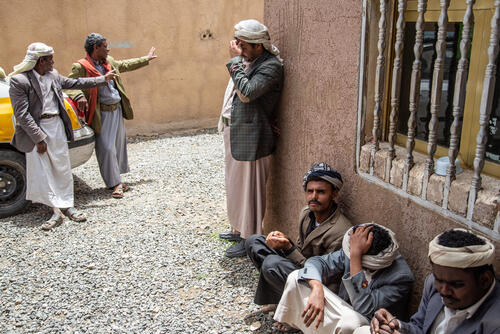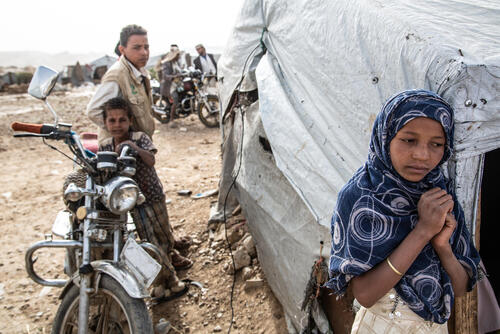
Yemen, Amran governorate, Khamer, 24 April 2019 - Dahadh camp is located in Khamer, Amran governorate, 1 km southeast of the city centre, near the Qat market. 410 families, around 3430 persons, have been living inside the camp since 2015, the beginning of the war. Some of these families were displaced several times, they are mostly coming from Saada (280 families), the most heavily bombed governorate by the Saudi and Emirati-led coalition (SELC) since March 2015. New waves of displacements to Khamer occurred during the offensive on Hodeidah, launched in June 2018 by SELC backed troops against Ansar Allah forces to take over the city. Following clashes in Kuchar (north Abs), located in Hajjah governorate, new IDP recently arrived in Khamer. In March 2019, over 18,000 newly displaced people were forced to flee looking for safety in Abs and surrounding areas after several days of intense fighting. More than 50,000 people are now displaced in North Abs because of these fighting. 
In Dahadh camp, MSF teams have been supporting IDPs with NFIs (blanket, soap, kitchen tools, etc), water tanks and water trucking until Oxfam took over at the end of 2015. We also started two mobile clinics, one of them visiting Dahadh camp twice a week. Mobile clinic activities were stopped when the lands’ owners prohibited teams to go to Dahadh. In July 2016, we provided scabies treatment in the camp.
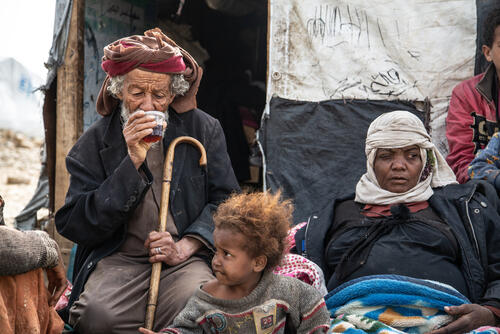
A family displaced by fighting outside their tent in the Dahadh displaced persons camp in Khamer, Amran governorate, northwestern Yemen. April 2019.
© Agnes Varraine-Leca/MSF

Last stop, Khamer: displaced people in exile in northwestern Yemen

A family displaced by fighting outside their tent in the Dahadh displaced persons camp in Khamer, Amran governorate, northwestern Yemen. April 2019.
© Agnes Varraine-Leca/MSF
Ebola disease in DRC: find out how we're responding
Learn more

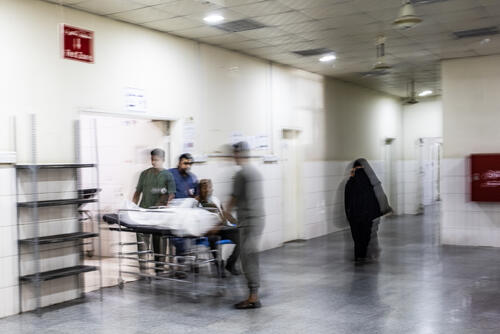
Since the end of March, heavy fighting has intensified in Hajjah governorate, northwestern Yemen. The conflict between Ansar Allah's troops and forces loyal to President Hadi, backed by the Saudi and Emirati-led coalition, has displaced thousands of people. Some of them have sought safety in Khamer, in the neighbouring governorate of Amran, where Médecins Sans Frontières (MSF) teams are providing medical and surgical care.

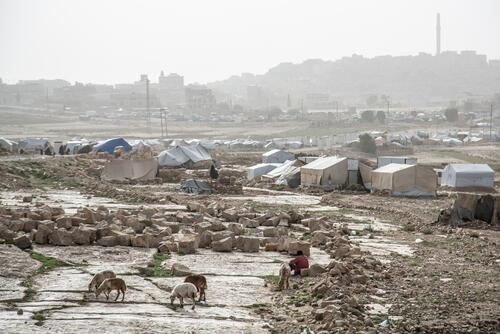
These displaced families have joined many others, already living in exile in Khamer for several years after fleeing fighting. In Dahadh camp, nearly 3,500 people are now living in precarious conditions, with limited access to medical care and water.
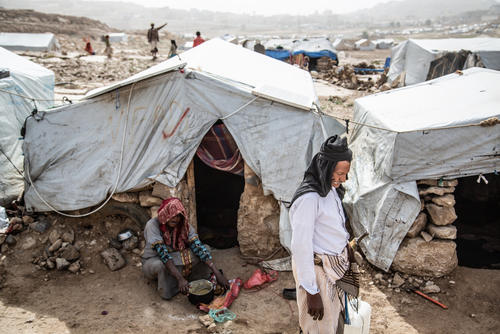
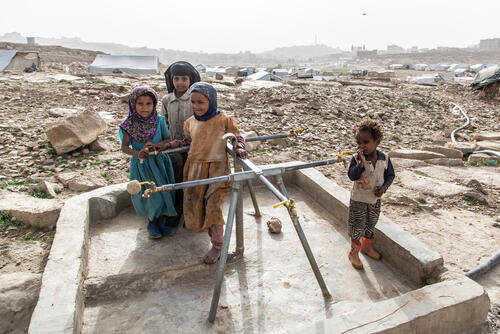
Over the past years, MSF teams have distributed emergency kits to people in Dahadh camp on multiple occasions and ran mobile clinics to provide medical care until our access to the camp was no longer permitted. In July 2016, teams also provided residents with treatments for scabies.
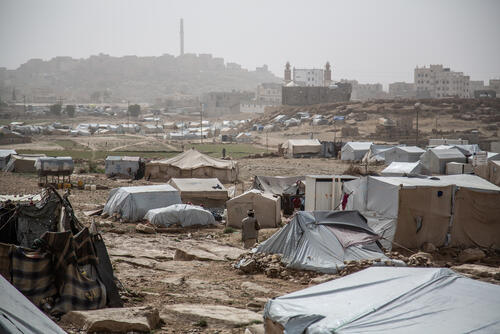
Yemen, Amran governorate, Khamer, 24 April 2019 - Dahadh camp is located in Khamer, Amran governorate, 1 km southeast of the city centre, near the Qat market. 410 families have been living inside the camp since 2015, the beginning of the war. Some of these families were displaced several times, they are mostly coming from Saada (280 families), the most heavily bombed governorate by the Saudi and Emirati-led coalition (SELC) since March 2015. New waves of displacements to Khamer occurred during the offensive on Hodeidah, launched in June 2018 by SELC backed troops against Ansar Allah forces to take over the city. Following clashes in Kuchar (north Abs), located in Hajjah governorate, new IDP recently arrived in Khamer. In March 2019, over 18,000 newly displaced people were forced to flee looking for safety in Abs and surrounding areas after several days of intense fighting. More than 50,000 people are now displaced in North Abs because of these fighting. 
In Dahadh camp, MSF teams have been supporting IDPs with NFIs (blanket, soap, kitchen tools, etc), water tanks and water trucking until Oxfam took over at the end of 2015. We also started two mobile clinics, one of them visiting Dahadh camp twice a week. Mobile clinic activities were stopped when the lands’ owners prohibited teams to go to Dahadh. In July 2016, we provided scabies treatment in the camp.
A view of the Dahadh camp for displaced people, in Khamer, Amran governorate, northwestern Yemen. April 2019.
© Agnes Varraine-Leca/MSF

Two-thirds of the Dahadh camp population arrived in 2015, at the beginning of the war. They fled the massive aerial bombardment by the Saudi and Emirati-led coalition (SELC), over the governorate of Saada, an Ansar Allah stronghold. Nearly a quarter of all recorded coalition air strikes have hit Saada, which shares a border with Saudi Arabia, since the beginning of the conflictAccording to the monitoring group Yemen Data Project.. Declared a hostile zone by the coalition in 2015, this is the most heavily bombed governorate in Yemen.
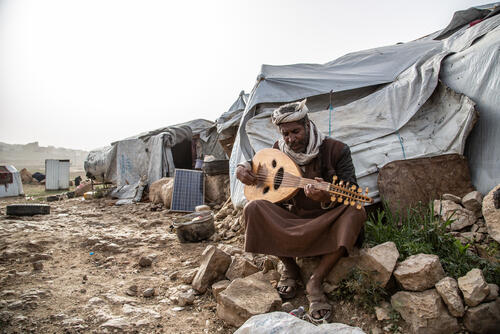
Yemen, Amran governorate, Khamer, 24 April 2019 - Mohammed Hamoud, oud player. Dahadh camp is located in Khamer, Amran governorate, 1 km southeast of the city centre, near the Qat market. 410 families, around 3430 persons, have been living inside the camp since 2015, the beginning of the war. Some of these families were displaced several times, they are mostly coming from Saada (280 families), the most heavily bombed governorate by the Saudi and Emirati-led coalition (SELC) since March 2015. New waves of displacements to Khamer occurred during the offensive on Hodeidah, launched in June 2018 by SELC backed troops against Ansar Allah forces to take over the city. Following clashes in Kuchar (north Abs), located in Hajjah governorate, new IDP recently arrived in Khamer. In March 2019, over 18,000 newly displaced people were forced to flee looking for safety in Abs and surrounding areas after several days of intense fighting. More than 50,000 people are now displaced in North Abs because of these fighting. 
In Dahadh camp, MSF teams have been supporting IDPs with NFIs (blanket, soap, kitchen tools, etc), water tanks and water trucking until Oxfam took over at the end of 2015. We also started two mobile clinics, one of them visiting Dahadh camp twice a week. Mobile clinic activities were stopped when the lands’ owners prohibited teams to go to Dahadh. In July 2016, we provided scabies treatment in the camp.
Displaced man Mohammed Hamoud plays his oud, a musical instrument, in Dahadh camp, Khamer. Amran governorate, Yemen, April 2019.
Agnes Varraine-Leca/MSF

In June 2018, the coalition's offensive against the city of Hodeidah resulted in a new wave of displaced people crossing into Amran governorate. Fatima and her husband, a fisherman working on the Red Sea, fled fighting and bombing inside the city in July 2018 and found shelter in Dahadh camp. She remembers the journey: 12 endless hours travelling the 300 kilometres between Hodeidah and Khamer – and the fear she felt when she heard the sounds of fighting approaching her home. The couple now live at the far end of the camp, in a tent, far from the sea.
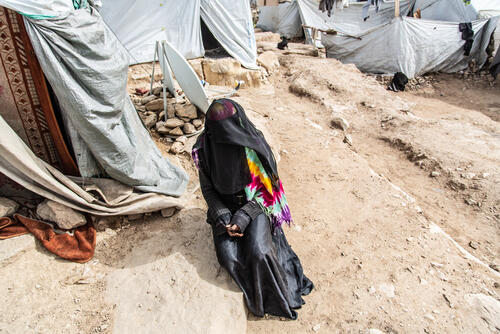
Yemen, Amran governorate, Khamer, 24 April 2019 - Fatima is from Taez, she is married to a fisherman, they were living together in Hodeidah until the offensive on the city started in June 2018. At that time, SELC-backed troops launched a strong offensive against Ansar Allah forces to take over Hodeidah. She was very afraid for her husband’s life, as she heard stories about fishermen being targeted and killed. In July 2018, they decided to leave the city after strong ground fighting and airstrikes increased. It took them 12 hours to reach Khamer, in Amran governorate. They now live together in a tent in Dahadh camp. She mentioned the shortage of cooking gas and sometimes difficulties to get clean water. « Here it’s safe, even if I don't have my own house, and even if it’s cold in the winter » she said. « I hope I can get back to my house in Hodeidah. »  Dahadh camp is located in Khamer, Amran governorate, 1 km southeast of the city centre, near the Qat market. 410 families, around 3430 persons, have been living inside the camp since 2015, the beginning of the war. Some of these families were displaced several times, they are mostly coming from Saada (280 families), the most heavily bombed governorate by the Saudi and Emirati-led coalition (SELC) since March 2015. New waves of displacements to Khamer occurred during the offensive on Hodeidah, launched in June 2018 by SELC backed troops against Ansar Allah forces to take over the city. Following clashes in Kuchar (north Abs), located in Hajjah governorate, new IDP recently arrived in Khamer. In March 2019, over 18,000 newly displaced people were forced to flee looking for safety in Abs and surrounding areas after several days of intense fighting. More than 50,000 people are now displaced in North Abs because of these fighting. 
In Dahadh camp, MSF teams have been supporting IDPs with NFIs (blanket, soap, kitchen tools, etc), water tanks and water trucking until Oxfam took over at the end of 2015. We also star
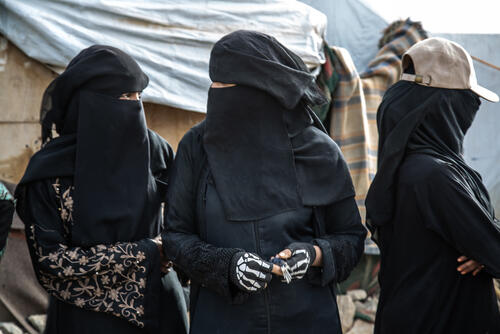
Fatima, who has been displaced from Hodeidah, sits outside her tent in Dahadh camp. Amran Governorate, Yemen, April 2019. 
Agnes Varraine-Leca/MSF

Fatima, who is married to a fisherman, is from Taez. She and her husband were living together in Hodeidah until the offensive on the city started in June 2018. At that time, SELC-backed troops launched a strong offensive against Ansar Allah forces to take over Hodeidah. She was very afraid for her husband’s life, as she heard stories about fishermen being targeted and killed.

In July 2018, they decided to leave the city after heavy ground fighting and the number of airstrikes increased. It took them 12 hours to reach Khamer, in Amran governorate. They now live together in a tent in Dahadh camp. She mentioned the shortage of cooking gas and how it is sometimes difficult to get clean water.

“Here it’s safe, even if I don't have my own house, and even if it’s cold in the winter,” she said. "I hope I can get back to my house in Hodeidah.”

Dahadh camp is located in Khamer, Amran governorate, 1 km southeast of the city centre, near the Qat market. 410 families, around 3430 persons, have been living inside the camp since 2015, the beginning of the war.


In early 2019, the intensification of fighting in Hajjah governorate, in the north of the country, led to another wave of population displacement. In March, more than 20,000 people were uprooted by the conflicts in the north of Abs and the governorate of Amran, adding to the thousands of families already in exile.

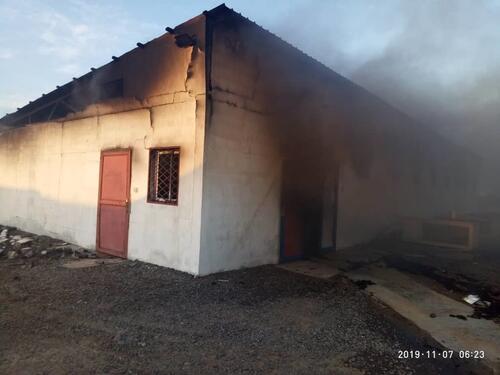
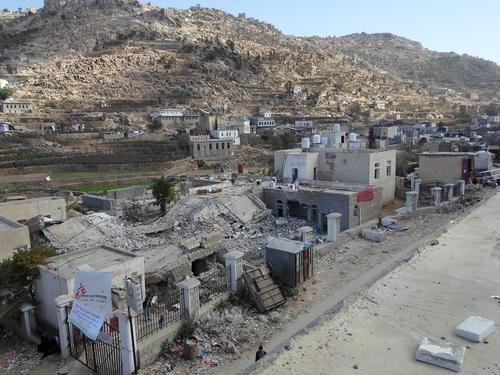
The most violent fighting broke out near Abs, a town near the Saudi border, where MSF is supporting a field hospital in collaboration with the Ministry of Health. The same hospital was partially destroyed by a coalition air strike on 15 August 2016 that killed 19 people. Two years later, in June 2018, an SELC airstrike also destroyed a cholera treatment centre newly constructed by MSF in Abs.
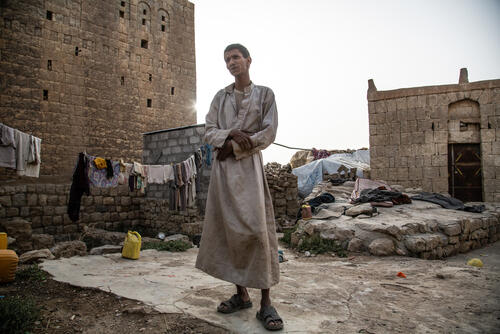
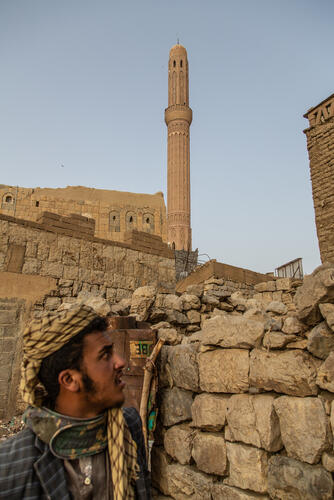
Yemen, Amran governorate, Khamer, 24 April 2019 - Ahmad is living with his wife and his three children near the mosque in the old city of Khamer, in the ruins of an ancient building. He comes from Midi and was displaced several times because of active fighting on different frontlines. He lost his house in Hajour (Hajjah governorate), he had to flee and could not get back to his house because of fighting, which makes him very sad. He is farming some vegetables near his shelter in the old city of Khamer to feed his family and mainly depends on aid to live. He used to sell commodities to Saudi Arabia before the war. Since mid-2015, influx of IDPs as a consequence of the war has been observed in Amran governorate, particularly IDPs coming from Saada and Hajjah governorates. IDPs in Amran are located in different districts. The most vulnerable are those still living in the camps where sanitation/hygiene/shelter are very poor. The economic situation is also critical in Amran, with direct consequences on the deterioration of access to health care services for people who can’t afford transportation to reach health facilities, but also who can’t pay for their treatments.
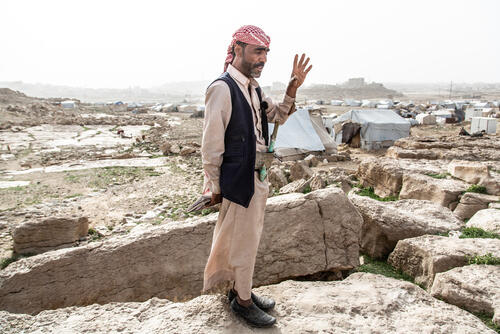
Displaced person Ahmad stands outside his shelter, in the ruins of an ancient building in the old town of Khamer. Amran governorate, Yemen, April 2019.
Agnes Varraine-Leca/MSF

Since last spring, Ahmad has lived with his wife and three children in the ruins of an old house near the Khamer Mosque. The family comes from Hajjah governorate, from which they fled in April. A former trader, Ahmad lost everything in the fighting and bombing that affected Kuchar, a mountainous area about 50 kilometres from the Saudi border.
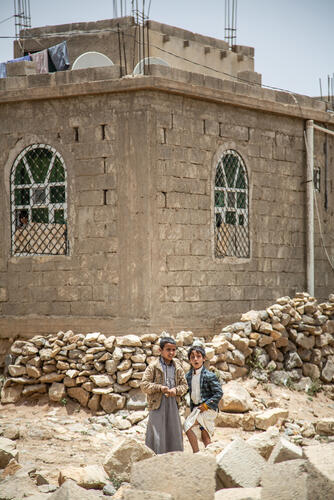
By March, more than 5,300 families had managed to flee the district, but thousands more were trapped in the areas affected by fighting with no possibility of shelter. According to the United Nations, there are an estimated 3.65 million displaced people in Yemen.