“I was sick and I was pregnant,” says Amina*, a mother of six from Nigeria. “I gave birth to five of my children at home; I have never been to a health centre. For this new baby though, I felt that my life would be at risk if I didn't seek help. So, the other people I was on the run with called a caregiver from the village of Illori, in Nigeria, who helped me give birth.”
“As soon as I gave birth, we learned that armed men were arriving in the village,” she says. “I fled again with my newborn, I spent three nights in the bush without bathing, food or water. When I heard noises, I had no strength to run.”
“I was protecting my child. My feet were swollen. I could neither sit nor stand. I was exhausted,” says Amina. At the beginning of March, she arrived on the other side of the border, in Benin.
For several months, the security situation in the border areas between northern Benin and Nigeria have experienced a marked deterioration. In early February, there were violent attacks by armed individuals in several villages on the Nigerian side of the border, including Konkosso, Kokani, Zatinna, Kigbèra and Mazé.
People who have fled report extreme violence, including killings, the burning of homes, lootings and kidnappings. This violence has deeply affected communities.
“Armed men killed my husband,” says Zainabou. “It was early in the morning, and we heard gunfire and then screams from the first people attacked. My husband opened the door to see what was happening and as soon as he closed it again, they arrived. They forced the door open and shot him in front of me. No one could help him.”
I fled again with my newborn, I spent three nights in the bush without bathing, food or water. When I heard noises, I had no strength to run.Amina*, a refugee from Nigeria
Essential needs, including adequate shelter, are largely unmet. Access to food, hygiene services, and clothing remains limited. Médecins Sans Frontières (MSF) is calling for a strengthened humanitarian response to meet the basic needs of these refugees. People must have dignified living conditions and access to essential services.
Ibrahim describes the scale of the attacks: “There were a lot of them, people who arrived on motorcycles. They were shooting and there were explosions as well. Several people had their throats cut; others were shot. They set fire to our motorcycles. I saw people fall. They kidnapped people, including my little brother.”
Faced with this persistent insecurity, thousands of people have fled to Benin, seeking refuge and protection in the border area of Ségbana.
People are living in precarious conditions in Ségbana
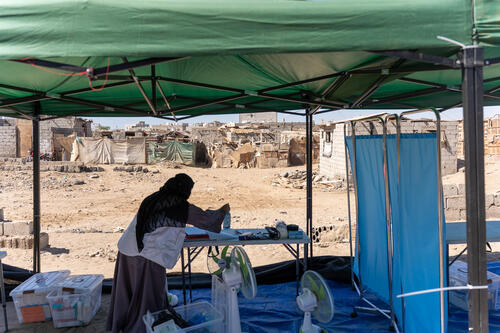
The commune of Ségbana, in Benin, is currently hosting more than 3,000 refugees. The majority arrived without resources and depend largely on the support of the local community. Accommodations are significantly overcrowded.
“When we arrived, we were welcomed into this Beninese family, but due to lack of space we had to separate,” says a father of seven. “My wife and children sleep in another house with other women. I sleep in a small room where there are more than 20 of us.”
Several people had their throats cut; others were shot... They kidnapped people, including my little brother.Ibrahim, a man who witnessed the attacks in Nigeria
“It is crucial that refugees have access to basic services,” says Laurent Ndalume, MSF’s project medical officer. “Without dedicated spaces, they are forced to live in precarious conditions, with no safe shelter, limited access to water and sanitation services and healthcare, and insufficient food. Immediate action is needed. The refugees cannot wait any longer.”
There are also psychological consequences to the violence. Many people show signs of psychological distress, including disturbed sleep, anxiety, or withdrawal.
“I think about my husband all the time,” says Zainabou. “My three children cry at night.”
People’s needs are immense
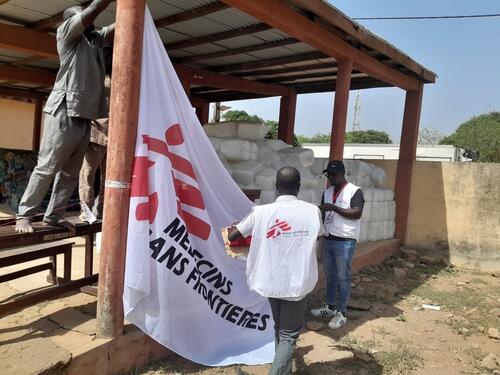
MSF teams are providing emergency assistance to the displaced and have been in Ségbana since 4 March.
“We have set up free general health care services, including consultations, maternity care and medical referrals,” says Ndalume. “At the same time, mental health and psychosocial support is provided by our psychologist to help the refugees cope with the trauma of the violence they’ve experienced.”
Between 4 and 22 March, MSF provided 2,541 outpatient consultations, including 589 for children under five years old. We also offered prenatal consultations and assisted in 69 deliveries. Eighty-two people were admitted to hospital and 18 were referred for further specialist care.
MSF's general healthcare services in Ségbana between 4 and 22 March:
2,541
2,541
69
69
82
82
In mid-March, a mass multi-antigen vaccination campaign, coupled with screening for malnutrition and deworming with albendazole, was organised for children under five years old in order to prevent diseases with a high epidemic risk, such as measles and meningitis.
From this screening of 5,157 children, 522 were diagnosed with moderate acute malnutrition and 23 with severe acute malnutrition. Some parents also attended sessions where MSF teams raised awareness of good dietary practices and presented how to prepare fortified porridge.
In addition to medical care, MSF has worked to improve family’s living conditions. A total of 600 kits, which include soap, mosquito nets, and water purification tablets, have been distributed. To ensure access to safe drinking water, 5,000-litre tanks have been installed at the health centre and in the community. Our teams also cleared pits and built 17 emergency latrines in areas hosting large numbers of refugees. The aim is to prevent water- and hygiene-related diseases, which represent a major health risk in this environment.
*Name changed to protect identity
DRC Ebola outbreaks
Children are being left behind in the current Ebola disease outbreak response
Press Release
15 Oct 2026
DRC Ebola outbreaks
What will it take to end the Ebola disease outbreak in Democratic Republic of Congo?
Project Update
30 Sep 2026