We continued to work in the north of the country, amid a growing humanitarian crisis, with thousands of people displaced due to insecurity and attacks by non-state armed groups. In the south, despite progress achieved in recent years, significant health challenges remained, particularly regarding sexual and reproductive healthcare.
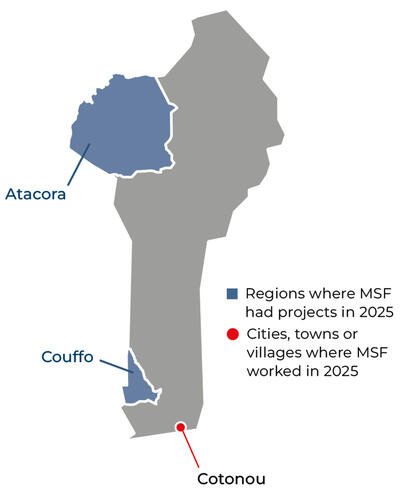
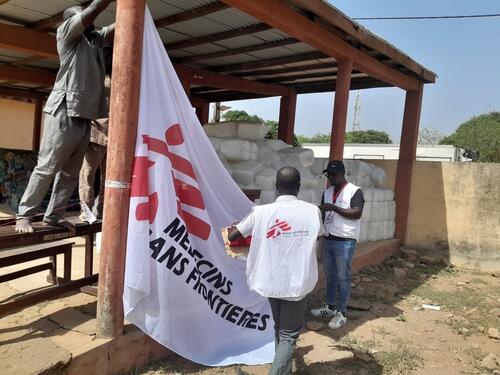
In the north, specifically in Tanongou, MSF responded to the needs of communities forced to flee their villages during armed raids, by supporting health centres in Toucountouna and Tanguiéta through donating supplies and facilitating referrals. We also distributed relief items, such as hygiene kits and mosquito nets. To strengthen access to healthcare in hard-to-reach communities, we started working in health centres in Matéri, Cobly, and Pétinga, focusing on improving treatment for malaria and malnutrition, particularly for children under five years old and pregnant women, and for injuries resulting from community violence.
In addition, we trained healthcare staff working in emergency rooms in Atacora and Alibori departments in mass-casualty management, aiming to improve the speed and effectiveness of responses during crises.
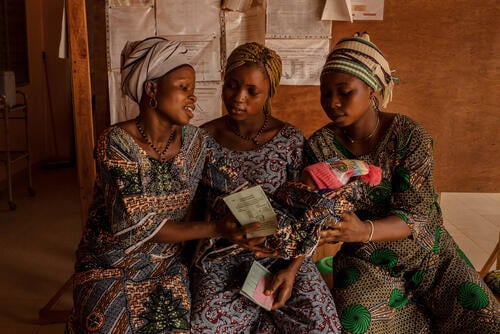
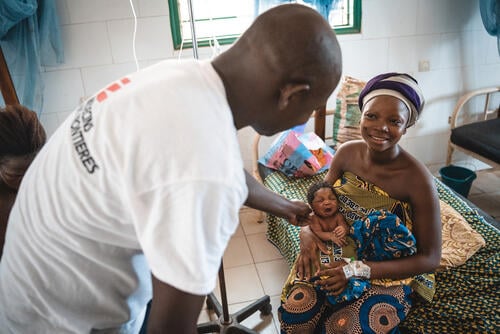
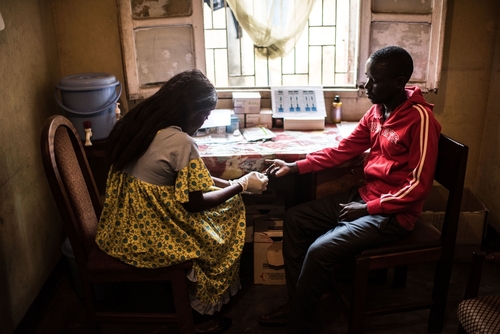
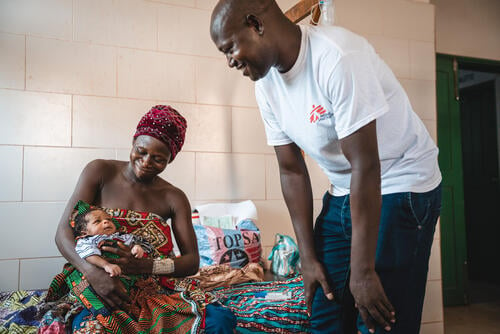
In Couffo department, in southern Benin, the sexual and reproductive healthcare project we opened in 2022 continues to cater to the needs of women, adolescents, and families. Our teams support women throughout pregnancy, childbirth, and postnatal follow-up, and ensure access to family planning services and safe abortion care. We also provide medical and psychosocial care to victims and survivors of sexual violence. Women trained by MSF carry out most of the outreach and health promotion activities in the department’s villages. The commitment of these women from the community has strengthened the link between health centres in the area and local people, especially women, who are now visiting the centres on a much more regular basis.