









8,290
8,29
3,890
3,89
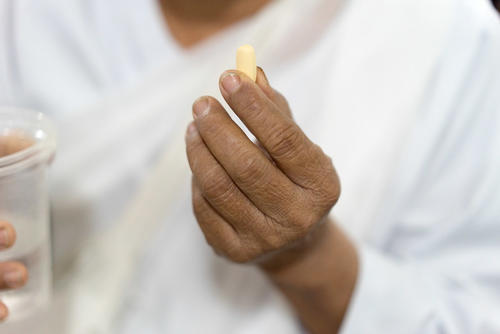
Once considered a lifelong and deadly disease, hepatitis C can now be cured using direct-acting antivirals (DAAs) – new drugs that are both simpler to take and better tolerated, but also more expensive. Hepatitis C is endemic in Cambodia and access to diagnosis and treatment is virtually non-existent.
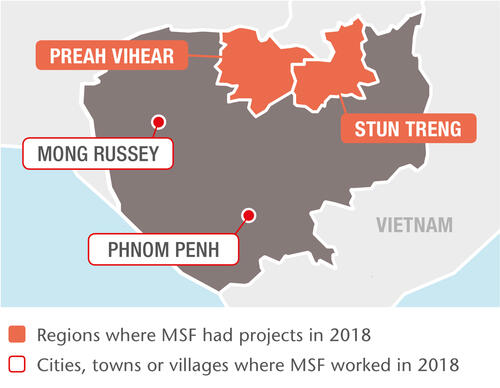
The goal of our project in Preah Kossamak hospital in Phnom Penh is to simplify the diagnosis and treatment of hepatitis C, to prove its cost-effectiveness, and to make it replicable in other countries.
In 2018, the time between screening and the start of the treatment was reduced from 140 to 9 days thanks to a simplified diagnostic process, and the use of the new DAAs cut the number of appointments each patient needed while on treatment from 16 to 5, including just one with a medical doctor.
In March, we launched a project in the district of Mong Russey to adapt this simplified model of care to a rural context. In addition to screening at nurse-led health centres, active case finding was carried out in villages in the district from October. The team tested more than 12,700 villagers in the last three months of the year.
Since 2015, we have also been developing models of intervention to contribute to the elimination of malaria in Preah Vihear and Stun Treng, two areas of multidrug resistance in northern Cambodia.
In 2018, we conducted the first-ever pilot of a new highly sensitive rapid diagnostic test. We also increased the number of districts in which we worked, and the health authorities replicated one of our models of intervention.
143
143
€4.8 M
4.8M
1979
1979
Find us online