



Thumbnail
International Activity Report 2018

Feature articles

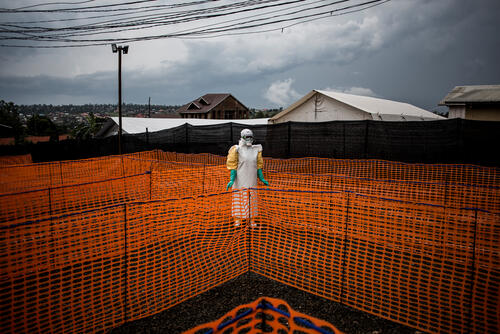
Ebola disease in DRC: find out how we're responding
Learn more

Gaza: Overwhelmed by gunshot wounds

‘The Great March of Return’ protests held at the border almost every Friday since 30 March 2018 have been met with hails of gunfire from the Israeli army. By the end of 2018, 180 people had been shot dead and 6,239 injured by live fire – the vast majority sustaining wounds to the legs. It is these complex and severe injuries that our teams have been struggling to respond to.

How do you treat thousands of similar injuries, all needing multi-stage treatment, potentially lasting for years?

Marie-Elisabeth Ingres describes what she saw in Gaza in 2018.

Read the full feature
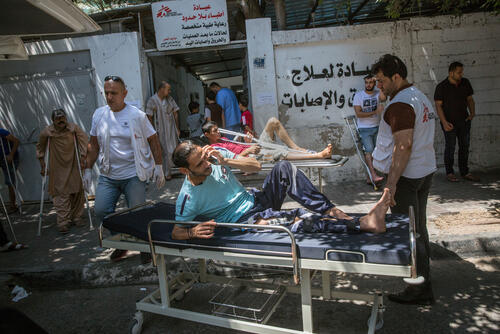
Palestinians who have been wounded from Israeli live ammunition as they arrive for post-operative care at the Médecins Sans Frontières (MSF) clinic in Gaza City on June 6,2018. According to Medecins Sans Frontieres (MSF) who operate in Gaza, the Israelis have been using ammunition that causes fist-sized wounds of “unusual severity”.The clinic also treats burn victims such as the little girl who is seen .
(Photo by Heidi Levine/Sipa Press).
On June 6, 2018, Palestinians hit by Israeli live-fire fire arrive for post-operative care at an MSF clinic in Gaza.
© Heidi Levine/Sipa Press
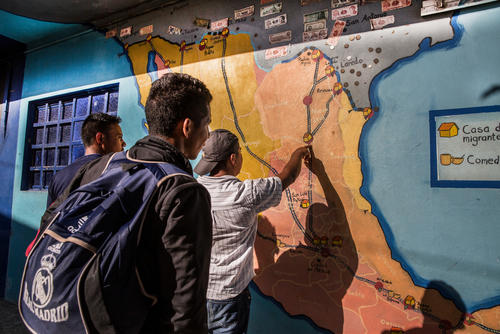
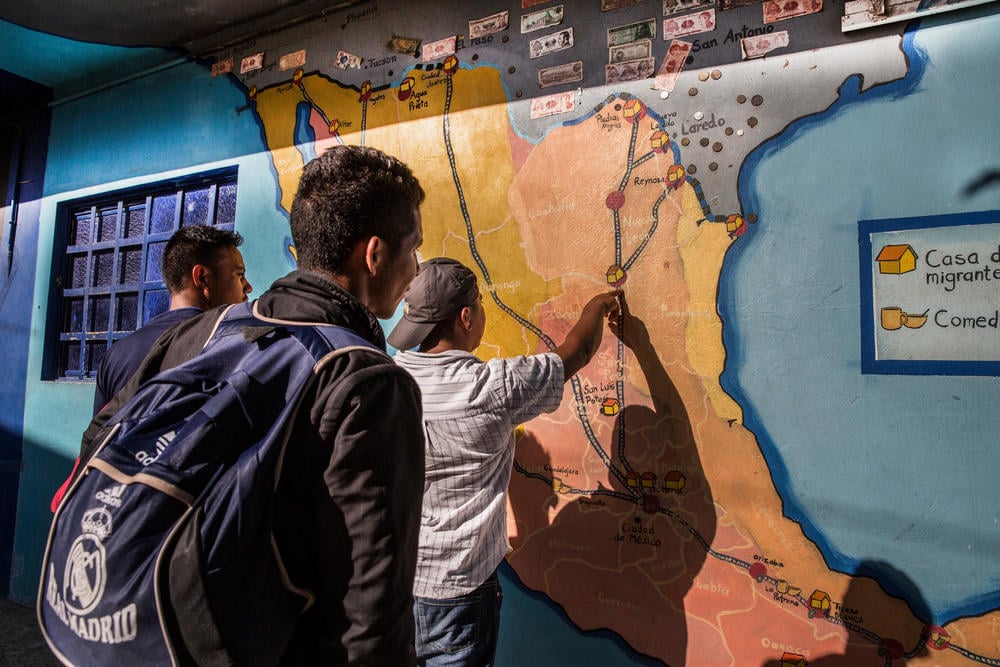
Migrants also use the shelters to gather information on routes to continue on their way through Mexico.
A group of men study a map of migration routes at the La 72 shelter in Tenosique, to try find their way through Mexico, where they are exposed to violence. Mexico, February 2018
© Juan Carlos Tomasi

The broken American dream

Violence on the Central American migration route

In the so-called Northern Triangle of Central America – and along the treacherous migration route north through Mexico to the United States – two powerful opposing forces have trapped thousands of people in a seemingly endless cycle of violence and displacement.

In 2018, we scaled up our response to the physical and psychological consequences of this unfolding disaster, expanding our mental health and psychosocial activities in health facilities as well as migrant shelters along the routes north. We are also working to adapt our response to better serve the growing numbers of people on the move.

Read the full feature

The Rohingya: No country to call home

More than a year after their mass exodus from Myanmar, the future looks more uncertain than ever for the Rohingya. Following a campaign of violence by the Myanmar military in August 2017 – ostensibly in response to attacks by the Arakan Rohingya Salvation Army – Rohingya refugees have continued to cross the border into Bangladesh. Over 908,000 had fled there by the end of 2018.

MSF has been working with the Rohingya for decades – in Myanmar since 1994, in Bangladesh on and off since 1985, and in Malaysia starting in 2004.

Read the full feature
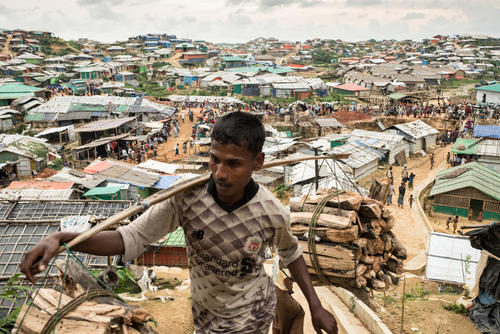
A Rohingya man carries wood through the Kutupalong- Balu Khali mega camp. Cox’s Bazar District, Bangladesh.
Мужчина из народа рохинджа несет связку дров через мегалагерь для беженцев Кутупалонг-Балукхали, который в 2018 году стал крупнейшим лагерем в мире. Округ Кокс-Базар, Бангладеш, август 2018 г.
© Robin Hammond/NOOR
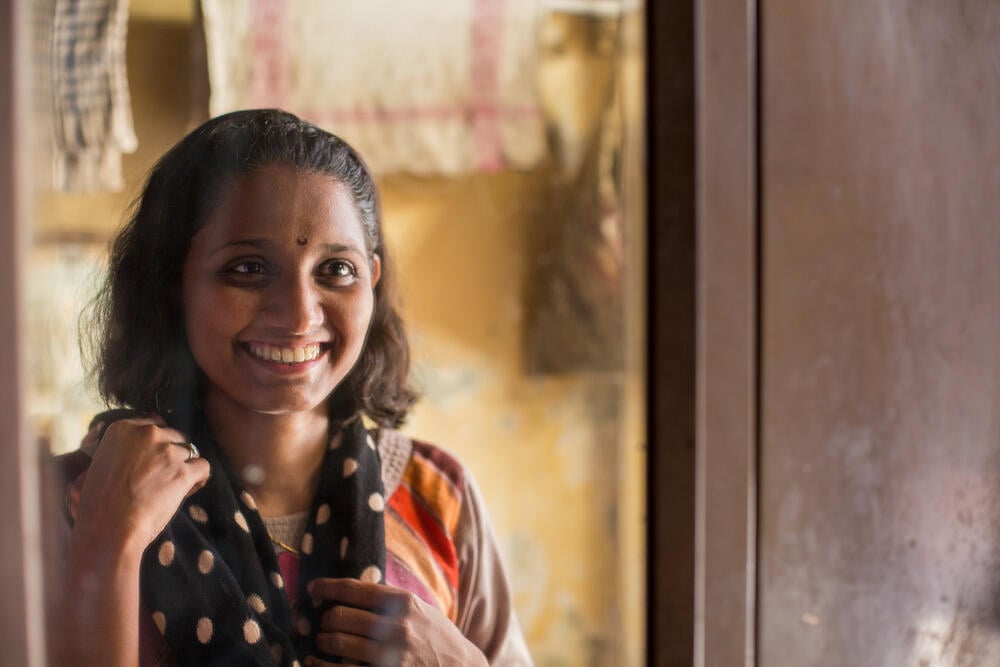
After losing her mother to MDR-TB five years ago, Ankita Parab learned that she too was infected with the disease, and endured years of arduous treatment. Later, her brother also fell ill with MDR-TB. In 2016, when her brother’s condition worsened, his doctor referred him to MSF’s TB clinic in Mumbai, India, where he was quickly started on a treatment regimen that included newer TB drugs. Ankita was also tested for TB through contact tracing, one of the preventive services MSF offers to all family members living with people with TB. The results were a terrible shock for her. Despite her earlier treatment, Ankita had developed XDR-TB – the most severe form of the disease. With support from her family, friends and MSF medical staff and counsellors, Ankita completed her two years of XDR-TB treatment with MSF in May 2018 and was declared cured. Follow-up testing in November 2018 confirmed there was no relapse or recurrence of TB.
Ankita Parab, in her home in Mumbai, India, April 2019.
© Abhinav Chatterjee

Drug-resistant tuberculosis: From hopelessness to healing

Although believed by many to be a disease of the past, tuberculosis (TB) kills more people today than any other infectious disease and is one of the top 10 causes of mortality worldwide.

An estimated 1.6 million people die from TB each year, equivalent to a staggering 4,400 lives lost every day.

World leaders have set ambitious goals to combat the disease, but the international response to this global crisis is shamefully off track.

Read the full feature