An aerial view of a road and dykes being built by the UN in Bentiu. The dykes are up to 2.5 metres high and 5 metres wide. The flooding around Bentiu spans 80km.
Aerial view of a road and dikes being built by the UN in Bentiu. The dikes are up to 2.5 metres high and five metres wide. The floods around Bentiu extend over 80 kilometres. South Sudan, August 2022.
© Christina Simons

A year in pictures 2022

Aerial view of a road and dikes being built by the UN in Bentiu. The dikes are up to 2.5 metres high and five metres wide. The floods around Bentiu extend over 80 kilometres. South Sudan, August 2022.
© Christina Simons
Ebola disease in DRC: find out how we're responding
Learn more

Pictures from a year of humanitarian response

In 2022, MSF teams around the world continued to respond to crises, old and new. While COVID-19 was no longer the emergency it was in previous years, new challenges arose. The war in Ukraine escalated in February; the political, humanitarian and economic crises in Haiti deteriorated severely; cholera emerged on an exceptional scale in several countries.

This collection of 63 images, from December 2021 until November 2022, outlines 12 months of some of the work our teams undertook, highlights the people whom we serve, or illustrates the contexts in which we work.
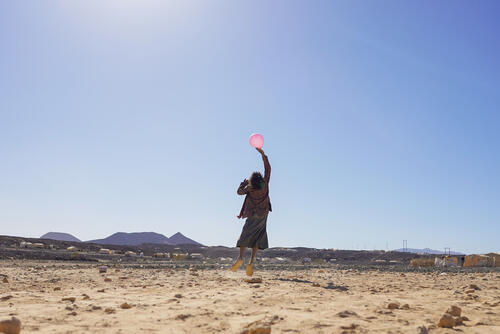
A child plays with a balloon at Al-Sweida camp for internally displaced people in Marib, Yemen. MSF community mental health workers organize psychosocial activities with children of internally displaced families to promote their natural upbringing, improve their social skills and sense of cooperativeness in a complex environment.
A child plays with a balloon, as part of a mental health activity, at Al-Sweida camp for internally displaced people. Marib, Yemen, December 2021. 
Hesham Al Hilali
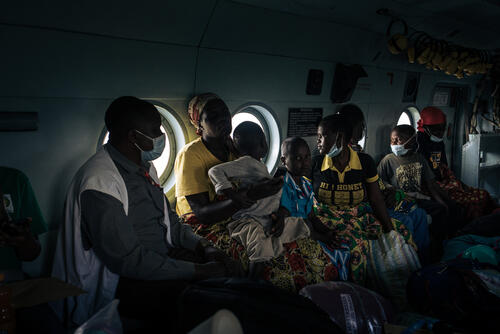
Patients and their families inside the UN helicopter that is used by MSF to refer patients between Rhoe and Bunia hospital. Since the attacks on Drodro in November forced people to flee and teams to abandon the General Referral Hospital there, the helicopter is the only means of referral and supply to the Rhoe IDP (Internally displaced people) camp, where MSF runs the health centre.
Patients and their families are transported to Bunia hospital in the UN helicopter. Following attacks in Drodo, forcing the hospital there to be abandoned, the helicopter was the only way to refer people from the MSF-run health centre in nearby Rho displaced people’s camp to hospitals that provide more advanced care. Democratic Republic of Congo, December 2021. 
Alexis Huguet
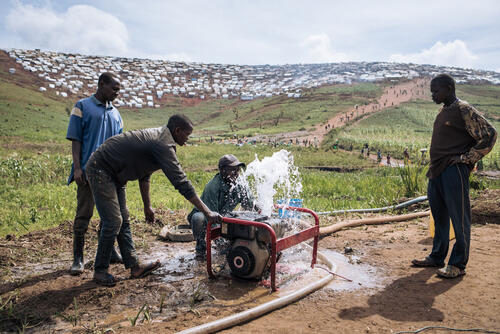
WASH (Water, sanitation and Hygiene) activities by MSF teams in Rhoe camp. After successive attacks in the region forced more than 40,000 additional people to take refuge in the Rhoe site in 2 months, bringing its population to more than 65,000 displaced, MSF increased WASH activities to provide clean water and latrines to displaced people in the camp.
MSF teams try out a water pump as part of a bid to provide clean water and latrines to displaced people in Rho camp. Democratic Republic of Congo, December 2021.
Alexis Huguet
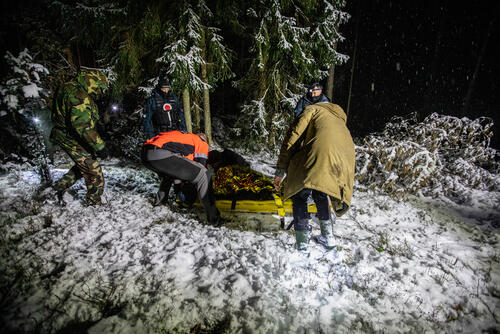
A man unable to walk was found in Kabeliai frontier section near Dūbas village and taken to the Druskininkai hospital. 2021-12-24, Kabeliai,
Lithuanian emergency services workers prepare to take a man, who had crossed the border from Belarus and was no longer able to walk, to hospital. Kabeliai, Varėna district, Lithuania, December 2021.
Vidmantas Balkunas/BNS
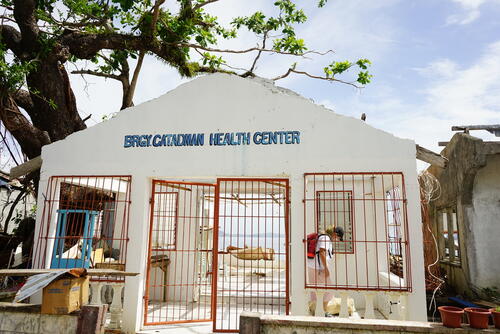
All that remains of the barangay health center are a few walls, a rusty weighing scale and a damaged examination bed. The roof was blown away by Typhoon Rai (local name Odette).
An MSF staff member inspects the remains of Barangay health centre, which was severely damaged by typhoon Rai (known locally as typhoon Odette). Surigao City, Philippines, January 2022.
Regina Layug Rosero/MSF
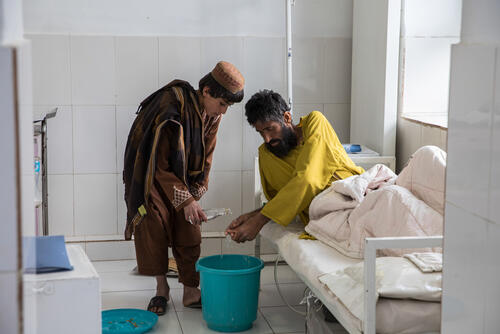
Gul, 40, washes his hands with the help of his son in the male inpatient department at the MSF-supported Boost hospital in Lashkar Gah, Helmand province.
Gul washes his hands with the help of his son at the MSF-supported Boost hospital in Lashkar Gah. Helmand province, Afghanistan, January 2022.
Oriane Zerah
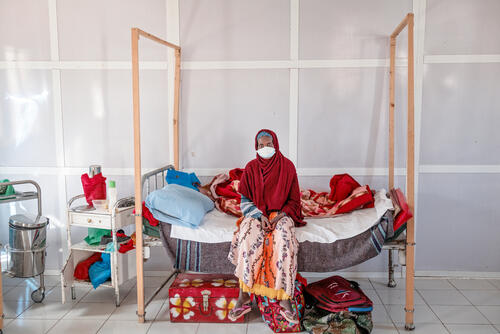
Nimo Abdi* (name changed to protect her identity), rests on her bed in the DR-TB ward, Hargeisa.
Nimo Abdi* rests on her bed in MSF’s drug-resistant tuberculosis ward in Hargeisa. Somaliland, Somalia, February 2022. *name changed to protect identity  
Sean Sutton
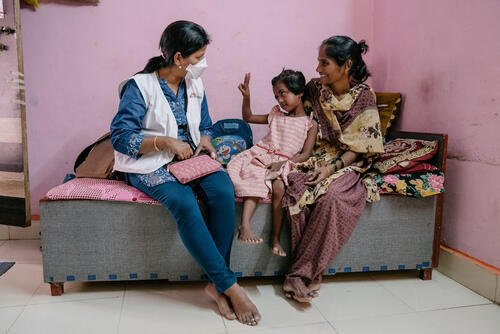
Vaishnavi, a 7-year-old DRTB (Drug Resistant​ Tuberculosis) patient interacts with Prachi, an MSF nurse as her mother Vishaka holds her.​
Seven-year-old DR-TB patient Vaishnavi speaks with MSF nurse Prachi during a home visit, as Vaishnavi’s mother Vishaka looks on. Mumbai, India, February 2022.
Prem Hessenkamp
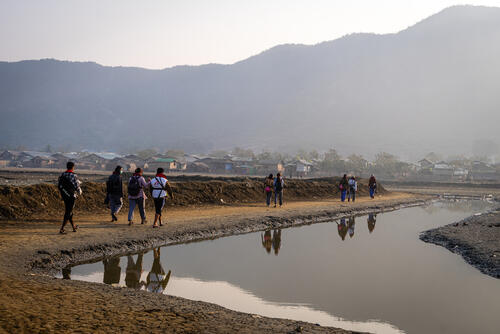
MSF staff on their journey to set up a clinic in Ah Nau Ywe camp in Paukaw township, 15 March 2022
MSF staff walk towards Paukaw township to set up a clinic where they will provide medical and mental healthcare for displaced people in Ah Nau Ywe camp. Myanmar, March 2022.
Ben Small/MSF
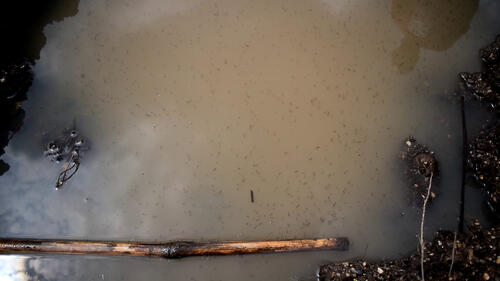
In Ramba, Kalehe Territory, South Kivu, mosquito larvae are thriving in standing water. 
To prevent an outbreak of malaria, MSF has distributed mosquito nets impregnated with insecticide to affected families.


––––

A Ramba dans le territoire de Kalehe au Sud-Kivu, les larves de moustiques se développent dans les eaux stagnantes. 
Pour prévenir une flambée du paludisme, MSF a distribué aux familles touchées, des moustiquaires imprégnées d'insecticide.
Mosquito larvae thrive in standing water in Ramba, Kalehe Territory, where MSF has distributed insecticide-treated mosquito nets to families to prevent malaria. South Kivu, Democratic Republic of Congo, February 2022.
Norah Mbadu/MSF
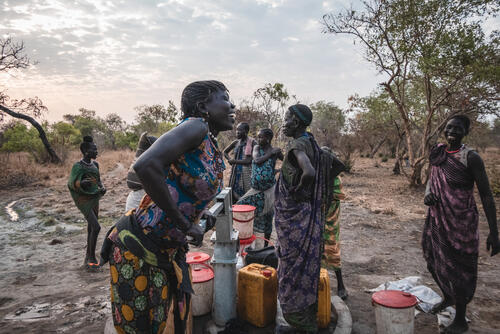
Sera James a resident of Akello village, draws water from the bore hole as she shares a laugh with her friends.
Sera James, a resident of Akello village, shares a laugh with her friends as she draws water from a pump MSF teams have just installed to improve the community’s access to clean water during the dry season. Pibor country, South Sudan, March 2022.
Njiiri Karago/MSF
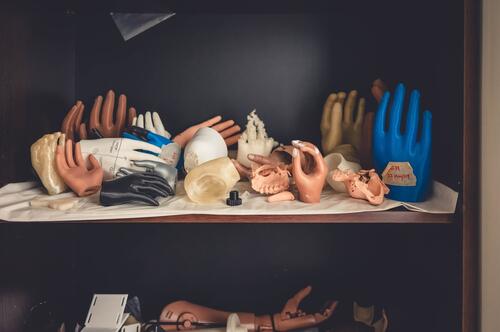
L’étagère est remplie de prototypes de prothèses de main et de bras réalisées dans le cadre du Programme 3D qui a pour objectif d’équiper le plus grand nombre de patients amputés.

The shelf is filled with prototypes of hand and arm prostheses made as part of the 3D Program that aims to equip as many amputee patients as possible.
Prototypes of hand and arm prostheses, made as part of MSF’s programme to 3D print prostheses for amputee patients, sit on a shelf. Amman, Jordan, February 2022.
MSF/SORIYA
Portrait of M. from Guinea Conakry

“After crossing the desert the driver told us we didn’t pay enough so he left us in the desert. He came back after 2 or 3 days asking for money but we didn’t have, so he kept us in another place (in a warehouse ) and after a week police came. They kept us in a small house. We were around 60, we couldn’t eat or sleep…they used to come every morning, beating us and asking for money. They kept our phones and gave us our parents number on a small paper so we were able to call them and to ask for money. “

After being imprisoned M. was sold to work as house servant, then he gained his freedom and was able to go back to Niger with his wife and his 4 years old daughter. 
Burns are visible on his arms and his back. He also told us that during the imprisonment  in Libya he saw two men beaten and killed in front of him.
A portrait of M., from Guinea, who was treated by MSF teams in Agadez, Niger, after fleeing Libya, where he was burned, beaten and imprisoned. Agadez, Niger, March 2022.
Yarin Trotta del Vecchio
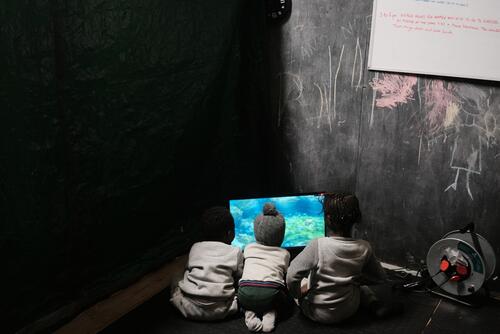
Children watch a cartoon in the women's area of the Geo Barents. The rescue ship operated by MSF, continues patrolling the search and rescue area for more boats in distress. Rotation 8. Central Mediterranean Sea.
Children watch a cartoon in the women's area on board MSF’s search and rescue ship, the Geo Barents, following their earlier rescue. Central Mediterranean Sea, March 2022.
Kenny Karpov
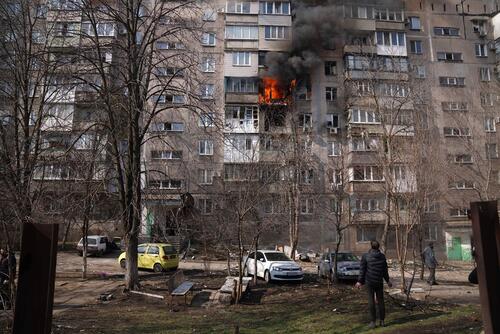
People look at a burning apartment building in a yard after shelling in Mariupol, Ukraine, Sunday, March 13, 2022. (AP Photo/Evgeniy Maloletka)
People look at a burning apartment building after shelling in Mariupol, following the escalation of the war in Ukraine in late February. Donetsk oblast, Ukraine, March 2022.
Evgeniy Maloletka/AP Photo
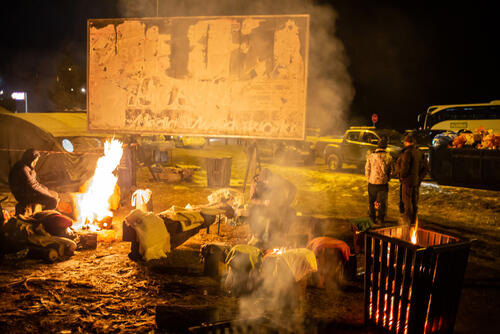
2022_03_01 Poland, Hrebenne . Border crossing with Ukraine. Refugees who escaped from Ukraine in makeshift humanitarian point.
Refugees who escaped from Ukraine try to find warmth in a makeshift humanitarian point at the Hrebenne border crossing. Poland, March 2022.
Maciej Moskwa
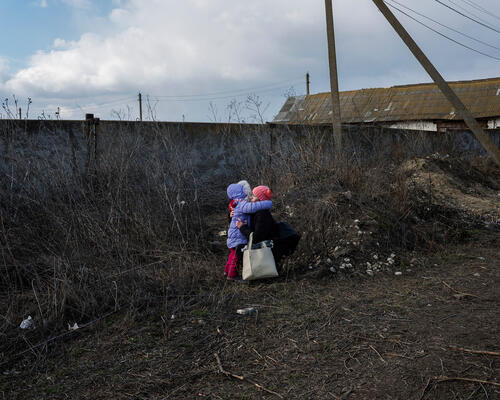
A mother took her daughter out of the crowed to reassure her while waiting to board a bus at departure dispatch point. Palanca, Moldova / March 10th 2022.
A mother comforts her daughter while waiting to board a bus at a departure point for Ukrainian refugees fleeing the war. Palanca, Moldova, March 2022.
Maxime Fossat
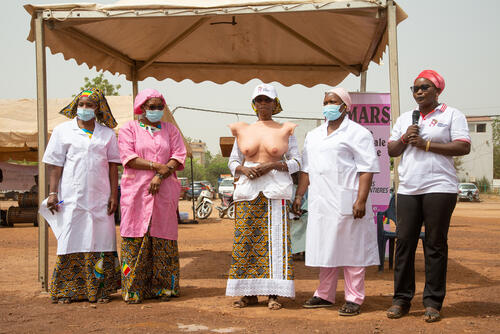
During the cancer awareness and early detection campaign on March 12, 2022 in Bamako, Djénèbou Diallo, head of the screening component of the MSF oncology project, demonstrates breast self-examination, a simple technique that women should apply at home to detect any malignant lump of cancer suspicion.
An MSF staff member wears a prosthetic chest so she and the health promotion team can demonstrate breast self-examination, a technique that women can use to detect lumps for potential breast cancer. Bamako, Mali, March 2022.
Mohamed Dayfour Diawara
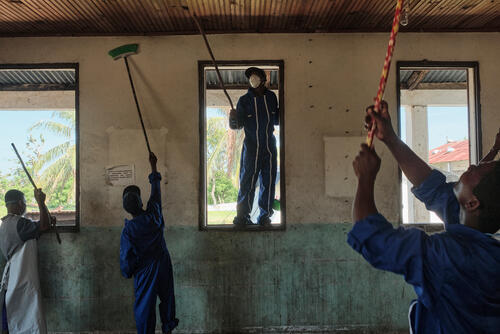
Cleaning and rehabilitation of the wards of the hospital in Nosy Varika, which has been partially destroyed by the cyclones, as numerous health centres in this remote area, where people have very limited access to healthcare and other essential services.
MSF teams are supporting medical activities and and rehabilitating the hospital, as well as 5 other health centres damaged by the cyclones.
MSF teams clean and rehabilitate the wards of a hospital, which was partially destroyed by two cyclones which went through the area in February. Nosy Varika, Madagascar, March 2022.
iAko M. Randrianarivelo/Mira Photo
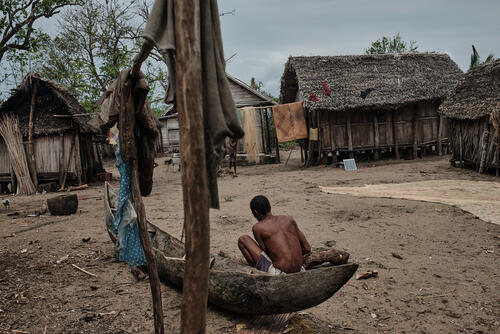
A fisherman repairing his canoe. Batsirai has had serious consequences for fishing. After Batsirai, fish are increasingly scarce, which heavily affects the daily income of fishermen. If before Batsirai they had an income of 30,000 to 40,000 Ariary (about 9 euros) per day, now they barely have an income of 4,000 to 5,000 Ariary (about 1 euro).
As there have been no fish for a month, the fishermen do not go out to sea.
For the time being, they are living on the few provisions they have left.
A fisherman repairs his canoe while he’s unable to fish; there have been no fish since cyclone Batsirai hit the area in early February, devastating livelihoods. Nosy Varika, Madagascar, March 2022.
iAko M. Randrianarivelo/Mira Photo
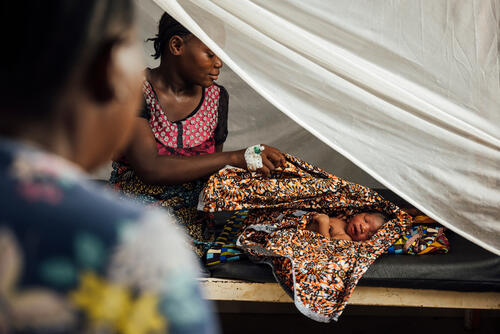
Aminata had just delivered her baby in the MSF-supported Community Health Centre (CHC) in Mile 91, Tonkolili.
Aminata looks over her newborn baby, who she delivered at the MSF-supported community health centre in Mile 91, Tonkolili. Tonkolili, Sierra Leone, March 2022. 
Oliver Barth/MSF
A Venezuelan migrant holds his daughter as he looks out from the malecón along the Tumbes River in central Tumbes, 23 kms/14 miles from the Peru-Ecuador border. There, migrants rest and take shelter from the sun or the rain.
A man from Venezuela holds his daughter and looks out from the pier along the Tumbes River. The pier, which is 23 kilometres from the Peru-Ecuador border, is where people rest and take shelter before continuing their journey to the border. Central Tumbes, Peru, March 2022.
MAX CABELLO ORCASITAS
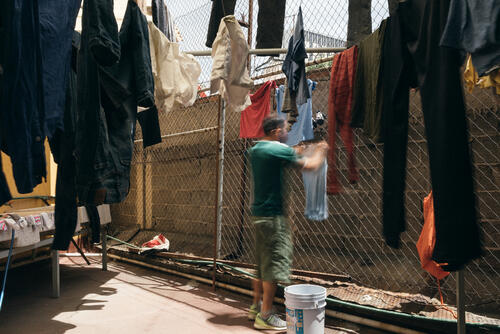
Inside the Integral Attention Center in Mexico City. Run by MSF, it welcomes the victims of extreme violence, torture or inhumane treatment. Here, a multidisciplinary team offers psychological and physical attention to the patients, as well as a safe place to stay until their recovery.
A man hangs clothes inside the Integral Attention Centre in Mexico City, where an MSF team offers medical and mental health care to survivors of extreme violence, torture, or inhumane treatment. Mexico City, Mexico, March 2022.  
Jordi Ruiz Cirera
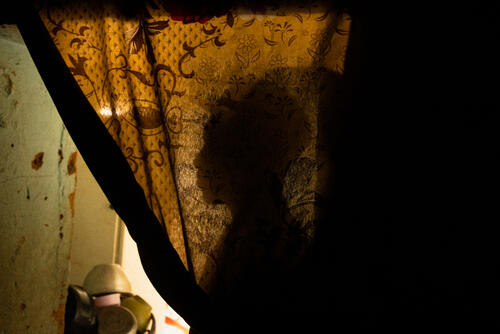
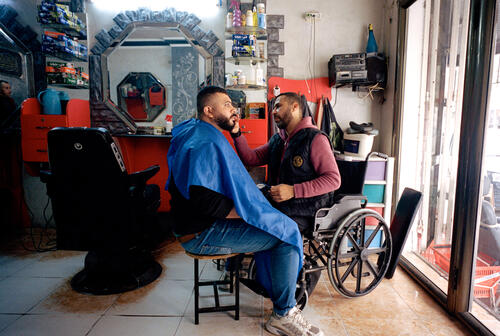
Muawiyah Al-Wahidi, 42, was unlocking his barber shop in Gaza city on 12th May 2021, when a rocket hit a car in the street near him. He was uninjured, but the tailor from the shop opposite ran towards him, screaming that he’d been hit in the chest. Half way across the road he collapsed with blood flowing from his mouth. Muawiyah was sat next to him, reciting prayers, when the next rocket hit. This time he was not so lucky. When he woke in hospital his right leg had been amputated and his left ankle shattered.

In the weeks after he refused to eat and was suffering from depression. “I would look at myself, then look at others; and think to myself I don’t want to be different. When he returned home from hospital the depression deepened and he would find himself losing his temper. “Early on, I would refuse the food my wife cooked, it was hard for her. I was angry with her, my brother, the children. It was difficult. But thanks to God and the strength of my wife we got through it”

An important part of his journey was the community that rallied around him (he’d owned the barbershop for twenty five years) and an MSF phycologist, Marwah, who taught him and his wife Yassmin, on ways to manage his anger and depression.

A couple of days after meeting Muawiyah at his barber shop, the family invited me over for dinner. They knew I was keen to learn how to make Musakhan, a Palestinian dish of chicken, onion and sumac laid on taboon bead that soaks up the sauce.

As we cooked Yassmin explained more, “it was difficult for me and the children early on. I had to pretend to be strong for everyone else. But I would call the psychologist Marwah and she would encourage me and advise me on how I should respond, and advise on what to say to Muawiyah. And we got through it.”

As we sit to eat I ask Muawiyah now about his appetite now. “Now, thank God, I can enjoy her food again. This dish”, he says pointing at the Musakhan, “is our history. We eat the food that is Palestinian, the food of our grandparents. What we eat and our happiness are the same.”
Muawiyah Al-Wahidi, who had his right leg amputated after being injured during an airstrike in Gaza City in 2021, is able to continue working as a barber with support from his wife, community, and an MSF psychologist. Gaza City, Palestine, April 2022. 
Giles Duley
Amro Ayman Alhadad, 23, was injured by a bullet on 14th May 2018 while at the Great March of Return. He had been bused, along with his school friends, to the border, in order to join the protest against Trump’s decision to open the US Embassy in Jerusalem. His bus arrived at 11.15am, by 11.30 am, Amro tells me, he’d been shot in the leg and with his artery severed, he soon lost consciousness.

According to Gaza’s ministry of health, on that day 52 Palestinians were killed and 2,400 injured. In the chaos, Amro had been presumed dead. It was only by chance that a neighbour, who worked as an ambulance driver, saw him among the bodies and realised he was still alive.

After emergency treatment in Gaza, Amro was taken to Turkey for further surgeries. It was there that his leg was amputated.

Amro has struggled to deal with the events of that day and psychological impact of his amputation. Since returning from hospital in Turkey, Amro has confined himself to his parent’s apartment in Gaza city.

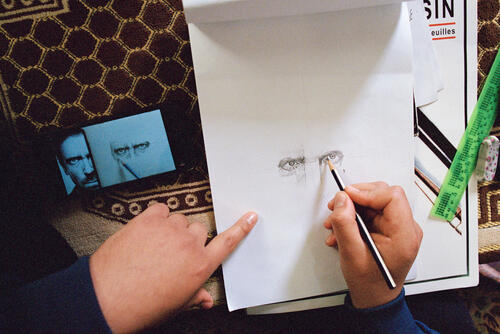
“I found escape in drawing”, Amro tells me, “I watch online videos and have taught myself to be an artist.”

His days are spent inside drawing and tending to his bird, which never leaves his side. He wont go outside, thinking people will stare at his missing leg, and he has a fear of crowds.

On my last day in Gaza, I ask Amro if he will join me for a coffee on a quiet part of the beach. He agrees and we spend a couple of hours on the beach drinking coffee and talking. I suggest he meets Mahmoud (see previous post) and joins other support groups for amputees. It’s through others experience that we see hope I tell him. He promises he will and asks that I share his story. “Maybe my going outside will give someone else hope” he says.
Amro Ayman Alhadad spends his time drawing and looking after his pet bird since having his leg amputated as a result of an injury from a bullet during the Great March of Return protest movement in 2018. Gaza City, Palestine, April 2022.
Giles Duley
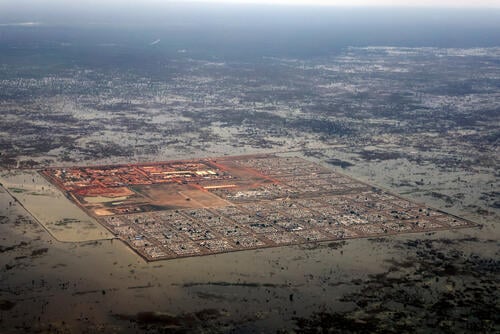
Bentiu internally displaced persons (IDP) camp from the air. Flood waters surround the camp, where approximately 120,000 people are living. The dykes are the only thing protecting the camp from flooding.
An aerial view of Bentiu internally displaced persons camp, where approximately 120,000 people live, and the surrounding floodwaters. The dykes around the camp are the only thing protecting people from flooding. Bentiu, Unity State, South Sudan, April 2022. 
Peter Caton
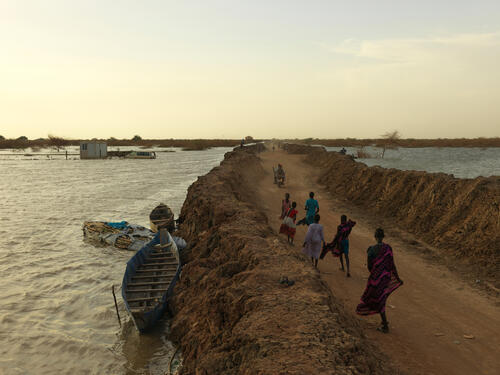
Internally displaced people walk along the road between the dykes into the Bentiu IDP camp, where approximately 120,000 people are currently residing. These dykes are all that are preventing the entire camp from flooding.
People walk along the road between flooded dykes surrounding Bentiu internally displaced persons camp. Bentiu, Unity State, South Sudan, April 2022. 
Peter Caton
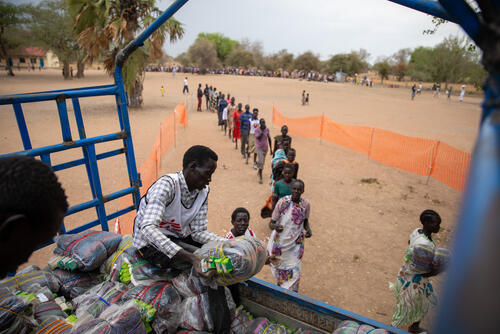
Members of the MSF logistics team distribute blankets and jerry cans in Nyin Deng Ayuel displacement camp in Twic County. After fleeing violence in Agok, thousands of people have been left without basic essentials to survive.
Members of the MSF logistics team distribute blankets and jerry cans to people who have fled violence in Agok and are now staying in Nyin Deng Ayuel displacement camp. Twic County, South Sudan, April 2022. 
Scott Hamilton/MSF
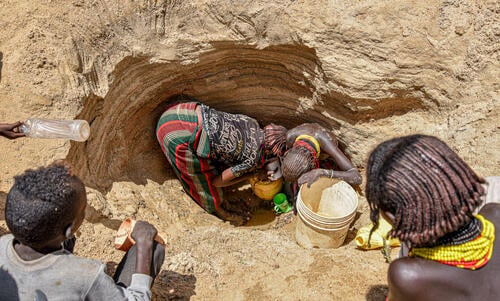
Women fetch water in one of the shallow wells along a dry river bed in Illeret.

The ravaging drought has led to a water shortage in the region forcing residents to look for alternative water sources, unsafe for human consumption.
Women fetch water in a shallow well along a dry riverbed in Illeret. Drought in the region is forcing people to look for alternative water sources, which are unsafe for human consumption. Illeret ward, Kenya, April 2022.
MSF/Lucy Makori
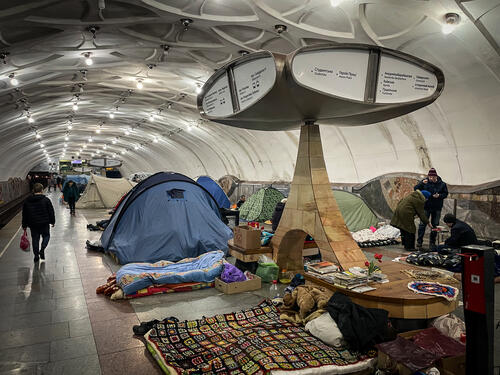
Akademika Barabashova host tens of IDPs most of them are elderly people.
Akademika Barabashova, a metro station in Kharkiv, hosts people sheltering from the war. Kharkiv, Kharkiv oblast, Ukraine, April 2022. 
Mohammad Ghannam/MSF
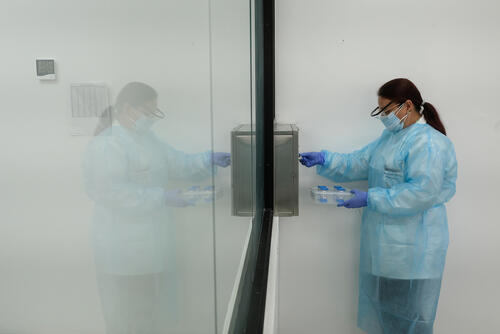
Bioanalyst Xiomara Villoria holds a COVID-19 test to be processed at the Public Health Molecular Biology Laboratory in San Cristóbal, Táchira State, western Venezuela. 

MSF refurbished and set up a laboratory that will be managed by local health authorities in the state, which now has a specialized machine capable of analyzing molecular tests with high precision.
Xiomara Villoria, a bioanalyst, holds a COVID-19 test to be processed at the Public Health Molecular Biology Laboratory in San Cristóbal. The laboratory was refurbished by MSF to include a specialised machine that is capable of analysing molecular tests. Táchira state, Venezuela, April 2022.
Matias Delacroix
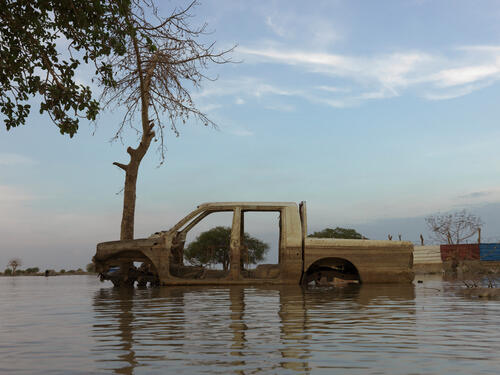
In Rubkona, South Sudan, vehicles lay abandoned and submerged in the floods that have devastated the area.
A vehicle lies abandoned and submerged in the floodwaters that have devastated Rubkona. Unity state, South Sudan, May 2022. 
Peter Caton
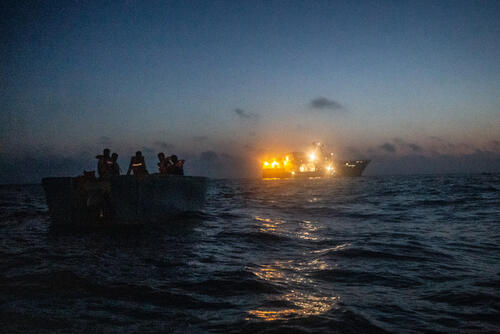
On the night of May 11, we rescued 67 people from a wooden boat in danger of sinking in Maltese SAR zone. Later the same night, we rescued another 29 persons from a rubber boat in distress also in Maltese SAR zone. There was a total lack of coordination from Maltese authorities against their obligation  to provide assistance to boats in distress.
During the night of 11 May, the MSF search and rescue team completed two rescues, saving a total of 96 people from boats in distress in the Maltese search and rescue zone. Mediterranean Sea, May 2022.
Anna Pantelia/MSF
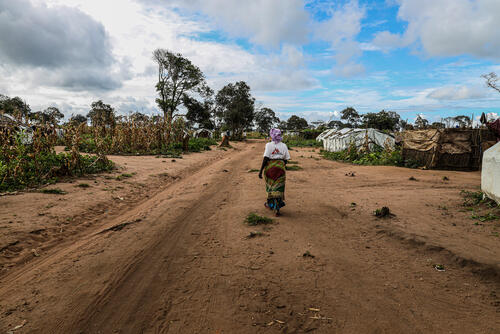
Atija walks through Eduardo Mondlane camp for displaced people to counsel pregnant and lactating women. She is 66 years old and lives there too. She is originally from Mocímboa da Praia, a town heavily hit by attacks due to the ongoing conflict in the northern province. She now works with MSF as a traditional birth attendant (TBA) and assists more than 100 women in the camp. Like many of them, she lived through traumatic experiences, witnessing her husband’s and son’s murder. Now, she says she loves doing her job since she can help women in their time of need – “When I arrived here, this place was a forest. Some good people helped me to get settled. Now I can also help pregnant women. I know they need my support.”
Atija, a traditional birth attendant, walks through Eduardo Mondlane camp for displaced people. She works to counsel women in the camp, who like herself, have been displaced by violence. Mozambique, May 2022.
Mariana Abdalla/MSF
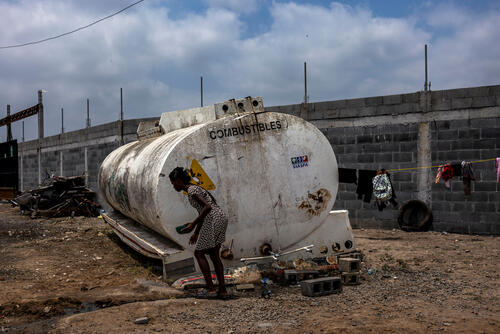
At the construction site for what will be the "Senda de Vida II" migrant shelter, a Haitian woman retrieves water from an old combustibles transport trailer that is being used as a water tank. There is not enough space at local shelters, so many migrants are living in precarious conditions with limited access to essentials like health care, food, and clean water.
A woman from Haiti retrieves water from an old transport trailer that is now being used as a water tank at the construction site for what will be the "Senda de Vida II" migrant shelter. Reynosa, Mexico, May 2022. 
Yael Martínez/Magnum
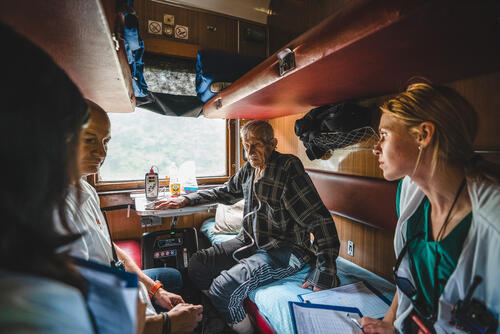
The medical team on board the MSF medical train discuss the condition of an eldelry war-wounded patient during the journey from Pokrovsk in eastern Ukraine, to Lviv in western Ukraine. The journey takes approximately 20 hours.  Since 31 March, we have transported more than 600 patients.
The medical team on board the MSF medical train discuss the condition of a war-wounded patient during the journey from Pokrovsk in eastern Ukraine, to Lviv in the country’s west. The journey takes approximately 20 hours. Ukraine, May 2022.
Andrii Ovod
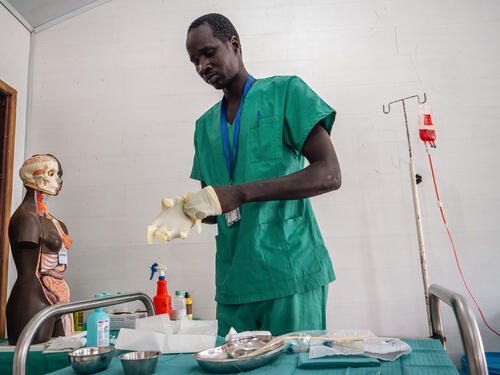
Gabriel Kalany, MSF Academy student in Old Fangak, gets ready for a session of practice at the Skills Lab. After arranging his trolley with all required tools to perform the placement of a urinary catheter on a mannequin, he puts on disposal gloves. After 18 months of training, Gabriel graduated from the MSF Academy in Old Fangak in June 2022.
Gabriel Kalany, a nursing student of the MSF Academy in Old Fangak, gets ready for a practice session at the Skills Lab, where he will place a urinary catheter on a mannequin. Gabriel has since graduated, completing his 18 months of training. Old Fangak, South Sudan, June 2022. 
Florence Miettaux
Port-au-Prince, Haiti, Monday, June 21, 2022.
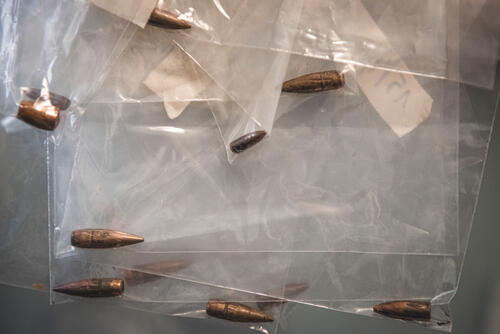
 Part of a batch of projectiles of different calibers that MSF doctors removed from the wounds of some MSF patients at the Emergency Centre of Turgeau...
 Stray bullet wounds are becoming more frequent in Port-au-Prince.
A batch of bullets that MSF doctors removed from the wounds of patients at the Emergency Centre of Turgeau. Port-au-Prince, Haiti, June 2022.
MSF
Halima Hamadou (4) was admitted with a headwound. Her mother Zeinaolou Hamadou (35) is comforting her while our team treats her.
Halima Hamadou is being comforted by her mother, Zeinaolou Hamadou, as a medical team treats her headwound. Diffa, Niger, June 2022. 
Oliver Barth/MSF
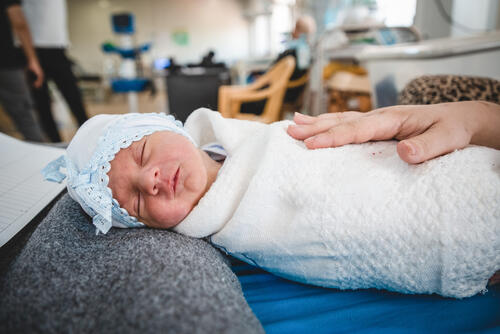
Hussein, born a few hours ago, via caesarean section. His mother is still resting. They come from Tal Afar (77 kilometres away from Mosul), and are for the first time in the MSF-run Nablus hospital. A doctor in Tal Afar referred her, but the family had heard already about Nablus hospital previously. The baby was born in good health one week earlier.
Hussein was born a few hours ago, by caesarean section, at Nablus hospital. His mother, who is still resting, travelled 77 kilometres to give birth. Mosul, Iraq, June 2022.
MSF/Florence Dozol
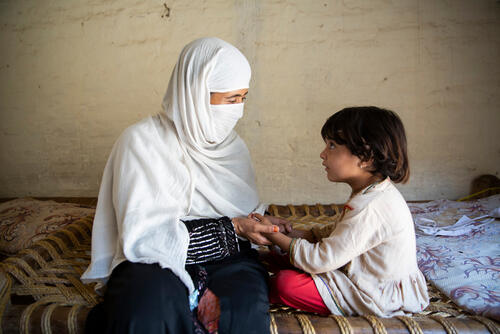
Gulnaz plays with her daughter at her brother’s house. She has travelled to her relatives’ place in Peshawar to get her treatment due to the unavailability of medicines, the treatment is not available in Pakistan.  in Peshawar, Pakistan, on 26 May 2022.
Gulnaz plays with her daughter at her brother’s home. She travelled to her relatives’ place in Peshawar to get treatment for cutaneous leishmaniasis, a parasitic disease, as it is not commonly available in the country. Peshawar, Pakistan, May 2022.
Saiyna Bashir
MSF health promoter Arina Ilchenko and nine-year-old Karina in a shelter for Displaced Persons in Dnipro. Ukraine, June 2022.
MSF health promoter Arina Ilchenko sits with nine-year-old Karina in a shelter for displaced people. Dnipro, Ukraine, June 2022. 
Alexander Glyadyelov 
Amaka Joseph, 35, tends to her recovering child at an ITFC facility at Specialist Hospital Sokoto, Nigeria on Friday 22 July 2022.
 
“When we began treatment, I started seeing improvement. Now they can eat well and play and this makes me happy” she said. 
 
She would leave her children in the care of her mother when she goes to her shop, so she suspects that maybe the hygiene of the children has not been up to par. 
 
“Now, I will take care of everything that has to do with these children, their food, their water and environment, I will make sure that everywhere is clean” says Amaka.
Amaka Joseph, 35, tends to her recovering child at an inpatient therapeutic feeding centre at Specialist Hospital Sokoto. “When we began treatment, I started seeing improvements. Now they can eat well and play, and this makes me happy,” she says. Nigeria, July 2022. 
KC NWAKALOR
Children living with epilepsy in Liberia can find it difficult to stay in school because of their seizures and the stigma attached to them.
Children gather outside a school in Liberia, Young people living with epilepsy in Liberia can find it difficult to stay in school because of their seizures and the stigma attached to them. Our teams support schools of students living with epilepsy. Liberia, June 2022. 
Carielle Doe
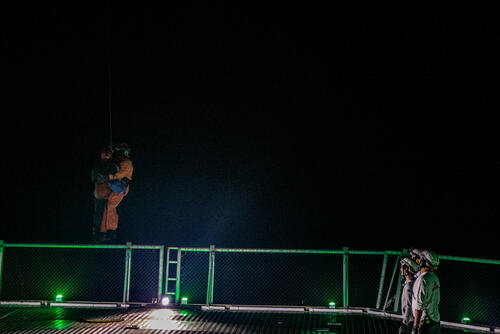
On the afternoon of June 27, the MSF team rescued 71 people from a rubber boat in distress. 22 people are missing, three persons were stabilized, including very young children, and one women died later on board after 30 minutes of resuscitation. A woman and her baby in critical state were also evacuated to Malta during the same night. This is another tragic rescue in the Central Mediterranean and everyone is in a very weak condition and traumatized. The MSF medical team on board is looking after the survivors until disembarkation in a place of safety.
Teams on board the Geo Barents search and rescue evacuate a person in critical condition to Malta. On the afternoon of 27 June, MSF teams rescued 71 people from a rubber boat in distress. Central Mediterranean, June 2022. 
Anna Pantelia/MSF
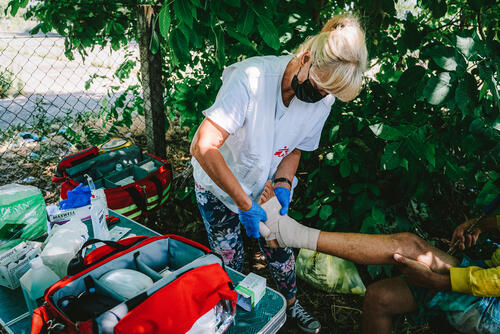
An MSF nurse straps up the ankle of a patient during a medical consultation of the MSF mobile clinic in Horgos 2 border crossing area in Serbia. In 2022 MSF is operational in informal settlements at the Serbian-Hungarian and Serbian-Romanian borders, with two mobile clinics providing primary health care, psycho-social support and health promotion activities, assessing and treating patients for physical injuries allegedly as a result of border violence.
An MSF nurse straps up the ankle of a patient during a medical consultation at the MSF mobile clinic in Horgos 2, a border crossing area in Serbia. In 2022, our teams provided healthcare in informal settlements at the Serbian-Hungarian and Serbian-Romanian borders through two mobile clinics. Serbia, July 2022. 
Evgenia Chorou/MSF
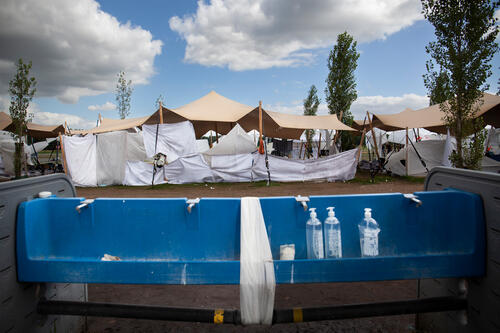
Watertap in Ter Apel.
A view of a sink for washing at an informal tented area for stranded asylum seekers in Holland. Ter Apel, Netherlands, August 2022. 
Olga Victorie
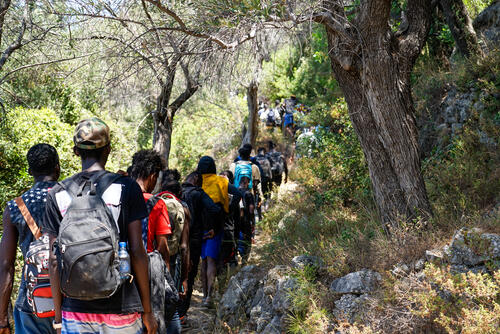
Medium shot of newly arrived people walking down a rocky path in Samos island, Greece. MSF’s emergency medical aid response has shown the high medical and humanitarian needs amongst new arrivals. During our interventions, most people we assist are exhausted and severely distressed. A lot of them are dehydrated after spending a long time, sometimes several days, in the bush without access to food and water. When they arrive on the island, they usually immediately run to hide in hills/mountains, reportedly afraid to be found by the border forces and forced return.
People who have just arrived on Samos walk along a rocky path on the island after arriving by boat across the Aegean Sea. MSF’s emergency teams have reported high medical and humanitarian needs amongst new arrivals. Samos, Greece, July 2022. 
MSF/Alice Gotheron
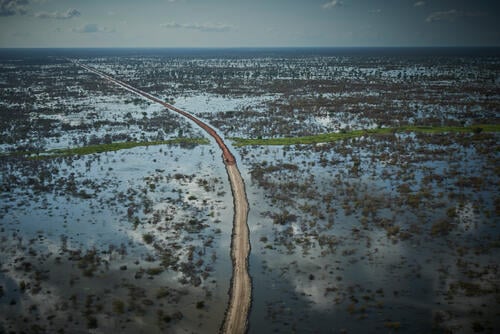
An aerial view of a road and dykes being built by the UN in Bentiu. The dykes are up to 2.5 metres high and 5 metres wide. The flooding around Bentiu spans 80km.
Aerial view of a road and dikes being built by the UN in Bentiu. The dikes are up to 2.5 metres high and five metres wide. The floods around Bentiu extend over 80 kilometres. South Sudan, August 2022.
Christina Simons
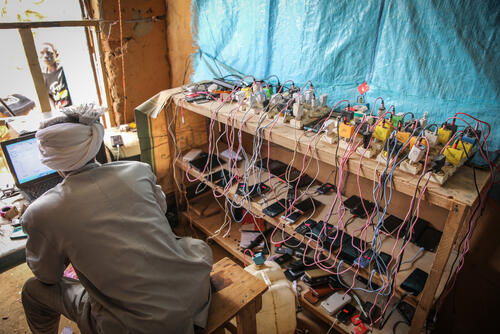
A phone charging shop in Guereda district, eastern Chad. 
In 2003, a deadly war erupts in western Sudan’s Darfur province. At least 300,000 people are killed. The war is sparked by the repression of the rebellion against Omar al-Bashir and struggles over the control of natural resources, water, and the most fertile land.
Since 2003, some 370,000 Sudanese people have fled the violence and taken refuge in neighbouring Chad. Some have endured almost 20 years of harsh living conditions in refugee camps along the Chad-Sudan border.
Over the years, Médecins Sans Frontières teams have been responding repeatedly to the waves of violence and displacement near the Chad-Sudan border. In 2022, they helped to improve access to medical care, safe water, hygiene and sanitation in refugee camps in Guereda district.
20 years after the war started in Sudan, Sudanese refugees and Chadian communities living in eastern Chad still struggle to survive, supported by a humanitarian response that is too small to meet all their needs.
A man sits in a phone-charging shop within a refugee camp for people who have fled war in western Sudan’s Darfur province. Guereda district, Chad, August 2022.
Mohammad Ghannam/MSF
Patient Portraits
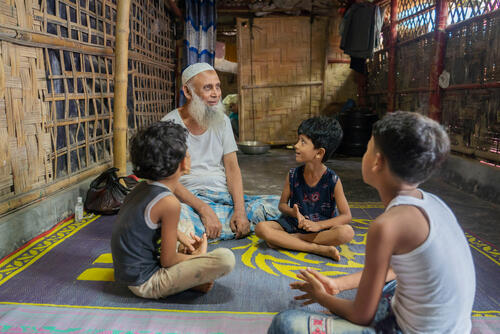
Mohamed Hussein, who fled Myanmar because due to discrimination and violence, sits with Rohingya children in a refugee camp in Cox’s Bazar. Bangladesh, June 2022. 
Saikat Mojumder/MSF
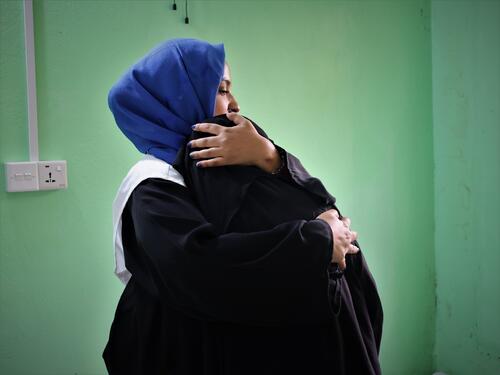
Aura Ramírez, MSF’s mental health activities manager comforting Sanaa*. 
Sanaa*, 30 years old: “I got married when I was very young, I was 14 years old, I didn’t know what marriage was, and a few years later I got pregnant. Since day one I faced a lot of challenges, I left school, and I had a lot of problems with my husband until we divorced. They took my son away from me, and I was not able to see him for 3 years, not even to visit him, nor to contact him by phone. During “Eid” I used to look at the children playing and enjoying their family time, and think about my son, is he happy? Is he safe?
I didn’t know what to do, as a young woman I lacked experience, and I didn’t have any support, I had no one to advise me on how I can take my son back. I used to cry a lot, and had depressive episodes, I felt empty, as if something is missing, and I didn’t know where my son was. I was in a desperate situation. I felt powerless, and never felt safe. Then I learned about MSF services in Hajjah. I came here and they offered me psychological care, and I’m following up with them for 3 months now. Now I feel stronger, they also engaged the Mental health activity manager who learned about my situation with my son. In collaboration with the local authorities, they helped me reunite with my son. They also referred us to other organizations that provided us with shelter and social assistance. Today I’m back to work, and my son is back to school. He understood that I’m his mother despite everything, whatever the situation is. No child should be separated from his mother. 
*Name changed for confidentiality.
An MSF mental health team member comforts Sanaa*, a patient in Hajjah city. “I felt empty, as if something was missing, and I didn’t know where my son was... I felt powerless, and never felt safe. Then I learned about MSF’s services in Hajjah. I came here and they offered me psychological care,” says Sanaa. Yemen, September 2022.   *Name changed to protect identity 
Jinane Saad/MSF
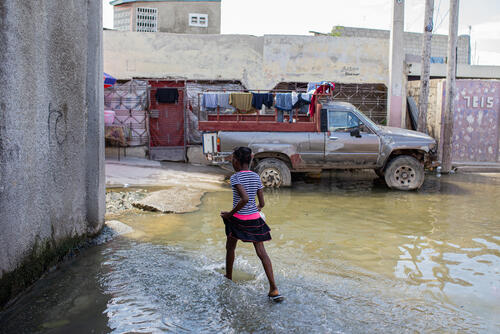
Haiti Cité l'Eternel - Part of the neighborhood of Cité l'Eternel is flooded due to the clogging of canals caused by poor waste management. Cholera spreads rapidly in areas with inadequate treatment of sewage and lack of access to clean water.
A child steps through a flooded street in the Port-au-Prince neighbourhood of Cité l'Eternel. Floods are caused by clogged canals due to poor waste management. In such settings, cholera spreads rapidly due to inadequate treatment of sewage and a lack of access to clean water. Port-au-Prince, Haiti, October 2022.
MSF/Alexandre Marcou
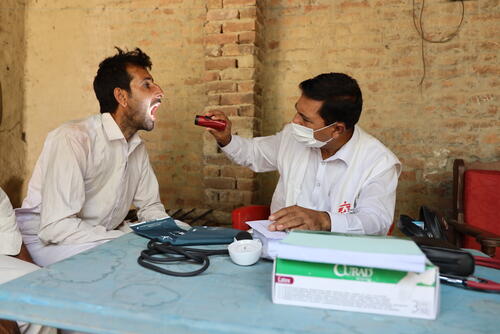
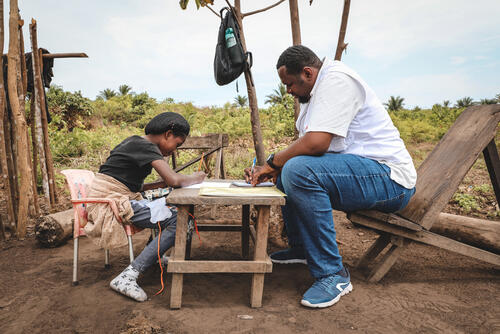
An MSF medical doctor - Iftikhar Ahmed is providing consultation to patient Feroz Shah at the mobile clinic in Sara sang village of Charsadda district in Khyber Pakhtuhkwa province of Pakistan.
An MSF medical doctor in consultation with a patient at the mobile clinic in Sara Sang village, Charsadda district. Khyber Pakhtuhkwa province, Pakistan, September 2022. 
Zahra Shoukat/MSF
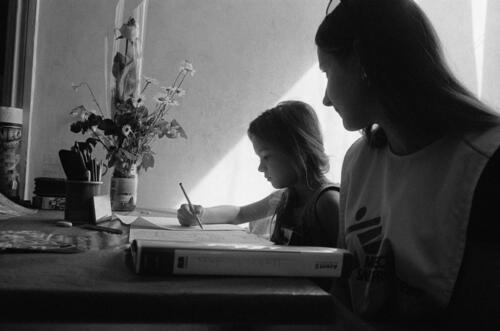
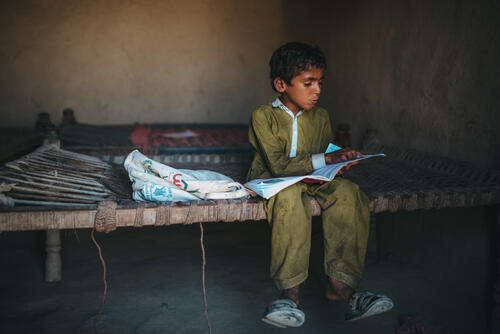
A young boy reading his school textbook. His house collapsed during the heavy rains and he and his 6-person family are living in a one-room shelter in Nangar Daro village, Dadu district, Sindh
A boy reads from his school textbook in his family’s one-room shelter in Nangar Daro village, after their house collapsed during heavy rains and flooding in Dadu district. Sindh province, Pakistan, October 2022.
Asim Hafeez
Beverly, 11, attends a psychological consultation with Joel-Christopher Bolombo, the MSF emergency mission psychologist, at the Hervé Farm IDP site in Kwamouth. Besides treating the wounded and sick, MSF has organised psychology sessions to help people traumatised by the violence witnessed in recent weeks.
A young patient in consultation with an MSF psychologist at a site for displaced people in Kwamouth. Besides treating the wounded and sick, our teams provide mental health sessions to help people traumatised by the violence they witness. Democratic Republic of the Congo, September 2022. 
Johnny Vianney Bissakonou/MSF
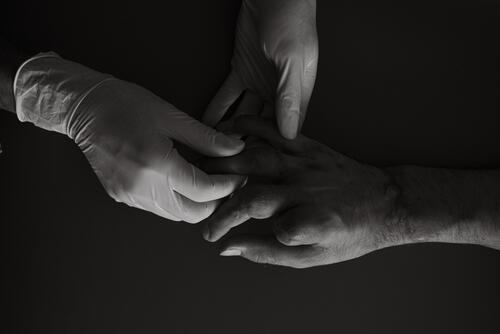
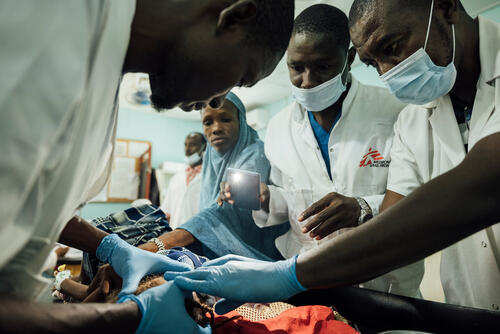
MSF physiotherapist Ahmad Alrosan undertakes a muscle stretching exercise on the hand of a patient who had a broken wrist and whose right finger was amputated. Physiotherapy department of the main medical centre of the Ministry of Internal Affairs of Ukraine, Kyiv. Ukraine, September 2022.
MSF physiotherapist Ahmad Alrosan undertakes a muscle-stretching exercise on a patient with a broken wrist and amputated finger. Kyiv, Ukraine, September 2022.
Hussein Amri/MSF
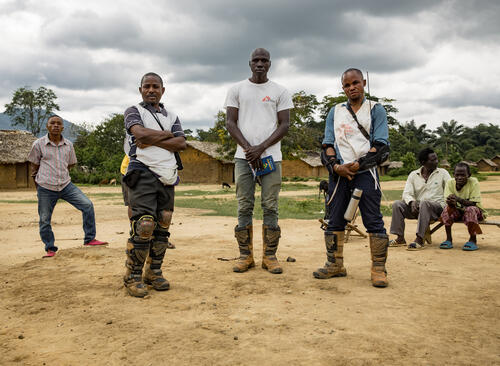
MSF teams regularly organise awareness-raising sessions with the inhabitants of the villages where the healthcare sites are implemented. In the presence of the village chief, the inhabitants express their concerns on the various challenges related to their health. MSF teams listen, answer questions and explain the importance of the decentralised care approach.
In Salamabila, community health workers organise awareness-raising sessions with the community to address preventable health issues, as well as listen, answer questions and explain the importance of a decentralised approach to healthcare. Maniema province, DRC, September 2022.  
Michel Lunanga/MSF
The 293 survivors - including 146 minors - are waiting for a place of safety to disembark. Several requests were sent to responsible authorities of Italy and Malta but a positive answer always comes after many long days. The unnecessary waiting for days in these circumstances is worsening their physical and psychological conditions.
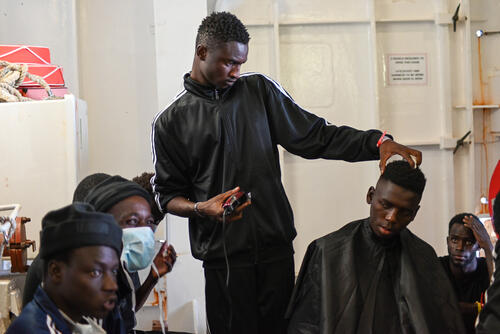
On board the Geo Barents, one survivor cuts the hair of another. The 293 survivors – including 146 minors – wait for a place of safety to disembark after having been rescued from the Mediterranean Sea. Central Mediterranean, October 2022. 
MSF/Candida Lobes
In their escape, the families took only the bare necessities with them. Today, they lack everything - food, shelter, water and latrines. An urgent mobilisation of humanitarian actors is essential to meet the vital needs of the displaced people.
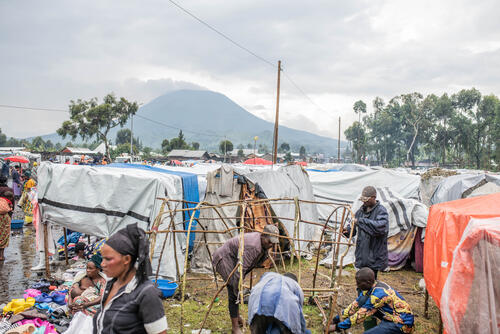
People displaced by intermittent clashes between the M23 group and Congolese army set up basic shelters at an informal camp just outside of Goma. In their escape, families took only the bare necessities with them and now lack food, shelter, water and latrines. Democratic Republic of the Congo, November 2022. 
Moses Sawasawa
The 293 survivors - including 146 minors - are waiting for a place of safety to disembark. Several requests were sent to responsible authorities of Italy and Malta but a positive answer always comes after many long days. The unnecessary waiting for days in these circumstances is worsening their physical and psychological conditions.
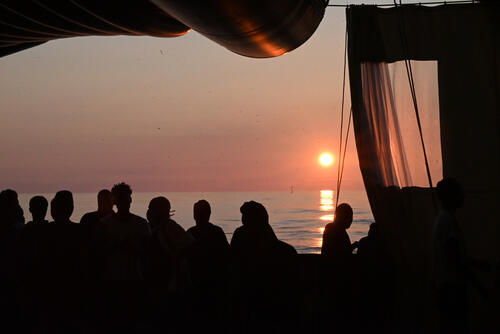
Aboard the MSF search and rescue ship Geo Barents, shipwreck survivors wait to disembark at a port of safety. Central Mediterranean, October 2022. 
MSF/Candida Lobes
Portrait of Zainab
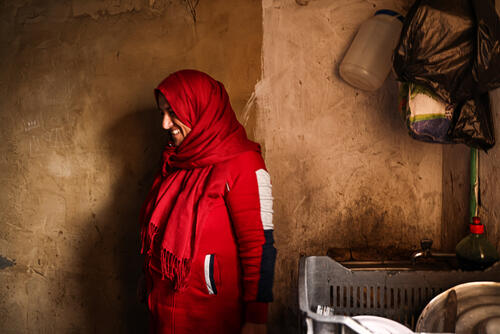
Portrait of Zainab. Zainab, from Lebanon, shares the challenges she faces in obtaining safe drinking water during a cholera outbreak in the country. “We don’t have a functioning water network here. Knowing that cholera spreads in contaminated water, I was scared that we would get sick,” she says. Arsal, Lebanon, November 2022. 
Carmen Yahchouchi/MSF
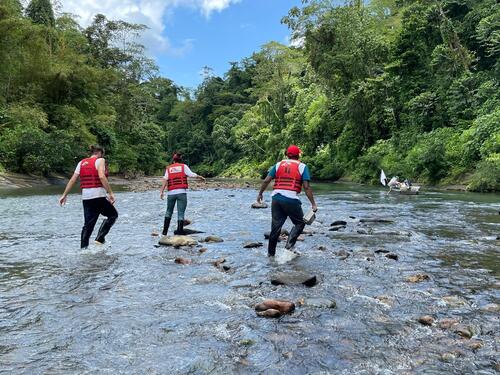
MSF staff in the Baudó river.
MSF teams traverse the Baudó river, on their way to treating local communities for dehydration, diarrhoea, malaria and malnutrition. Here, communities encounter food and supply difficulties, as well as mental health problems, due to clashes and lock downs. Alto Baudó, Colombia, November 2022.
MSF/Santiago Valenzuela