


8041 Results
 
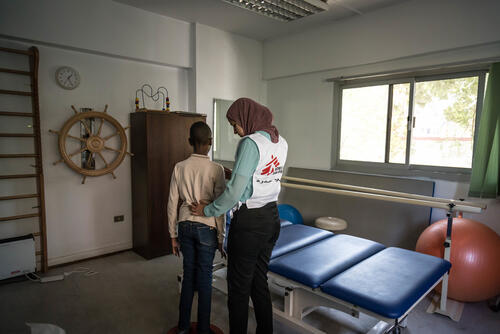
MSF psychologist/physiotherapist/social worker with a patient in MSF clinic for treatment of victims of violence in Maadi Egypt
Middle East & North Africa

Egypt

Egypt is a key transit and destination country for African and Middle Eastern refugees and migrants, many of whom have been subjected to violence or persecution in their countries. Country
 
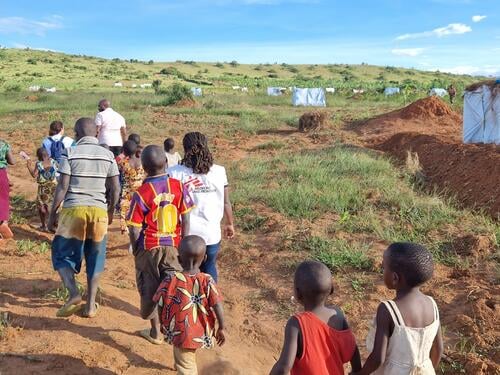
MSF staff with refugees in Kabwera new settlement, Nakivale camp.
Africa

Uganda

Hundreds of thousands of refugees have fled to northern Uganda following violence in South Sudan. Uganda is currently the largest refugee hosting country in Africa. Country
 
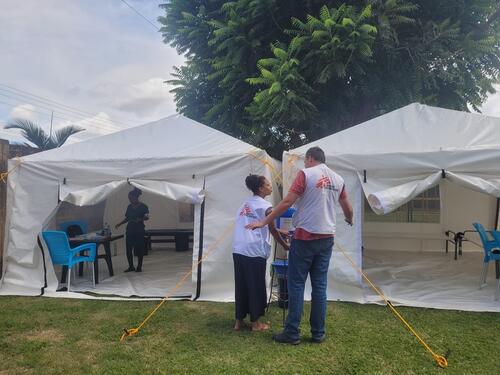
In the Massala health zone, which accounts for more than 50% of cholera cases in the Ndola district, we are working simultaneously on several fronts: support for the establishment of a patient isolation and treatment unit, specific triage at the health center level and collaboration with epidemiological surveillance services and community stakeholders. This allows our teams to detect “clusters” of cases. Based on this case geolocation work, activities related to water, hygiene and sanitation are carried out via the chlorination and rehabilitation of water points, as well as the distribution of water kits and hygiene at the household level in the most affected areas.
Africa

Zambia

MSF last worked in Zambia in 2024. Country
 
An MSF staff member converses with Anam (name changed), a 17-year-old DRTB (Drug Resistant Tuberculosis) patient and her mother outside the MSF DRTB Clinic, Chembur, Mumbai.


Anam (name changed on request), a bright 17-year-old, excels not only at English and Science in school but is an equally good Mehndi/henna artist. She tells us happily that she has completed a professional Mehndi course and learnt needlework. She aspires to become a fashion designer. 
She scrolls through her phone gallery, bringing up photos of the bridal henna designs that she has created. As her hand moves over the screen, there is a contrast between those delicate designs and the pattern on her own hand from the PICC Line (Peripherally Inserted Central Catheter).
Anam was first diagnosed with pulmonary TB at the age of nine. Before her diagnosis, she frequently had a cough and a fever. When her mother initially took her to a doctor, she was suspected of having double typhoid. 
Being diagnosed with TB at such a young age came as a blow to Anam’s family, who had no history of the disease.  Her mother later got to know that Anam studied with around eight to ten TB positive patients in school. The stigma around the disease is so strong that other children or their families never informed the school authorities. The parents feared that their children would be expelled, bullied, harassed or discriminated against. Anam’s mother decided that it was important to break this lethal chain. She informed the Principal and did not send Anam to school for the next five months. 
For 14 months, Anam received treatment at a private hospital with support from her immediate family and friends. However, the treatment did not work and her symptoms such as weight loss and vomiting worsened. The treatment at the private hospital cost her family around Rs 5,500 monthly (Rs 2,500 for medicines and Rs 3,000 for tests). In February 2021 she was finally diagnosed with drug-resistant tuberculosis (DR-TB) at a government DR-TB centre.  She was put on a DR-TB regimen, however subsequent investigations revealed additional resistance to other drugs as well. She suffered from cough, fever and weight loss. Since her condition was not improving with the treatment received so far, she ultimately came to MSF.  
At the MSF Clinic, Anam was put on a regimen of the oral drugs bedaquiline, delamanid, linezolid and amoxicillin, and an intravenous treatment with the injection imipenem. This regimen was built for her based on her resistance to certain drugs and she has been taking it for the last one and a half years.  
Anam’s mother says, “We have been through a very rough patch, but we found help every step of the way. The psychosocial support in terms of counselling, and the medical support that we received at the MSF clinic reduced our financial and medical treatment worries.”
Despite constant encouragement and support, every day Anam is also witness to another TB story unfolding outside her bedroom window. The impact of stigma and lack of awareness about TB is having serious consequences for a girl not much older than Anam in the neighbouring house. Anam recalls distraught conversations with her ‘window friend’: how she has been locked inside her room because of the disease; how her parents have abandoned her; and the irregularity of her meals. Anam’s mother says that their neighbours don’t allow other community members to help them. Bereft of medical and psychosocial support, her ‘window friend’ developed suicidal tendencies that resulted in one failed attempt to jump off the roof.  
Anam realises that her friend’s parents may have prevented the suicide attempt, yet they contributed nothing to alleviating the everyday suffering. No proper treatment is sought, she says. Anam’s mother tried to counsel the girl’s parents but they are reluctant to listen to anyone.
The story of Anam and her ‘window friend’ highlights the importance of medical treatment and psychosocial support in TB treatment, and the importance of raising awareness around the disease and fighting stigma.  And for Anam, even a small dream like hanging out with friends on a vacation post-recovery, keeps her going.
Asia & Pacific

India

In India, we focus mainly on mental healthcare, screening and treatment for HIV, tuberculosis (TB) and hepatitis C, and support to victims of sexual and gender-based violence. Country
 
On 27 April 2023, the 75 survivors, including many women and children, have finally touched the ground in Naples. We hope they will receive the assistance and protection they deserve and need.
Europe & Central Asia

Italy

In Italy, we address the needs of migrants and people on the move. Country
 
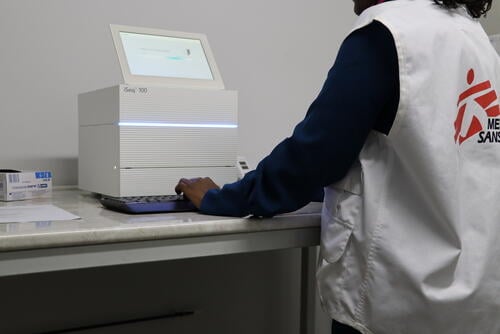
Next-generation sequencing (NGS) machine in the MSF managed laboratory in Nukus. NGS is a new technique which allows to analyse every gene in TB bacteria DNA. This technique provides information on mutations of resistance to TB drugs.  

MSF renovated and equipped a mycobacteriological laboratory biosafety level 3 in Nukus and introduced advanced rapid TB diagnostics technologies. The laboratory has the capacity for conducting culture tests, drug sensitivity tests and sputum smear quality control. The laboratory carries out the second-line drug sensitivity tests (DST). Introduction of NGS is also planned for Nukus laboratory.
Europe & Central Asia

Uzbekistan

In Karakalpakstan, western Uzbekistan, we focus on the implementation of a comprehensive care programme for drug-resistant and drug-sensitive tuberculosis (TB). Country
 
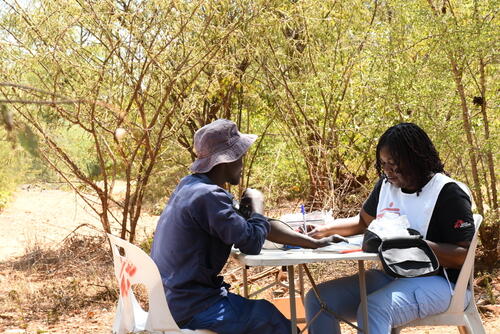
Artisinal miner gets a BP check up by MSF nurse
Africa

Zimbabwe

Learn about our medical projects in Zimbabwe, where the economic situation continues to create numerous challenges for the health sector, including shortages of medical supplies and essential medicines. Country
 
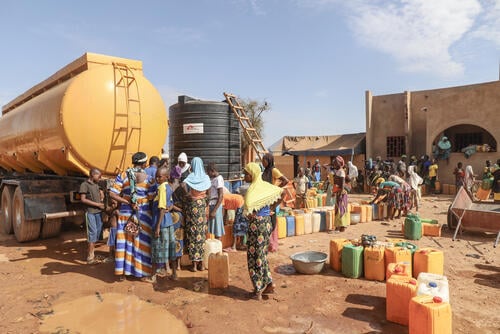
Women collecting drinking water at an MSF water pump
Africa

Burkina Faso

MSF is providing people affected by insecurity with essential services. Country
 
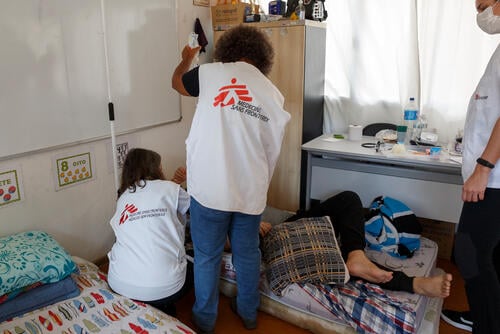
About 400 people now live in this shelter at the Paulo Freire Municipal School. The place has been receiving people from many neighborhoods of Canoas. It’s the state’s third most populous city, with 350 thousand inhabitants, and 180 thousand of them had to leave their homes. The space previously used by students is now occupied by whole families. And there are many of them, housed in makeshift accommodations after torrential rains flooded whole cities and left hundreds of thousands of people without shelter in May 2024. A team of Médecins Sans Frontières/Doctors Without Borders (MSF), with doctors, nurses, psychologists and health promoters, offer medical and mental health assistance to the people in the shelter.
The Americas

Brazil

Learn about MSF's activities in northern Brazil, where we are working to improve medical care for Venezuelan migrants and asylum seekers, as well as local communities. Country
 
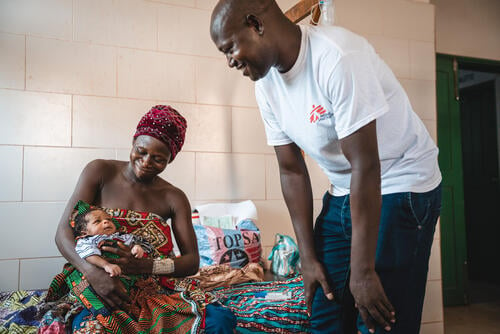
MSF gynecologist following up on a patient in the maternity ward for women having given birth through a C-section, Klouékanmè Hospital.

Dr Dieudonné has been on assignement at the Klouékanmè Hospital since October 2023. He supports the medical team, provides training in obstetrical care and helps organize the department.
Africa

Benin

Learn about MSF's activities in Benin. Country
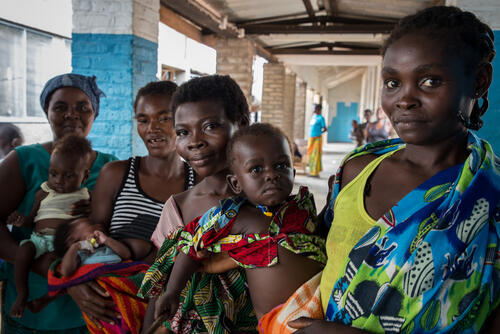
Four mothers posing in a corridor of the Hospital in Bili. All four of them are staying in the hospital with their child, that's suffering from a severe case of malaria. Since the beginning of the project in 2016, the pediatric ward already treated more than 4.000 cases of complicated/severe form of malaria.
Médecins Sans Frontières (MSF)

Independent medical humanitarian assistance

We provide medical assistance to people affected by conflict, epidemics, disasters, or exclusion from healthcare. Our teams are made up of tens of thousands of health professionals, logistic and administrative staff - most of them hired locally. Our actions are guided by medical ethics and the principles of independence and impartiality. We are a non-profit, self-governed, member-based organisation.

Learn more