



Ebola disease in DRC: find out how we're responding
Learn more
7998 Results
 
NAIROBI, 22 February 2016: As the rainy season approaches in Wajir in northeastern Kenya, Doctors Without Borders / Médecins Sans Frontières (MSF) is warning that the substandard water and sanitation situation is creating ideal conditions for a future increase in cholera cases. While today patient numbers in the cholera treatment centre in Wajir Hospital are stable, the organization is urging for an immediate improvement in sanitation services to avoid another spike in the outbreak.
Kenya

MSF warns of future cholera spike if poor water and sanitation conditions in Wajir are not urgently addressed

MSF is warning that the substandard water and sanitation situation in Wajir, northeastern Kenya, is creating ideal conditions for a future increase in cholera cases. Project Update - 22 Feb 2016
 
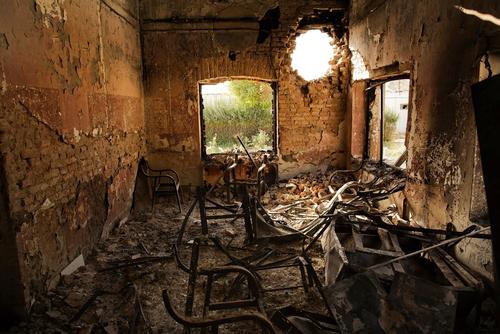
The MSF-supported hospital in Ma’arat Al Numan before it was attacked and destroyed on Monday 15th Feb. At least 25 people were killed, including nine staff members.
The 30-bed hospital  had 54 staff, two operating theatres, an outpatient department and an emergency room. The outpatient department treated around 1500 people a month, the ER carried out an average of 1,100 consultations a month, and around 140 operations a month, mainly orthopaedic and general surgery, were carried out in the operating theatres.

MSF has been supporting this hospital since September 2015 and covered all the needs of the facility including provision of medical supplies and running costs.
Syria

Our bombs are smarter than yours

"All four permanent members of the UN Security Council currently participating in the conflict must respect their own resolutions and assure that their own military. Opinion - 22 Feb 2016
 
MSF operates a 50-bed hospital in Malakal, including a 24-hour emergency room, as well as a separate emergency room inside the PoC site.
South Sudan

73 wounded treated in Malakal PoC after new fighting erupted on Thursday

MSF teams in Malakal worked through the night to deal with new patients, injured after fighting erupted in the Protection of Civilians (PoC) site on Thursday that resulted in 18 people dead. Crisis Update - 19 Feb 2016
 
Dr. Joanne Liu, International President. October 2013
Syria

Statement by Dr Joanne Liu International President of Médecins Sans Frontières

Today in Syria, the abnormal is now normal. The unacceptable is accepted.

Relentless, brutal, and targeted attacks on civilians are the dominant feature of this war. In addition to the countless numbers of dead, hundreds of thousands of people are fleeing for their lives. Many of them trapped, and denied the fundamental right to flight.
Speech - 18 Feb 2016
 
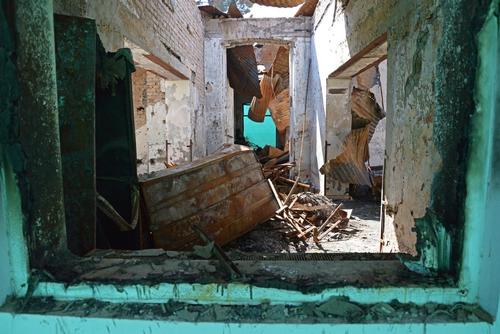
The MSF-supported hospital in Ma’arat Al Numan before it was attacked and destroyed on Monday 15th Feb. At least 25 people were killed, including nine staff members.
The 30-bed hospital  had 54 staff, two operating theatres, an outpatient department and an emergency room. The outpatient department treated around 1500 people a month, the ER carried out an average of 1,100 consultations a month, and around 140 operations a month, mainly orthopaedic and general surgery, were carried out in the operating theatres.

MSF has been supporting this hospital since September 2015 and covered all the needs of the facility including provision of medical supplies and running costs.
Syria

Civilians under relentless attack

Project Update - 18 Feb 2016
 
The MSF-supported hospital in Ma’arat Al Numan before it was attacked and destroyed on Monday 15th Feb. At least 25 people were killed, including nine staff members.
The 30-bed hospital  had 54 staff, two operating theatres, an outpatient department and an emergency room. The outpatient department treated around 1500 people a month, the ER carried out an average of 1,100 consultations a month, and around 140 operations a month, mainly orthopaedic and general surgery, were carried out in the operating theatres.

MSF has been supporting this hospital since September 2015 and covered all the needs of the facility including provision of medical supplies and running costs.
Syria

Report documents war wounded and war dead in MSF-supported medical facilities in Syria

As the conflict in Syria approaches its 6th year, the humanitarian and medical toll of the violence remains appalling. This report aims to present a documented analysis of the medical and humanitarian consequences of the intensification of the military campaign in 2015, based on medical reports and data from 70 clinics and hospitals in Syria supported by MSF. Report - 17 Feb 2016
 
Next to the screening centre located in the outskirts of the city of Samos, MSF is running a mobile clinic and has also distributed a hot meal  to an average of 200 persons every day until the activity was handed over on February 15.
Greece

Looking after refugees in transit

With the arrival of winter the number of refugees landing on the Greek island of Samos has shrunk. In October more than 500 people were arriving every day where as in January there were no more than 150. But there have never been so many accidents as now. Project Update - 17 Feb 2016
 
People queue outside a Medecins Sans Frontiers (MSF) clinic. 

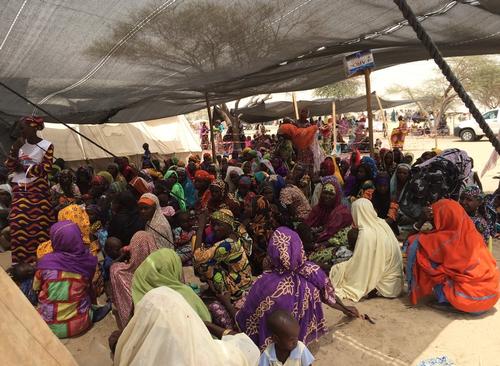
Over 5.800 Mozambican nationals have camped in the village of Kapise 2 in Malawi after fleeing their homes in Mozambique, the majority of them women, children and the elderly. Half of the consultations in the MSF clinics are malaria cases.
Malawi

Humanitarian standards not reachable for more than 5,800 Mozambican refugees in Kapise camp

"MSF is working to improve the living conditions but we know we will not be able to reach the minimum standards," says Whitney Ward, MSF field coordinator in Kapise, Malawi. "There is no doubt that the camp needs to be moved. Firstly in a place that will ease the overcrowding, provide adequate resources as well as guarantee access and efficient deployment of aid." Voices from the Field - 17 Feb 2016
 
Over 5.800 Mozambican nationals have camped in the village of Kapise 2 in Malawi after fleeing their homes in Mozambique, the majority of them women, children and the elderly. As the camp was built without pre-planning overcrowding has become severe, with high fire hazard for the makeshift shelters.
Mozambique

Crisis Update - 16 February 2016

Project Update - 17 Feb 2016
Four mothers posing in a corridor of the Hospital in Bili. All four of them are staying in the hospital with their child, that's suffering from a severe case of malaria. Since the beginning of the project in 2016, the pediatric ward already treated more than 4.000 cases of complicated/severe form of malaria.
Médecins Sans Frontières (MSF)

Independent medical humanitarian assistance

We provide medical assistance to people affected by conflict, epidemics, disasters, or exclusion from healthcare. Our teams are made up of tens of thousands of health professionals, logistic and administrative staff - most of them hired locally. Our actions are guided by medical ethics and the principles of independence and impartiality. We are a non-profit, self-governed, member-based organisation.

Learn more