


8077 Results
 
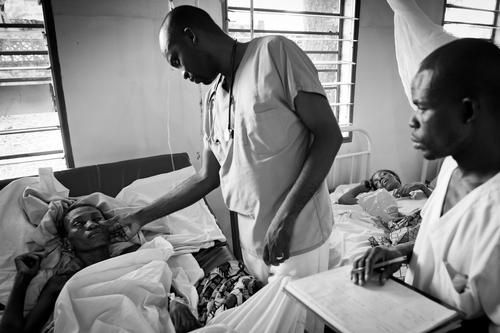
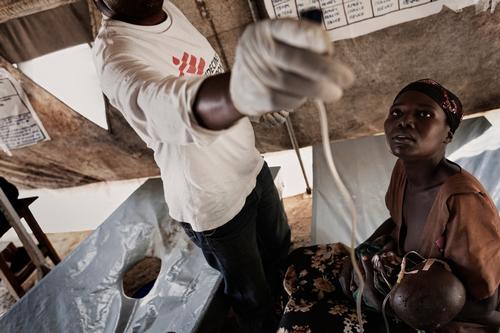
Patrick Luyeye and Selly Bentone (right) examine Nadine (28 yrs. old)
HIV/AIDS

Fight against HIV doomed to fail without urgent focus on West and Central Africa

“Countries with low antiretroviral coverage need to take advantage of the renewed ambitions worldwide to accelerate scale up of their HIV response”, says Dr Mit Philips, health policy advisor at MSF. “But it is unrealistic to think they can break the deadly status quo alone. If the world is serious in its goal of defeating AIDS, it is time to correct a too narrow focus of the Fast Track strategy and, as a matter of priority and urgency, to bring lifesaving ARVs to some of the most neglected victims of HIV/AIDS”. Report - 19 Apr 2016
 
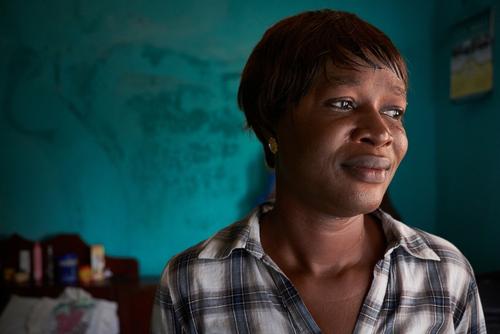
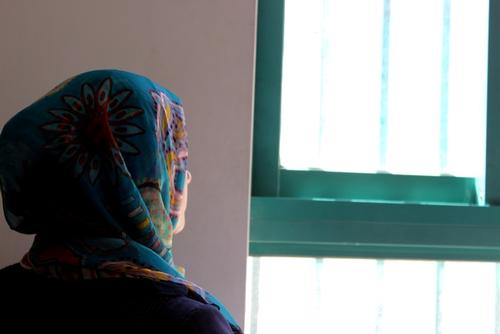
Portrait of Odia at her home in Conakry, Guinea on March 18, 2016. 

"I learnt in 2005 that I was HIV positive when I for a medical checkup. But the first time, it was my father who received the results from my tests and he did not tell me what they were. I returned to the hospital again with a friend of my mother and was tested again. That’s when I learnt I was HIV positive. I was stigmatised by my Aunty at first, today though I don't face problems. I am a counsellor in an MSF treatment centres for those who come for HIV tests."

MSF launched a HIV testing campaign in Conakry with the support of health authorities moving throughout several neighbourhoods throughout 2016.

In Guinea, only one in four people living with HIV are on life-saving antiretroviral treatment. Lack of voluntary HIV testing, estimated at only 5% from the latest study dating from 2012, hampers the necessary increase of people on ART.
HIV/AIDS

7 things you may believe about HIV/AIDS that turn out to be wrong

MSF calls for donors and UN agencies, in particular UNAIDS, the Global Fund, Pepfar and EU donors, as well as affected governments, to develop and implement a fast-track plan to scale-up life-saving antiretroviral treatment for countries where ART coverage reaches less than one-third of the population, particularly in West and Central Africa. Project Update - 19 Apr 2016
 
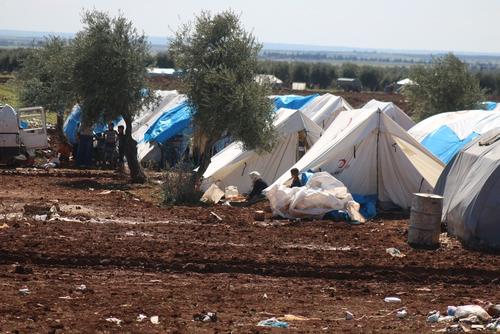
Internally Displaced People in a makeshift camp in Azaz district, Aleppo governorate, northern Syria on the 18th of March. On April 18th MSF warned that the situation was critical for more than 100,000 people who were trapped by renewed fighting in the area, and called on all warring parties to respect civilians and health structures.
Syria

More than 100,000 people trapped in northern Syria by renewed fighting

“Yet again we see tens of thousands of people forced to flee but with almost nowhere safe to go” Press Release - 18 Apr 2016
 
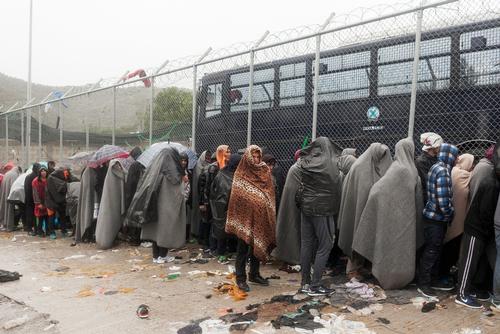
Refugees look through a fence during a rain storm as they wait to be registred at the Moria Reception Centre on Lesbos island.
Greece

As a doctor, I feel outraged

"I’m afraid that European citizens do not know what kind of outrageous deal their states have signed in their behalf. If they knew, they would feel ashamed, sick, angry and betrayed, just like I do," says Federica Zamatto, MSF Medical Coordinator for Migration Programmes. Voices from the Field - 15 Apr 2016
 
A mother and her child in the Cholera treatment Unit (CTU) of Bweru. The baby is receiving treatment.
Democratic Republic of Congo

MSF to resume medical humanitarian assistance in the Mweso health zone after 4 months absence

MSF is set to resume medical humanitarian activities in Mweso, four months after armed men attacked a convoy and abducted two of our staff members, forcing us to close our projects in the area. Press Release - 15 Apr 2016
 
Khadija, 42, is a mother of four from Syria who is now detained on Samos island, Greece, along with her children. She spoke to MSF from behind two metal fences. 
“What is going to happen next? Will they kill us here in Europe? My husband was killed and our house was destroyed by a barrel bomb in 2013. Since then we have been moving from village to village looking for safety, until I lost hope and I brought my children to Turkey. I worked many jobs but it was so hard for me to manage with four children so I decided to come here to be safe. Yet here we are behind barbed wire like criminals, this is extremely unjust.
For more details see: https://lc.cx/4BCC
Greece

Will they kill us here in Europe?

Voices from the Field - 13 Apr 2016
 
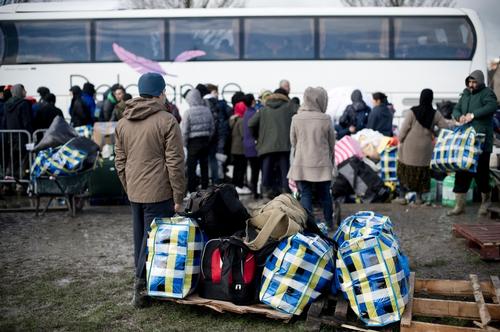
People waiting to take the bus, moving to La Linière, the new camp in Grande Synthe provinding decent living conditions to the refugees.
France

Update on relocation of migrant camp in Dunkirk

Transfer of migrants from the decrepit Basroch "camp of shame" to a new MSF constructed facility took place between 7 and 9 March. Project Update - 13 Apr 2016
 
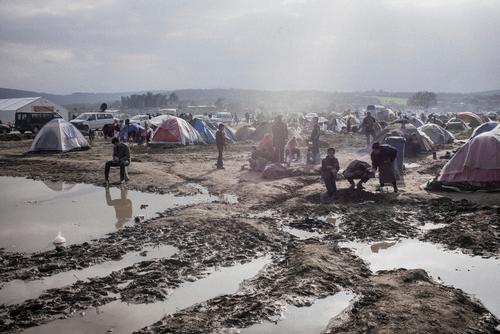
Idomeni, border between Greece and Macedonia domeni, frontière entre la grèce et la macédoine.  1 200 refugees arestuck since the closing of the border, waiting for an agreement between Europe and Turkey (which happened on March 18th 2016)
Greece

MSF treats hundreds after Greek-FYROM border violence

Events are latest consequences of absurd humanitarian crisis created by Europe Project Update - 10 Apr 2016
 
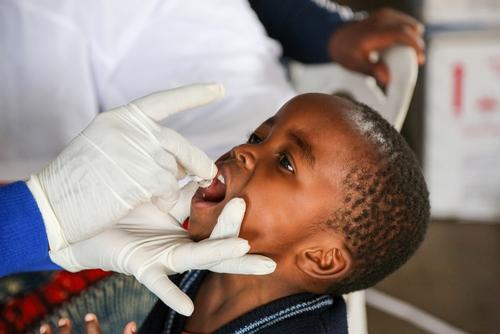
Cholera Vaccination at St Joseph Churh, one of the 15 sites of vaccination in Kanyama districts.
Zambia

Largest ever oral cholera vaccination campaign underway in Lusaka

“Lusaka has experienced regular cholera epidemics in the past, but this is the first outbreak since 2010,” says Caroline Voûte, MSF emergency coordinator. “With such a long period between outbreaks, the population has little to no acquired immunity to the disease, leaving a ‘blank slate’ for cholera transmission in these densely populated, flood-prone areas.” Press Release - 9 Apr 2016
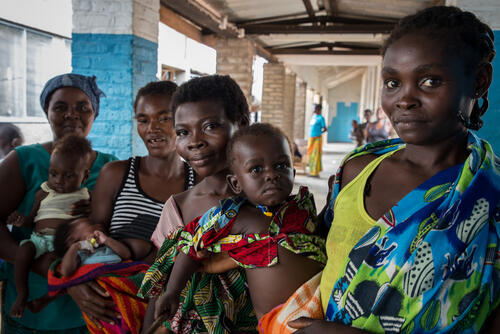
Four mothers posing in a corridor of the Hospital in Bili. All four of them are staying in the hospital with their child, that's suffering from a severe case of malaria. Since the beginning of the project in 2016, the pediatric ward already treated more than 4.000 cases of complicated/severe form of malaria.
Médecins Sans Frontières (MSF)

Independent medical humanitarian assistance

We provide medical assistance to people affected by conflict, epidemics, disasters, or exclusion from healthcare. Our teams are made up of tens of thousands of health professionals, logistic and administrative staff - most of them hired locally. Our actions are guided by medical ethics and the principles of independence and impartiality. We are a non-profit, self-governed, member-based organisation.

Learn more