


Ebola disease in DRC: find out how we're responding
Learn more
7998 Results
 
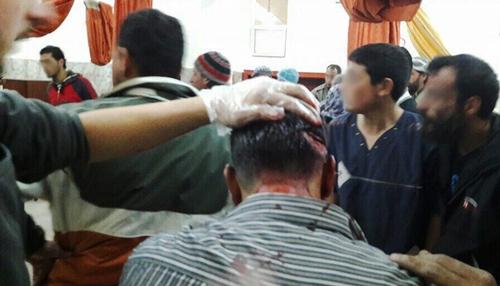
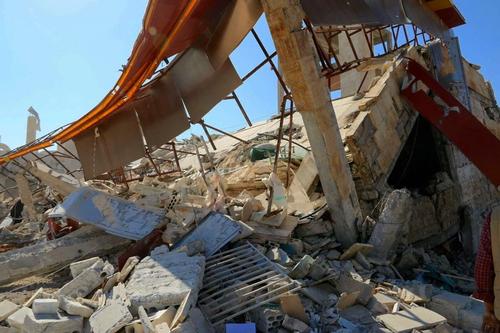
The Shiara hospital, an MSF-supported facility in Razeh district (Northern Yemen), was hit by a projectile in northern Yemen on January 10thm resulting in five deaths, eight injured and the collapse of several buildings of the medical facility. One of the critical injured victim, passed away on Sunday 17th after being transferred to the ICU at the MSF hospital in Saada. More than 130 health centres and hospitals have been affected by the conflict ravaging the country in the last ten months.
Yemen

“I’d never before seen the level of casualties I saw in Saada. The scale of wounded was extreme.”

“I’d never before seen the level of casualties I saw in Saada. The scale of wounded was extreme,” says Michael Seawright, former MSF Project Coordinator in Yemen. Voices from the Field - 27 Jan 2016
 
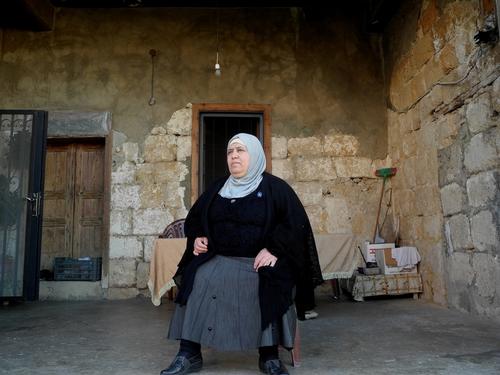
The house of the Al Atrash family is full of pictures of their son. “The photos make us comfortable, you know, you feel that he is with you,” explains Foad Irfae Aref Al Atrash, the father of Annas Al Atrash.

Annas was 23 years old and the fourth in a family of eight siblings living in Hebron city in the West Bank. He was the manager of the family’s shoe business and responsible for looking after their income. He also worked selling trainers in the family’s shop in Jericho to tourists. On November 7th 2013 he was killed by an Israeli soldier while crossing a checkpoint by car.
Palestine

“You shot an innocent person and destroyed a whole family’s life.”

This month, Occupied Minds looks at how checkpoints, restriction of movements, are affecting the life of the Palestinian population. Annas was 23 years old and the fourth in a family of eight siblings living in Hebron city in the West Bank. He was the manager of the family's shoe business and responsible for looking after their income. On 7 November 2013 he was killed by an Israeli soldier while crossing a checkpoint by car. Voices from the Field - 26 Jan 2016
 
The Shiara hospital, an MSF-supported facility in Razeh district (Northern Yemen), was hit by a projectile in northern Yemen on January 10thm resulting in five deaths, eight injured and the collapse of several buildings of the medical facility. One of the critical injured victim, passed away on Sunday 17th after being transferred to the ICU at the MSF hospital in Saada. More than 130 health centres and hospitals have been affected by the conflict ravaging the country in the last ten months.
Yemen

"They didn’t realise that the missile had hit the hospital itself."

"The border with Saudi Arabia is only half an hour away so everyone here is used to the sound of bombs and rockets," says Teresa Sancristoval, Head of MSF’s emergency desk, about the 10 January attack on Shiara hospital. "Knowing it had hit somewhere nearby, they set about preparing for mass casualties. What they didn’t realise was that the missile had hit the hospital itself, and soon they would be treating their own colleagues and patients.” Voices from the Field - 25 Jan 2016
 
The Shiara hospital, an MSF-supported facility in Razeh district (Northern Yemen), was hit by a projectile in northern Yemen on January 10thm resulting in five deaths, eight injured and the collapse of several buildings of the medical facility. One of the critical injured victim, passed away on Sunday 17th after being transferred to the ICU at the MSF hospital in Saada. More than 130 health centres and hospitals have been affected by the conflict ravaging the country in the last ten months.
Yemen

Health facilities under attack - MSF wants answers

MSF medical activities in Yemen have come under attack four times in less than three months, each incident more serious than the last.“Four of our medical facilities have been attacked in four months in Yemen and Afghanistan,” Press Release - 25 Jan 2016
 
A rapid detection test (RDT) indicates a patient is positive for malaria. Four-year-old Agok, was being carried by his mother, Akuot Yel, when MSF outreach manager and nurse Abdifatah Mohamed encountered them walking from their village of Maluil to the nearby private clinic in town. Yesterday, Akuot took her son to the government-run primary health care unit (PHCU) nearby but they found nobody there. It was closed. PHCUs have no trained personnel to administer quinine intravenously, and often have no oral ACT medication in stock, so they do not open at all, thinking that there is nothing for them to do for patients that come in, the vast majority of which suffer from malaria. The private clinic in town would have cost Akout 15 SSP for the test, and 80 SSP to purchase the medicine needed. Akuot has two twins at home who are also ill, but Agok's state was most serious. Akuot can't afford medication for three sick children all at once so she tried to take care of Agok first. She could have received free medicine at the the government-run health care center in Panthui, but the walk will take about two hours, and there was no guarantee that they will have medicine in stock. The PHCU has a car to provide free transportation for patients that need to be referreed to Panthou health care center for treatment, but that wasn't an option for Agok since they found the PHCU closed. Later, Abdifatah also found Agok had symptoms of severe anemia. Abdifatah, en route to Panthui, offered Akuot and Agok a ride to the health care center there. At home, they use a mosquito net that they received from an NGO who distributed them in the area two years ago. It is old now and tearing.
Disease prevention

Five epidemics to watch

Five diseases with the potential to become epidemics in 2016 are being highlighted by MSF. “We know that thousands of lives will be at risk in the year to come. Press Release - 25 Jan 2016
 
The Shiara hospital, an MSF-supported facility in Razeh district (Northern Yemen), was hit by a projectile in northern Yemen on January 10thm resulting in five deaths, eight injured and the collapse of several buildings of the medical facility. One of the critical injured victim, passed away on Sunday 17th after being transferred to the ICU at the MSF hospital in Saada. More than 130 health centres and hospitals have been affected by the conflict ravaging the country in the last ten months.
Yemen

Saada attacks wound dozens and kill at least 6, including ambulance driver

Yesterday afternoon (loca time), 21 January, the ambulance service of the MSF-supported Al Gomhoury Hospital in Saada governorate, Yemen, was hit by an airstrike, killing one Ministry of Health staff member. Project Update - 22 Jan 2016
 
View from Al Thawra hospital in the besieged area of Taiz.
A siege has been impoased on the city by Houthis since late August 2015. MSF was not able to enter medical aid into the enclave area for five months. Only on January 16th, MSF got the authorization and delivered medical aid to Al-Thawra hospital inside the enclave area.
Yemen

At least 10 children killed and three wounded while walking back home from school in Taiz

Michele Trainiti, MSF project coordinator in Taiz, Yemen, reports on an incident that took place on 19 January. At least 10 children killed and three wounded while walking back home from school. Voices from the Field - 21 Jan 2016
 
Consultations in the malnutrition ward at the MSF hospital in Mweso, North Kivu, DRC.
Democratic Republic of Congo

MSF forced to close major humanitarian project in Mweso following abduction of staff

MSF announces the closure of its project in Mweso, Masisi territory, North Kivu Province, Democratic Republic of Congo, after armed actors attacked one of our convoys and abducted two of our staff members from 15-16 December 2015. “We’ve been forced to take this painful decision because our staff cannot continue to work in a situation where they are targeted or attacked,” says Annemarie Loof, MSF Operational Manager in Amsterdam. Press Release - 20 Jan 2016
 
Damage of Al Thawra hospital in the besiged area in Taiz.
Yemen

Medical supplies reach hospitals in besieged Taiz

MSF has successfully delivered two truckloads of essential medical supplies to the the besieged area of the city of Taiz, in southern Yemen. “During war, people have a right to medical care. Blocking people from health care should never be used as a military tool," says Karline Kleijer, MSF’s emergency manager for Yemen. Statement - 19 Jan 2016
 
Oct. 24, 2016. Oussama Omrane, a cultural mediator for MSF, helps a Nigerian woman, who was saved off the Libyan coast by the MSF search and rescue vessel the Dignity I, to disembark. 
The Dignity I arrived at the port of Trapani, in Sicily, Italy, on Oct. 24, 2016, with 548 people of different nationalities on board, who had been saved off the Libyan coast.
Mediterranean migration

European policies dramatically worsened the so-called 2015 “refugee crisis”

A new report titled “Obstacle Course to Europe” details the humanitarian consequences of Europe’s actions and explains how Europe’s walls forced MSF and other humanitarian organisations to radically scale up activities at the entry points of Europe. Report - 19 Jan 2016
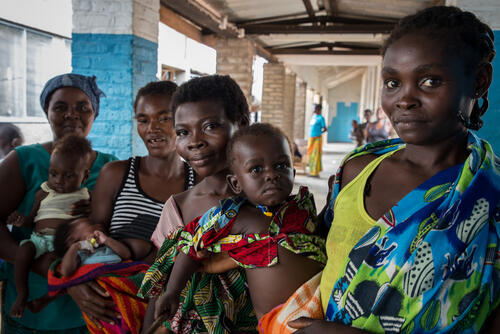
Four mothers posing in a corridor of the Hospital in Bili. All four of them are staying in the hospital with their child, that's suffering from a severe case of malaria. Since the beginning of the project in 2016, the pediatric ward already treated more than 4.000 cases of complicated/severe form of malaria.
Médecins Sans Frontières (MSF)

Independent medical humanitarian assistance

We provide medical assistance to people affected by conflict, epidemics, disasters, or exclusion from healthcare. Our teams are made up of tens of thousands of health professionals, logistic and administrative staff - most of them hired locally. Our actions are guided by medical ethics and the principles of independence and impartiality. We are a non-profit, self-governed, member-based organisation.

Learn more