


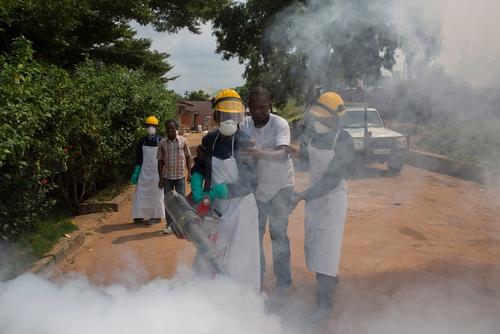

Ebola disease in DRC: find out how we're responding
Learn more
7998 Results
 
A new mother performs skin-to-skin care, which helps her pre-term baby grow by keeping it warm, promoting breastfeeding and bonding, and reducing the risk of infection.

Une mère pratique la technique « peau à peau » pour favoriser la croissance de son nouveau-né prématuré, en le maintenant au chaud. Cette technique permet aussi l’allaitement maternel et réduit les risques d'infection.
Afghanistan

Nurturing premature babies with their mothers’ embrace

Kangaroo Mother Care (KMC), or skin-to-skin care, is highly valued as a therapy that can benefit both mother and child. Dr Nikola Morton, paediatrician, and Laura Acheson, a neonatal nurse, were both passionate about consolidating skin-to-skin practice in Dasht-e-Barchi. They shared their experience of how skin-to-skin has become standard in MSF’s thriving Dasht-e-Barchi neonatal unit. Project Update - 26 Apr 2016
 
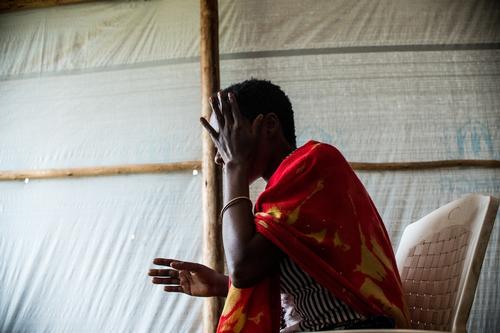
MSF health promotor during a session on sexual violence and sexually transmitted infections (STI) in Molokai village. The original inhabitants of the region are pygmies people.
Democratic Republic of Congo

In Mambasa, MSF teams provide care to four new rape survivors each day

“Our work involves changing mentalities to get rid of the taboo around sexual violence, and to be able to offer proper care to every victim,” says Mame Anna Sane, MSF medical team leader. “Of course there is a criminal and legal aspect to sexual violence, but for us it’s first of all a medical emergency.” Project Update - 25 Apr 2016
 
A malaria flare killed dozens in the beginning of 2015 in Ziralo, eastern DRC. Number of cases has not decreased but MSF intervention managed to help decreasing the mortality.
Global

World Malaria Day: five challenges in the fight against the disease

Although the number of cases of and deaths related to malaria has been declining steadily for 15 years, the disease continues to cause more than 400,000 deaths annually, primarily in Africa (90% of deaths) and among children (70% of deaths). Project Update - 25 Apr 2016
 
This house was destroyed by the quake, Tateno, Minami-aso village, Kumamoto prefecture.
Japan

People have to continue living in shelters for a while

Interview with Dr. Sonoko Sidehara, project coordinator for Kumamoto Quake emergency response Voices from the Field - 25 Apr 2016
 
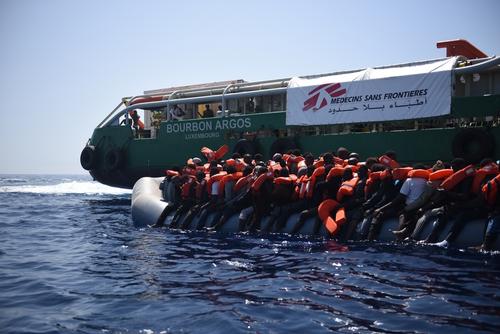
MSF Search & Rescue boat, Dignity I, in the Mediterranean.
Mediterranean migration

MSF resumes Search and Rescue activities in the central Mediterranean

Due to the lack of safe and legal alternatives for people to flee and seek protection, the deadly stretch of water between Libya and Italy, which in 2015 claimed the lives of 2,892 men, women and children, is now almost the only way for thousands to reach European shores, and it is already as busy as ever. Press Release - 24 Apr 2016
 
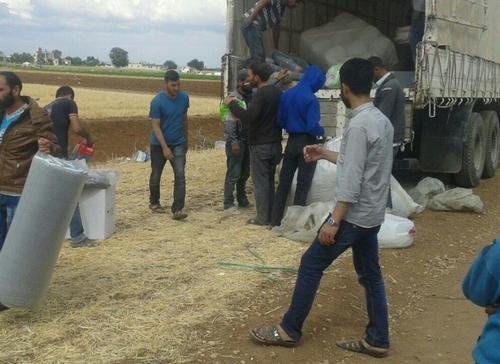
Distribution of NFI to displaced people in Azaz district where more than 30.000 people are gathering after fleeing active frontlines. In total more than 100.000 people are trapped in Azaz between frontlines and the Turkish border, who has been closed for over a year except for patients in critical condition and humanitarian workers with special permits.
Syria

Situation critical for tens of thousands displaced over 10 days

Situation update from MSF Syria Head of Mission on the new displacement crisis in Azaz, northern Syria, where more than 35,000 people have fled displaced people camps taken over by the Islamic State group. Voices from the Field - 22 Apr 2016
 
MSF teams currently responding to medical needs in Ecuador following the 7.8 magnitude earthquake which struck the northeast of the country on Saturday, April 16. According to the latest official figures, 525 people were killed in the earthquake.
Ecuador

MSF teams offer psychosocial support, distribute medicines in affected areas

The most acute needs are psychosocial support and donations of water, plastic sheeting and jerry cans for displaced people in shelters in the areas of Muisne, Chamanga and Cabo de San Francisco, in the municipalities of Muisne and Pedernales. MSF will also provide donations of medicines and medical supplies to various health structures in affected zones. Project Update - 22 Apr 2016
 
MSF nurse Tomoyuki Hatai is getting ready to administer IV drips in a shelter set up in Hakusui gym in Minami-aso.
Japan

MSF starts medical activities in the area of Minami-aso after Kumamoto Quake

Médecins Sans Frontières (MSF) team travelled to Kumamoto prefecture on 17 April, and identified a severe lack of basic healthcare in Minami-aso village because houses and medical facilities there were severely damaged and people are living in shelters since 14 April. The MSF team working in the area hit by the Kumamoto earthquake is made up of three doctors, three nurses, a pharmacist, a psychologist, a logistician and an administrator. Project Update - 21 Apr 2016
Four mothers posing in a corridor of the Hospital in Bili. All four of them are staying in the hospital with their child, that's suffering from a severe case of malaria. Since the beginning of the project in 2016, the pediatric ward already treated more than 4.000 cases of complicated/severe form of malaria.
Médecins Sans Frontières (MSF)

Independent medical humanitarian assistance

We provide medical assistance to people affected by conflict, epidemics, disasters, or exclusion from healthcare. Our teams are made up of tens of thousands of health professionals, logistic and administrative staff - most of them hired locally. Our actions are guided by medical ethics and the principles of independence and impartiality. We are a non-profit, self-governed, member-based organisation.

Learn more