



Ebola disease in DRC: find out how we're responding
Learn more
7998 Results
 
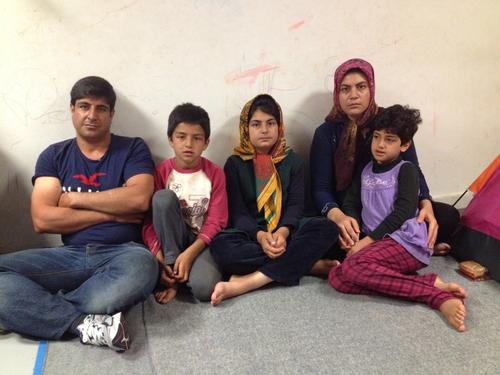
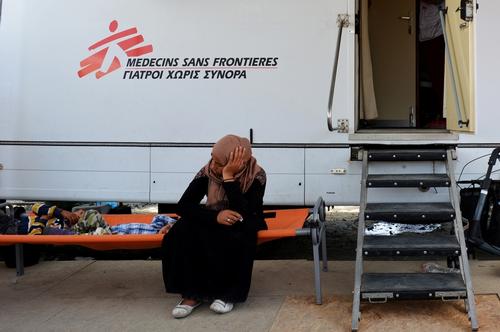
Khadija, 42, is a mother of four from Syria who is now detained on Samos island, Greece, along with her children. She spoke to MSF from behind two metal fences. 
“What is going to happen next? Will they kill us here in Europe? My husband was killed and our house was destroyed by a barrel bomb in 2013. Since then we have been moving from village to village looking for safety, until I lost hope and I brought my children to Turkey. I worked many jobs but it was so hard for me to manage with four children so I decided to come here to be safe. Yet here we are behind barbed wire like criminals, this is extremely unjust.
For more details see: https://lc.cx/4BCC
Greece

Will they kill us here in Europe?

Voices from the Field - 13 Apr 2016
 
People waiting to take the bus, moving to La Linière, the new camp in Grande Synthe provinding decent living conditions to the refugees.
France

Update on relocation of migrant camp in Dunkirk

Transfer of migrants from the decrepit Basroch "camp of shame" to a new MSF constructed facility took place between 7 and 9 March. Project Update - 13 Apr 2016
 
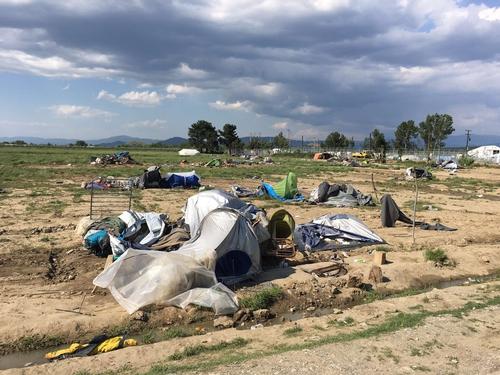
Idomeni, border between Greece and Macedonia domeni, frontière entre la grèce et la macédoine.  1 200 refugees arestuck since the closing of the border, waiting for an agreement between Europe and Turkey (which happened on March 18th 2016)
Greece

MSF treats hundreds after Greek-FYROM border violence

Events are latest consequences of absurd humanitarian crisis created by Europe Project Update - 10 Apr 2016
 
Cholera Vaccination at St Joseph Churh, one of the 15 sites of vaccination in Kanyama districts.
Zambia

Largest ever oral cholera vaccination campaign underway in Lusaka

“Lusaka has experienced regular cholera epidemics in the past, but this is the first outbreak since 2010,” says Caroline Voûte, MSF emergency coordinator. “With such a long period between outbreaks, the population has little to no acquired immunity to the disease, leaving a ‘blank slate’ for cholera transmission in these densely populated, flood-prone areas.” Press Release - 9 Apr 2016
 
In January and February MSF teams were able to send 50 trucks with approximately 550 tons of drugs, medical material, shelters and non-food items to supported medical facilities and displacement camps in Aleppo citiy and its northern coutryside.
Syria

Despite cease fire catalogue of horror continues in besieged areas

Although the cease-fire and the humanitarian convoys have contributed to a decrease in humanitarian consequences of the conflict, the situation remains critical in many besieged areas. “The catalogue of horror continues virtually unabated in many besieged areas,” says Dr Bart Janssens, MSF Director of Operations. Project Update - 7 Apr 2016
 
Bullet casings were found throughout the MSF medical centre, which was extensively looting during and after fighting in Pibor, South Sudan from Feb 23-25, 2016. Life-saving medicines, medical equipement and essential records were strewn everywhere while cabinets and shelves were tossed and emptied in a whirlwind of theft and disrespect for medical care.
South Sudan

MSF issues open letter on nationwide lack of essential medicines

“The conflict in South Sudan has now continued for over two years, heavily impacting its population,” Dr. Liu wrote, calling the worsening drug shortages “an additional and preventable medical emergency.” Statement - 7 Apr 2016
 
At the crossing of MSF vaccination team, some fishermen come close to the boat and vaccination takes place directly on the water.
Malawi

A cholera response among fishing communities on and around Lake Chilwa

Each year there are between three million and five million cases of cholera worldwide, causing between 100,000 to 120,000 deaths. In 2014, MSF treated around 21,000 cases of cholera in its projects worldwide. The first case of cholera was registered in Malawi in 1973. Outbreaks have occurred almost every year since with the highest number of cases and deaths reported in 2001–2002. Photo Story - 4 Apr 2016
 
An interior view of the MSF Trauma Centre, 14 October 2015, shows a missile hole in the wall and the burnt-out remians of the the building aftera sustained attack on the facility in Kunduz, northern Afghanistan..
Kunduz hospital attack

This is my story

Voices from the Field - 3 Apr 2016
 
Interior of the Medecins Sans Frontiers (MSF) hospital in Kunduz, destroyed on the 3rd October 2016 in a sustained bombing attack by the US airforce on the facility.
Kunduz hospital attack

Kunduz: 6 months later

On 3 October 2015, MSF’s trauma hospital in Kunduz, Afghanistan, was destroyed by precise and repeated U.S. airstrikes. The attack killed 42 people, including 14 MSF staff members, 24 patients and four caretakers, and wounded dozens more. The facility was a fully functioning hospital at the time of the attack and was therefore protected under International Humanitarian Law. Project Update - 3 Apr 2016
Four mothers posing in a corridor of the Hospital in Bili. All four of them are staying in the hospital with their child, that's suffering from a severe case of malaria. Since the beginning of the project in 2016, the pediatric ward already treated more than 4.000 cases of complicated/severe form of malaria.
Médecins Sans Frontières (MSF)

Independent medical humanitarian assistance

We provide medical assistance to people affected by conflict, epidemics, disasters, or exclusion from healthcare. Our teams are made up of tens of thousands of health professionals, logistic and administrative staff - most of them hired locally. Our actions are guided by medical ethics and the principles of independence and impartiality. We are a non-profit, self-governed, member-based organisation.

Learn more