



8077 Results
 
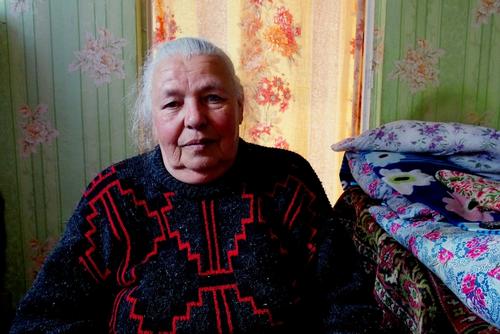
Raisa Manko, 80, lives in Taramchuk, eastern Ukraine. Her house was shelled in August 2014, and now she lives another house in the same village which was abandoned by its owners. It was also shelled, but remains relatively intact.
Raisa has hypertension and asthma, and has just been diagnosed with pneumonia. MSF’s mobile clinic team visits the village to provide assistance to her and others who remain stuck near the line of contact.  The elderly are particularly vulnerable, having not been able to escape at the height of the conflict. 
“I don’t live, I survive. The war: it started all unexpectedly. We could not understand what was going on. They started to shell very intensely, and the shells were falling everywhere. Some houses were half ruined, but mine was completely ruined. I don’t have anything left.
How can I live like this in my old age?  I have nothing. I don’t want to live like this, but I have no choice. I have nothing except three graves – my husband, my mother and my son.”
Ukraine

We are lost here and very scared

Project Update - 5 Jul 2016
 
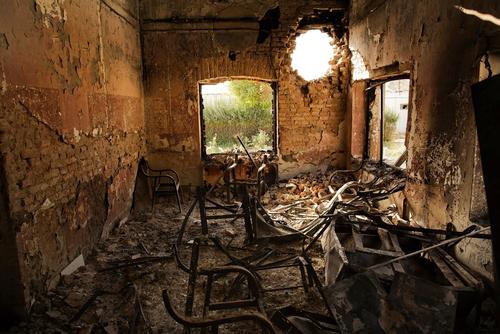
An interior view of the MSF Trauma Centre, 14 October 2015, shows a missile hole in the wall and the burnt-out remians of the the building aftera sustained attack on the facility in Kunduz, northern Afghanistan..
Afghanistan

The attack on Kunduz trauma centre

First published in the International Activity Report 2015 Voices from the Field - 1 Jul 2016
 
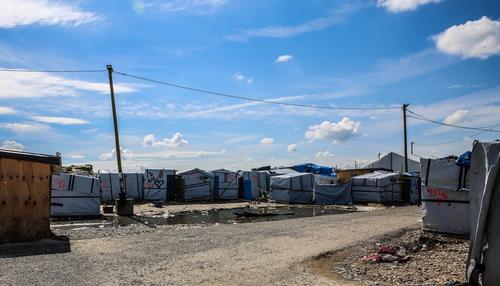
Since French authorities demolished the southern half of the Jungle camp in March this year, living conditions in the northern half have become very cramped. People are fighting for space, with 1,000 new arrivals in the past month alone, local NGOs have counted, including 142 minors which makes a total of 700 minors in the Jungle now.
France

No respite from violence for refugees in Calais

Project Update - 1 Jul 2016
 
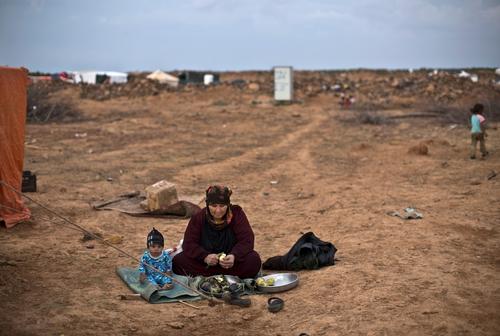
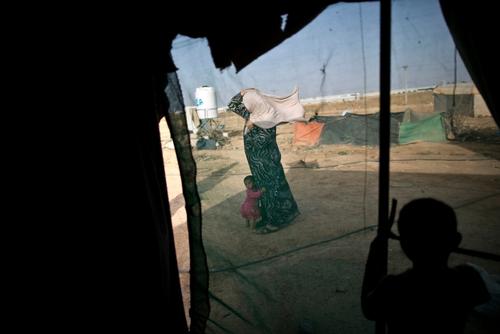
A Syrian refugee woman holds on to her headscarf against the wind while she and her daughter stand outside their tent at an informal tented settlement near the Syrian border on the outskirts of Mafraq, Jordan.
Syria

Voices from the Berm

Voices from the Field - 30 Jun 2016
 
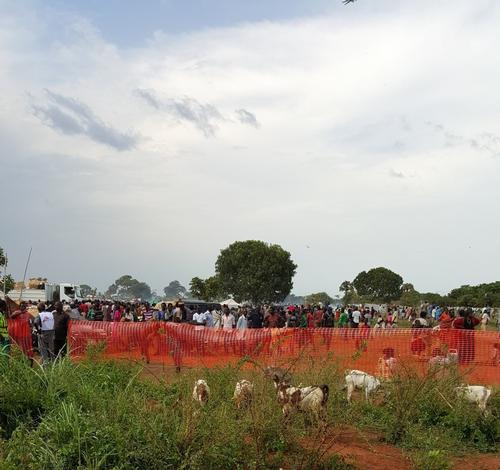
On Sunday and Monday MSF teams ran mobile clinics around the UN base, treating 160 and 174 people respectively. People were much sicker than we would have expected, the impact of months of ongoing insecurity. Main morbidities are malaria (due to the rainy season and limited access to bed nets), malnutrition (it is the traditional hunger gap period, but due to the conflict people have not been able to cultivate), diarrhea and upper respiratory tract infections. We also treated gunshot wounds and women who had been raped. 
 
Yesterday we shipped in two plane loads of supplies including therapeutic food, rape kits and dressings. Today our teams have handed over our activities in the UN base so that we can move further south to find those people who have been pushed further away by the fighting. We will continue to respond to the situation as it evolves.
South Sudan

Heavy fighting in Wau causing new displacement crisis

Dr David Kahindi, Deputy Medical Coordinator for MSF, has been working in South Sudan for more than three years. He recently arrived in Wau where he has been overseeing MSF’s emergency response. Voices from the Field - 29 Jun 2016
 
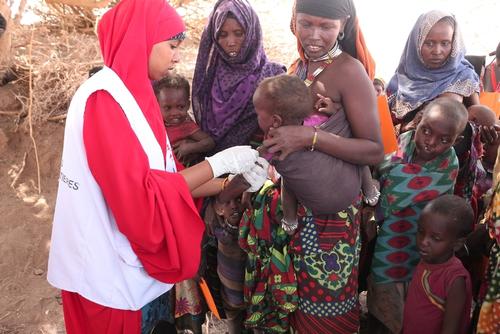
Many diseases spread with malnutrition. MSF was engaged in vaccination programmes alongside its other regular activities.
Ethiopia

Two years of drought followed by floods challenge the pastoral way of life

The eastern Ethiopian regions of Afar and Sitti are dry and inhospitable places for much of the year. Yet this is where many pastoralists live, moving from place to place, searching for water and pasture to feed their precious livestock. Project Update - 27 Jun 2016
 
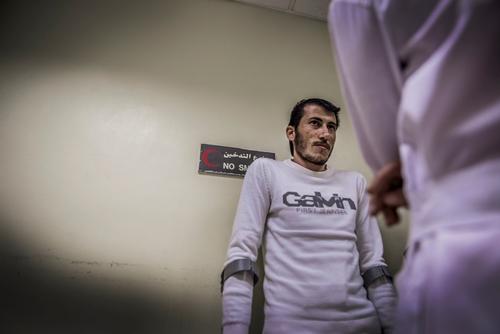
Mahmud,  25, from Rawa in Syria leans on his crutches in the corridor of the Al-Mowasah Hospital in Amman. He admits that he is a militant from the Free Syrian Army and was wounded 02 April 2013 when a bullet shattered his right leg. He says that before joining the opposition group he was detained and tortured by the government.
Greece

Helping Victims of Violence' move on with their lives

Voices from the Field - 24 Jun 2016
 
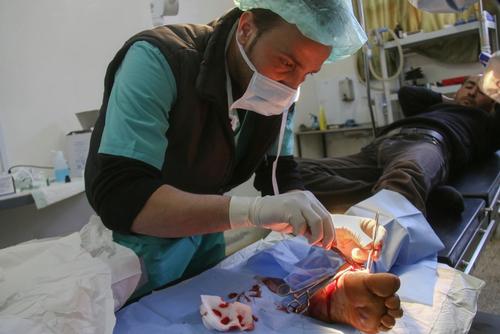
A surgery at MSF´s Al Salamah hospital in Azaz district in northern Syria. The 52 bed hospital includes an ER, an operating theatre,outpatient and inpatient services, including maternity care. It is the largest directly run MSF facility still inside Syria, managed by nearly 150 Syrian staff. Azaz district has seen new waves of displaced people arrive in recent months, and now an estimated 100,000 people are trapped in the area between shifting frontlines and the closed Turkish border. MSF teams travel out to displaced persons camps and surrounding areas to bring back patients, and MSF also provides distributions of emergency relief items. In May the hospital was forced to close when frontlines came too close, since June it has reopened only for emergency cases and surgeries.
Syria

MSF staff on working at Al Salamah hospital, Azaz

“I had the opportunity to work in Germany but I refused,” says Thurayia Zein Al Abideen, a paediatrician at MSF’s Al Salamah hospital in Azaz district, northern Syria. “I want to work in Syria, because people need us and we are facing a huge shortage of doctors.” Voices from the Field - 23 Jun 2016
 
"This is the first time MSF has been able to access Bama, but we already know the needs of the people there are beyond critical,” said Ghada Hatim, MSF head of mission in Nigeria. “We are treating malnourished children in medical facilities in Maiduguri and see the trauma on the faces of our patients who have witnessed and survived many horrors.” 

During its assessment, the MSF team counted 1233 cemetery graves located near the camp which had been dug in the past year. Many of those graves—480—were of children
“Bama is largely closed off,” said Hatim. “We have been told that people including children there half starved to death. According to the accounts given to MSF by displaced people in Bama new graves are appearing on a daily basis. We were told more than 30 people are dying a day due to hunger and illness.”
Nigeria

At least 24,000 displaced people in dire health situation in Bama

Critical humanitarian needs identified for displaced in Bama, Borno State, Nigeria Press Release - 22 Jun 2016
Four mothers posing in a corridor of the Hospital in Bili. All four of them are staying in the hospital with their child, that's suffering from a severe case of malaria. Since the beginning of the project in 2016, the pediatric ward already treated more than 4.000 cases of complicated/severe form of malaria.
Médecins Sans Frontières (MSF)

Independent medical humanitarian assistance

We provide medical assistance to people affected by conflict, epidemics, disasters, or exclusion from healthcare. Our teams are made up of tens of thousands of health professionals, logistic and administrative staff - most of them hired locally. Our actions are guided by medical ethics and the principles of independence and impartiality. We are a non-profit, self-governed, member-based organisation.

Learn more