



Ebola disease in DRC: find out how we're responding
Learn more
7998 Results
 
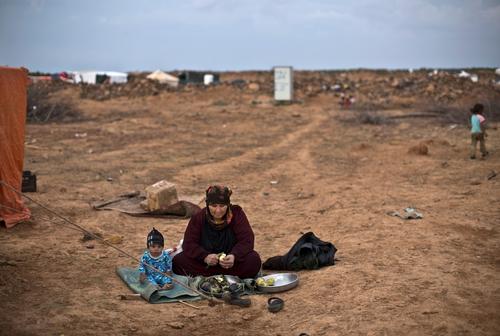
Portrait of Hussein Shuhaib, 27 from Syria.

'Here we have suffered a lot. For example, in this camp there are 12,000-13,000 human beings. My children are getting sick.
I’m a father, I have two children, my family are with me. We’ve been here for 9 days is this not shameful? We demand they open up this border crossing, we have children, families, women, babies. The most difficult thing is the children’s illnesses. I have a one year old child, and another who is two and a half years old they cannot handle this weather, this rain, this sun See, they are staying in small tents These are summer tents, not for the winter. My children don’t understand why the border crossing is closed. My son always asks:
“Dad, when are we going home? Dad, when are we going home?” Of course! We left the war as refugees, not as tourists, or a vacation. If there was nothing happening in Syria, we wouldn’t have left.
Refugees, IDPs and people on the move

Refugee Day 2016: Don't let this be the #LastRefugeeDay!

More than 60 million people are displaced around the world in search of safety and protection. They come from conflict zones and places where they are persecuted for their thoughts, their religion, their sexual orientation, their political opinions. Photo Story - 20 Jun 2016
 
08 June. Three boats containing approximately 150 people each were rescued in the Mediterranean Sea by the Bourbon Argos and taken to Sicily, Italy.
Mediterranean migration

EU Migration Crisis Update - June 2016

Since 1 January 2016, 200,000 people have arrived on European shores by sea. The great part of them arrived through the Aegean Sea before the closure of the so called Balkan road and around 50,000 arrived in Italy through the dangerous Central Mediterranean route. At least 50,000 are stuck in Greece after the closure of the Balkan route, with the extremely dangerous Central Mediterranean becoming one of the few remaining opportunities to reach Europe for thousands of people. Crisis Update - 17 Jun 2016
 
Idomeni, border between Greece and Macedonia domeni, frontière entre la grèce et la macédoine.  1 200 refugees arestuck since the closing of the border, waiting for an agreement between Europe and Turkey (which happened on March 18th 2016)
Gas station turned into a refugee camp, 20 km upstream the border.
Greece

I’ve met the people the EU has decided to no longer welcome and protect

By Dr. Conor Kenny, in collaboration with Ifigenia Anastasiadi and Elisa Compagnone Voices from the Field - 17 Jun 2016
 
Abu Jaber, 36, came to the Greek island of Samos with his 31-year-old wife Madiha and their young children. They were fleeing Syria's Aleppo after their house was destroyed.
"We were lucky because we weren't home when a Russian air raid flattened our home three months ago," Abu Jaber told MSF. "I thought we would find mercy in Europe, but it's even harder for us than it was in Syria. That's because when your expectations are high and you then face disillusionment, it's harder than when you had nothing at all to hope for."
For more details see: https://lc.cx/4BCK
Refugees, IDPs and people on the move

EU States’ dangerous approach to migration places asylum in jeopardy worldwide

“Deterrence policies sold to the public as humanitarian solutions have only exacerbated the suffering of people in need. There is nothing remotely humanitarian about these policies.” Press Release - 17 Jun 2016
 
Samos hotspot which became a detention center since 20 of March 2016  where more than 700 asylum seekers and migrant are detained there.
Greece

Refugees arrive often cold, scared, unsure, confused and in distress

Interview with Elspeth Kendal-Carpenter, nurse, superving MSF's Mobile Landing Rescue Team Voices from the Field - 15 Jun 2016
 
msf-placeholder
Yemen

Treating gunshot, grenade and mine injuries in Aden

“This was the first time I was confronted with injuries caused by gunshots, grenades and mines – and they were often horrific injures,” reflects Helmut Shoengen, an anaesthetist/doctor who recently returned from working in Aden, Yemen with Médecins Sans Frontières (MSF). Voices from the Field - 15 Jun 2016
 
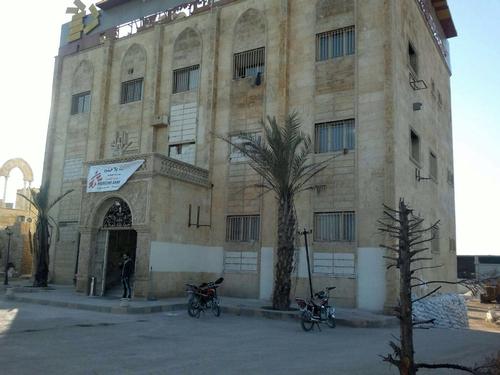
In January 2016 MSF opened a PHCC in Al Shuada, a very poor neighbourhood in the district of Abu Graib, west of Baghdad. 
In the first month 4.000 consultations were carried out by our medical team.
The organisation offers medical services in 3 other locations in the district. Another mobile team is active in camps close to Bzibiz bridge on the border with Anbar.
In Baghdad OCG employs 72 national staff 13 expatriate staff
Iraq

There is a lack of humanitarian actors in Baghdad area

By Robert Onus, field coordinator for the MSF project in Abou Ghraib, Baghdad Voices from the Field - 10 Jun 2016
 
Makhmood is a taxi driver. He had brought his wife to the clinic in Hutheima who is complaining of strong headaches. "We went to
Dohuk to see a specialist, he says. She had a scan and was given medication but it didn't work. It's not easy to
go to Dohuk, you need a referral and permission from the police unless it's an emergency.
We asked the only local doctor for a referral and were granted one. Then we went to the police and
we got permission in a few hours. The journey to dohuk was smooth and we had no problems at the
checkpoints".
Iraq

I left all my memories in Mosul

"People started to flee. I didn’t know what to do: I was torn between the need to get my family to a safe place and my commitment to the hospital. It was a time of great uncertainty," says Baroj, assistant coordinator of MSF’s project in Ninewa, Iraq. Voices from the Field - 10 Jun 2016
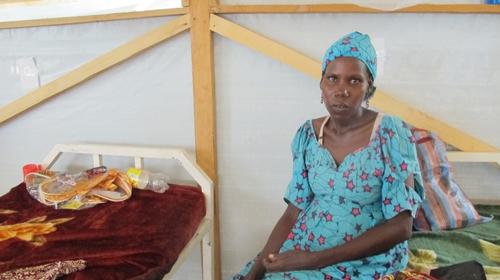
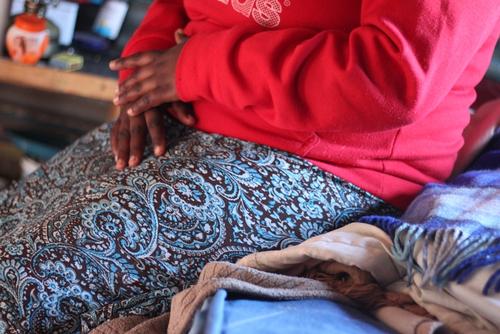
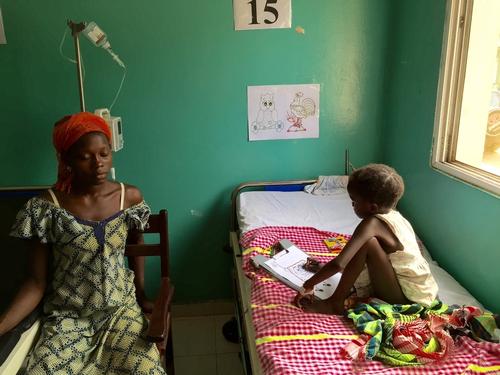
Four mothers posing in a corridor of the Hospital in Bili. All four of them are staying in the hospital with their child, that's suffering from a severe case of malaria. Since the beginning of the project in 2016, the pediatric ward already treated more than 4.000 cases of complicated/severe form of malaria.
Médecins Sans Frontières (MSF)

Independent medical humanitarian assistance

We provide medical assistance to people affected by conflict, epidemics, disasters, or exclusion from healthcare. Our teams are made up of tens of thousands of health professionals, logistic and administrative staff - most of them hired locally. Our actions are guided by medical ethics and the principles of independence and impartiality. We are a non-profit, self-governed, member-based organisation.

Learn more