



8077 Results
 
MSF providing individual mental health support for victims of floods in Abalack, Niger.
Niger

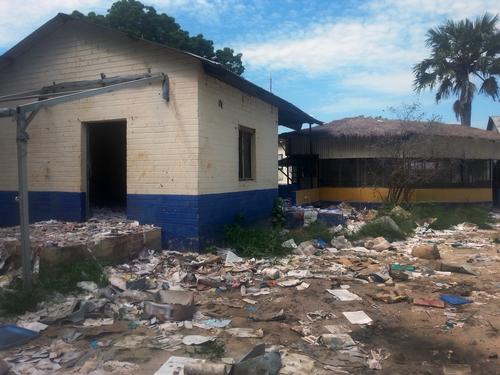
Floods leave hundreds of families homeless with increased risk of disease

“We see that the families in this area, who are already have very little, have now lost everything. Despite the presence of government health facilities, many parents do not have the money for treatment for such illnesses as respiratory infections, diarrhoea and skin diseases,” said Adolphe Masudi, MSF project manager for this intervention. Project Update - 26 Aug 2016
 
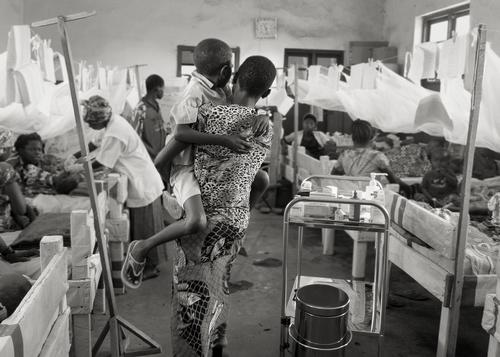
MSF just ended its emergency intervention in North East DRC, Haut-Uélé province. After three months of intervention, our medical teams, in collaboration with the Ministry of Health, supported nearly 82,000 patients infected with malaria, the majority being children under five. The emergency phase is over, and the malaria outbreak is now under control. In three months, our medical teams, in collaboration with the Ministry of Health, supported nearly 82,000 patients infected with malaria, the majority being children under five.
Malaria

Malaria outbreak now under control, MSF withdraws from Haut-Uélé province

Interview with Florent Uzzeni, deputy head of MSF’s emergency unit in Geneva, Switzerland Voices from the Field - 26 Aug 2016
 
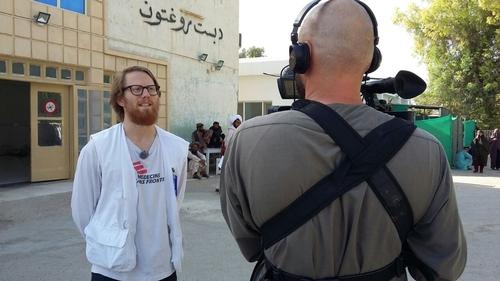
MSF's Dr Erlend Grønningen outside of Boost hospital, Lashkar Gah, Helmand Province
Afghanistan

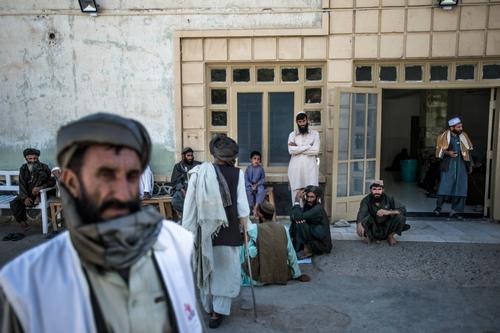
Empty beds are the face of war

By Dr Erlend Grønningen, inpatient department supervising medical doctor at Boost Hospital in Lashkar Gah, Helmand Voices from the Field - 26 Aug 2016
 
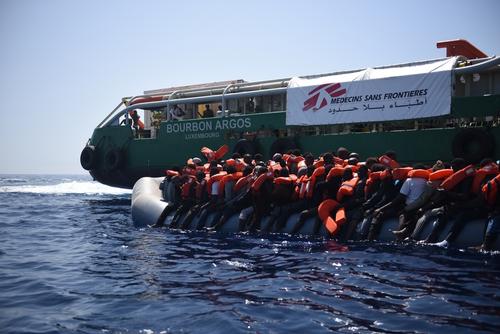
23rd may 2016. Three boats containing approximately 150 people each were rescued in the Mediterranean Sea by the Bourbon Argos and taken to Sicily, Italy.
Mediterranean migration

MSF condemns attack on rescue vessel

Statement - 25 Aug 2016
 
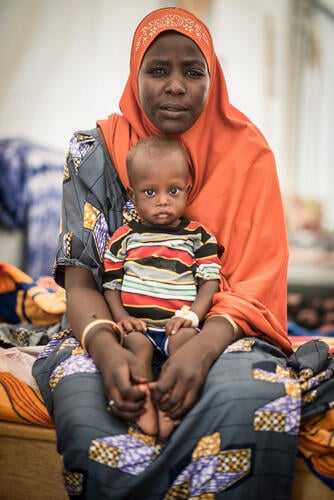
Fanne holds her 8-month old son Mallum Abba. He weighs 5,4 kg and is receiving treatment for malnutrition at MSF's inpatient therapeutic feeding centre in Ngala.
Nigeria

Video: Testimonies from displaced women in Maiduguri, Nigeria

Voices from the Field - 23 Aug 2016
 
Amina Story 7/7

Amina is 15 years old, she looks like she has the weight of the world on her shoulders. Her small frame shrinks further in size as she talks about what she has experienced.

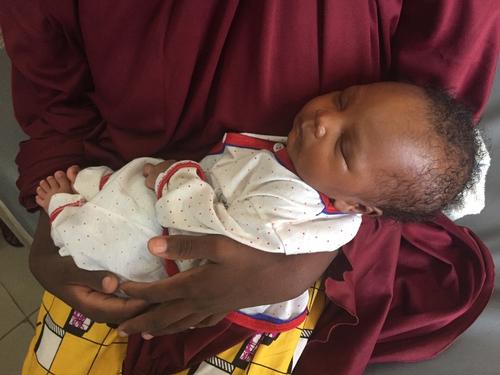
Sleeping on the hospital bed besides her is her son Yaqub, who she gave birth to a few days ago in MSF‘s health facility in Maimusari, 15 kilometres from the centre of Maiduguri, the capital of Borno State, north east Nigeria.

The MSF health centre in Maimusari is heaving with women and children, everwhere you look women are huddled holding their babies or seated on benches waiting to be seen by health workers.

I say women, but many of the faces in the crowd are teenager girls similar in age to Amina. Some of these girls have given birth to their second or third child. 

More than five hundred women and babies are being treated in this MSF health facility daily and more than seventy babies are delivered every week. 

MSF runs an In Patient and Out Patient Department,  maternity and ante natal services and an Ambulatory Theraputic Feeding Centre – ATFC. This is where malnourished  children and babies are provided with threaputic treatment. 

Amina says she is her husbands second wife, he has five children from his first wife, Amina says she has no idea where he is and he has yet to meet their newborn son. 

Amina is from Bama, a town in north east Nigeria. 
Bama is one of the frontlines in the ongoing conflict between the Nigerian army and Boko Haram that has left more than one million displaced and facing a growing nutrition crisis. 

Amina was evacuated from Bama and refered to MSF‘s health facility in Maimusari. The journey by road takes two and a half hours, the road is in poor condition and dangerous because it is part dotted with military checkpoints and is close to the Sambisa Forest in Gwozah, where Boko Haram are said to have a base. 

“I don‘t remember the journey from Bama to Maiduguri because I was in so much pain I had passed out. My youngest sister, Noor, aged five acompanied me on the journey. Was I scared ? I have spent my whole life being scared and so this was no different“ says Amina.

“It is very hard to be a girl here. Many bad things happen to girls, unspeakable things happen and they start happening to little girls as young as ten“ Amina twists the fabric of her dress as she talks and looks away frequentky trying to avoid eye contact with the nurse in the room. 

“What can I tell you ? It is impossible for me to talk about these things. “

I ask her how she feels about being a mother?

She shrugs her shoulders and then leans back and looks in to the distance.

In the same room as Amina there are two women on each bed with their newborns. 

The older looking mothers handle their children with more experience and attachment, holding their babies close as they breastfeed them. 

In one bed there are twins nestling into the blankets they’re laid out on. Many of the new mothers have expresionless faces. They look utterly exhusted.

Fatima,  35, has given birth to her sixth child, she says her baby was deliverd safely by MSF and she is thankful that she had somewhere to turn to in her time of need. 

“I felt safe here and knew that I would get good care and my baby would be healthy. I do not know what tomorrow will bring and all I can do is hope for the best for my child and all the children.“

MSF midwife Etsuko Nakamura is doing the rounds in the health centre. 

In the delivery room a woman has just given birth and has a retained placenta which can be life threatening as it can cause infection. Nurses masage her uterus to try and encourage the placenta to discharge. 

Another woman is in labour and the staff are preparing for her delivery.

“Our women patients are mostly in poor general health and for most it is very difficult for them to get to see a doctor because they don’t have the money or their family members do not see it as a priority,“ says  MSF midwife Etsuko.

“We deliever up to fifteen babies daily, many of the women have had repeat pregnancies and deliveries in a short space of time – their bodies are weak and exhausted. 

As always with our work  we see the dailly impact of conflict and poverty. We see how women and children’s lives are made harder by violence and instability. 

It is the women and children who are the most vulnerable and suffer the most,“ says Etsuko.
Nigeria

Amina, a 15-year-old mother in Maiduguri

“Our women patients are mostly in poor general health, and for most it is very difficult for them to get to see a doctor because they don’t have the money or their family members do not see it as a priority,” explains Etsuko Nakamura. Voices from the Field - 18 Aug 2016
Four mothers posing in a corridor of the Hospital in Bili. All four of them are staying in the hospital with their child, that's suffering from a severe case of malaria. Since the beginning of the project in 2016, the pediatric ward already treated more than 4.000 cases of complicated/severe form of malaria.
Médecins Sans Frontières (MSF)

Independent medical humanitarian assistance

We provide medical assistance to people affected by conflict, epidemics, disasters, or exclusion from healthcare. Our teams are made up of tens of thousands of health professionals, logistic and administrative staff - most of them hired locally. Our actions are guided by medical ethics and the principles of independence and impartiality. We are a non-profit, self-governed, member-based organisation.

Learn more