



Ebola disease in DRC: find out how we're responding
Learn more
7998 Results
 
On Sunday and Monday MSF teams ran mobile clinics around the UN base, treating 160 and 174 people respectively. People were much sicker than we would have expected, the impact of months of ongoing insecurity. Main morbidities are malaria (due to the rainy season and limited access to bed nets), malnutrition (it is the traditional hunger gap period, but due to the conflict people have not been able to cultivate), diarrhea and upper respiratory tract infections. We also treated gunshot wounds and women who had been raped. 
 
Yesterday we shipped in two plane loads of supplies including therapeutic food, rape kits and dressings. Today our teams have handed over our activities in the UN base so that we can move further south to find those people who have been pushed further away by the fighting. We will continue to respond to the situation as it evolves.
South Sudan

Heavy fighting in Wau causing new displacement crisis

Dr David Kahindi, Deputy Medical Coordinator for MSF, has been working in South Sudan for more than three years. He recently arrived in Wau where he has been overseeing MSF’s emergency response. Voices from the Field - 29 Jun 2016
 
Many diseases spread with malnutrition. MSF was engaged in vaccination programmes alongside its other regular activities.
Ethiopia

Two years of drought followed by floods challenge the pastoral way of life

The eastern Ethiopian regions of Afar and Sitti are dry and inhospitable places for much of the year. Yet this is where many pastoralists live, moving from place to place, searching for water and pasture to feed their precious livestock. Project Update - 27 Jun 2016
 
Mahmud,  25, from Rawa in Syria leans on his crutches in the corridor of the Al-Mowasah Hospital in Amman. He admits that he is a militant from the Free Syrian Army and was wounded 02 April 2013 when a bullet shattered his right leg. He says that before joining the opposition group he was detained and tortured by the government.
Greece

Helping Victims of Violence' move on with their lives

Voices from the Field - 24 Jun 2016
 
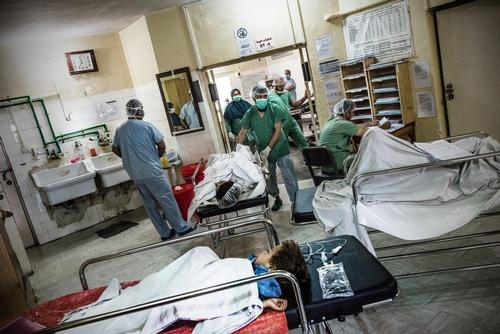
A surgery at MSF´s Al Salamah hospital in Azaz district in northern Syria. The 52 bed hospital includes an ER, an operating theatre,outpatient and inpatient services, including maternity care. It is the largest directly run MSF facility still inside Syria, managed by nearly 150 Syrian staff. Azaz district has seen new waves of displaced people arrive in recent months, and now an estimated 100,000 people are trapped in the area between shifting frontlines and the closed Turkish border. MSF teams travel out to displaced persons camps and surrounding areas to bring back patients, and MSF also provides distributions of emergency relief items. In May the hospital was forced to close when frontlines came too close, since June it has reopened only for emergency cases and surgeries.
Syria

MSF staff on working at Al Salamah hospital, Azaz

“I had the opportunity to work in Germany but I refused,” says Thurayia Zein Al Abideen, a paediatrician at MSF’s Al Salamah hospital in Azaz district, northern Syria. “I want to work in Syria, because people need us and we are facing a huge shortage of doctors.” Voices from the Field - 23 Jun 2016
 
"This is the first time MSF has been able to access Bama, but we already know the needs of the people there are beyond critical,” said Ghada Hatim, MSF head of mission in Nigeria. “We are treating malnourished children in medical facilities in Maiduguri and see the trauma on the faces of our patients who have witnessed and survived many horrors.” 

During its assessment, the MSF team counted 1233 cemetery graves located near the camp which had been dug in the past year. Many of those graves—480—were of children
“Bama is largely closed off,” said Hatim. “We have been told that people including children there half starved to death. According to the accounts given to MSF by displaced people in Bama new graves are appearing on a daily basis. We were told more than 30 people are dying a day due to hunger and illness.”
Nigeria

At least 24,000 displaced people in dire health situation in Bama

Critical humanitarian needs identified for displaced in Bama, Borno State, Nigeria Press Release - 22 Jun 2016
 
MSF lab-tech Fabiola looks at a suspected case of sleeping sickness under the microscope in MSFâ??s mobile laboratory. She is looking for signs of the parasite in the blood sample.
MSF Scientific Day

MSF Scientific Days 2016

The MSF Scientific Days 2016 took place on 20 and 21 May 2016 in London, New Delhi and Johannesburg. Event - 22 Jun 2016
 
Malakal: MSF teams in Malakal worked through the nights of Wednesday and Thursday to deal with injured patients after fighting erupted in the Protection of Civilians (PoC) site on Wednesday that resulted in 18 people dead, two of them MSF South Sudanese staff members. Seventy-three patients have been admitted so far to the hospital, 46 of them with gunshot wounds. One of MSF’s main concerns is the fate of 43,000 internally displaced people (IDPs) who took shelter in the UNMISS compound. They have been squeezed into a very tight area and access to water and sanitation is of real concern. MSF does not know how long they will be permitted to remain in the facility.
South Sudan

Report details UN's failures in protecting civilians in Malakal

MSF releases a report on the response to February Malakal PoC attack Press Release - 22 Jun 2016
 
MSF mobile clinic in Gari Wanzam where thousands of newly displaced people from Bosso district have have sought refuge in the last days.
Niger

Humanitarian aid is barely in place in the Diffa region

MSF delivers water supplies and provides healthcare to people recently displaced by violence in the southeast of Niger. Project Update - 21 Jun 2016
 
95% of the patients who are coming to the health facilities in Pawa and Boma-Mangbetu areas are tested positive to malaria. After one month of intervention, 40000 patients have been taken care of.
Democratic Republic of Congo

40,000 people treated for malaria as disease surges

Project Update - 21 Jun 2016
 
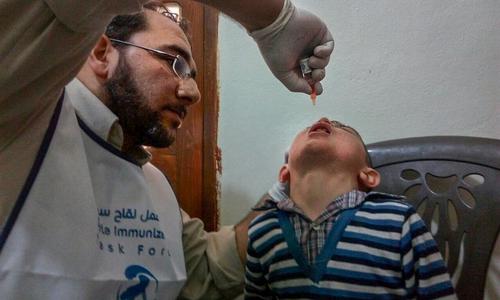
In February, the government announced measles, rubella and rabies epidemics. In response, MSF organised three mass measles vaccination campaigns for children under 15 in the town of Bria, at the displaced people camp in Batangafo, as well as in Batangafo town and the cities of Nzako and Bakouma. By the end of March, 33,000 children had been vaccinated.

International Financial Report 2015

Annual Report - 20 Jun 2016
Four mothers posing in a corridor of the Hospital in Bili. All four of them are staying in the hospital with their child, that's suffering from a severe case of malaria. Since the beginning of the project in 2016, the pediatric ward already treated more than 4.000 cases of complicated/severe form of malaria.
Médecins Sans Frontières (MSF)

Independent medical humanitarian assistance

We provide medical assistance to people affected by conflict, epidemics, disasters, or exclusion from healthcare. Our teams are made up of tens of thousands of health professionals, logistic and administrative staff - most of them hired locally. Our actions are guided by medical ethics and the principles of independence and impartiality. We are a non-profit, self-governed, member-based organisation.

Learn more