



Ebola disease in DRC: find out how we're responding
Learn more
7998 Results
 
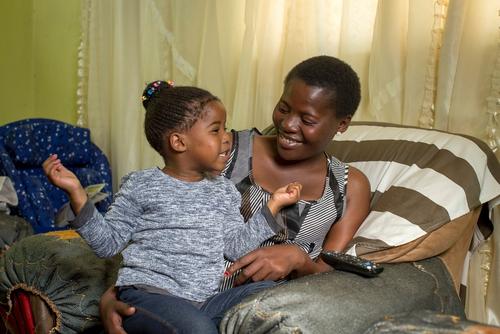
Zara Abba, 32, from the capital of Chad, N’djamena, has been in the MSF intensive care unit in Bokoro town for four days. She is there with her granddaughter, Katalma Moussa who is two years old. 
Zara Abba was visiting Bokoro to pay her respects to a family member who'd died when her granddaughter fell ill. “She hadn’t put much weight on for a while and then she started to get diarrhoea and her health got even worse. She hasn’t had any energy to be able to play with other children.”
“This is my daughter’s first child. She’s still in N’djamena but I’ve been speaking to her every day. She calls to ask about the health of her daughter. I say her daughter is getting better. MSF have gone above and beyond to help your daughter. They’ve worked really hard.”
Zara Abba also has a two year old daughter of her own. “I would travel all the way to France for my children’s health.” She says. “I have given birth to 15 children. Seven of them have died and eight are still living. Two of them were twins and they died on the same day they were born. The others, I don’t know why, it was God’s choice.”
Chad

Patient stories, malnutrition in Bokoro region

Severe malnutrition is very common among babies and young children in Chad and often relatives may not be aware of the severity of their child’s illness because it’s what they’re used to seeing. In addition, there are few health services in Chad and they often don’t have the necessary medicine, so relatives don’t always seek help. Voices from the Field - 15 Sep 2016
 
msf-placeholder
Access to medicines

The naked truth

Project Update - 14 Sep 2016
 
A nurse verifies blood-type compatibility before administering a blood transfusion to eight-year-old Adut Chuor Kujal, who is receiving treatment for cerebral malaria in the inpatient ward at the MSF hospital in Aweil city. Adut's father presses down on her fingertip which had been pricked to obtain a blood sample. Adut's family lives in a remote rural village and Adut had been sick for several days before her father made the journey to the MSF hospital at Aweil city.  He first took her to a private clinic closer to their home, but it had no malaria drugs in stock.
Access to medicines

MSF urges governments to set medical research policies that align with people’s health needs

“People in poor and wealthy countries alike are now finding that the medicines they need either don’t exist, or are priced so high they can’t afford them, and governments need to solve these problems,” said Katy Athersuch, Medical Access and Innovation Policy Advisor of MSF’s Access Campaign. Press Release - 13 Sep 2016
 
 *** Local Caption *** MSF has been working in the hospital in Paoua (173 beds) since 2006. Working alongside the Ministry of Health, our activities include emergency care, outpatient and inpatient treatment, internal medicine, paediatrics, obstetrics/maternity, HIV-AIDS and tuberculosis treatment, surgery and routine vaccination. MSF also supports a health centre in the town. Between March (when MSF took over the emergency room at the hospital) and October 2014, 9,640 consultations were provided at the hospital and 50,617 in the surrounding areas, 103 of which were for violence-related injuries. In total, an average of 59% of consultations concerned children under five and 76% were for malaria. There were 6,489 patients hospitalised in Paoua, including 1,208 suffering from malaria in the paediatric unit and 123 with violence-related injuries. Also, 1,976 surgical procedures were performed, 329 for violence-related injuries, and 1,213 children were admitted to our nutrition programme. MSF provided 7,890 antenatal consultations, assisted 1,354 natural deliveries and performed 128 caesareans. There were 6,148 children vaccinated against measles. MSF is treating 13,288 patients with HIV/AIDS and 8,730 are on antiretroviral treatment.
Central African Republic

Providing guidance to ensure high quality care

Voices from the Field - 13 Sep 2016
 
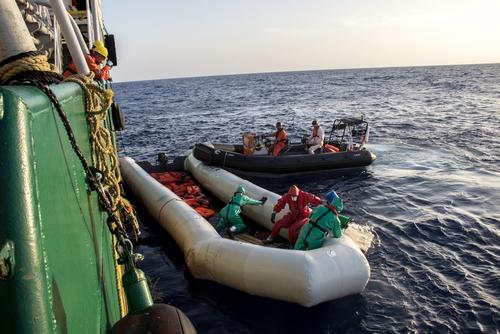
On Monday September 12, at 0700 ships time, a healthy baby boy was born on board MV Aquarius, a search and rescue vessel run in partnership between MSF and SOS MEDITERRANEE. He was born in international waters to Nigerian parents who named him Newman Otas.
Mother Faith recounts “I was very stressed on the rubber boat, sitting on the floor of the boat with the other women and children. Panicking that I would go into labor. I could feel my baby moving, he would move down and then move back up again. I had been having contractions for three days.”
 
MSF Midwife Jonquil Nicholl delivered the baby “A very normal birth in dangerously abnormal conditions. I am filled with horror at the thought of what would have happened if this baby had arrived 24 hours earlier; in that unseaworthy rubber boat, with fuel on the bottom where the women sit, crammed in with no space to move, at the mercy of the sea.  And 48 hours previously they were waiting on a beach in Libya not knowing what was ahead of them. How can this still this still happen in 2016? That families, vulnerable people, pregnant women, tiny babies and unborn babies are forced to risk their lives in the Mediterranean Sea when they should be receiving  assistance and protection.”
Mediterranean migration

A very normal birth in dangerously abnormal conditions

On 12 September, a healthy baby boy was born on board MV Aquarius, a search and rescue vessel run in partnership between MSF and SOS Méditerranée. He was born in international waters to Nigerian parents, who named their baby Newman Otas.

Project Update - 12 Sep 2016
 
More than 200 families from Nigeria and Chad have reached the town of Toumour, located in east Diffa region, in recent days fleeing violence and hunger in their hometowns. 77 of the families newly arrived in Toumour lived in very poor conditions, without enough food and any good. To alleviate this situation, an MSF team has distributed NFI kits for these 77 families.
Niger

MSF assists hundreds of newly displaced people in eastern Diffa

“Given the critical situation in the areas of Nigeria and Chad that border Niger, it is likely that Toumour will continue to receive more refugees in such a precarious condition as this last group,” explains Youssouf Demdelé, MSF’s deputy head of mission in Niger. Project Update - 9 Sep 2016
 
MSF Medical team leader, Crystal Vanleeuwen in front of the outpatient department in Al-Thawra hospital in the besieged area of Taiz. A siege has been imposed on the city by Houthis since late August 2015. MSF was not able to enter medical aid into the enclave area for five months. Only on January 16th, MSF got the authorization and delivered medical aid to Al-Thawra hospital inside the enclave area.
Yemen

Healthcare at breaking point

"In the public hospitals that are still functioning in Yemen, beds are full – those people who are able come from all over the country to access what medical care is available," says Crystal van Leeuwen, an MSF nurse. "For others, all that remains are private clinics that, in the current economic crisis, people can barely afford." Voices from the Field - 9 Sep 2016
Four mothers posing in a corridor of the Hospital in Bili. All four of them are staying in the hospital with their child, that's suffering from a severe case of malaria. Since the beginning of the project in 2016, the pediatric ward already treated more than 4.000 cases of complicated/severe form of malaria.
Médecins Sans Frontières (MSF)

Independent medical humanitarian assistance

We provide medical assistance to people affected by conflict, epidemics, disasters, or exclusion from healthcare. Our teams are made up of tens of thousands of health professionals, logistic and administrative staff - most of them hired locally. Our actions are guided by medical ethics and the principles of independence and impartiality. We are a non-profit, self-governed, member-based organisation.

Learn more