



Ebola disease in DRC: find out how we're responding
Learn more
7998 Results
 
Since the closure of the Jordan/Syria borders on 21 June, war-wounded Syrians have been systematically denied entry through Jordan’s northwestern borders to Ramtha hospital, where MSF runs an emergency trauma surgical project to treat those injured in the ongoing conflict in Syria. What was once a busy hospital has been left with very few patients, yet MSF operations continue at same speed to attend to the medical needs of war-wounded Syrians.
Jordan

You are so close, yet so very far because you are unable to reach those in need

By Hardik Vyas, otherwise known as “Tonny”, a surgeon at MSF’s Ramtha emergency surgical project Voices from the Field - 9 Sep 2016
 
Mustafa is a volunteer in one of MSF supported hospitals in the city of Aleppo
Syria

We cannot go and leave our people behind; we do not have the right to leave them alone

Mustafa Karaman volunteers as a physiotherapist in one of the only eight functional hospitals in east Aleppo, where 250,000 people are now living under siege and constant bombing, and medical staff like Mustafa are fighting a daily struggle to care for the sick and the wounded. Voices from the Field - 9 Sep 2016
 
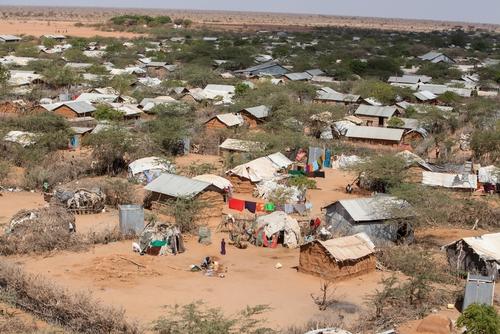
There are an estimated 15,000 people in Bama camp – most of these people are women and children under the age of five. People are living inside a camp surrounded by the Nigerian army. Boko Haram fighters are stationed a few killometres away from Bama camp, the town is empty, and it is like a ghost town. The only people who remain in Bama are inside the camp. 

We returned to Bama on August 17th to carry out our emergency response. We reached a total number of 3,293 children under the age of five. We treated 513 malnourished children (4.2% have severe malnutrition and 10.9% have moderate malnutrition).  
Our operational aim was to reduce morbidity and mortality among children under the age of five by providing treatment and food for one month.
We took Non Food Items (mosquito nets, soap), therapeutic food for malnourished children (plumpy nut) and a food blanket ration targeting malnourished children’s household (oil, emergency food, rations and beans). 
We started our distribution at 7am and there were people as far we could see. There were lines and lines of women and children. We screened the children for malnutrition as we distributed the items. 
Our operation strategy is to return to Bama every month for the next two months. 

There is an Outpatient clinic run by the Ministry of Health and UNICEF but very few patients go to the clinic because there are not enough medicines there. In addition the Nigerian Air Force opened few days ago an hospital in front of the camp’s entrance. 

Most people in the camp live in make shift corrugated iron shelters – with sheets of metal not offering much protection against the rain or elements. 
Now some people have plastic sheeting on their shelters and tents but there are no windows so it’s very hot inside these shelters and they’re not sustainable. There is also an issue around water. There isn’t enough water for the number of people in the camp. here is nine bore holes in the camp and only seven are functioning, this is not covering the needs of the 15,000 people in the camp.
Nigeria

Malnutrition is the biggest problem in Bama

Interview with MSF project coordinator Hakim Khaldi Voices from the Field - 7 Sep 2016
 
msf-placeholder
South Sudan

Patient story - Nyajuba

Nya is one of the 201 patients who received surgery from MSF following the recent clashes in South Sudan, 54 of which were major operations. Voices from the Field - 5 Sep 2016
 
An MSF team is installing solar panels on the roof of Shamwana hospital, to make sure electricity remains on in the hospital and keeps the cold chain running. The sustainable and environmentally friendly solution will replace approximately 1,000
litres of diesel per month.
Democratic Republic of Congo

Lights off... and on again! Solar energy for a sustainable Shamwana

Project Update - 5 Sep 2016
Humanitarian challenges

Saving Lives and Staying Alive

In Saving Lives and Staying Alive, the authors look at the drivers of the professionalisation of humanitarian security and its impact on humanitarian practices, with a specific focus on Syria, the Central African Republic and kidnapping in the Caucasus. Book - 5 Sep 2016
 
This baby girl was born premature at 30 weeks, about 7 weeks to early. She weighed 1860 grams and had to be resuscitated, she had amniotic fluid in her lungs.  She is the 6th daughter of her mother Veronique Francil (36), and she was delivered through a c-section. Veronique says she was sterilized at her own request when they performed the c-section. Her husband decided this. He would like to have a son, but thinks she should stop trying to have babies. Veronique is afraid he will now find a new wife.
Website

MSF Paediatric Days

MSF Paediatric Days is an annual event for paediatric field staff, policy makers and academia to exchange ideas, align efforts, inspire and share frontline research to advance urgent paediatric issues of direct concern for the humanitarian field. paediatrics.msf.org/
Four mothers posing in a corridor of the Hospital in Bili. All four of them are staying in the hospital with their child, that's suffering from a severe case of malaria. Since the beginning of the project in 2016, the pediatric ward already treated more than 4.000 cases of complicated/severe form of malaria.
Médecins Sans Frontières (MSF)

Independent medical humanitarian assistance

We provide medical assistance to people affected by conflict, epidemics, disasters, or exclusion from healthcare. Our teams are made up of tens of thousands of health professionals, logistic and administrative staff - most of them hired locally. Our actions are guided by medical ethics and the principles of independence and impartiality. We are a non-profit, self-governed, member-based organisation.

Learn more