



Ebola disease in DRC: find out how we're responding
Learn more
7998 Results
 
View to the bay of Tumaco from the urban center.
Colombia

Malaria caused by the falciparum parasite spreading throughout country

By Ana Zaratiegui, MSF’s head of medical operations in in Latin America Project Update - 15 Aug 2016
 
Patients waiting for their operations. Boost hospital is run by MSF in partnership with the Ministry of Public Health. It is one of the biggest MSF runs worldwide: 300 beds, 700 national staff, 25 international staff.
Afghanistan

Patient numbers falling in Helmand as intensifying conflict restricts access

“The intensification and proximity of fighting is clearly limiting access to the hospital,” said Guilhem Molinie, MSF's Country Representative in Afghanistan. “In the immediate aftermath of fighting, one in four patients are currently unable to reach our Emergency Room.” Project Update - 12 Aug 2016
 
53 year old Jean-Pièrre in Zemio in the far southeast of the Central African Republic. Jean-Pièrre is from the Democratic Republic of the Congo. After the war in Congo in 2012, Jean-Pièrre was in bad health. He was tired and weak, unable to work. He knew he needed to be tested for HIV, but the closest testing center in Congo was over 400 kilometers away. That’s when he decided to come to Zémio, which, at 132 kilometers away, was much closer but across the border in the Central African Republic. His brother carried him across the border on a bike for 5 days. When he arrived at MSF’s clinic in Zemio, he was diagnosed with and began treatment for HIV.
Central African Republic

MSF nurse speaks with patients from HIV programme in Zémio

In these two stories, Keri Geiger, an MSF nurse in Zémio, speaks with two patients from the HIV programme. Jean Pierre, while gravely ill, was carried on a bike by his brother for more than 130 kilometres to the centre, over the border from Congo. Gisele was one of MSF’s first patients in Zémio. Project Update - 12 Aug 2016
 
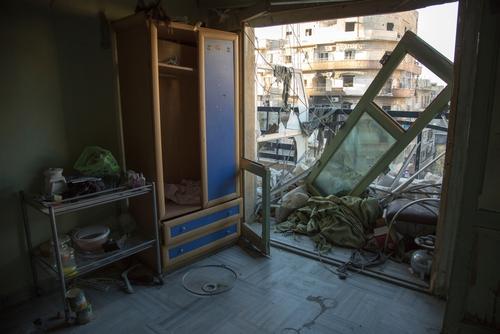
Dr.Hussein treating a child in an MSF supported hospital in east Aleppo
Syria

People are scared to go to hospitals

Interview with Dr Hussein, a Syrian doctor who manages an MSF-supported hospital in east Aleppo Voices from the Field - 11 Aug 2016
 
In a nightmarish day on the Mediterranean yesterday, 99 survivors from a sinking rubber boat were rescued by the Aquarius, a search and rescue vessel run by Médecins Sans Frontières (MSF) and SOS MEDITERRANEE, but an unknown number of men, women and children are missing, presumed drowned. Two women are confirmed dead.

“The scene was devastating, with many urgent medical cases in quick succession. They just kept coming, one after another, unconscious and not breathing,” said MSF nurse Aoife Ni Mhurchu. 

Dozens of people were already in the sea when the Aquarius arrived at the scene around 9.30am, and the rubber boat was already deflating. All floating devices were deployed from Aquarius, rafts were launched and the rescue team started pulling people from the sea. 

The MSF medical team on board the Aquarius resuscitated six young children, and one woman. Despite their best efforts they were unable to resuscitate two other women who had drowned. 

“It is absolutely heartbreaking. These women were mothers. We’re now trying to care for their very young children who remain onboard Aquarius” said Ni Mhurchu.

All medical emergencies together with their caretakers were evacuated from Aquarius by an Italian Navy Helicopter to Sfax, Tunisia – a total of sixteen people. This included all six resuscitated children and several women with water on their lungs. The MSF medical team also treated many severe fuel burns, as well as over a dozen mild to moderate hypothermia cases. Many survivors were disorientated and confused as a result of inhaling fuel which had leaked into the rubber boat.
Refugees, IDPs and people on the move

Humanitarianism and the Migration Crisis

"Humanitarianism and the Migration Crisis" is a collection of articles reflecting on the experiences of Médecins Sans Frontières (MSF) as we grapple with the implications of the global refugee ‘crisis’. Journal article - 11 Aug 2016
 
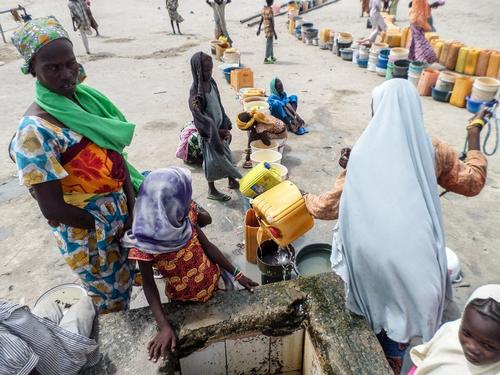
Dayo, 31, was referred to Mora Hospital in Cameroon in late July by MSF teams in Banki, Nigeria.

 She accompanied her sick four year-old son, Barine. The child urgently needed to be admitted to hospital as he was suffering from severe acute malnutrition.
Nigeria

We are scared to return

Patient testimonies from Banki Voices from the Field - 11 Aug 2016
 
A Syrian refugee child sits next to his grandmother while peeling eggplant for dinner, outside their tent at an informal tented settlement near the Syrian border on the outskirts of Mafraq, Jordan. The number of Syrian refugees stranded in a remote desert area known as "the berm," on the Jordanian border has tripled to 12,000 since last month, the U.N. refugee agency said Tuesday, Dec. 8, 2015.
Jordan

People in the Berm are stuck between life and death

By Dr Natalie Thurtle, MSF emergency doctor Voices from the Field - 11 Aug 2016
 
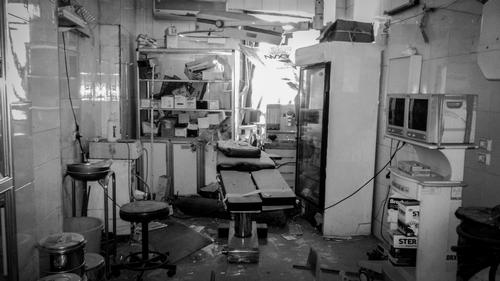
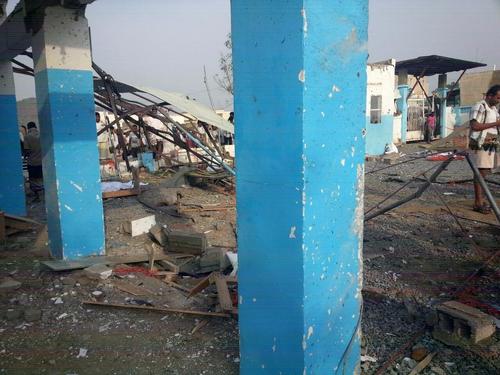
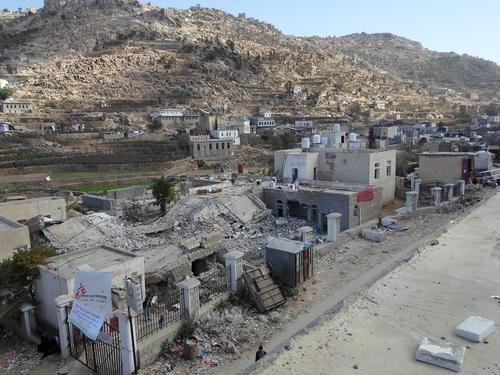
The MSF-supported hospital in Ma’arat Al Numan before it was attacked and destroyed on Monday 15th Feb. At least 25 people were killed, including nine staff members.
The 30-bed hospital  had 54 staff, two operating theatres, an outpatient department and an emergency room. The outpatient department treated around 1500 people a month, the ER carried out an average of 1,100 consultations a month, and around 140 operations a month, mainly orthopaedic and general surgery, were carried out in the operating theatres.

MSF has been supporting this hospital since September 2015 and covered all the needs of the facility including provision of medical supplies and running costs.
Syria

Providing healthcare in communities affected by conflict and violence in northern Syria

Jason Mills, former MSF Syria head of mission, describes our work to develop an alternative solution to providing healthcare for internally displaced Syrians and host communities in urgent need of assistance. Project Update - 10 Aug 2016
 
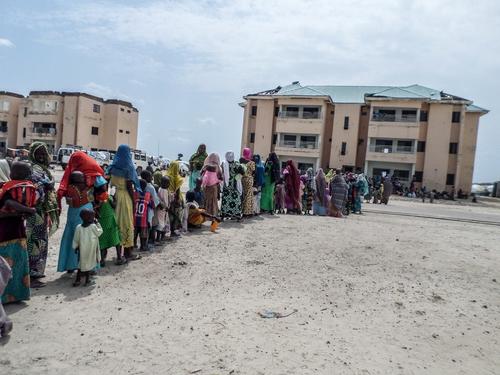
Muna camp in Maiduguri.
Nigeria

Crisis Info on Borno emergency - August 2016

Project Update - 10 Aug 2016
Four mothers posing in a corridor of the Hospital in Bili. All four of them are staying in the hospital with their child, that's suffering from a severe case of malaria. Since the beginning of the project in 2016, the pediatric ward already treated more than 4.000 cases of complicated/severe form of malaria.
Médecins Sans Frontières (MSF)

Independent medical humanitarian assistance

We provide medical assistance to people affected by conflict, epidemics, disasters, or exclusion from healthcare. Our teams are made up of tens of thousands of health professionals, logistic and administrative staff - most of them hired locally. Our actions are guided by medical ethics and the principles of independence and impartiality. We are a non-profit, self-governed, member-based organisation.

Learn more