


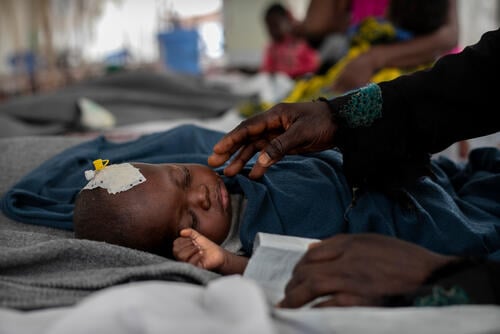
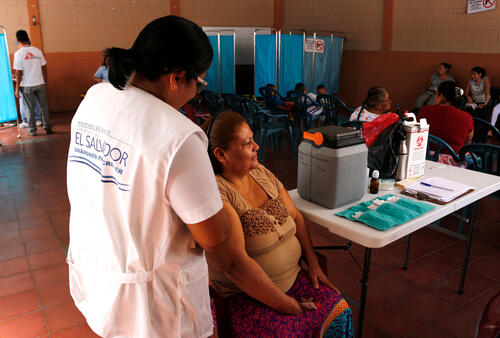

Ebola disease in DRC: find out how we're responding
Learn more
7996 Results
 
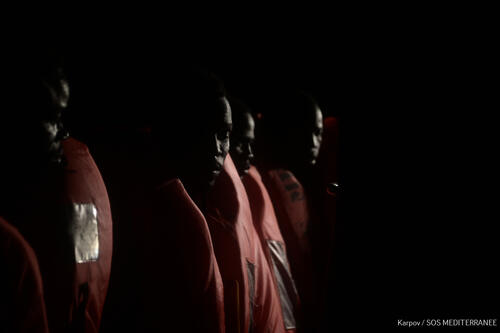
A shipwreck survivor in detention centre.
His testimony : “The sun was really strong and the boat started to deflate. All the babies died. How can we stay so many hours in the water without being rescued? People started to drink salty water. Why they left us die at sea?”
Libya

Trapped refugees must be released and granted safety from Tripoli fighting

Fighting that has broken out in Tripoli, Libya, over the last week, has trapped and further endangered the lives of refugees and migrants who are being held in detention centres. We call for their immediate release to a place of safety. Project Update - 11 Apr 2019
 
The remains of Ngangu village in Chimanimani, eastern Zimbabwe where many people were affected by cyclone Idai. MSF is working with the Ministry of Health and Child Care and partners to provide medical assistance where needed including treating trauma & providing medication for those who lost theirs in floods. Many residents lost their medications in the floods, in addition to their homes and livelihoods.
Cyclone Idai & Southern Africa flooding

Chimanimani: A community in distress after Cyclone Idai

Nearly a month since Cyclone Idai tore through parts of Manicaland province, Zimbabwe, communities around Chimanimani are still struggling to come to terms with with the destruction the cyclone caused. MSF teams are there to help. Project Update - 10 Apr 2019
 
Saif is nine years old. He injured his leg at school. He is being treated at MSF’s post-operative care facility, in East Mosul. This is his testimony: 
“A year and a half ago, my family and I left my village because it had become too dangerous to live there. With my three brothers and my mother, we went to live in a camp for displaced people. Life in the camp was not easy, but I was still happy because I got to go to school. Then one day, another boy at school through a big rock at me and it broke my leg. First, my mum took me to a hospital in Qayyarah. The doctors there operated on me twice. Then they sent me here, to this hospital in Mosul [the MSF post-operative hospital]. That was almost a month ago. I have had two more operations since I arrived here. My leg is getting better, but very slowly. The doctors tell me it is taking longer because I have bacteria in my body. And these bacteria make it harder for my leg to become normal again. The bacteria can hurt other people too, so the doctors put me in this isolation room and I have to wear a green gown when I go outside. But I like this hospital. I spend a lot of time with the nurses. We draw together and they are teaching me the alphabet; I already know how to write all the letters. It helps make the time pass by faster. When I am bored, I call my brothers on my mum’s phone and show them all the games I get to play here. But still, I am impatient to go back to school. I don’t know how long I’ll stay here; it depends on when my leg is healed.”
Iraq

A year of post-operative care in Mosul

In the aftermath of the battle of Mosul, Iraq, war-wounded people, including children, needed reliable post-operative care. In response, MSF established a post-operative care facility in the city a year ago. These are the patient stories and the challenges we face. Project Update - 10 Apr 2019
 
Alaa al-Share’

Worked with MSF: since 2014
Worked as nurse: 13 years 

	Why did you choose nursing?
Nursing is not just a day-to-day job. Being a nurse means being a teacher, an advocate, a care-giver, critical thinker and innovator. It means treating patients and colleagues with dignity.


	What does it mean to be a nurse?
“Being a nurse means sleepless nights, vital signs, and long hours by the bed side. It means working hard to provide high quality care to all patients and treating them with dignity. Nurses are the heart and soul of the healthcare system.” 


	What motivates you to come to work every day, and to Irbid NCDs project?
“What motivates me to come to work every day is the ability to help people, and contribute to any improvement in their health condition. Working with MSF in the non-communicable diseases project gave me the chance to help refugees, learn about their suffering and see their smiles when their examination results are satisfactory. It is a reason enough to wake up every morning to hurry to work. Every single detail about a patient story can make a difference in a nurse’s life.”


	Do you act as a nurse in your home just like in work?
I am also a nurse at home. I always try to promote a healthy lifestyle for my family. I cannot disconnect from this reality, I act as a nurse wherever I am, and I am proud to be one.”
Child health

“Children with chronic diseases need our attention”

While children with chronic diseases – such as heart disease, diabetes, asthma, and epilepsy – are not the majority of MSF's paediatric patients, the needs of these children equally need attention and treatment. Interview - 9 Apr 2019
 
At the village of Biaro. The Zairian Red Cross are present (brought here by the rebels of Kabila, who want to make sure the bodies are burried as fast as possible, fearing typhus epidemic) and make a count of all the orphans: above 1000 children. They are lined up along the railway tracks.Tens of thousands of Rwandan Hutu refugees, (they all come from the refugee camps of Goma and Bukavu), fleeing the Zairian rebels of Laurent- Desire Kabila, for the last 5 months, hiding in the bush, exhausted, famished, and all waiting to return home, to Rwanda, are today in the midst of a new nightmare. They had taken residence in camps in 1994, when they fled their country in fear of retribution for the massacres of hundreds of thousands of Rwandan Tutsi by Hutu extremists. The presence of Hutu nettled Zairian Tutsi, who joined forces with Kabila, a longtime Mobutu foe, and  launched the insurgency. The fighting forced most of the Rwandan refugees to go home in Autumn 96, but about 350.000 of them have been marooned in tough eastern Zaire, fighting terrain. They are dying at an alarming rate. They need food, water ans safe passage home. But no one has made the refugees a priority. The Zairian rebels of Kabila who seized Kisangani, Zaire'sthird city, had ordered the Rwandan Hutu Refugees, who were in this region's camps, to move back south.
Rwanda

Rwandan genocide 25 years on: MSF caught in spiral of extreme violence from Rwanda to Zaire

Twenty-five years after the Rwandan genocide, MSF takes a look back at the events before, during, and after one of the most horrific events in human history, outlining what our teams witnessed on the ground in Rwanda and Zaire (now DRC). Voices from the Field - 5 Apr 2019
 
Gaza le 16 mai 2018, centre post opératoire de MSF. Chaque jour des blessés par balle de la grande marche du retour, viennent se faire changer les pansements.  Plus de 3600 blessés par balles sont à déplorer depuis le début de la grande marche du retour. Salle d'attente.

Gaza on May 16th, 2018, post-operating centers of MSF. Every day the wounded persons by bullet of the big walking of return, come to be made change bandages. More than 3600 wounded persons by bullets are to be regretted since the beginning of the big walking of return. Waiting room.
Palestine

Gaza’s numbing routine of injury and death

MSF’s field communications manager in Jerusalem, Jacob Burns, reflects on what it means when such a devastating toll of injuries comes to be considered a “good” day in Gaza. Voices from the Field - 4 Apr 2019
 
Eyewitnesses and local authorities from Nguigmi reported that two people carrying improvised explosive devices blew themselves up in two different locations of the town on in the evening of 26 March. At the same time, several gunmen allegedly set fire to makeshift shelters and tents in camps for internally displaced and refugees, who saw their homes and personal effects reduced to ashes. This was just the latest of a series of violent episodes in the region, as escalating volatility is intensifying people’s suffering and forcing many to flee. 

Following the attack, MSF stepped in to support the treatment of the wounded at Nguigmi hospital, evacuating the most severely injured to the regional hospital in the town of Diffa in three ambulances and another MSF vehicle. MSF teams have distributed essential relief items including mosquito nets, jerry cans, kitchen utensils, blankets and hygiene items to 380 families. Our psychologists offered immediate mental health support for children and adults, organising individual and group psychosocial sessions for nearly 400 people. They found that many were struggling with depression, insomnia and other symptoms linked to the traumatic experiences they had undergone.
Niger

Violence, humanitarian needs and fear mount in Diffa

In just four days, attacks across Diffa region in southeastern Niger has left at least 30 dead, dozens injured and more than 380 shelters burned or destroyed. The worsening conflict around Lake Chad is taking a heavy toll on people in the region. Project Update - 4 Apr 2019
 
Displaced people at a health centre.  Mugunga 1 camp, Goma, North Kivu.
Democratic Republic of Congo

The daily struggle for survival in DRC

As the Democratic Republic of Congo (DRC) faces the largest Ebola outbreak ever recorded in the country, MSF operations manager Annemarie Loof highlights the recurring emergency health needs that go well beyond Ebola. Op-Ed - 4 Apr 2019
 
Over 30,000 people who were forced to flee to the town of Monguno following clashes that erupted in Nigeria’s Borno state in late December are in acute need of shelter, water, sanitation, food, protection, medical care and mental health support.
MSF is running a 10-bed emergency room for adults in a ministry of health facility in Monguno as well as providing people with mental health support. MSF teams have also set up 100 tents and are ready to put up 700 additional shelters.

People in Borno state are caught up in a cycle of violence, which has forced tens of thousands from their homes, fields and livelihoods, and left them struggling to survive with very little means.
Nigeria

Over 30,000 people in acute need in northern Borno state

Displaced people in Monguno, northern Borno State, Nigeria are living in poor conditions, with little sanitation, and a lack of safe drinking water and adequate shelter as the rainy season approaches. Press Release - 4 Apr 2019
Four mothers posing in a corridor of the Hospital in Bili. All four of them are staying in the hospital with their child, that's suffering from a severe case of malaria. Since the beginning of the project in 2016, the pediatric ward already treated more than 4.000 cases of complicated/severe form of malaria.
Médecins Sans Frontières (MSF)

Independent medical humanitarian assistance

We provide medical assistance to people affected by conflict, epidemics, disasters, or exclusion from healthcare. Our teams are made up of tens of thousands of health professionals, logistic and administrative staff - most of them hired locally. Our actions are guided by medical ethics and the principles of independence and impartiality. We are a non-profit, self-governed, member-based organisation.

Learn more