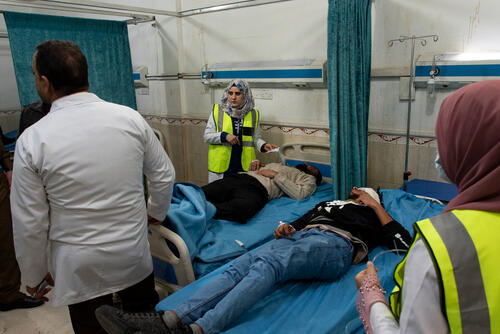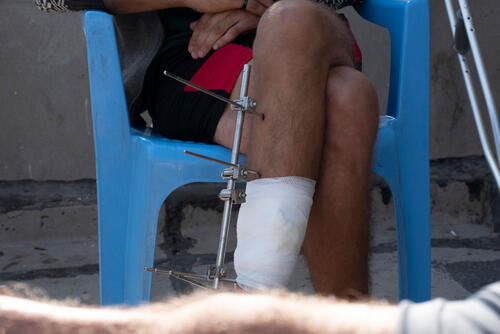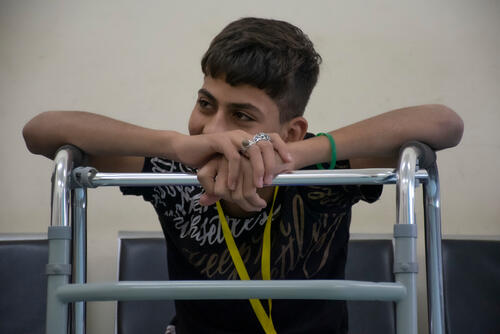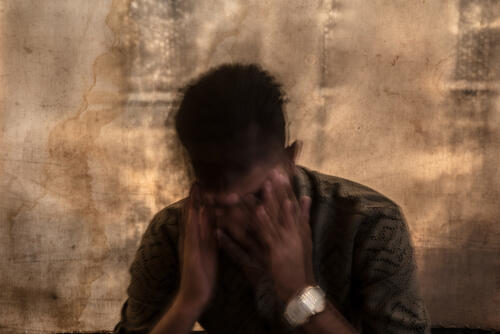
- A severe mental health crisis, which includes high numbers of suicides and suicide attempts, is occurring among the Yazidi religious community in Sinjar district, northwestern Iraq.
- Médecins Sans Frontières (MSF) mental health services in the town of Sinuni are overwhelmed.
- Ahead of World Mental Health Day on 10 October, MSF calls for increased international and national investment in mental healthcare across Iraq, which is still reeling from years of war and economic instability.
The Yazidi community in Sinjar district, northwestern Iraq, is grappling with a severe and debilitating mental health crisis, including a high number of suicides and suicide attempts, says MSF.
Between April and August 2019, 24 patients who were brought to the emergency room of Sinuni’s hospital had attempted suicide – six of whom died before arrival at the hospital or could not be saved.
Of the 24, 46 per cent were below the age of 18. The youngest, a 13-year-old girl who had hung herself, was dead on arrival at the emergency room. Fifty-four per cent were women or girls, four of whom died of self-immolation.
Others had attempted suicide by self-injury to their wrists, drinking poison, overdosing on medication or with firearms.
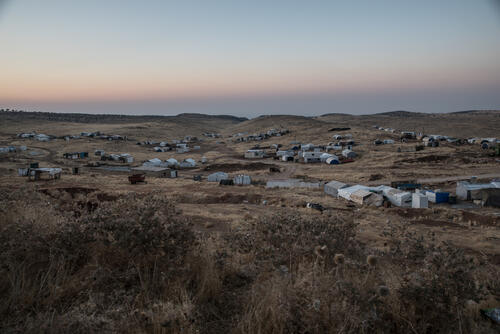
In the small town of Sinuni, which became the centre of gravity for the long-persecuted Iraqi Yazidi minority that remained in the area, MSF started offering mental health consultations in December 2018. Since then, 286 people have been enrolled in the programme and 200 of them are still under treatment today.
The most common diagnosis is depression (40%), followed by conversion disorderConversion disorder is a mental condition where a patient experiences blindness, paralysis, or other nervous system symptoms that cannot be explained by medical evaluations. (18%) and anxiety (17%). Some psychiatric and personality disorders, including post-traumatic stress disorder (3%), have also been diagnosed.
Even though MSF mental health services in the area were scaled up in recent months, they are now overwhelmed and have a waiting list.
Ahead of World Mental Health Day on 10 October, MSF calls for an increase in both international and national investment in mental healthcare, not only in Sinjar district but across an Iraq still reeling from years of brutal wars and economic instability.
Our first mental health survey in 2018 in Sinuni revealed that 100% of families had at least one member suffering from mental illnessDr Marc Forget, MSF head of mission Iraq
“Our first mental health survey in 201852 people participated to this survey conducted in September 2018. in Sinuni revealed that 100% of the families we spoke with had at least one member who suffered either moderately or severely from mental illness,” said Dr Marc Forget, MSF’s head of mission in Iraq.
The magnitude of the needs was confirmed by authorities.
“When we met with the medical director of the hospital in Sinjar, the heavily destructed town on the other side of the Sinjar mountain, he told us that everyone needs mental health support in the district, including him. It matched what we realised soon into the beginning of our activities: that we were dealing with a major mental health crisis, and also that there was something specific to it, directly linked with the collective trauma Yazidis endured recently,.” said Dr Forget.
In August 2014, the Islamic State group attacked the Yazidi religious minority living in the region. What followed has been the scene of a tragedy: a sustained campaign of killings, rape, abductions and enslavement, followed by a mass migration, mainly to camps in the adjacent Kurdish region.
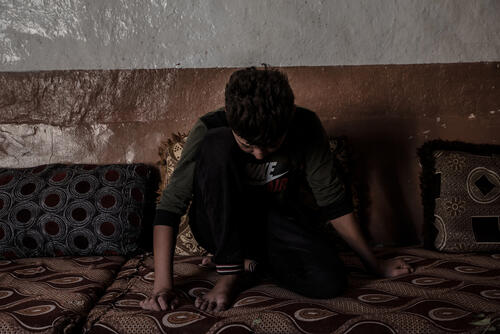
The UN has acknowledged IS’s atrocities in Sinjar region as genocide. Although the Sinjar area was retaken from the IS group more than four years ago, the return of those who fled the area has been slow. Still today many Yazidi families prefer to stay in Iraqi Kurdistan rather than return to their homes.
This is not only because many home and villages lay decimated, are littered with landmines and lack basic services like water or electricity but also because of the trauma many Yazidi now associate with their ancestral homelands.
Everyone here has lost at least one family member or friend and all over Sinjar region there is overwhelming sense of hopelessness and lossDr Kate Goulding, emergency doctor
“Everyone here has lost at least one family member or friend and all over Sinjar region there is overwhelming sense of hopelessness and loss,” says Dr Kate Goulding, who works in MSF’s emergency room in Sinuni.
“It is universal to be sad when your husband dies, when your child is sick, when you break up with your partner or when you are forced to be away from your family. But the extent of loss in this community is incomprehensible and compounded by the trauma of extreme violence, humiliation, mass displacement, poverty and neglect. As everyone will tell you here, the genocide perpetrated by IS wasn’t the first genocide the Yazidi have survived, it was the seventy-fourth.”
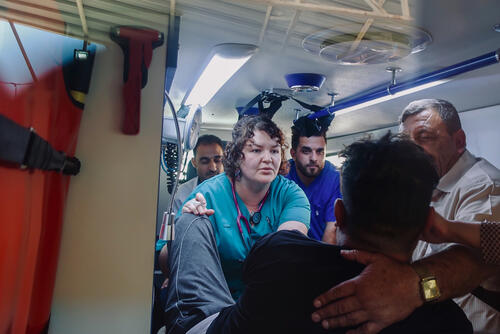
Dr Goulding supported MSF’s Yazidi staff in caring for psychiatric patients for two months this year when MSF was unable to find a psychiatrist in Iraq.
This is indicative of a larger issue in the country, where there is inadequate number of trained psychiatrists, psychologists and mental health counsellors to meet the immense mental health needs surfacing after years of brutal violence.
Despite the urgency of the situation in Sinjar, we are unable to find qualified psychiatrists and psychologists in Iraq to work with usDr Forget, MSF head of mission in Iraq
“Despite the urgency of the situation in Sinjar, we are unable to find qualified psychiatrists and psychologists in Iraq to work with us. So as MSF we are forced to bring in international staff for support, which is not ideal, and also not sustainable in the long term” says Dr Forget.
“The Iraqi mental health system definitely needs more money and more medication, but the biggest need is for more qualified staff, and for them to be assigned to areas of greater shortages, especially in rural and conflict affected areas of this country.”
MSF in Sinuni
An MSF team began supporting the Sinuni General Hospital with emergency and maternity services in December 2018 and quickly realised that mental health was a huge unmet need in the area. Since then, the team has increased the mental healthcare activities to cover psychiatric and psychological healthcare s in Sinuni hospital as well as group sessions and mobile mental health clinics for the displaced on Sinjar mountain.
Beyond the mental health clinic, since the beginning of 2019, MSF staff have conducted 9,770 consultations in the emergency room, 6,390 for further treatment in the inpatient wards and assisted 475 women in bringing their babies safely into the world.