



Ebola disease in DRC: find out how we're responding
Learn more
1390 Results
 
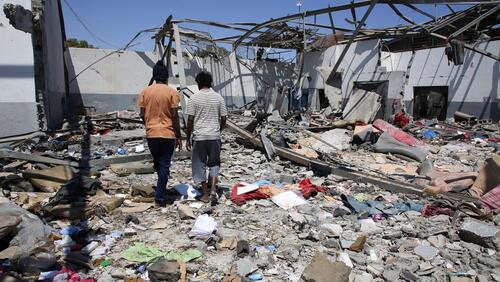
Debris covers the ground after an airstrike at a detention center in Tajoura, east of Tripoli in Libya, Wednesday, July 3, 2019. An airstrike hit the detention center for migrants early Wednesday, killing several.   (AP Photo/Hazem Ahmed)
Libya

“A night in which our worst fears would come to pass”

Sam Turner, MSF Head of Mission in Libya, recounts a night in which our worst fears would come to pass. The forced return of people fleeing Libya must stop. Voices from the Field - 23 Jul 2019
 
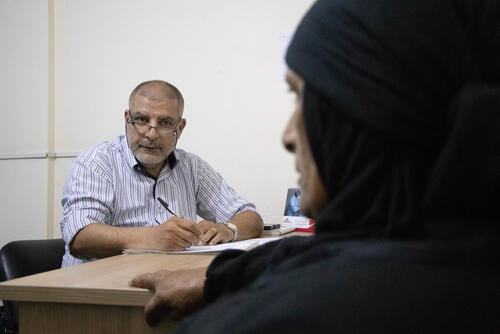
Dr Hassan Shams El-Din works as a psychiatrist, one day a week, at MSF’s clinic in Wadi Khaled. He is seen here in a session with Kharma, one of his patients, a Syrian woman who suffers from post-traumatic stress disorder and depression following the death of her husband. He has been seeing her regularly for about a year.

الدكتور حسان شمس الدين طبيب نفسي يتواجد في عيادة أطباء بلا حدود في وادي خالد يوماً واحداً في الأسبوع. في هذه الصورة، يجلس مع خرمة، مريضة سورية تعاني من اضطراب ما بعد الصدمة والاكتئاب منذ وفاة زوجها. يتابع الطبيب حالتها منذ حوالي عام.
Mental health

Tackling stigma one patient at a time in Lebanon

Although mental health issues are common in the community, they are still faced with stigma in the town of Wadi Khaled, northern Lebanon. The clear lack of mental health professionals in Akkar governorate makes way for an increase in superstitious beliefs. Project Update - 22 Jul 2019
 
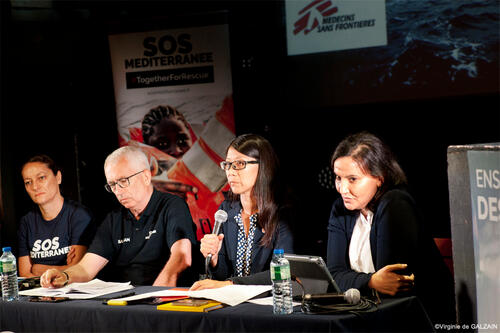
Press conference announcing the relaunch of search and rescue operations in the Mediterranean together with SOS Mediterranee.

Spokesperson during press conference:


- Dr. Joanne Liu, International President of Médecins sans Frontières (MSF)

- Hassiba Hadj-Sahraoui, MSF Humanitarian Affairs Advisor for Libya/SAR

- Sophie Beau, Co-Fournder and Vice President of SOS MEDITERRANEE

- François Thomas, President of SOS MEDITERRANEE France

- Frédéric Penard, Director of Operations SOS MEDITERRANEE
Mediterranean migration

MSF resumes search and rescue operations with Ocean Viking

MSF International President Dr Joanne Liu's speech in Paris on 22 July on MSF's decision to rejoin partner SOS MEDITERANNEE in search and rescue operations in the Central Mediterranean sea with new boat, the Ocean Viking. Speech - 22 Jul 2019
 
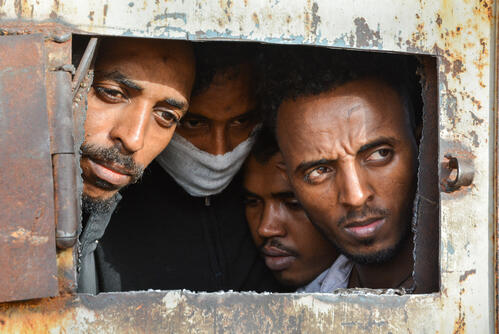
Refugees in Zintan DC at the gate of the main warehouse where 700 of them were detained. 
A tuberculosis outbreak has likely been raging for several months in the detention centre and some wear masks for fear of contamination. 
The main warehouse was emptied in June 2019, and the remaining people distributed among the other buildings within the detention centre compound.
Libya

Out of sight, out of mind: refugees in Libya's detention centres

Up to 6,000 refugees and migrants are being held in horrendous conditions in Libya’s detention centres, in an increasingly perilous situation as the country descends into conflict. Photo Story - 12 Jul 2019
 
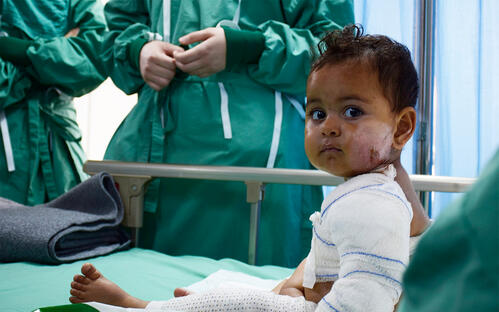
Bushra Mohammed, one year and 4 months old, was hospitalized in the burns unit at MSF Hospital in Qayyarah twenty days ago. 12% percent of her body had burn wounds. After two skin grafts (a surgical operation in which healthy skin is transplanted to the burn site), Bushra needs to stay in the hospital for several more days. Doctors prefer to monitor her recovery process due to her young age and the severity of her wounds.
“We are from Qayyarah, we came to this hospital because it is the nearest hospital and we knew MSF was working here. Before the last war with the Islamic State group (IS), there were other hospitals, the General and Jumhouri hospitals, but they were shelled and destroyed.” 
“It was 8:00 pm and we were having dinner, all of us, the family. Bushra’s 5-year-old sister went into the bathroom to wash her hands after eating. She turned the faucet of the hot water, and extremely hot water came pouring out. She feared that she could not turn the faucet again to close it, and left it open.”
At this moment, Bushra came in; she follows her sister’s every move. She slipped onto the water and fell with her soft skin touching the very hot ceramic floor. 
“We all jumped when she screamed. She was crying in pain, and my heart was pounding when I went in to look for her. Her father carried her straight to the hospital, but still, her arm suffered a bad burn despite our quick reaction. In the hospital, the staff attended to her burns and applied dressings to cover the wounds properly. Every two days they wash and clean her wounds, and then they informed us that she needs a skin graft. We have been here in this ward for 20 long days.  
Bushra is playful and curious, being stuck in bed the whole day every day is hard for her.  She is even tired of seeing the colour of the green sterile hospital scrubs. 
As everyone who enters the room to see and visit wears a green sterile gown, she gets upset when she sees this green colour. She used to cry whenever she sees me wearing it, and would stop as soon as I took it off.
I am now more aware of what could happen if she is left alone even for a single moment. I will  never let her out of my sight ever again.”
Iraq

Supporting people in Qayyarah

Project Update - 12 Jul 2019
 
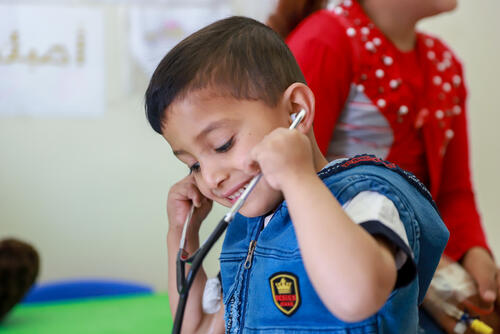
Abbas, 4 years old, playing inside MSF’s Kids Zone.
Abbas & his brother Youssef are both Thalassemia patients receiving treatment at MSF’s paediatric ward at the Elias Hraoui Government Hospital in Zahle. MSF’s Thalasemia services include, medical consultation and follow up, medical treatment and blood transfusion in addition to social and educational follow up for the children and their families.
A children’s visit to the hospital to receive treatment for Thalassemia could last for a full day. To make it an enjoyable experience, MSF prepared a Kids’ Zone, a safe space for thalassemia children to play, draw and have fun with their friends, as the mental well-being of the kids are an important factor in their physical health.
Lebanon

Treating Syrian children suffering from thalassemia

Thalassemia is a hereditary blood disorder which affects primarily people from the Mediterranean basin, including Syria. In Lebanon, MSF is treating Syrian refugee children with the disease, who usually lack access to treatment. Project Update - 5 Jul 2019
 
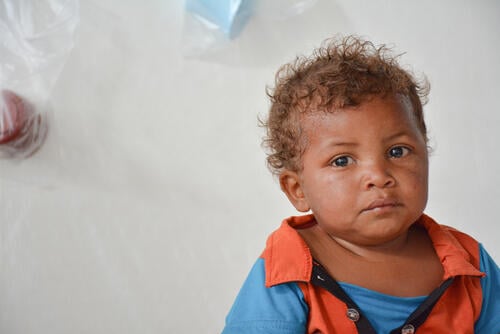
Dhi Sufal district is located at the south of Ibb governorate, in borders with Taiz governorate. In addition to MSF supported hospital, and due to the increase of the cholera cases in the area. MSF started Cholera treatment centre at the same district. MSF cholera treatment centre is receiving patients from Ibb, Taiz, and other IDPs from Hodeidah as well. Since Jan 2019, MSF has received 5466 of patients, between moderate and severe cases and has been working since the opening on 2017.
Yemen

The indirect consequences of war for people in Yemen

More than four years since the start of the war in Yemen, the indirect consequences of the conflict on ordinary Yemenis are high. Among them, people struggle to reach medical care and hospitals in time, which can have serious repercussions on their health. Project Update - 25 Jun 2019
 
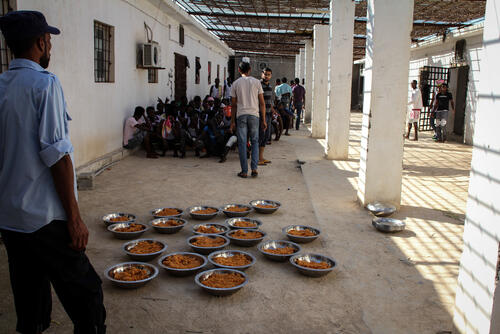
Refugees and migrants detained in this detention centre get rice or pasta for lunch and dinner. For breakfast people receive bread with some cheese. Meals often have to be shared by many people. Food is prepared in-house and is served in large metal bowls to be shared by five to 10 people.
Libya

“Healthwise, it was a disaster” in Libya’s Zintan and Gharyan detention centres

MSF staff who were recently granted access to two detention centres in Libya found a catastrophic medical situation among the people detained there. Project Update - 21 Jun 2019
 
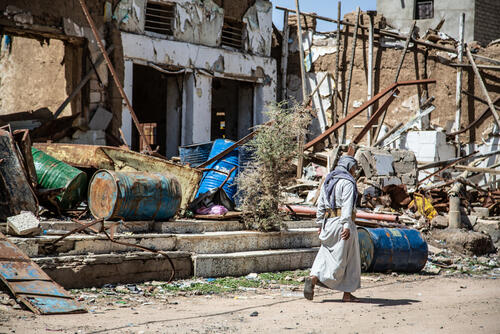
Yemen, Saada city, 22 April 2019 - A man walking in front of destroyed buildings near the old city of Saada.
Yemen

Aerial bombardments in Sa'ada

Video report on life in Sa'ada, the most bombed governorate of Yemen. With almost a quarter of all recorded coalition air raids since March 2015, the MSF hospital that was bombed in 2015 and reopened in April 2018 had admitted more than 1,500 patients by the end of the year. Project Update - 20 Jun 2019
 
In March 2018, Doctors Without Borders/ Médecins Sans Frontières (MSF) sent an assessment team to Mosul’s old city in northern Iraq. The old city experienced intense shelling, aerial bombing and attacks with improvised explosive devices (IED) during the conflict. Much of the old city is still inaccessible due to the destruction and presence of IEDs, unexploded ordinance (UXO) and booby traps. 

The MSF assessment team visited two primary healthcare centres (PHCCs) and donated medical supplies such as painkillers, antibiotics, dressing materials and tablets for sterilizing water. The assessment found the PHCCs were under-resourced and struggled to provide healthcare due to the lack of medication, water and electricity. One of the doctors said: “If we don't have water or electricity, we cannot do anything…most of the cases we cannot treat. We can only treat the simple cases and the complicated cases we refer.”

MSF currently runs a maternity and paediatrics hospital in west Mosul, and a post-operative and surgical unit for war-wounded patients in east Mosul. Following the assessment in the old city, MSF distributed 550 hygiene kits to families. The kits included items such as soap, toothbrushes, towels and water containers and will help families stay clean and prevent the spread of diseases.
Iraq

MSF in Iraq Annual Report 2018

Report on MSF's activities in Iraq during 2018. Report - 14 Jun 2019
Four mothers posing in a corridor of the Hospital in Bili. All four of them are staying in the hospital with their child, that's suffering from a severe case of malaria. Since the beginning of the project in 2016, the pediatric ward already treated more than 4.000 cases of complicated/severe form of malaria.
Médecins Sans Frontières (MSF)

Independent medical humanitarian assistance

We provide medical assistance to people affected by conflict, epidemics, disasters, or exclusion from healthcare. Our teams are made up of tens of thousands of health professionals, logistic and administrative staff - most of them hired locally. Our actions are guided by medical ethics and the principles of independence and impartiality. We are a non-profit, self-governed, member-based organisation.

Learn more