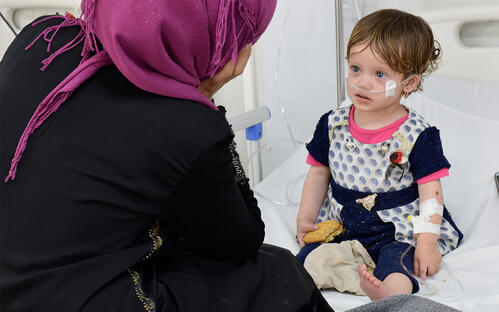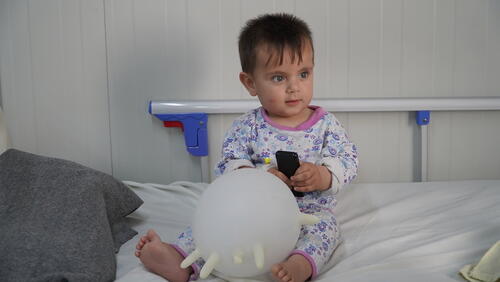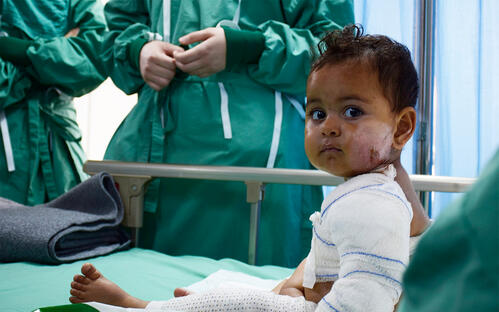
Bushra Mohammed, one year and 4 months old, was hospitalized in the burns unit at MSF Hospital in Qayyarah twenty days ago. 12% percent of her body had burn wounds. After two skin grafts (a surgical operation in which healthy skin is transplanted to the burn site), Bushra needs to stay in the hospital for several more days. Doctors prefer to monitor her recovery process due to her young age and the severity of her wounds.
“We are from Qayyarah, we came to this hospital because it is the nearest hospital and we knew MSF was working here. Before the last war with the Islamic State group (IS), there were other hospitals, the General and Jumhouri hospitals, but they were shelled and destroyed.” 
“It was 8:00 pm and we were having dinner, all of us, the family. Bushra’s 5-year-old sister went into the bathroom to wash her hands after eating. She turned the faucet of the hot water, and extremely hot water came pouring out. She feared that she could not turn the faucet again to close it, and left it open.”
At this moment, Bushra came in; she follows her sister’s every move. She slipped onto the water and fell with her soft skin touching the very hot ceramic floor. 
“We all jumped when she screamed. She was crying in pain, and my heart was pounding when I went in to look for her. Her father carried her straight to the hospital, but still, her arm suffered a bad burn despite our quick reaction. In the hospital, the staff attended to her burns and applied dressings to cover the wounds properly. Every two days they wash and clean her wounds, and then they informed us that she needs a skin graft. We have been here in this ward for 20 long days.  
Bushra is playful and curious, being stuck in bed the whole day every day is hard for her.  She is even tired of seeing the colour of the green sterile hospital scrubs. 
As everyone who enters the room to see and visit wears a green sterile gown, she gets upset when she sees this green colour. She used to cry whenever she sees me wearing it, and would stop as soon as I took it off.
I am now more aware of what could happen if she is left alone even for a single moment. I will  never let her out of my sight ever again.”
16-month-old Bushra Mohammed sits on her bed in the burns unit at the MSF hospital in Qayyarah, after suffering burns to 12 per cent of her body. Ninewa governorate, Iraq, May 2019.
© Candida Lobes/MSF

Supporting people in Qayyarah

16-month-old Bushra Mohammed sits on her bed in the burns unit at the MSF hospital in Qayyarah, after suffering burns to 12 per cent of her body. Ninewa governorate, Iraq, May 2019.
© Candida Lobes/MSF
Ebola disease in DRC: find out how we're responding
Learn more

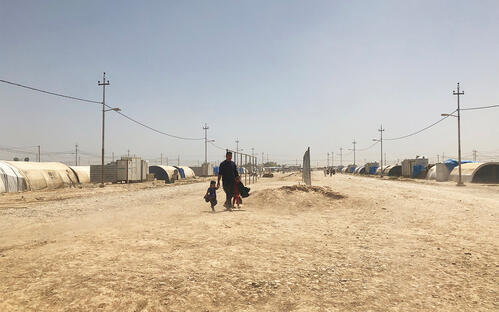
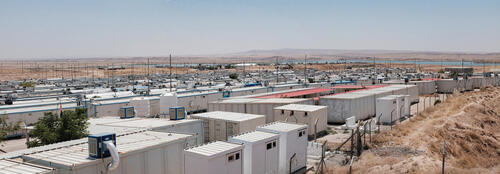
The town of Qayyarah, some 70 kilometres south of Mosul in Ninewa governorate, Iraq, lies on the west bank of the Tigris River. Before the Iraqi army retook the area at the end of August 2016 it was under the control of Islamic State group for two and a half years. Close to Qayyarah, six camps now house up to 100,000 internally displaced people (IDPs).

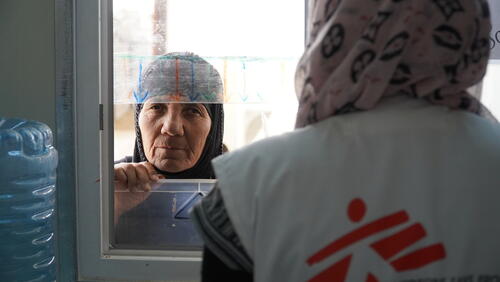
With a large local and IDP population needing medical care, MSF is supporting people with a number of services in the area.

MSF hospital

Qayyarah General hospital was partially destroyed in 2016. When MSF opened a new hospital in December 2016, it was the only functional health facility in a sub-district with a population of 300,000 people.

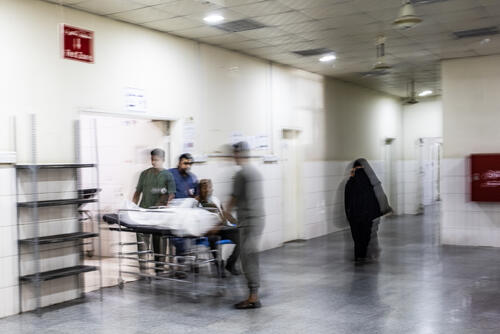
Since 2016, the hospital has expanded its medical services and now includes an emergency room, an intensive care unit, two operating theatres, a neonatology ward, ambulatory and outpatient therapeutic feeding centres, two inpatient wards, a laboratory, and a mental health programme offering psychological and psychiatric consultations. 

Currently, MSF’s hospital in Qayyarah provides more than 330 medical consultations per month. Between January and June 2019, more than 6,200 emergency consultations and 1,260 surgical interventions have been performed, and more than 1,600 psychological consultations have been provided to patients coming both from the urban area and the camps for displaced people.

Burns unit

In April 2018, we also opened a 10-bed burns unit within the hospital that is currently the only specialised medical facility to provide hospital care to burns victims in Ninewa governorate. More than 160 people have been hospitalised and treated in the burns unit since it was opened.

Abdusalam Omar, 2 years old, and his grandmother Aia, 40 years old. They come from Shirqat town in Salahaddin Governorate, 35 km from Qayyarah. 
They were admitted to the burns unit at MSF hospital in Qayyarah one week ago. At the time of their arrival, Abdusalam was suffering from burn wounds on 28% of his body (face, arms, abdomen and legs). Aia had burn wounds on her face and on her right hand (5% of her body).
Aia will be discharged in a few days, but Abdusalam needsa longer recovery process since his wounds are more extensive. He could be facing a stay in the hospital of more than one month and he will soon undergo a skin graft, a surgical operation in which healthy skin is transplanted to the burn site. This surgical procedure generally reduces the course of treatment needed and minimizes scarring. 
Aia’s discoloured [burnt] lips move slowly. She has difficulty pronouncing her words clearly to those around her, but in spite of the pain she is in,  she is keen to talk to people. “It is good to pass the time instead of waiting while Abdulsalam is inside the operating room.”
“We arrived at the hospital at 9:00pm. It took us one hour to reach the hospital. People and relatives recommended this hospital to us so we came in a hurry.” 
“Abdulsalam is my grandson, but I raised him as my own child. His mother abandoned him when he was a baby. He follows me around the house, wherever I go, and I am very protective of him,” says Aia.  
“Our stove caused the fire. We thought that it was turned off, but it was not properly close, and gas was leaking. In a moment the  kitchen ignited and flames and thick black smoke covered the room. The child was outside and the blowing flames caught up with him. My face and hands were caught in the fire, and he was burnt on his legs, hands, the lower part of his abdomen and his face as well. We also suffered asphyxia because of inhaling the heavy gas. We both fell unconscious for a while. When I regained consciousness I was still in the house and immediately was rushed alongside Abdulsalam to the hospital. We arrived there with black smoke on our faces.”
“We were given painkillers and our burns were treated instantly. The next morning he underwent surgery. Today will be his third surgery in eight days.”
Two-year-old Abdusalam Omar and his grandmother Aia, 40, sit in the burns unit of MSF's hospital in Qayyarah. Ninewa governorate, Iraq, May 2019. 
Candida Lobes/MSF

Two-year-old Abdusalam Omar, and his grandmother Aia, 40 years old, come from Shirqat town in Salahaddin Governorate, 35 kilometres from Qayyarah. They were admitted to the burns unit at MSF hospital in Qayyarah one week ago. At the time of their arrival, Abdusalam was suffering from burns to 28 per cent of his body (face, arms, abdomen and legs). Aia had burns to five per cent of her body, with wounds on her face and on her right hand. Aia will be discharged in a few days, but Abdusalam will need longer to recover; he will soon undergo a skin graft.

Aia’s discoloured, burnt lips move slowly. She has difficulty pronouncing her words clearly to those around her, but in spite of the pain, she is keen to talk to people. “It is good to pass the time instead of waiting while Abdulsalam is inside the operating room.”

“We arrived at the hospital at 9:00pm. It took us one hour to reach the hospital. People and relatives recommended this hospital to us so we came in a hurry,” says Aia. “Abdulsalam is my grandson, but I raise him as my own child. His mother abandoned him when he was a baby. He follows me around the house, wherever I go, and I am very protective of him.”  

“Our stove caused the fire. We thought that it was turned off, but it wasn't, and gas was leaking. In an instant, the gas in the kitchen ignited, and flames and thick black smoke covered the room. The child was outside but the flames caught up with him. My face and hands were caught in the fire, and he was burnt on his legs, hands, the lower part of his abdomen and his face as well.”

“We also suffered from asphyxia because of inhaling the heavy gas. We both fell unconscious for a while. When I regained consciousness I was still in the house and immediately was rushed alongside Abdulsalam to the hospital. We arrived there with black smoke on our faces.”

MSF support in IDP camps around Qayyarah

In 2019, more than 1.6 million people are still displaced in Iraq, according to the International Organisation for Migration (April 2019). More than half (53%) of displaced people live in Ninewa Governorate. Up to 100,000<a href="https://data2.unhcr.org/en/situations/iraq_cccm"> UNHCR, CCCM Cluster, Iraq</a> displaced people are in the camps close to Qayyarah town (Jeddah and Airstrips camps), where in July 2017 we began an integrated nutrition and mental health project.
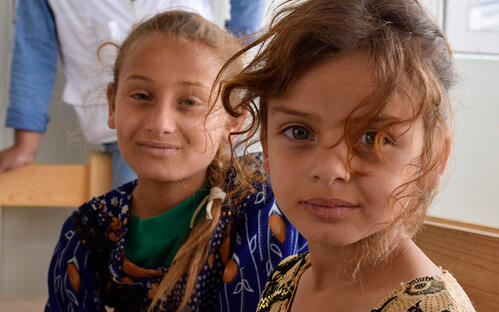
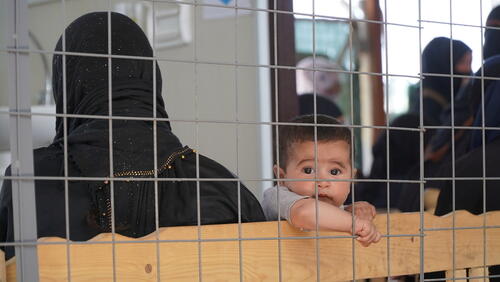
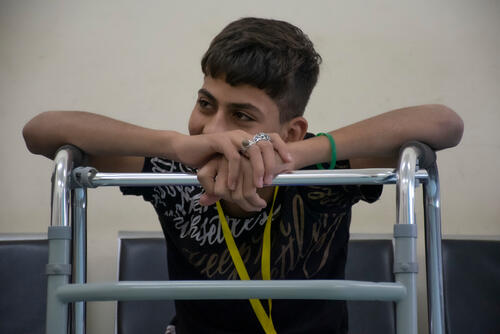
Mariam and Aisha, aged five and eight, in the waiting area of the outpatient department at MSF primary healthcare centre in the Airstrip camp for displaced people in Qayyarah, Ninewa Governorate.
Mariam and Aisha are from a village close to Tikrit town. Their lives changed in 2017, when the family moved to Mosul to follow their father. He died during the battle for Mosul. Masteen, the mother of the two girls, decided to flee the town to protect her children Mariam, Aisha and their three brothers. 
When they returned to the village they found their house destroyed; they had nowhere to go. Since then, they have lived in the Airstrip camp in Qayyarah. 
Masteen, thirty-nine years old, cannot  hold her tears back while she tells her story, covering her face with her veil. 
“I didn’t want to leave our village; my husband forced me. From that moment, our lives were overturned and now I’m alone with my children in this camp. We’ll never have our lives back. We live in a tent, and we survive thanks to the food distributions and some money that one of my married daughters sends us. I dream of living in a proper house with my family; just one room would be enough, out of this camp. 
I often think of taking my own life. I’m tired; I see no hope for me. My family is so unlucky.”
Eight-year-old Aisha and five-year-old Mariam sit in the waiting area of the outpatient department at MSF's primary healthcare centre in the Airstrip camp for displaced people in Qayyarah, Ninewa Governorate. Iraq, May 2019.
Candida Lobes/MSF

Since then, MSF has scaled up the medical activities provided to the displaced population in the camps. We currently run a primary healthcare centre, including sexual and reproductive health services (antenatal and postnatal care, basic obstetric and new born care, family planning), a 24-hour emergency care service, outpatient consultations for children and adults, consultations for chronic diseases, a vaccination programme, a nutritional unit, mental health services and health promotion activities and campaigns in the camps.

Between January and June 2019, our primary health centre has provided medical assistance to more than 130 people daily. More than 13,800 medical consultations and 4,600 emergency consultations were performed; we have assisted more than 250 deliveries; and more than 500 individual counselling sessions were offered to people living in the camp.