



While much of the world’s attention is on battling the COVID-19 pandemic, which has now reached many countries in Africa, measles continues to silently kill large numbers of mostly children in the Democratic Republic of Congo (DRC), Central African Republic (CAR) and Chad. DRC – which has also been fighting an Ebola epidemic – declared a measles outbreak in June 2019. Chad’s measles outbreak has been raging for two years, since May 2018. CAR declared its measles outbreak in January this year.
Together, the outbreaks have infected hundreds of thousands of children and killed thousands more. Some kids die at home, never having reached proper medical care, or having been seen only by a traditional healer.
MSF teams have been responding to the measles epidemic in all three countries – providing outbreak response vaccination, treating children for the disease, and for other illnesses such as malnutrition – amid logistics challenges and insecure contexts, all while the COVID-19 pandemic looms as a further potential threat and distraction for governments, donors and other health organisations.
Democratic Republic of Congo
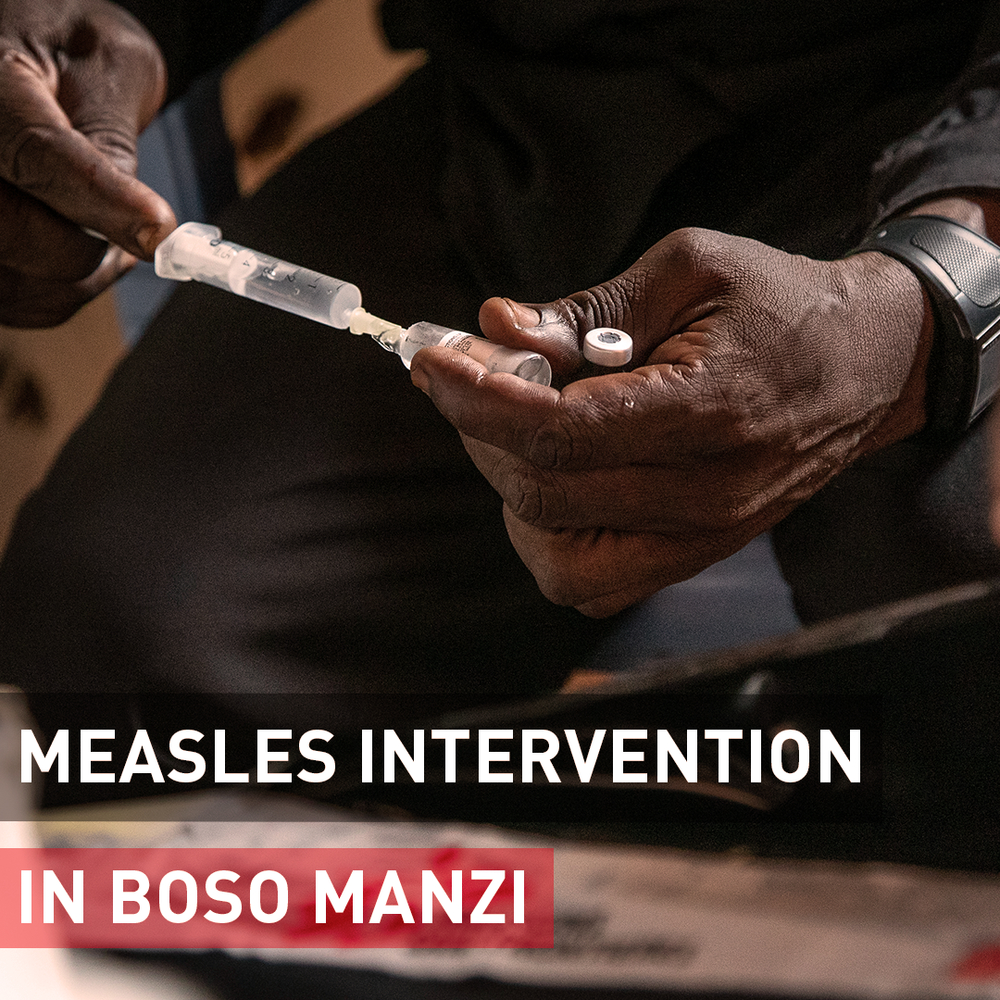
Video
Measles intervention in Boso Manzi
Overshadowed by the Ebola outbreak in the east of the country, the measles response in DRC has been neglected from the start. It took months before the epidemic was finally declared in June 2019, while the vaccination campaigns organised by authorities were marked by delays, coordination issues and a lack of supporting partners, many of whom were focused on the response to Ebola. A supplementary vaccination campaign, intended to 'mop up’ those children who had been missed, was repeatedly postponed, before finally taking place in late 2019.
All of these factors contributed to the disease’s heavy toll in DRC, making it the country’s deadliest measles epidemic recorded to date and the largest in the world today.
“Today, the overall number of cases may have reduced, but the epidemic is far from over,” says Emmanuel Lampaert, MSF operations coordinator in DRC. “Some areas are even reporting increases and there are about 100 health zones where action is urgently needed.”
“Since January, more than 50,000 cases and 600 deaths have already been officially notified,” Lampaert continues. “But many zones with increasing numbers of cases and deaths are not included in the latest national measles response plan.”
Every delay and every obstacle increases the risk of the epidemic continuing to spread, killing more children.Emmanuel Lampaert, MSF operations coordinator in DRC
From Haut-Uélé to Kongo Central, from North Ubangi to South Kivu, MSF teams have already been deployed in a dozen provinces across DRC in 2020; this year they have already vaccinated more than 260,000 children against measles, while caring for more than 17,500 that already had the disease. Last year, MSF vaccinated 816,000 children against measles and cared for more than 50,000 patients with the disease.
816,000
816,
50,000
50,
260,000
260,
Silent killers, but few medicines available
As in many remote places in DRC, local people know all too well the toll taken by ’silent killers’ such as measles, malaria, diarrhoea and respiratory infections.
“The needs here are huge but the supply of medicines to health centres is problematic,” says Gédéon Mushadi, the health zone’s chief doctor. “The few medicines available in the health facilities do not cover the needs.”
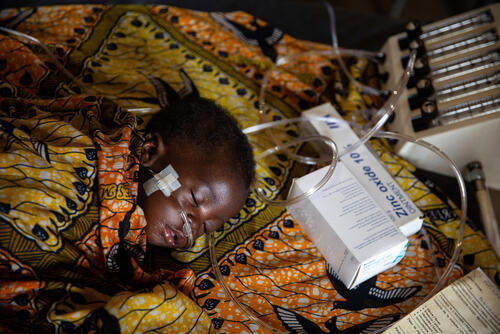
Alphonsine Ekima, 43, and her family have felt the direct impact of this. Six weeks ago, her three-year-old daughter Marie died of measles. She was buried on the same day as her cousin, who died from the same disease.
“Marie was the fourth child taken away from me,” says Alphonsine.
Every delay, every obstacle fuels the outbreak
In this already difficult context, the COVID-19 pandemic has created extra barriers to vaccinating children against the disease.
“Implementing preventive measures to reduce the spread of COVID-19 is vital to protect communities and health workers, especially in a country like DRC where the health system is very limited,” says Lampaert. “Unfortunately, these measures are having an impact on the overall measles response, including transporting vaccines, assembling dedicated teams and launching vaccination campaigns.”
As we adapt our approach to the coronavirus pandemic and support the response to it, it is important to remember that a one-track focus on COVID-19 will sow the seeds of other major health crises.Emmanuel Lampaert, MSF operations coordinator in DRC
These obstacles are affecting the efforts to bring the measles epidemic under control, says Lampaert.
“Every delay and every obstacle increases the risk of the epidemic continuing to spread, killing more children,” Lampaert says. “The same happened during the West African Ebola outbreak, when measles vaccination activities were disrupted, leading to a resurgence of the disease.”
COVID-19 will sow the seeds of other health crises
Today, with all eyes focused on the threat of COVID-19, MSF teams are continuing to respond to other health emergencies such as measles, in DRC and beyond.
“As we adapt our approach to the coronavirus pandemic and support the response to it, it is important to remember that a one-track focus on COVID-19 will sow the seeds of other major health crises,” says Lampaert. “Reducing vaccinations, nutrition support or malaria prevention in the face of a public health crisis will lead to other crises, making the situation even worse. Neglecting the other health issues would make us complicit in many more future deaths.”
Central African Republic
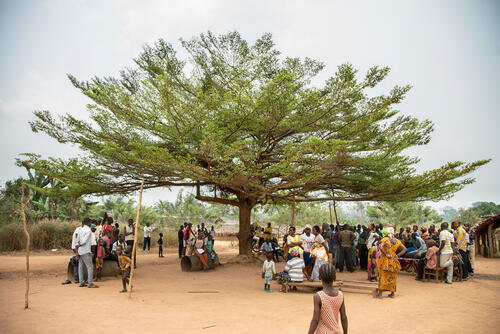
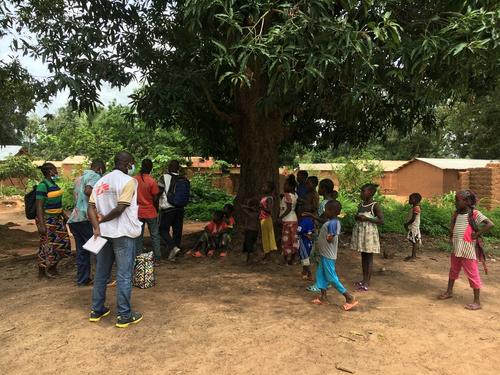
After many years of violence and insecurity, the Central African Republic is in a state of chronic health emergency. Many of the country’s five million inhabitants, more than 700,000 of them internally displaced due to insecurity, don’t have access to healthcare, and many children have not been vaccinated.
In these conditions, a preventable but highly contagious disease like measles can spread fast. In January 2020, the Ministry of Health declared a nationwide measles epidemic.
In support of the health authorities, we have launched a massive vaccination campaign to vaccinate more than 340,000 children for measles in seven health zones across the country.
Insecurity and tricky logistics make for challenging vaccination campaigns
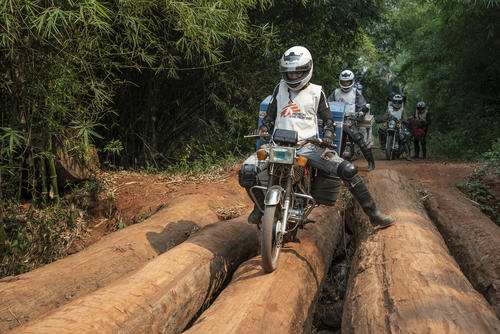
“The logistical challenges and costs of setting up a large-scale vaccination campaign in such remote, isolated parts of the country are enormous,” says Ester Gutierrez, MSF’s head of mission in CAR. “Many of these areas can only be reached by plane. Our mobile teams often spend several days in the field, in order to reach the most far-flung villages.”
“Insecurity is another issue,” Gutierrez continues. “In the area between Bria and Ouadda in the centre of the country, for instance, clashes prevented us from carrying out our planned medical and vaccination activities.”
Keeping vaccines cold in areas without reliable electricity is a huge challenge. Zacharie Musangu is a veteran MSF staff member who first started working with us in his native Democratic Republic of Congo in 2004. At our temporary base in the small town of Baboua, close to the border with Cameroon, the logistics expert gets up every morning at 3 am to prepare vaccines for the eight mobile teams that take them by car or motorbike to remote villages in the district.
“The most important part is to maintain the same temperature when vaccines are taken from the freezers at our base, what we call the active cold chain, to the passive cold chain in cooler boxes that our mobile teams are taking to the vaccination sites,” says Zacharie. “It’s a very delicate procedure.”
The logistical challenges and costs of setting up a large-scale vaccination campaign in such remote, isolated parts of the country are enormous. Many of these areas can only be reached by plane.Ester Gutierrez, MSF head of mission in CAR
Treatment by MSF teams takes place of treatment by traditional medicines
Parallel to the vaccination campaign, MSF teams also treat children already sick with measles. Since the beginning of 2020, more than 6,200 suspected cases of measles have been notified and treated by MSF in Ouham region and Nangha Boguila and Bossangoa health districts in the north of the country.
Yvonne Zongagofo has brought her stepson Maxime to a health post that MSF supports in the village of Benzambe, several hours drive from the town of Bossangoa. Maxime has been sick for three days. He has a fever and doesn’t want to eat.
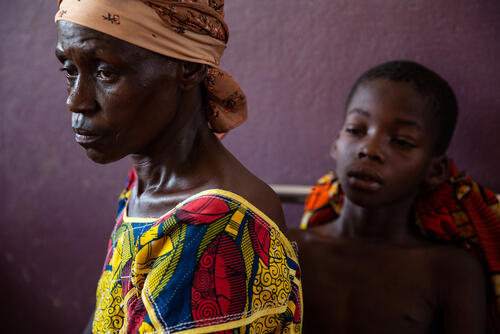
“I have insisted with my family to take Maxime to the health post - I knew it was measles,” Yvonne says. “We haven’t had anybody get sick from this disease for years, but I recognised the symptoms because I remember the last epidemic, when I was a child.”
“Back then, traditional medicine was the only remedy, and there were no NGOs, doctors or hospitals in this region,” Yvonne continues. “Nowadays the situation has improved slightly, we have a bit more access to healthcare, but it’s not enough. Children are still dying in my community.”
After the consultation at the health post, Maxime is taken to the MSF-supported hospital in Bossangoa, where a special measles ward has been set up.
“Children should not have to die of a preventable disease like measles,” says Adelaide Ouabo, MSF medical coordinator. “Unlike for the new coronavirus, we’ve had a vaccine for measles for decades, and we need to make sure that as many children as possible have access to it.”
Chad
As concerns grow about the spread of COVID-19 in Chad, parts of the country remain gripped by a two-year measles epidemic that is increasing in intensity and shows no signs of slowing down, leaving the country at risk of a twin crisis.
Officially declared in May 2018, 118 out of 126 health districts in Chad have now been affected by measles with southern provinces near the border with Central African Republic facing a rapid increase in cases.
Some 28 health districts are in a declared measles epidemic and during the first three months of 2020, the Ministry of Public Health reported 7,412 suspected cases, with the highest number of registered cases in Beboto, Kyabe and Goundi health districts.
Malnutrition and measles spin each other out of control
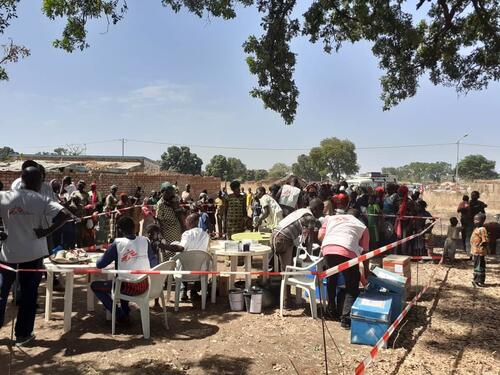
An MSF emergency response team travelled to affected regions including Beboto in February, after the Ministry of Public Health alerted MSF that measles cases in the district had doubled in a matter of weeks.
25,177
25,177
10,432
10,432
1,191
1,191
MSF Nurse Supervisor Ngueremi Yary Roger says that upon arriving in the district, the team found that some families reported having had three or four children recently pass away from the disease. Patients were either staying home or using traditional medicines instead of trying to access local health facilities.
Our team in Beboto also worked closely with community leaders to raise awareness about measles prevention and how suspected measles patients could access free medical treatment in MSF supported health facilities. We donated medical kits, measles vaccines, and water and sanitation supplies to the health district to enable case management by local teams under the supervision of Beboto health district authorities.
From the beginning of February until mid-April, we also carried out a vaccination campaign in the Kyabé region of southern Chad, targeting children between six months and five years old. Because of the many cases of malaria and malnutrition, MSF also provided general paediatric care and treated the children with measles in addition to vaccination activities.
Despite the fact that COVID-19 is the emergency situation attracting the full attention of the country and donors, the response to the measles epidemic remains our main priority.Seidina Ousseini, MSF head of mission, Chad
COVID-19 fears threaten to overshadow other health needs
Since the first COVID-19 case in Chad was confirmed on 19 March, the majority of humanitarian organisations and donors have shifted their attention towards COVID-19 prevention activities.
A measles vaccination campaign by the Ministry of Public Health and supported by UNICEF and GAVI is planned for this year but fears of a large COVID-19 outbreak may threaten that.
“Despite the fact that COVID-19 is the emergency situation attracting the full attention of the country and donors, the response to the measles epidemic remains our main priority,” says MSF Head of Mission Seidina Ousseini. “We must focus and push for a mass vaccination campaign.”
“Chad has been facing an economic crisis since 2015 and the government simply does not have the capacity or funds to respond to COVID-19 and measles at the same time,” Ousseini says. “It is important to remember that while donor funding continues to be diverted towards COVID-19 activities, we must continue to do what we can to help fight measles and ensure other health services aren’t neglected to avoid a catastrophic situation where all these issues merge into one even bigger problem.”
Central African Republic
In times of COVID-19, malaria remains the number one killer of children in CAR
Project Update
15 Sep 2020